According to a security notice from cybersecurity firm Malwarebytes, data tied to roughly 17.5 million Instagram users is circulating freely on Breachforums after resurfacing in early January 2026, courtesy of a threat actor using the handle “Solonik.” The twist: this wasn’t a brand-new breach. The data reportedly traces back to a misconfigured Instagram API from late 2024 that allowed large-scale scraping of user profiles, quietly collecting structured information before disappearing—until now.
“Beware of emails and messages that claim to come from Instagram, as they could be sent by malicious hackers trying to trick you into handing over your password,” Malwarebytes explained in a distributed alert email. “If you’re concerned, sign into your Instagram account and reset your password to a new, strong, unique password.”
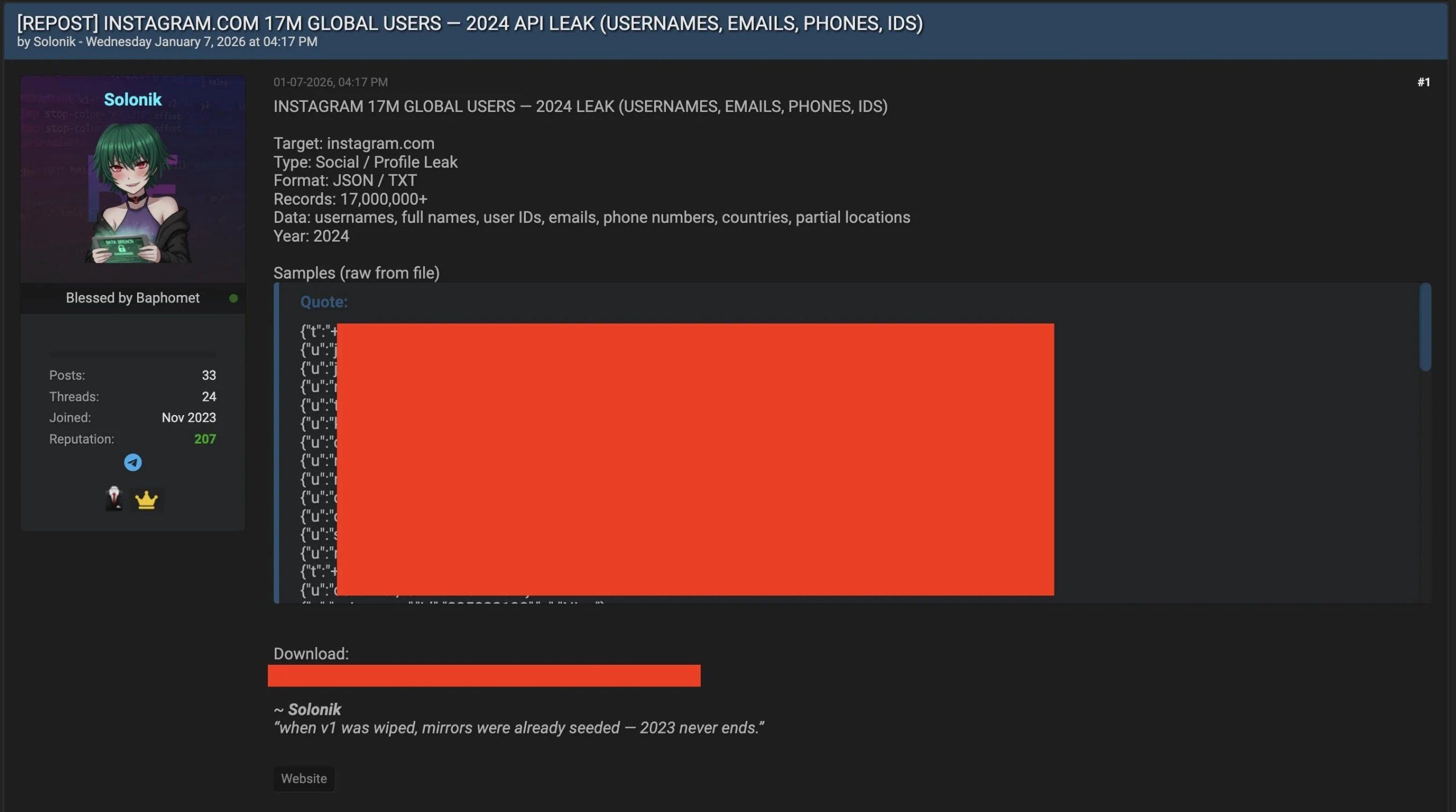
The freshly reposted dataset is said to include usernames, emails, phone numbers, physical addresses, and account metadata, making it catnip for scammers and identity thieves. As of Jan. 10, Meta had not issued a public statement, while reports of unsolicited password reset emails has spiked. Old data, new damage—because the internet never forgets, and neither do cybercriminals. What makes this leak especially irritating is how it’s being used.
Attackers aren’t blasting obvious scam emails; instead, they’re triggering legitimate Instagram password reset messages from the platform’s real security domain, banking on confusion to do the dirty work. With enough personal details in hand, bad actors can escalate from phishing to even SIM swapping and targeted fraud, particularly for users who recycle passwords across sites.
Malwarebytes flagged the breach during routine dark web monitoring, showcasing how recycled data can still fuel very current attacks. While the exposure appears global—with confirmed impacts in parts of Europe—the risk profile is universal: account takeovers, financial fraud, and a fresh reminder that scraped data ages like milk, not wine. The fix is unglamorous but effective: stronger passwords, two-factor authentication, and a healthy suspicion of any “urgent” email demanding clicks.
- Was this a new Instagram hack?
No, the data reportedly originates from a 2024 API scraping issue and only resurfaced publicly in January 2026. - What information was exposed?
Usernames, emails, phone numbers, partial or full addresses, and account metadata were included. - Why are users getting real password reset emails?
Attackers are abusing Instagram’s legitimate reset system to make phishing attempts seem authentic. - What should affected users do now?
Change passwords immediately, enable two-factor authentication, and monitor accounts for suspicious activity.
免责声明:本文章仅代表作者个人观点,不代表本平台的立场和观点。本文章仅供信息分享,不构成对任何人的任何投资建议。用户与作者之间的任何争议,与本平台无关。如网页中刊载的文章或图片涉及侵权,请提供相关的权利证明和身份证明发送邮件到support@aicoin.com,本平台相关工作人员将会进行核查。


