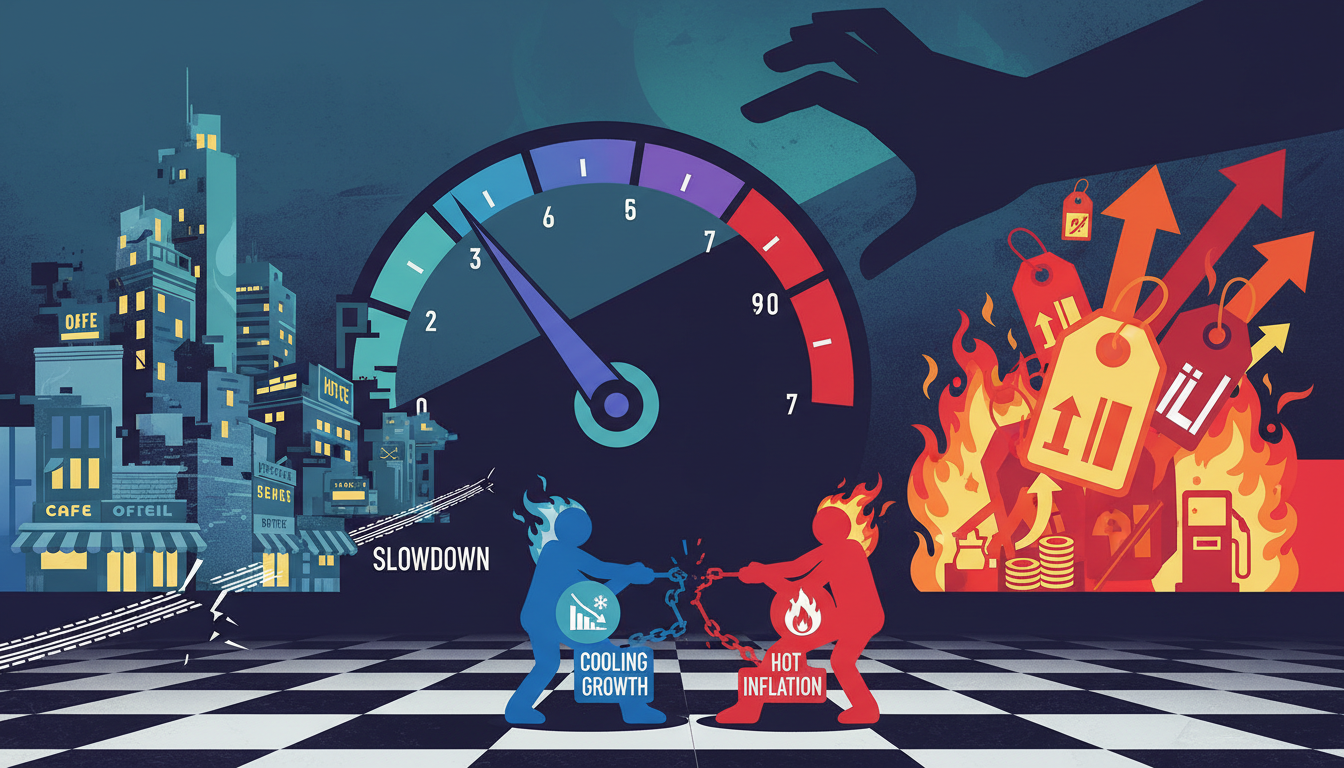
On the evening of January 6, East 8 Time, the latest combination of inflation data from France and the European Central Bank's interest rate decision has once again brought the contradiction of "low inflation + high interest rates" in the Eurozone to the forefront. Data released by the French National Institute of Statistics shows that the year-on-year CPI in France for December 2025 is only 0.7%, further declining from 0.8% in November, reaching a new low for this phase, indicating a continued easing of inflationary pressures. In contrast, the European Central Bank chose to maintain the deposit rate unchanged at its monetary policy meeting on December 18, 2025, continuing the previous guidance that "no interest rate hikes should be expected in the foreseeable future," keeping monetary policy on hold. The mismatch of low inflation and high interest rates suppresses the risk of rising prices on one hand, but on the other hand, it amplifies the divergence between economic growth and asset price performance in the Eurozone through high real interest rates and tight financing costs. This article will assess the potential impact of this macro combination on the pricing of Euro assets and on cryptocurrencies, including Bitcoin, from three dimensions: news, funding, and sentiment.
French Inflation Slips Below 1%: Eurozone Prices Enter the "0 Era"
The latest data from France indicates that the year-on-year CPI for December 2025 has further dropped from 0.8% to 0.7%, not only remaining close to the 1% mark for several months but also significantly below the European Central Bank's 2% symmetric target, showing signals of dual weakening in demand-side and input inflation. After a previous round of significant fluctuations, energy and commodity prices have stabilized, and against the backdrop of slowing global demand, their upward effect on French prices has noticeably weakened; at the same time, weak domestic demand and limited growth in real income have resulted in insufficient transmission power for companies to pass on prices to end consumers, keeping price increases hovering at low levels. Compared to the previous phase of inflation declines in major Eurozone economies, French inflation is not experiencing a "cliff-like" drop but is slowly approaching the range of 1% or even 0.X% at a relatively gentle slope, having effectively entered the "0 era." This slow but persistent decline suggests that the second derivative is turning negative, and inflation expectations may be re-anchored towards "lower." Persistently low inflation theoretically provides room for future interest rate cuts: when price growth is far below 2%, the central bank has the operational space to lower policy rates and restore growth without sacrificing price stability targets. However, inflation hovering near zero growth reignites market concerns about "Japanification" and deflationary shadows. A long-term lack of upward momentum in prices often corresponds to weak demand and a lack of investment willingness; if the monetary policy shift is not timely, it can easily form a negative feedback loop of "low inflation - high real interest rates - low growth," which constitutes a chronic suppression of Eurozone asset valuations.
High Rates Frozen: Concerns Behind the ECB's Inaction
Against the backdrop of significantly falling inflation indicators, the European Central Bank still chose to maintain the deposit rate unchanged at its regular meeting on December 18, 2025, continuing the previous forward guidance of "no interest rate hikes should be expected in the current and foreseeable future." This decision means that the ECB is unwilling to "endorse" the temporary decline in inflation with a rate cut in the short term, opting instead to freeze policy rates at high levels to gain time for observing medium- to long-term price trends. Current inflation is approaching the range of 1% or even lower, yet the ECB is not in a hurry to shift towards easing, reflecting a greater concern about a rebound in inflation and damage to its credibility. On one hand, the high inflation phase over the past few years has impacted the ECB's credibility, making it more cautious in regaining its "voice" on price risks; on the other hand, with wage negotiations, energy price fluctuations, and geopolitical uncertainties not fully resolved, prematurely opening the door to rate cuts could catalyze a second round of inflation at the expectation level.
At the macro structural level, the internal game within the Eurozone is quietly intensifying. Historical background information shows that Bulgaria officially joined the Eurozone on January 1, 2026, becoming the 21st member state, increasing the number of decision-makers in the ECB's Governing Council to 27. The expansion of the committee means that discussions on monetary policy will have more diverse voices and more complex interest demands, and the differences between Northern and Southern Europe regarding inflation tolerance, fiscal discipline, and growth priorities may further amplify internal coordination challenges, increasing the path dependence and time costs of future policy shifts. Meanwhile, at the EU level, the idea of setting a cap on digital euro holdings received support at the council level on December 23, 2025, as regulators worry that the digital euro could directly compete with commercial bank deposits, thereby amplifying instability in the financial system. Coupled with the European Central Bank's foreign exchange reserves recording a decrease of 600 million euros to 329.4 billion euros on December 30, 2025, it can be seen that the current policy framework emphasizes preventing systemic risks rather than stimulating short-term growth through aggressive easing. This risk-prevention orientation increases the likelihood that the "low inflation + high interest rate" situation will persist for a longer time, laying the groundwork for Euro asset pricing and global capital reallocation.
Gold and Capital Migration: Euro and Crypto Assets Under Fiat Currency Credit Hedge
On the funding and sentiment front, the European Central Bank's own data and global institutional asset allocation trends are sending a clear signal: official and large-scale funds are systematically preparing for a world where "fiat currency, liquidity, and stability are no longer taken for granted." According to public information and JP Morgan's summary, gold has risen to become the second-largest reserve asset for central banks, surpassing the euro itself, reflecting the strengthening demand for hedging against traditional fiat currency credit by various monetary authorities. The World Gold Council's central bank survey shows that about 75% of central banks plan to continue increasing their gold reserves over the next five years, which is not merely a reaction to price trends but more a comprehensive consideration of policy security, geopolitical factors, and internal stability. When central banks choose to increase their gold holdings, it often reflects a high level of strategic determination rather than short-term trading logic.
In 2025, the dramatic fluctuations in precious metal prices also confirm this structural shift: JP Morgan's summary indicates that gold prices rose by about 64% over the year, while silver prices surged by about 146%, with silver prices even experiencing a one-day drop of about 9% at the end of 2025 but still maintaining an astonishing annual increase. This "unilateral revaluation amidst volatility" essentially stems from global funds viewing gold and silver as core assets for hedging against inflation and currency devaluation risks. For the Eurozone, under the framework of "low inflation + high interest rates + policy stalemate," marginal funds are being rebalanced between gold, the US dollar, and crypto assets. Some defensive and macro-hedging funds are more inclined to lock in nominal and real purchasing power by increasing their allocations to gold and dollar positions, while others with higher risk appetites are assessing the allocation value of cryptocurrencies like Bitcoin under the narrative of "digital gold." The key is whether the mainstream perception of fiat currency and precious metals as the main hedges will lead to an exclusion effect on the crypto market. If central banks and institutions have significantly increased their allocations to traditional safe-haven assets while their acceptance of crypto assets has not increased in tandem, then Bitcoin's share as a "digital hedge asset" may be marginally compressed. Conversely, in a scenario where the regulatory and liquidity environment improves, some funds withdrawing from Euro-denominated bonds and stocks may reallocate through a "gold + Bitcoin" combination for macro hedging, which will directly impact the beta and alpha space of the crypto market.
Bull-Bear Tug of War: The Tug of War Between Easing Expectations and Demand Collapse
Surrounding the combination of French inflation falling into the 0.X% range and the ECB's inaction, market divergences between bulls and bears have already emerged. From the bull perspective, the lower the inflation, the stronger the future policy easing expectations. When the CPI remains below the 2% target for an extended period and economic data continues to weaken, the probability of the European Central Bank being forced to signal a rate cut increases. Once the rate cut cycle and reinvestment operations begin, the liquidity environment in the Eurozone will marginally improve, real interest rates will decline, benefiting the valuation recovery of Euro-denominated assets, including stocks, credit bonds, and some high-beta assets. Additionally, within the global funding framework, if Euro assets have already been fully sold off during the previous phase of "high rates suppressing valuations," the elasticity brought by future policy shifts may allow Euro-denominated assets to have a higher recovery potential when risk appetite returns.
The bear perspective emphasizes that 0.X% inflation is more like a signal of demand collapse rather than merely a result of successfully controlling inflation. If economic slowdown intensifies, corporate investment willingness is hindered, and consumer spending trends weaken, then even if policy rates are lowered in the future, risk assets will still be pressured under the downward revision of profit expectations and rising unemployment rates. For stocks and crypto assets, a decline in profits and real economic activity often means an increase in risk premiums, making valuations difficult to sustain. Furthermore, macro-hedging funds are currently more likely to continue increasing their allocations to gold and the US dollar, using futures and interest rate derivatives to opportunistically go long on interest rate-sensitive assets while suppressing the performance of the euro and high-beta assets through shorting or reducing positions. In this allocation logic, crypto assets are often viewed as part of the risk asset basket, and their performance is more dependent on the speed of overall macro liquidity recovery and confidence in "economic growth bottoming out."
Specifically in the crypto market, the bull-bear divergence is highly concentrated on the weight of two variables: first, the "speed of macro liquidity recovery," that is, when and at what pace the European Central Bank will initiate and advance interest rate cuts and balance sheet adjustments; second, the "extent of real economic downturn," that is, whether the degree of economic growth slowdown and employment deterioration will pierce risk appetite. If liquidity recovery leads the comprehensive deterioration of the real economy, then assets like Bitcoin have the opportunity to play the role of "leading rebound" high-elasticity targets; if the real economy declines more than expected while the policy shift is slow, then crypto assets may continue to be pressured under the squeeze of "tight credit + weak growth." This bull-bear game has significantly increased the sensitivity of current crypto asset prices to Eurozone macro data and ECB statements.
Key Variables and Three Main Lines: Euro, Gold, and Bitcoin
Looking ahead, the performance of Euro assets and the crypto market will largely depend on the combination of inflation paths, the ECB's reaction function, and global risk aversion preferences. If inflation in France and the Eurozone continues to hover below 1% in the coming months, while PMI and other growth data continue to weaken, and unemployment and profit expectations deteriorate, the easing pressure on the European Central Bank will significantly increase. In this scenario, the likelihood of releasing early signals for rate cuts and adjusting forward guidance will rise, potentially driving a phase of recovery in Euro assets and risk appetite, with European stocks, credit bonds, and some high-beta assets likely to welcome a valuation re-evaluation window, while Bitcoin may also gain some support under the logic of "liquidity warming." Conversely, if the ECB maintains a hawkish stance and delays policy shifts due to concerns about inflation rebounding and credibility, in a context of stagnating growth and low inflation, global funds may further embrace gold and the US dollar, prolonging the "vampire effect." At that time, the pressure on the euro and high-risk assets will be forced to extend, and the Eurozone's weight in global asset allocation may be passively adjusted downwards, with crypto assets also facing competitive pressure from precious metals and US dollar assets.
For the crypto market, it is essential to closely track key indicators along three main lines. The first is the combination path of Eurozone inflation and PMI, used to assess whether the shadows of deflation and economic slowdown evolve into systemic risks; the second is the policy signals and wording details from the ECB's regular meetings, especially the marginal changes in inflation risk assessments and future interest rate paths; the third is the pace and scale of central bank gold purchases, which directly reflect the official attitude towards fiat currency credit and the US dollar system. In the hedge triangle formed by "fiat currency credit - precious metals - crypto assets," whether Bitcoin can solidify its narrative as a "digital hedge asset" will determine its beta and alpha space in the next phase of the market. If Bitcoin is viewed by more institutions as a complementary rather than a substitutive allocation tool to gold, its weight in macro hedging portfolios may still have room to increase; conversely, if safe-haven funds concentrate on gold and the US dollar, and regulatory attitudes towards crypto assets remain cautious, then Bitcoin's sensitivity to macro easing will be weakened, returning more to the trajectory of industry cycles and technological narratives. The current pattern of French inflation returning to the 0 era and the ECB's inaction is just the latest piece in this long-term game.
Join our community to discuss and grow stronger together!
Official Telegram community: https://t.me/aicoincn
AiCoin Chinese Twitter: https://x.com/AiCoinzh
OKX Benefits Group: https://aicoin.com/link/chat?cid=l61eM4owQ
Binance Benefits Group: https://aicoin.com/link/chat?cid=ynr7d1P6Z
免责声明:本文章仅代表作者个人观点,不代表本平台的立场和观点。本文章仅供信息分享,不构成对任何人的任何投资建议。用户与作者之间的任何争议,与本平台无关。如网页中刊载的文章或图片涉及侵权,请提供相关的权利证明和身份证明发送邮件到support@aicoin.com,本平台相关工作人员将会进行核查。