Author: Liang Yu
Editor: Zhao Yidan
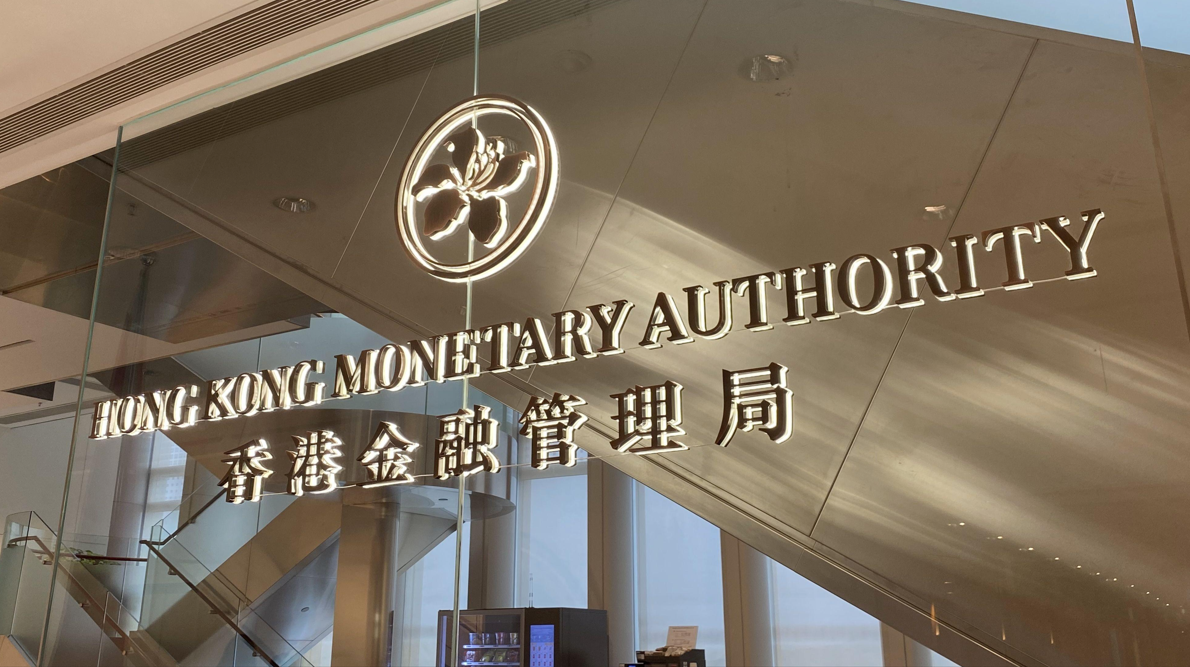
On January 1, 2026, Hong Kong's financial system will officially implement a globally recognized "risk benchmark." According to Caixin, on December 29, the Hong Kong Monetary Authority confirmed that starting from this date, comprehensive regulatory capital requirements for crypto assets based on the latest standards from the Basel Committee on Banking Supervision (BCBS) will be fully implemented in Hong Kong. This move not only signifies Hong Kong as the first major financial center in Asia to align with this international regulatory framework but also marks its transition from localized pilot programs to comprehensive, systematic international integration in the prudent regulation of crypto assets.
According to the new regulations, the definition of "crypto assets" under the Basel framework is broad, encompassing various digital assets that rely on cryptography and distributed ledger technology. This means that mainstream cryptocurrencies like Bitcoin and Ethereum, as well as stablecoins and real-world asset tokens (RWA), are all included in a unified capital regulatory perspective.
The core intention of this policy is to pave a "guardrailed innovation runway" for the banking sector's participation in crypto asset businesses: it aims to prevent potential financial risks and maintain systemic stability through strict capital constraints, while also providing a clear regulatory basis for compliant and sustainable business exploration, guiding the market from reckless growth to rational development.
1. How is Hong Kong implementing international regulatory standards?
The new regulations implemented by the Hong Kong Monetary Authority signify that the banking sector in Hong Kong is officially aligning its prudent regulation of crypto assets with international standards. This regulatory framework is based on the global prudential regulatory framework released by the Basel Committee on Banking Supervision in 2023, systematically incorporating crypto assets into the realm of bank capital regulation for the first time.
The official statement from the Hong Kong Special Administrative Region government clearly states that the revised rules aim to "provide a robust and prudent regulatory framework for banks' risk exposure to crypto assets that meets international standards, promotes responsible innovation, and maintains financial stability."
It is noteworthy that Hong Kong has demonstrated distinct local characteristics in implementing this international standard. The Hong Kong Monetary Authority conducted multiple rounds of consultations with the industry while formulating the revised rules to ensure that the regulations meet international standards while adapting to the actual conditions of Hong Kong's financial market. This localized practice is reflected in the differentiated regulatory approach to crypto assets.
According to the new regulations, banks are required to categorize crypto assets into two types for management. The first category includes tokens linked to traditional assets and stablecoins with effective stabilization mechanisms; the second category encompasses unsecured tokens like Bitcoin and ineligible tokenized assets. These two categories of assets face entirely different regulatory requirements and capital standards.
Hong Kong's regulatory authorities have specifically clarified that licensed stablecoins that meet the requirements of the "Stablecoin Ordinance" will be regarded as low-risk assets, receiving more favorable capital treatment. This flexible and pragmatic regulatory attitude provides differentiated development paths for various types of digital assets.
2. Decoding capital calculation rules
The key to understanding the new regulations lies in grasping the deeper logic of risk weights. Risk weight is a core concept in bank capital management, determining how much capital a bank needs to reserve for holding specific assets. According to the Basel Accord, the minimum capital adequacy ratio requirement for banks is 8%, meaning that for every 100 units of risk-weighted assets held, a bank must reserve at least 8 units of its own capital as a buffer.
For crypto assets with the highest risk level, the Basel framework sets a risk weight of 1250%. This figure may seem astonishing, but its calculation logic is as follows: for every 1 dollar of such assets held, the risk-weighted asset value is 1 dollar × 1250% = 12.5 dollars. According to the 8% capital adequacy ratio requirement, the bank needs to reserve 12.5 dollars × 8% = 1 dollar of capital for this portion of risk-weighted assets.
This design means that banks holding high-risk crypto assets will face extremely high capital costs, effectively limiting the economic feasibility of large-scale allocations of such assets.
In stark contrast to high-risk crypto assets is the capital treatment of licensed stablecoins. Hong Kong has made it clear that stablecoins licensed under the "Stablecoin Ordinance" will be regarded as low-risk assets. This policy arrangement makes stablecoins the most likely area for banks to prioritize their entry into the digital asset space.
The capital calculation for RWA tokens is more complex. Banks need to assess risks across three dimensions: on-chain technology risk, underlying asset credit risk, and legal structure risk. This multi-layered risk assessment mechanism compels banks to set higher standards for the legal structure, asset rights confirmation, and information disclosure of RWA projects.
3. The divergent paths of stablecoins and RWA
Under the new regulatory framework, different types of digital assets will embark on distinctly different development paths. As a payment and settlement tool, the development path of stablecoins is clearer and more predictable. With the "Stablecoin Ordinance" in Hong Kong officially taking effect on August 1, 2025, Hong Kong has established one of the world's first comprehensive regulatory frameworks for stablecoin issuance.
The ordinance requires stablecoin issuers to obtain a license from the Financial Management Commissioner and comply with a series of strict regulations regarding reserve asset management, redemption mechanisms, anti-money laundering, and more. Tech giants like Ant International and JD Technology have entered the regulatory sandbox of the Monetary Authority and have clearly stated their intention to submit formal license applications immediately after the ordinance takes effect.
Although the RWA market faces higher compliance costs, its close connection to the real economy is showing strong growth momentum. Citibank predicts that by 2030, the RWA market size is expected to reach trillions of dollars. BlackRock is even more optimistic, estimating in its research report that the global tokenized asset scale could reach up to 16 trillion dollars.
The Hong Kong market has already made significant progress in this area. A 2.9 billion HKD office project in Causeway Bay has completed asset tokenization, being split into 1 million tokens, with project data showing a 300% increase in asset liquidity. Shenzhen Futian Investment Holdings has issued RWA digital bonds in Hong Kong, and Longxin Group has completed its first 100 million RMB new energy RWA financing, providing valuable case studies for the market.
4. Traditional financial institutions accelerate entry
The implementation of the Basel new regulations has accelerated the pace at which traditional financial institutions are laying out digital assets, forming a "two-way rush" between Wall Street and the Hong Kong market. BlackRock, as a global asset management giant, has established a complete system for its digital asset layout.
According to company disclosures, BlackRock's iShares Bitcoin Trust and iShares Ethereum Trust have accumulated inflows of 55 billion dollars and 12.7 billion dollars, respectively. The BUIDL fund launched by the company in 2023 has nearly 3 billion dollars under management, becoming a benchmark product in the tokenized currency market. Goldman Sachs' tokenized corporate bond pool has issued over 1.2 billion dollars, while Franklin Templeton's FOBXX fund has become a representative product for tokenized U.S. Treasury bonds.
Local financial institutions in Hong Kong are also actively embracing this transformation. HSBC launched a tokenized deposit service for corporate clients in Hong Kong in May 2025, becoming the first bank to provide blockchain settlement services locally. In September of the same year, the bank completed its first cross-border USD transfer transaction between Hong Kong and Singapore, expanding its tokenized deposit service to multiple countries and regions.
Chinese institutions such as Guotai Junan International and Bank of China Hong Kong are also actively preparing for crypto asset custody and market-making businesses, forming a pattern of joint market development between foreign and Chinese institutions.
5. Hong Kong's role in the international regulatory game
Although Hong Kong has chosen to implement the Basel crypto asset new regulations on schedule, global regulatory fragmentation remains a major challenge in this field. The Federal Reserve and the Bank of England have reservations about the Basel framework's provisions on the risk weights of stablecoins, arguing that applying the same risk weight to mainstream stablecoins like USDC and USDT as to Bitcoin is "unrealistic."
The "GENIUS Act" currently under consideration in the U.S. Congress plans to incorporate RWA into the securities regulatory framework, while the EU's MiCA regulations require custodians of tokenized assets to hold banking licenses. These regulatory differences lead to complex compliance requirements for cross-border digital asset projects, increasing business costs and uncertainty.
In this international regulatory game, Hong Kong has adopted a pragmatic and flexible strategy. In addition to implementing Basel capital requirements, Hong Kong has also filled regulatory gaps through localized legislation. The "Stablecoin Ordinance," which will officially take effect on August 1, 2025, establishes a licensing system for fiat-backed stablecoin issuers.
The ordinance requires stablecoin issuers to operate under a license, maintain 100% reserve assets, and conduct regular disclosures and audits. These requirements effectively pull stablecoin issuance back from the "shadow banking" realm into the traditional financial regulatory framework.
The "Ensemble" project launched by the Hong Kong Monetary Authority has reached a cross-border compliance agreement with Singapore's Monetary Authority's "Project Guardian." This cooperation has reduced compliance costs by about 65%, opening up channels for mainland assets to conduct RWA financing through Hong Kong, reinforcing Hong Kong's role as a bridge connecting the mainland and international markets.
6. Payment transformation: When stablecoins meet RWA
Technological innovation is the core driving force behind the development of the RWA market. The Jovay chain launched by Ant Group in 2025 supports transaction processing capabilities of up to 100,000 TPS and, combined with zero-knowledge proof technology, can verify the authenticity of off-chain assets while protecting commercial privacy. Chainlink's DECO protocol provides a secure solution for obtaining off-chain data and verifying it on-chain, allowing traditional asset information to be securely and reliably brought on-chain.
These technological innovations are addressing core challenges in the development of RWA. For example, in real estate tokenization, traditional processes involve multiple steps such as property rights verification, value assessment, and legal review, often taking weeks or even months. By combining the Jovay chain with the DECO protocol, along with AI automated due diligence tools, this process can be shortened to just a few days while ensuring the authenticity and compliance of the information.
The application of artificial intelligence technology in the RWA field is also deepening. AI algorithms can analyze vast amounts of data, automating asset valuation, risk assessment, and compliance checks. Machine learning models can identify abnormal trading patterns, providing early warnings of potential risks. The integration of these technologies significantly enhances the efficiency and security of RWA issuance.
The PayFi concept that emerged in 2025 is deeply integrating RWA with cross-border payments, creating a new financial model. Through the innovative design of "stablecoin + RWA collateral," businesses can achieve a seamless experience of "payment as financing." In this model, exporters can tokenize their receivables into RWA and immediately use them as collateral to obtain stablecoin liquidity, without waiting for the lengthy payment terms of up to 90 days in traditional trade financing. This innovation has increased the efficiency of capital turnover by several times while reducing financing costs.
The collaboration between the Hong Kong Monetary Authority's Ensemble project and Ant Group's Jovay chain has achieved millisecond-level trusted transaction verification, laying the foundation for the large-scale commercial use of PayFi. This technological breakthrough allows cross-border payments to complete settlement and clearing in almost real-time, challenging the efficiency bottleneck of the traditional SWIFT system, which requires several days for processing. By the end of 2026, Hong Kong is expected to initially establish a cross-border stablecoin clearing network connecting Southeast Asia. This network will support stablecoin liquidity in multiple currencies, providing more efficient and cost-effective payment solutions for trade and investment within the region.
7. Future vision: Building a new ecosystem for digital finance
With the improvement of the regulatory framework and the acceleration of technological innovation, Hong Kong's digital financial ecosystem is undergoing profound reconstruction. By 2030, the RWA market may become an indispensable component of the global financial system.
Citibank predicts that the tokenization of private assets and equity in unlisted companies will grow by more than 80 times, becoming the fastest-growing submarket.
Hong Kong's role in this process is becoming increasingly clear. On one hand, by implementing international standards, Hong Kong maintains regulatory advancement and international recognition; on the other hand, through localized innovation and policy flexibility, it provides a testing ground for the development of digital finance.
The "Digital Hong Kong Dollar" and the cross-border interoperability tests for central bank digital currencies promoted by the Hong Kong Monetary Authority provide an important testing ground for the internationalization of the digital renminbi, while also enhancing Hong Kong's voice in the global development of digital currencies.
The structure of market participants will also undergo profound changes. Compliant licensed institutions, projects backed by real assets, and infrastructure providers with technical strength will gain unprecedented development opportunities. In contrast, "wild projects" that attempt to obtain short-term profits through regulatory arbitrage and information opacity will accelerate their exit under capital constraints.
Hong Kong is exchanging short-term compliance costs for long-term institutional advantages, shaping a unique positioning and value in the global digital finance competition. As traditional financial giants feel secure entering the market due to clear rules, and as trillions of dollars in RWA assets activate liquidity through bank credit, Hong Kong's position in the global financial system will be further consolidated and enhanced.
Hong Kong's alignment with the Basel standards for crypto asset capital regulation is far from a simple rule update. It signifies Hong Kong's proactive adoption of a "capital benchmark" to measure risks and open the floodgates for a trillion-dollar digital asset market. This is both a firm adherence to the highest international regulatory standards and a rational path laid for local financial innovation.
Under the new regulations, short-term pain is inevitable, but clear rules are precisely the cornerstone of long-term prosperity. They force the market to bid farewell to reckless growth and guide capital and innovation toward areas that truly possess real value and technological prospects. Stablecoins thus move toward compliance as payment tools, RWA can link to the real economy, and traditional financial institutions gain a safe entry ticket.
Looking ahead, Hong Kong's opportunity lies in its unique "connector" role: backed by China's vast real economy and the digital renminbi experiment, while facing global capital and crypto financial innovation. When capital, assets, and technology meet here based on common rules, Hong Kong is expected to transcend the traditional offshore financial center positioning and become a key node in the next generation of global digital financial infrastructure—a value hub defined by rules that ensure safety and support innovation.
The implementation of the new regulations is just a prologue. What it measures is not only asset risk but also Hong Kong's vision and determination in the financial new era to balance innovation and stability, connecting local and global.
Sources of some materials:
· "Hong Kong will fully implement new bank capital regulations based on Basel Committee crypto regulatory standards on January 1"
· "Confirmed! Hong Kong Monetary Authority to implement Basel capital standards in 2026!"
· "Hong Kong's bank capital rules for digital assets such as RWA tokens will take effect in January 2026"
免责声明:本文章仅代表作者个人观点,不代表本平台的立场和观点。本文章仅供信息分享,不构成对任何人的任何投资建议。用户与作者之间的任何争议,与本平台无关。如网页中刊载的文章或图片涉及侵权,请提供相关的权利证明和身份证明发送邮件到support@aicoin.com,本平台相关工作人员将会进行核查。


