More than 50 billion SHIB tokens left centralized exchanges in a brief amount of time, according to a recent massive exchange outflow event reported by Shiba Inu. Practically speaking, this indicates that a sizable portion of the liquid supply has been removed from marketplaces, intended mainly for sales. That by itself does not ensure a rally, but it significantly alters short-term supply dynamics.
Shiba Inu exchange flows
One of three behaviors – long-term accumulation, cold storage transfers or internal restructuring by large holders – is typically indicated by significant exchange outflows. Instead of just shuffling wallets, the size and persistence of the negative netflow in this instance tend to favor accumulation.
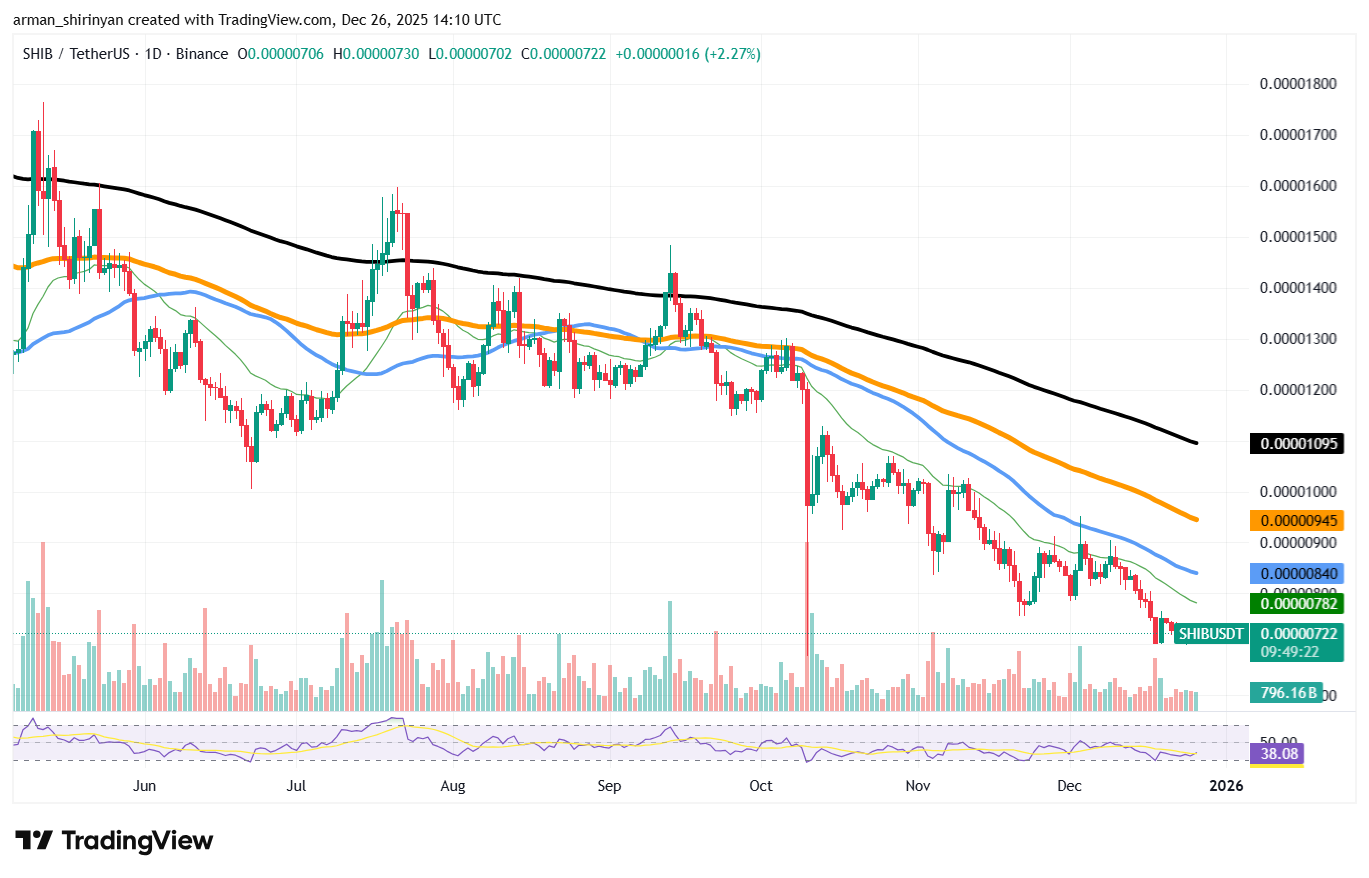
SHIB/USDT Chart by TradingView
Liquidity would normally move onto exchanges rather than off of them if participants were getting ready to sell. According to the data, sellers are either becoming much less aggressive at the current price levels or are thinning out.
HOT Stories Crypto Market Prediction: Bitcoin Could Spike Above $90,000, Shiba Inu (SHIB) Hits Hidden Reversal Level, Will Ethereum's (ETH) New Year Pump Happen?Fidelity’s Macro Guru Turns Bearish on BitcoinMorning Crypto Report: Legendary Trader Speaks out on $24,111 Bitcoin Anomaly on Binance, Cardano's Hoskinson Calls out New Project and Brings up XRP, Dogecoin (DOGE) Posts 'Naughty List'CZ Reacts to Trust Wallet Hack. Are Funds SAFU?
Although the price chart does not yet shout bull market, it does support this interpretation. Although SHIB is still trading below its major moving averages and in a wider downtrend, the downtrend’s slope has significantly flattened. Instead of acceleration, recent price action indicates compression.
SHIB stays oversold
Momentum indicators are hovering in oversold territory without causing panic-driven breakdowns, lower lows are minimal and volatility has decreased. That is a classic example of late-stage bearishness.
From a midterm standpoint, this arrangement is beneficial but weak. It takes less additional demand to raise prices when supply leaves exchanges because it lessens the immediate sell pressure. Demand still needs to be demonstrated, though. In the absence of a catalyst or a wider market tailwind, SHIB may stay in consolidation for longer than impatient traders anticipate.
Exhaustion selling seems to be limiting the downside, while even modest inflows could increase the upside risk. When accumulation phases give way to momentum moves, SHIB has historically been extremely reactive, frequently without much notice.
免责声明:本文章仅代表作者个人观点,不代表本平台的立场和观点。本文章仅供信息分享,不构成对任何人的任何投资建议。用户与作者之间的任何争议,与本平台无关。如网页中刊载的文章或图片涉及侵权,请提供相关的权利证明和身份证明发送邮件到support@aicoin.com,本平台相关工作人员将会进行核查。


