The report, published by Rest of the World and authored by Hazel Gandhi and Rina Chandran, maps nearly 9,000 operational data centers across 21 countries and compares their locations with average annual temperature data.
Using industry benchmarks from the American Society of Heating, Refrigerating and Air-Conditioning Engineers (ASHRAE), the analysis defines the optimal temperature range for data centers as 18 degrees Celsius to 27 degrees Celsius. According to the analysis, about 8,808 data centers were operating globally as of October 2025, a number expected to triple by 2030.
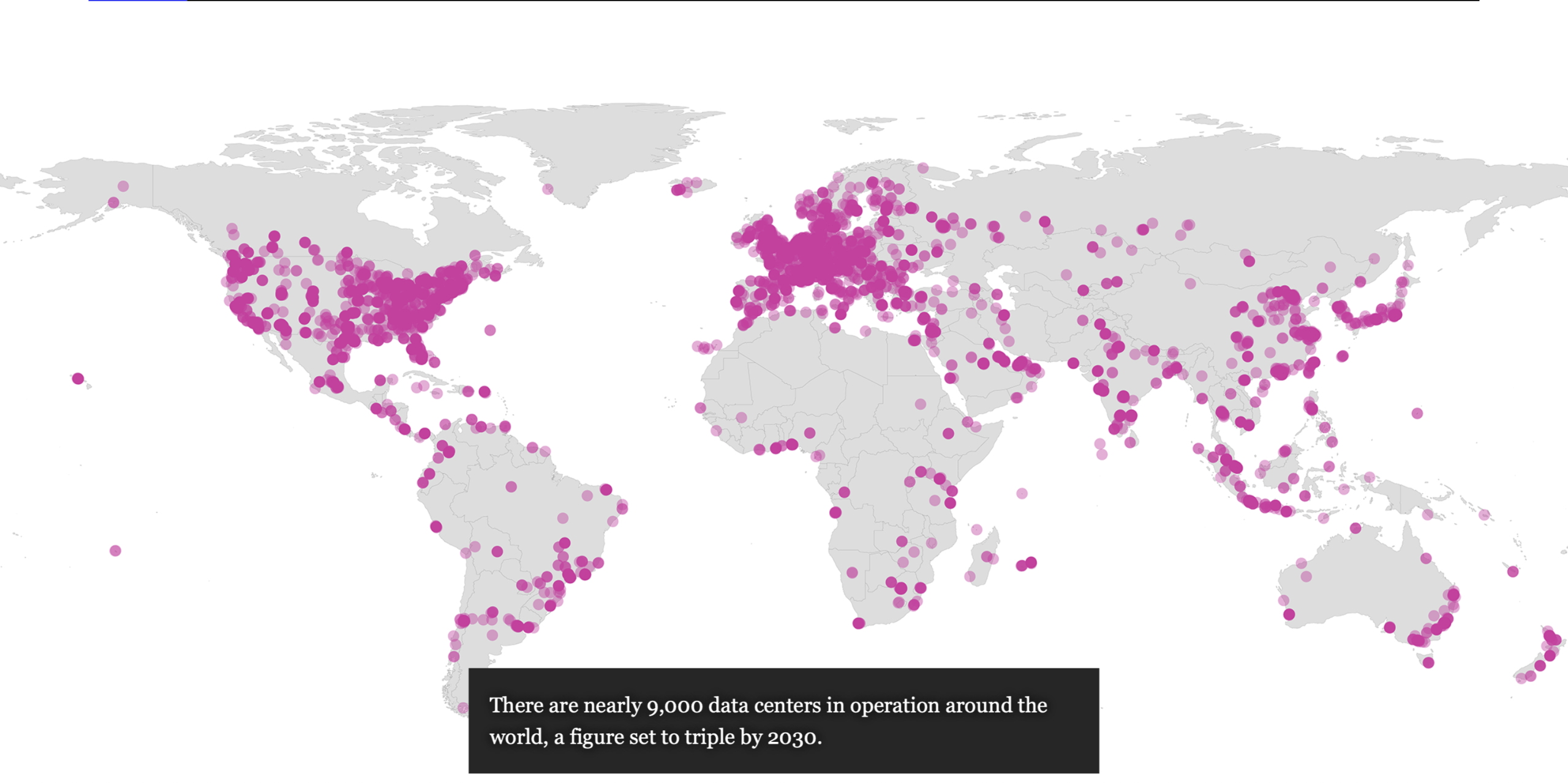
Nearly 7,000 of those facilities sit outside the optimal temperature range, though most are in colder climates. Roughly 600 data centers, or less than 10% of the global total, are located in regions where average annual temperatures exceed 27 degrees Celsius. In 21 countries — including Singapore, Thailand, Nigeria, and the United Arab Emirates (UAE) — every operational data center is located in zones classified as too hot for efficient cooling.
Nearly all data centers in Saudi Arabia and Malaysia fall into the same category, while about half of Indonesia’s facilities and roughly 30% of India’s data centers operate in overly hot regions. Despite these challenges, investment continues as countries push to meet growing demand for cloud services and generative artificial intelligence while keeping data within national borders.
Also read: Bitcoin Consolidates Near $88K as Traders Strap in for a Technical Reckoning
Singapore alone hosts more than 1.4 gigawatts of data center capacity and plans to add another 300 megawatts, even though all 72 of its data centers are located in climates considered too hot for optimal operation. High temperatures increase cooling costs, strain electricity grids, and raise the risk of outages.
The report notes that data centers consumed about 415 terawatt-hours of electricity globally in 2024 — roughly 1.5% of total global electricity use — and that demand could more than double by 2030. To address these pressures, operators and researchers are experimenting with alternatives to traditional air cooling, including direct-to-chip liquid cooling, hydro-cooling, immersion cooling, and hybrid systems designed for hot and humid environments.
While such technologies can significantly reduce energy and water use, the report cautions that they are easier to deploy in new facilities than in existing ones, leaving older data centers in hot regions exposed to long-term resilience risks.
- Why are data centers being built in hot climates?
Countries are expanding data centers to meet AI demand and keep data stored within national borders, even in challenging climates. - What temperature range is considered optimal for data centers?
Industry guidelines recommend operating between 18°C and 27°C for maximum efficiency. - How many data centers operate in overly hot regions?
About 600 data centers worldwide are located in areas with average annual temperatures above 27°C. - What solutions are being explored to reduce heat-related risks?
Operators are testing liquid cooling, immersion cooling, and hybrid systems to lower energy and water use.
免责声明:本文章仅代表作者个人观点,不代表本平台的立场和观点。本文章仅供信息分享,不构成对任何人的任何投资建议。用户与作者之间的任何争议,与本平台无关。如网页中刊载的文章或图片涉及侵权,请提供相关的权利证明和身份证明发送邮件到support@aicoin.com,本平台相关工作人员将会进行核查。


