Hong Kong Financial Major Release! Financial Development Bureau: Focus on Developing Tokenized Real Assets in 2-5 Years
Written by: Liang Yu
Edited by: Zhao Yidan
The Chairman of the Hong Kong Financial Development Bureau, Hong Pi Zheng, held a thick conceptual report and announced a goal grander than being an "International Financial Center"—to transform Hong Kong into a "globally influential capital hub in Asia" within five to ten years. The core engine of this ambitious blueprint is clearly identified as "tokenization."
On December 13, the Hong Kong Financial Development Bureau released a conceptual report titled "Navigating Hong Kong's Capital Markets: Super Connector - A Global Capital Hub in the Digital Age," which proposed a strategic framework centered around the "Four Is," with various initiatives planned along a clear timeline.
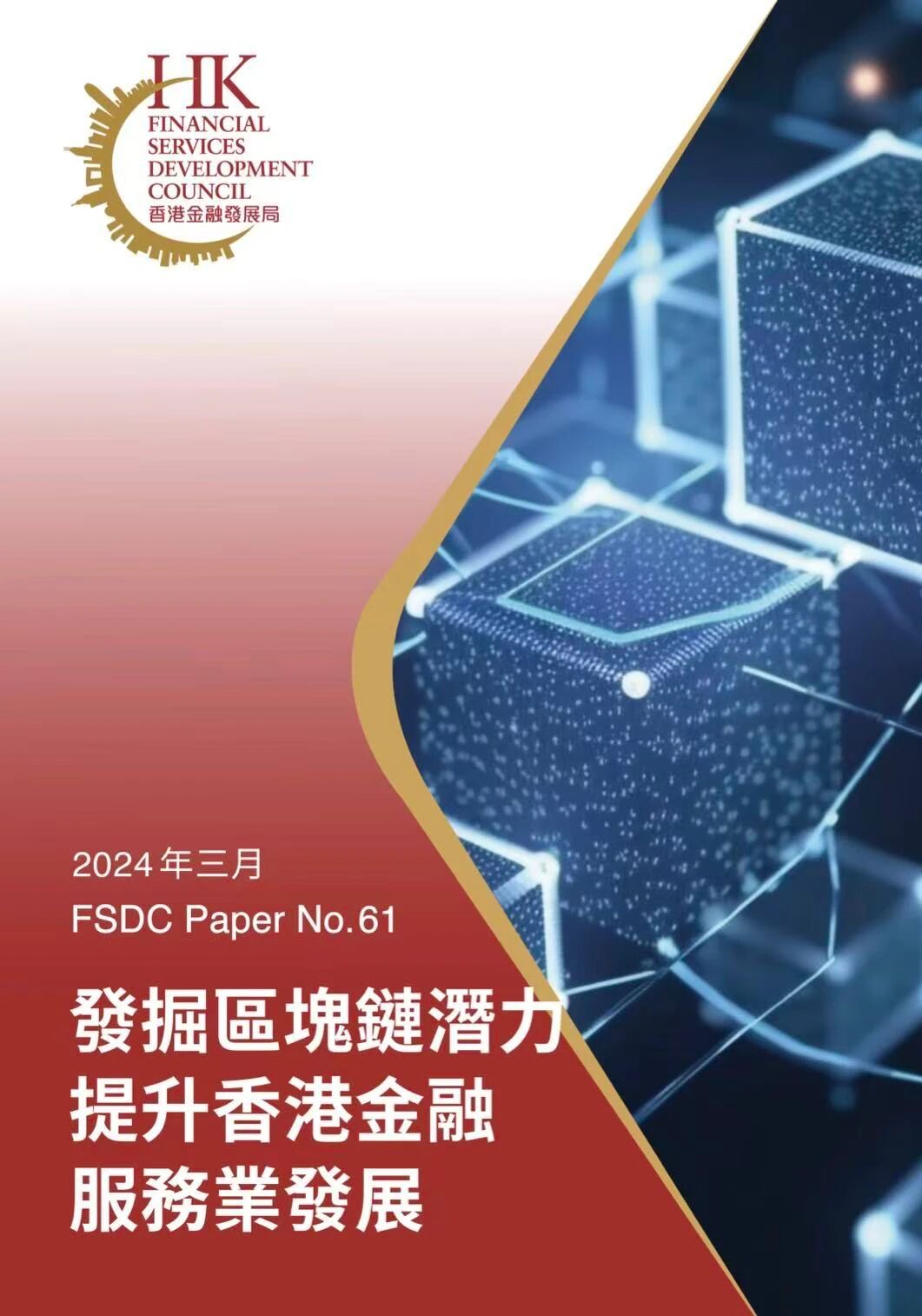
Notably, the report clearly outlines a timeline for the development of tokenized assets: in the mid-term direction of 2-5 years, tools such as tokenized real assets will be developed, while the long-term vision of 5-10 years will gradually enhance the operational capabilities supporting tokenized issuance and trading.
About a month before the report was released, Hong Kong had just completed a globally watched practice: the SAR government successfully priced a total of approximately HKD 10 billion worth of digital green bonds, marking the largest digital bond issuance in the world to date.
This issuance not only represents a breakthrough in scale but also technically introduced tokenized central bank currencies in HKD and RMB for settlement for the first time.
This achievement and blueprint mutually confirm each other, revealing the core logic of Hong Kong's financial strategic transformation: it is attempting to transcend the traditional role of a funding "channel" by "tokenizing" assets and building a new generation of digital financial infrastructure, aiming to become one of the rule-makers in the future global capital game.
I. Strategic Blueprint: Beyond "Super Connector," Anchoring "Global Capital Hub"
Hong Kong has new expectations for its financial role. According to the Financial Development Bureau's conceptual report, its goal is to strive to develop into an "Asia's globally influential capital hub" that supports multiple assets and currencies within five to ten years.
This statement surpasses Hong Kong's traditional positioning as an "International Financial Center" and a "Super Connector" between China and the world. Chairman Hong Pi Zheng explained the necessity of this upgrade: in an era of rapid digitalization of global markets and real-time cross-border capital flows, the leadership position of a financial center depends not only on liquidity and the number of listings but also on its ability to efficiently connect global issuers, investors, and financial instruments as a "capital hub."
Supporting this ambition is Hong Kong's existing solid foundation: over HKD 35 trillion in asset management scale, a mature common law system, and a unique connectivity mechanism.
The strategic framework proposed in the report revolves around the "Four Is": attracting diverse "issuers," expanding the "investor" base, strengthening the "intermediary" ecosystem, and enriching "financial instruments."
Among these, the planning for "financial instruments" is particularly noteworthy, clearly prioritizing the development of tokenized assets, sustainable financial products, and alternative investments.
To achieve this vision, the report outlines a clear three-stage transformation timeline, revealing Hong Kong's "gradually aggressive" strategic thinking.
II. Transformation Path: A Clear "Tokenization" Timeline
Hong Kong's transformation is not an overnight success but a roadmap clearly divided into three stages: short-term, mid-term, and long-term.
The short-term task focuses on optimizing the market environment, spanning one to two years. The core is to optimize listing rules to attract new economy enterprises, injecting fresh blood into the capital market. The recent observations of the Bureau's Director, Yi Yue, during visits to the Middle East, Southeast Asia, and Central Asia support this direction, as he found many local companies willing to go public but facing choices regarding location. In the context of geopolitical situations, Hong Kong's importance as a reliable "second listing location" or "dual primary listing location" is increasingly highlighted.
The mid-term phase is about expansion and deepening, spanning two to five years. The focus is on extending the existing connectivity mechanisms to broader areas such as derivatives and commodities, and beginning to develop tools like tokenized real assets. This phase signifies a shift from the connectivity of traditional financial products to the exploration and acceptance of new digital financial assets.

The long-term goal is a fundamental reshaping of infrastructure, spanning five to ten years. The core is to build a new generation of digital financial infrastructure to support asset tokenization and multi-currency fixed income markets, ultimately consolidating Hong Kong's position as a center for capital allocation and risk management. Specifically, it involves gradually enhancing the capabilities to support tokenized issuance and post-trading operations, and promoting the coordination and unification of data and compliance standards on a larger scale.
From this timeline, it is evident that tokenization is not an isolated product innovation but a core thread running through mid-term product exploration to long-term infrastructure reconstruction.
III. Why "Tokenization"? Hong Kong's Strategic Logic
Hong Kong elevates "tokenization" to the core of its financial strategy for the next five to ten years, backed by a profound, multi-dimensional strategic logic. This is not merely about keeping up with technological trends but aims to address structural issues in Hong Kong's financial market and seize a high ground in the new round of global financial order.
The primary logic is to break through the bottleneck of a singular market structure. Hong Kong's capital market has long been dominated by stocks, resulting in a relatively simple structure. Tokenization provides a technological key to activate a vast but illiquid asset class.
By using blockchain technology to convert real-world assets such as real estate, private equity, infrastructure, and even intellectual property into digital tokens, the liquidity, divisibility, and trading efficiency of these assets can be significantly enhanced. This not only enriches the product spectrum of Hong Kong's financial market but also attracts global "patient capital" seeking diversification and long-term stable returns.
The second logic lies in building new advantages in efficiency and cost. Traditional financial transactions, especially cross-border transactions, involve long chains, many intermediaries, slow settlements, and high costs. The combination of tokenization and smart contracts can achieve near real-time, end-to-end transactions and settlements.
The President of the Hong Kong Monetary Authority, Yu Weiwen, once likened tokenization to upgrading to a "smart highway," enabling faster and smoother transactions. The recent issuance of HKD 10 billion in digital green bonds has successfully introduced tokenized central bank currencies for settlement, showcasing the potential for such efficiency improvements.
The deepest logic may lie in competing for the authority to set future financial standards. The digital transformation of the global financial system is still in its infancy, but rules and standards have yet to be established. Hong Kong's goal is to become a "pioneer and demonstrator of new generation capital market solutions."
Through large-scale, high-standard practices, Hong Kong has the opportunity to integrate its experiences in common law systems and financial regulation into the standards of tokenized asset issuance, custody, information disclosure, compliance, and other aspects.
The Financial Secretary of the Hong Kong SAR Government, Paul Chan, pointed out when commenting on the latest digital bond issuance that regular issuance of tokenized bonds will help the market establish a more comprehensive benchmark. The term "benchmark" aptly highlights Hong Kong's ambition at the standard level.
IV. Practice First: Looking at Hong Kong's "Practical Experience" from the HKD 10 Billion Digital Bond
The ambition of the strategy requires solid practice to support it. Before releasing the grand blueprint, Hong Kong had already conducted multiple rounds of exploration in the practice of tokenized finance, with the most representative being the digital green bonds issued by the SAR government. This series of practices provides vivid illustrations of the aforementioned strategic logic.
Hong Kong's journey with digital bonds began in 2023. After two smaller-scale successful pilot projects in 2023 and 2024, the Hong Kong SAR government completed its third batch in November 2025, which is also the largest digital green bond issuance in the world to date, totaling approximately HKD 10 billion, covering four currencies: HKD, RMB, USD, and EUR.
This issuance is far more than a simple scale-up; it achieves substantial breakthroughs on multiple dimensions, demonstrating Hong Kong's pragmatic advancement in the digital finance field.
In terms of technological integration, it achieved a dual tokenization breakthrough on both the "asset side" and the "funding side." This issuance introduced tokenized central bank currencies in HKD and RMB as options for the first time in the settlement process. This means that the bond itself (the asset) is digital, and the funds used to purchase the bond (the currency) can also be digital. This "atomic settlement" significantly shortens the settlement time and reduces counterparty risk, marking a milestone in global fintech applications.
In terms of market acceptance, it showcased widespread participation from mainstream financial institutions. This issuance attracted numerous top international financial institutions, including HSBC, Bank of China (Hong Kong), JPMorgan Chase, and Standard Chartered, as joint global coordinators, lead managers, or direct participants.
More importantly, the investor categories covered a wide range of global institutional investors, including asset management companies, banks, insurance companies, and private banks, many of whom were first-time subscribers to digital bonds. This proves that tokenized financial products are gradually moving away from niche experiments and gaining recognition in mainstream capital markets.
In terms of standard alignment, it actively integrates into the global system. All bonds issued in this round adopted digital token identifiers (defined by the International Organization for Standardization) and are directly linked to traditional financial identifiers such as International Securities Identification Numbers. Although this initiative is highly technical, it carries significant meaning, indicating Hong Kong's commitment to promoting the integration of tokenized assets with traditional global financial standard frameworks rather than starting from scratch, which is beneficial for enhancing interoperability and lowering the acceptance threshold for global investors.
The Secretary for Financial Services and the Treasury, Xu Zhengyu, clearly stated that this issuance is the first practice of regularizing tokenized government bonds following the release of the "Hong Kong Digital Asset Development Policy Declaration 2.0." The transition from experimentation to regularization marks a new stage in the development of Hong Kong's tokenized bond market from "pilot demonstration" to "scale development."
V. Infrastructure Support: The Digital Foundation Composed of Digital Currency and Data "Bridges"
Any grand financial vision cannot be built on sand. Hong Kong understands that the prosperity of tokenized assets cannot be established on shaky foundations. Therefore, while promoting product innovation, Hong Kong has simultaneously launched an equally ambitious digital financial infrastructure plan, which is primarily supported by two pillars: digital currency and data flow bridges.
At the currency level, Hong Kong is carefully constructing a multi-layered, complementary digital currency ecosystem. The Hong Kong Monetary Authority (HKMA) plays a central role as the designer and promoter within this ecosystem. At the top of this ecosystem is the wholesale "digital HKD" that the HKMA is researching.
Unlike retail central bank digital currencies aimed at the public, the wholesale digital HKD is primarily targeted at financial institutions for large payments, cross-border trade settlements, and financial transactions. Its greatest advantage lies in being issued by the central bank, eliminating credit risk, making it particularly suitable as a settlement tool for large, critical financial transactions.
Beneath the digital HKD are tokenized deposits and regulated stablecoins. The HKMA actively collaborates with the industry to explore the use of tokenized deposits for digital asset transaction settlements through projects like "Ensemble" and other sandboxes.
The vision outlined by HKMA President Yu Weiwen is to establish a comprehensive digital currency framework that promotes the complementary coexistence of different forms of tokenized currencies, such as digital HKD, tokenized deposits, and regulated stablecoins, to jointly support financial innovation.
At the data level, Hong Kong is committed to breaking down the "data silos" in the financial system. The Monetary Authority likens data to islands, and the new generation of data infrastructure serves as the "digital bridges" connecting these islands. The core achievement is the "Commercial Data Interchange" (CDI).
Since its launch in 2022, CDI has become a secure bridge connecting banks and multiple data providers. As of September 2025, it has facilitated over 71,000 loan applications, with the total credit approvals estimated to exceed HKD 58.1 billion. From small and medium-sized enterprise loans to personal financial services, the secure and efficient circulation of data is effectively lowering the thresholds and costs of financial services.
This "currency + data" digital infrastructure perfectly complements the strategy for tokenized assets. Tokenized assets require an efficient and trustworthy payment settlement network (provided by the digital currency ecosystem) and reliable identity and asset information verification (supported by the data bridges). Together, they form an indispensable underlying operating system for Hong Kong's future as a "global capital hub."
VI. A Calm Examination: Challenges and Far-reaching Significance Beneath the Vision
While the blueprint is exciting, the road ahead is far from smooth. Hong Kong's path to becoming a "global capital hub," especially with tokenization at its core, faces multiple challenges from both internal and external sources, necessitating a calm examination.
The primary challenge comes from the complexity of coordination. Tokenized finance spans multiple regulatory domains, involving various departments such as the Monetary Authority, the Securities and Futures Commission, and the Financial Services and the Treasury Bureau. Establishing a clear, unified, and efficient regulatory coordination mechanism is a significant test. When it comes to cross-border tokenized assets, the issues become even more complex, requiring communication and collaboration with regulatory authorities in different jurisdictions.
Technical risks and ecosystem maturity are another major constraint. Distributed ledger technology is still evolving, and its security, scalability, and interoperability need to withstand the test of large-scale applications. At the same time, whether the local blockchain developer ecosystem, along with professional legal and auditing services, can keep pace with the rapid advancements in financial innovation will also require time to cultivate.
Intense international competition cannot be overlooked. Global financial centers such as Singapore, London, and Dubai are actively positioning themselves in the digital asset and tokenization space. For example, the World Gold Council has planned to launch a gold-backed digital token in London. Hong Kong must continue to innovate and fully leverage its unique advantages of a common law system, free flow of capital, and backing from the mainland Chinese market to maintain its competitive edge.
Despite the numerous challenges, the strategic significance of Hong Kong's actions is profound. It marks a shift in the global financial landscape competition from "scale and flow" to "rules and standards." Hong Kong is no longer content to merely act as a "pipeline" for capital flows; it is attempting to participate in defining the technical specifications and governance rules of the next generation of financial infrastructure through pioneering practices.
From a broader perspective, this is also Hong Kong's proactive and forward-looking layout under "one country, two systems" to consolidate its position as an international financial center and serve the country's financial opening and the internationalization of the RMB. By positioning itself as a trustworthy and efficient global capital hub in the digital age, Hong Kong can play a more critical and creative role than ever in connecting China with the world.
The Secretary for Financial Services and the Treasury, Xu Zhengyu, stated after the latest digital bond issuance that Hong Kong's unique advantages give it a head start in advancing traditional finance into the digital asset era.
Not long ago, Hong Kong ranked first in the fintech category in the international financial center rankings. As global capital begins to focus on the shimmering digital tokens on the blockchain, Hong Kong has already laid out its nautical chart, attempting to transform institutional trust into technical standards, anchoring a new coordinate named "hub" on the map of global digital finance.
Some sources of information:
· "Navigating Hong Kong's Capital Markets: Super Connector - A Global Capital Hub in the Digital Age"
· "Hong Kong Financial Development Bureau: Promoting Tokenization of Real Assets in 2-5 Years, Perfecting the Tokenized Issuance and Trading System in 5-10 Years"
免责声明:本文章仅代表作者个人观点,不代表本平台的立场和观点。本文章仅供信息分享,不构成对任何人的任何投资建议。用户与作者之间的任何争议,与本平台无关。如网页中刊载的文章或图片涉及侵权,请提供相关的权利证明和身份证明发送邮件到support@aicoin.com,本平台相关工作人员将会进行核查。


