1. Lumoz Modular Computing Layer
The Lumoz protocol is a globally distributed modular computing protocol dedicated to providing advanced zero-knowledge proof (ZKP) services, supporting the development of ZK technology, and offering powerful computing support for cutting-edge technologies such as ZK and AI. In the face of current challenges regarding the cost of computation in the field of zero-knowledge computing, the Lumoz protocol leverages its rich experience in the ZKP domain to innovate and optimize circuits and algorithms, significantly enhancing computational efficiency and effectively addressing the high costs and low efficiency of Rollup projects, thereby lowering the barriers for ordinary users to participate in the zero-knowledge computing market.
Currently, Lumoz is a pioneer in the Rollup field, becoming a leading provider of top-notch zero-knowledge (ZK) computing power with its modular computing layer network. It has already provided ZKP computing support for multiple projects, including Merlin. Lumoz is now able to meet the growing demand for computing power support.
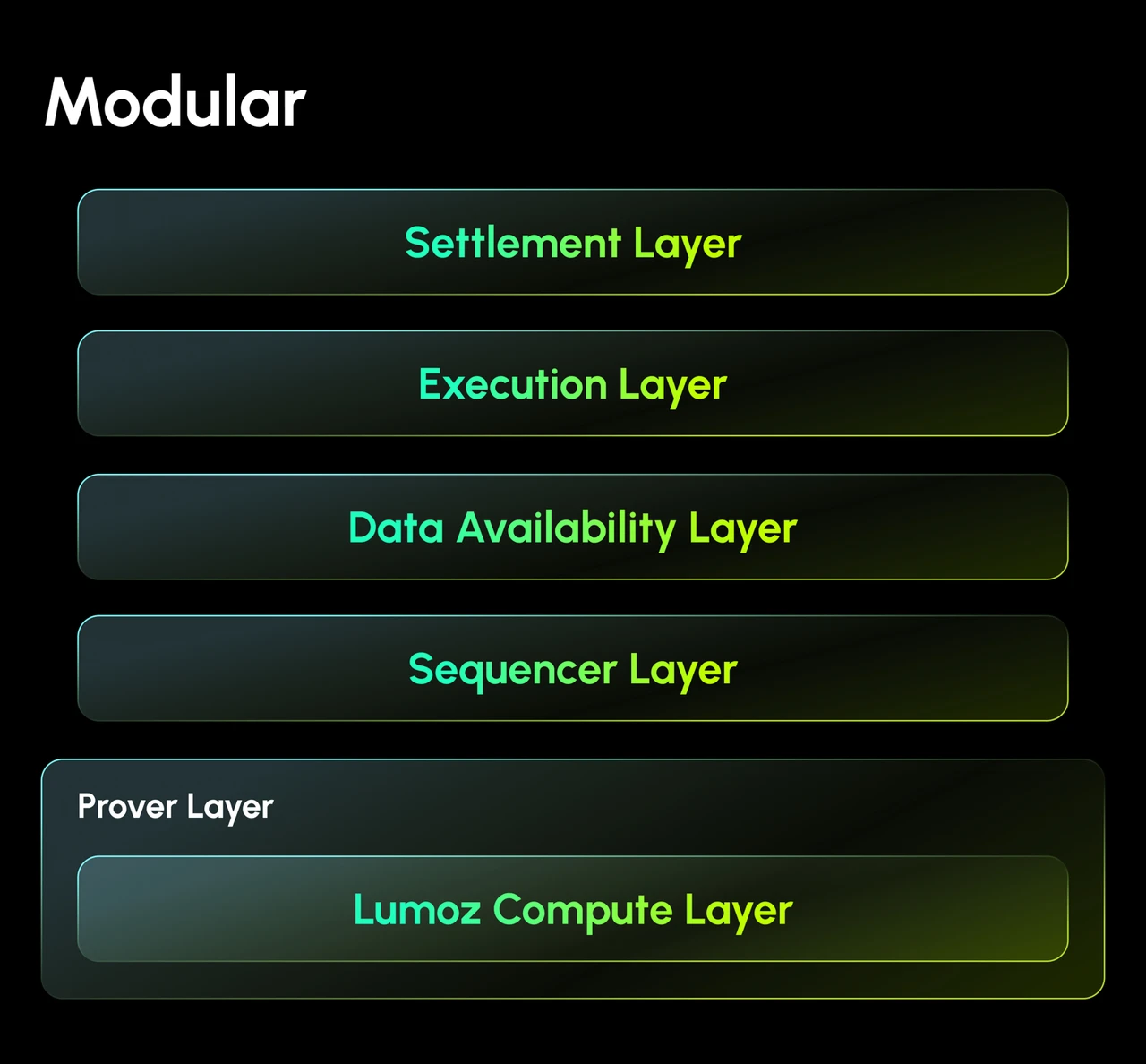
The Lumoz modular computing layer, as a computing module, has the following significant features:
Decentralized Computing: The Lumoz computing layer operates in the form of a blockchain network, employing a hybrid consensus mechanism of Proof of Stake (POS) and Proof of Work (POW) to ensure decentralized computing power. This architecture provides continuous ZKP computing capabilities for zkRollups and offers a secure data processing and model training environment for AI applications.
Strong Computational Stability: Lumoz computing nodes consist of thousands of GPU/CPU nodes, ensuring not only continuous ZKP computing power but also supporting the large-scale parallel computing required by AI, guaranteeing the efficient execution of computational tasks.
High Compatibility: Lumoz is highly compatible with mainstream Rollup solutions in the blockchain industry (such as Polygon zkEVM, zkSync, Scroll, Starknet) while meeting various computational needs in the AI field, providing strong support for different technology stacks through its unique computing mechanism.
Cost Efficiency: The Lumoz decentralized computing layer, combined with a well-designed economic model, achieves low-cost ZKP generation. This cost efficiency is also applicable to AI computing tasks, providing users with economical and efficient AI and blockchain computing solutions.
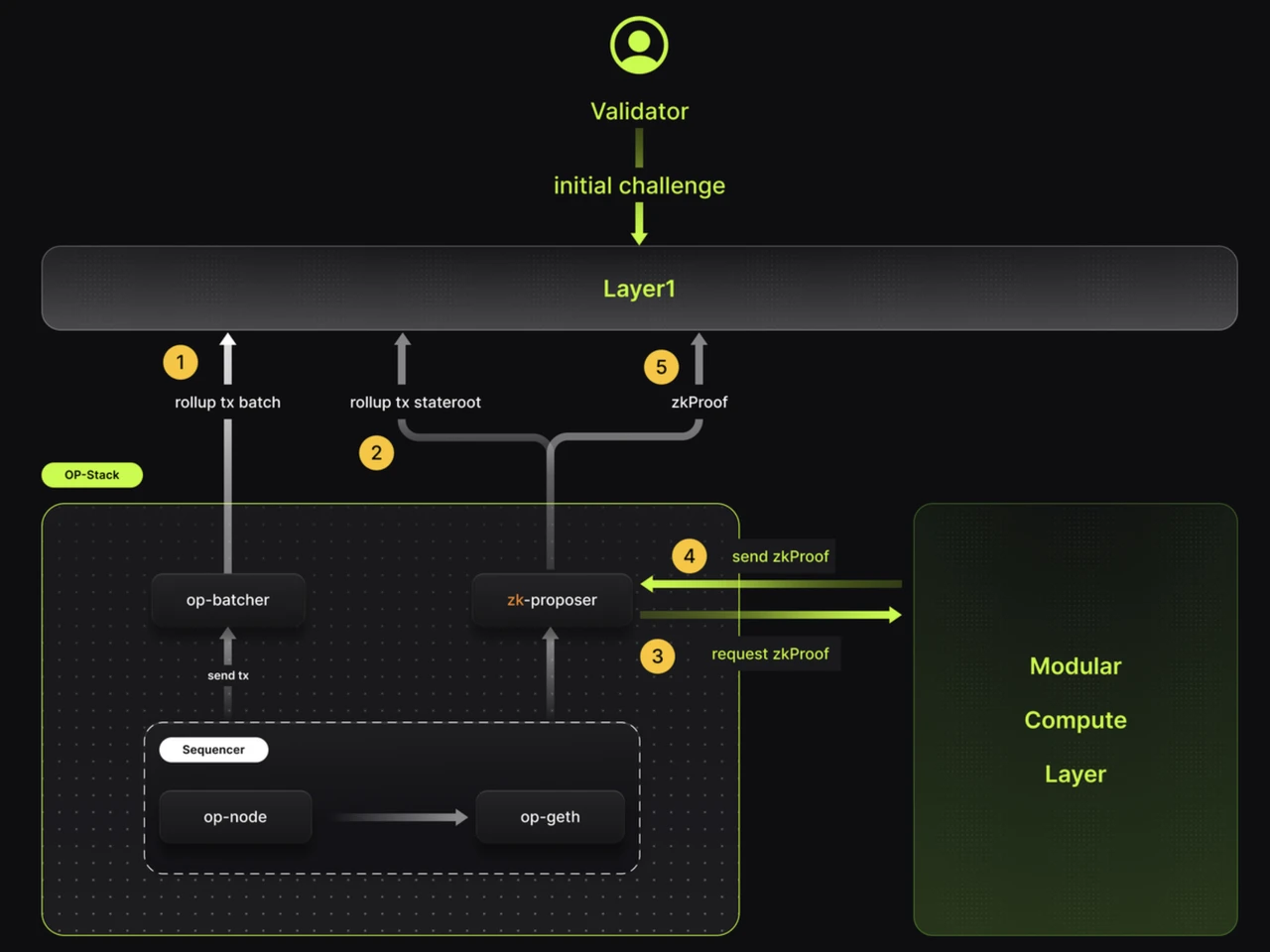
2. Lumoz Accelerates the Arrival of Ethereum 3.0
In Vitalik's The Verge roadmap, the SNARKification of Ethereum is an important task aimed at enhancing Ethereum's scalability and decentralization through zero-knowledge proof transformations of the consensus layer and execution layer. This process is particularly critical in the vision of Ethereum 3.0. Vitalik's interpretation candidly states that the transformation of the consensus layer is a challenge that requires continuous consideration and optimization in subsequent work.
The Beam Chain proposal introduced by Justin Drake at DevCon is a response to this challenge, providing a possible path to achieve the Snarkification of the consensus layer. By introducing SNARK proofs and post-quantum cryptography, Beam Chain not only lowers the staking threshold but also shortens block confirmation times, bringing greater decentralization and higher performance to Ethereum.
Goals of BeamChain
Block Production Goals:
Validator Isolation: Adopting Attester Proposer Separation and execution auctions to separate validators from block production.
Accelerate Slot Time: Shortening the Slot time to 4 seconds to increase block generation speed.
Staking Goals:
Lower Staking Threshold: Reducing the staking threshold from 32 ETH to 1 ETH.
Achieve Fast Finality: Realizing fast finality through single slot finality.
Cryptographic Goals:
Chain Snarkification: Integrating zkVM to enhance the system's privacy and security.
Long-term Security: Ensuring the cryptographic security of Ethereum can last for decades or even centuries.
BeamChain is a consensus layer upgrade proposal for Ethereum 3.0, significantly enhancing the security, efficiency, and scalability of the blockchain through innovative technologies such as zero-knowledge proofs and post-quantum signatures. These improvements not only enhance transaction privacy and decentralization but also reduce verification costs and prepare for future challenges posed by quantum computing. This series of innovations brings new development opportunities to the blockchain industry.
Lumoz plays a key role in the implementation of BeamChain, driving the achievement of multiple goals through its modular design and efficient computing power:
Efficient Implementation of Validator Isolation: Lumoz's modular architecture provides efficient computing power for the separation of validators and block production. It optimizes the operational processes of validators, enhancing the overall decentralization and security of the network.
Enhancing Block Generation Speed: Lumoz's high-performance execution layer supports the shortening of Slot time. This acceleration is crucial for improving block generation speed, ensuring the network can quickly respond and process more transactions.
Supporting Chain Snarkification: By integrating zkVM, Lumoz provides powerful computing capabilities to support complex zero-knowledge proof computations. This support not only enhances the system's privacy but also improves overall security, ensuring the confidentiality and integrity of transaction data.
Ensuring Long-term Security: Lumoz's computing infrastructure provides continuous support for the cryptographic security of Ethereum, ensuring its security is not threatened for decades or even centuries to come. This long-term security assurance is vital for maintaining user trust and network stability.
Economically Efficient Computing Support: Lumoz achieves low-cost ZKP generation through its decentralized computing layer and well-designed economic model. This cost efficiency is applicable not only to blockchain computing tasks but also provides economical solutions for AI applications.
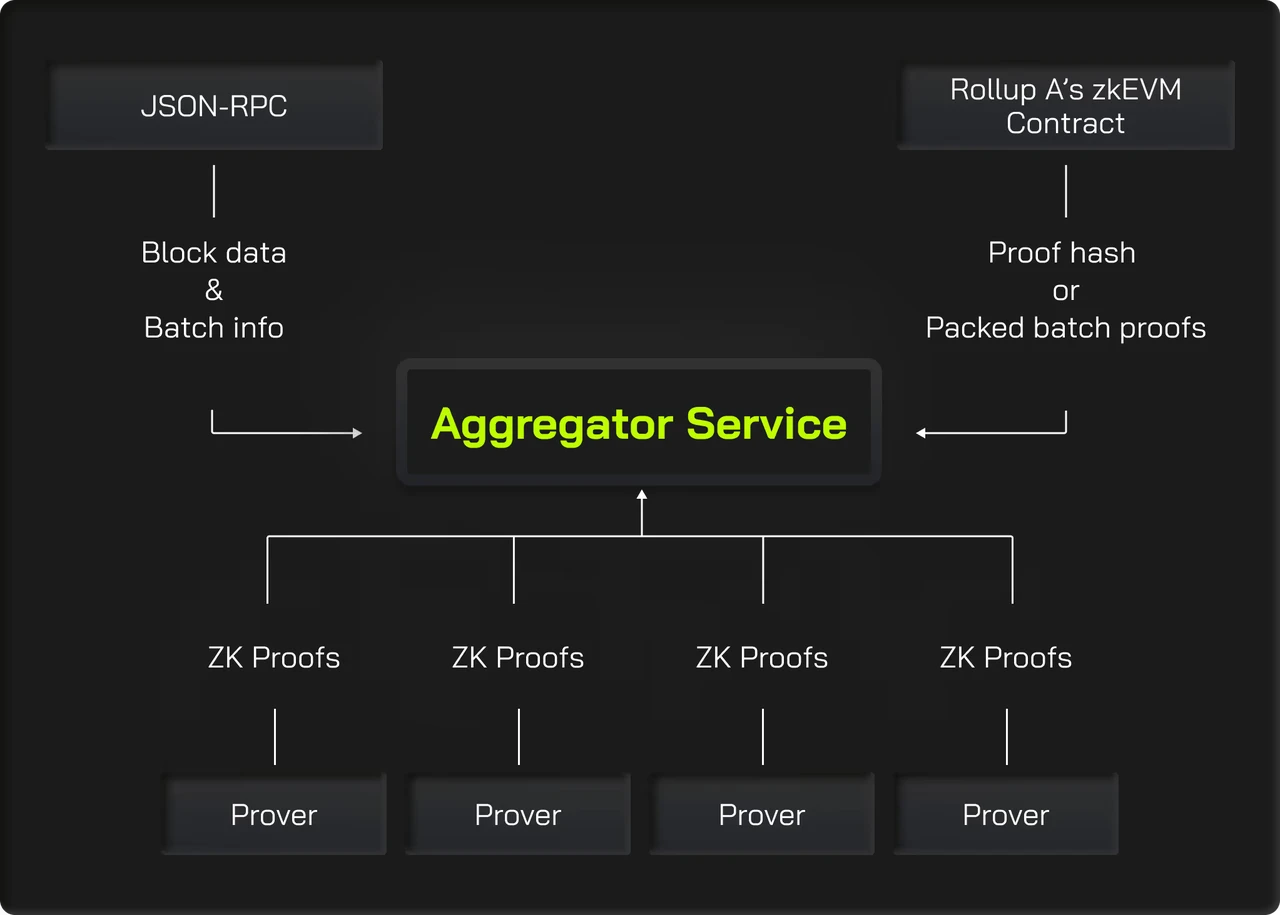
Through these contributions, Lumoz not only enhances the functionality and performance of BeamChain but also lays a solid foundation for the future development of the Ethereum ecosystem. It achieves breakthroughs in the impossible triangle problem of traditional blockchains through efficient validator computing, accelerated block generation, enhanced privacy and security, and economically efficient computing support. This enables Ethereum to significantly improve network scalability and user experience while maintaining decentralization and security, providing broader space for future innovations and applications.
3. Conclusion
Lumoz is a pioneer in the field of modular computing layers, providing decentralized ZKP computing power to support the development of Ethereum 3.0 and Beam Chain. Against the backdrop of the Ethereum community's long-term focus on optimizing the execution layer, Lumoz's technology has propelled the Snarkification of the execution layer and opened the door for the Snarkification of the consensus layer. The proposal of Beam Chain will guide the community's attention to the transformation of the consensus layer, bringing more exciting innovations.
By combining zero-knowledge proof technology and post-quantum cryptography, Lumoz provides stronger decentralization and higher performance for the Ethereum ecosystem. Its strong computational stability and low-cost ZKP generation capabilities, along with multi-chain compatibility and efficient computing power, offer economical solutions for blockchain and AI applications. These advantages collectively drive innovation and expansion in the Ethereum ecosystem, completing a key piece of the puzzle for Ethereum's Snarkification.
免责声明:本文章仅代表作者个人观点,不代表本平台的立场和观点。本文章仅供信息分享,不构成对任何人的任何投资建议。用户与作者之间的任何争议,与本平台无关。如网页中刊载的文章或图片涉及侵权,请提供相关的权利证明和身份证明发送邮件到support@aicoin.com,本平台相关工作人员将会进行核查。