Original Author: Eterna Capital
Original Translation: Plain Blockchain
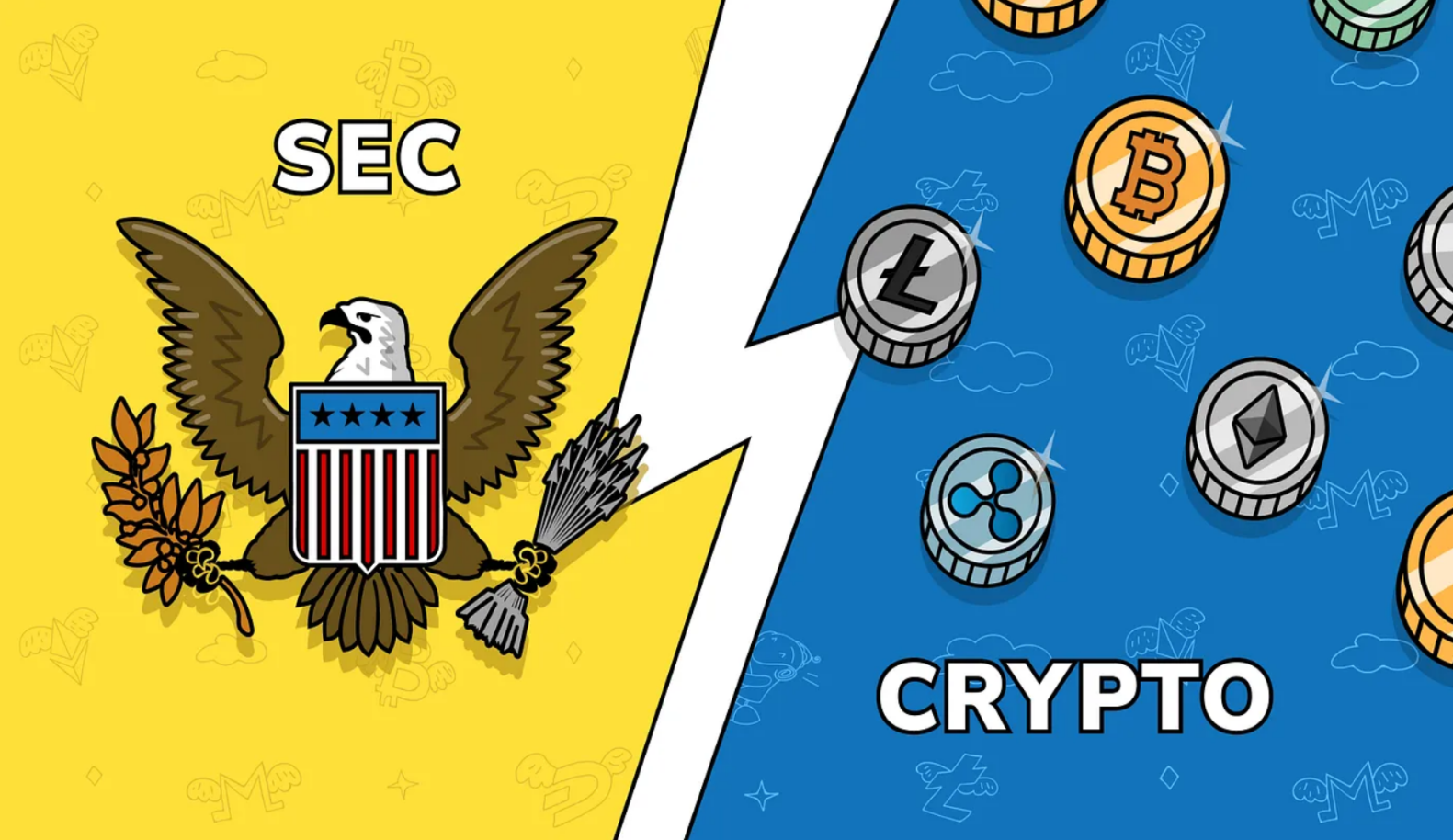
Recently, there have been reports that the U.S. Securities and Exchange Commission (SEC) has issued a Wells notice (a formal precursor to charges) to the popular NFT marketplace OpenSea, adding a new chapter to the legal legend that has plagued the blockchain industry for many years.
It is well known that the historical position of the SEC is "everything except Bitcoin is a security" - including, according to the notice given to OpenSea, NFTs. The debate over whether crypto assets are securities or commodities is crucial: it determines whether the SEC or CFTC is responsible for regulation. Essentially, this is a legal exercise to understand what can be considered a "security" as defined in 1946: therefore, it is difficult to apply to modern technologies such as cryptocurrencies. The resulting uncertainty and regulatory inconsistency have been the main constraints on the growth of the crypto industry, as it reduces adoption rates, research and development rates, and financing rates.
Astute investors have noticed that recent legal developments indicate that the U.S. Securities and Exchange Commission (SEC) has failed to convince the courts - and its chances of success through further litigation are diminishing.
1. SEC v CONSENSYS
1) After ETH 2.0
In June 2024, the U.S. Securities and Exchange Commission (SEC) dropped its investigation into Consensys' Ethereum 2.0 (the transition of blockchain to proof of stake). According to Consensys' own statement, "this means that the SEC will not bring charges against ETH sales as securities transactions." This is certainly good news -
But savvy observers are more inclined to wait for the SEC to announce the results of its investigation into Consensys' ETH 2.0 transactions and Ripple's activities.
Now, there is reason to be optimistic about these aspects.
2) Before ETH 2.0
Before Ethereum transitions to proof of stake (i.e., the era of proof of work), the SEC may still investigate Consensys' Ethereum transactions. For investors, the concern may not be the lawsuit itself, but the details of the lawsuit: the lawsuit brought by the SEC against Consensys' proof of work activities may contain details that are worrisome to ETH investors, namely whether these details can be considered securities.
Fortunately, the likelihood of such a lawsuit is diminishing for two reasons:
Cryptocurrencies have become a polarized and politicized topic, and neither presidential candidate will take it lightly;
The approval of a spot Ethereum ETF can be seen as the final conclusion of the "securities vs. commodities" debate.
2. SEC v RIPPLE
1) Delicate Judgment
In August 2024, Judge Torres issued a landmark ruling, ruling that Ripple's sale of its Token (XRP) to institutional investors constituted an unregistered securities offering. Although this resulted in a civil fine of $125 million, the ruling was considered a success because the fine amount was lower than the $2.5 billion demanded by the U.S. Securities and Exchange Commission.
In addition, the court ruled that secondary sales of XRP on trading platforms are not securities transactions, which is considered a victory for Ripple and all cryptocurrencies.
However, it was a Pyrrhic victory: Judge Torres' ruling acknowledges that XRP can be considered a security in certain circumstances - but it is not a uniform security for all transactions. This highlights the complexity of applying traditional (i.e., "unreformed") securities laws to cryptocurrencies and allows the SEC to take action in different situations.
2) Legal Implications
Is the case over? It may not be. Both parties must file appeals by October 6. Ripple may pocket the "victory" without appealing. On the other hand, the SEC may appeal (in fact, it attempted to appeal before the trial ended, in August 2023 - as expected, Judge Torres rejected the appeal). Although the appellate court is likely to support Judge Torres' unorthodox ruling, it is not guaranteed.
Binding precedent? Unlike the frequent misreporting by the media, it should be noted that this ruling is not binding (unless approved by the appellate court). On the other hand, it is also important to note that the momentum is clearly positive: in fact, other judges have cited the SEC v Ripple case in other cases (for example, in a case involving BNB Token, the Ripple ruling in the SEC v BN case was cited, favoring the defendant, in July 2024).
What about other altcoins? Even if the Ripple case ends with a binding precedent, it will still affect most other altcoins: in fact, XRP is an exception, as it has never conducted an ICO, and its consensus is not based on proof of stake.
3. SEC's Strategy Shift
The Consensys and Ripple cases can be seen as significant challenges to the SEC's enforcement strategy, especially in its pursuit of broad penalties and compliance enforcement in the cryptocurrency field.
1) Political Support
Both cases occurred against the backdrop of increasing political scrutiny of the SEC's regulatory stance on cryptocurrencies. Experts often overlook the fact that the SEC is an independent regulatory agency, supposedly immune to political influence. Nevertheless, driven by the election, we see both parties in Congress unusually pushing to limit the SEC's powers and provide clearer regulatory guidelines for the cryptocurrency industry.
Even prominent Democrats such as Pelosi and Schumer have parted ways with the Biden administration, supporting legislation to bring regulatory transparency to the cryptocurrency industry and reduce the SEC's broad enforcement discretion. Meanwhile, Trump has criticized the current government's handling of the SEC and even hinted at firing Gary Gensler if re-elected - although the U.S. president has no authority to dismiss the SEC chairman.
2) A Series of Legal Setbacks
The SEC's regulatory actions in the cryptocurrency field face significant legal challenges. In fact, shortly after the Consensys and Ripple cases, an appellate court ruled that the SEC's rejection of Grayscale's spot Bitcoin ETF application was "arbitrary and capricious," raising questions about the agency's decision-making process. The SEC faced public scrutiny after dropping charges against Ripple's co-founder. Weeks later, a court in Utah condemned the agency for "grossly abusing its power" in a case involving another cryptocurrency project. The SEC seems to have encountered similar challenges in the case against Coinbase.
These events, coupled with the SEC's reluctant approval of BTC and ETH spot ETFs, indicate a shift in the U.S. Securities and Exchange Commission's approach.
4. Conclusion: Turning Point?
The Consensys and Ripple cases are far from decisive victories, but they mark a turning point in the struggle between the SEC and cryptocurrencies. They highlight the need for clear legislation to lay the groundwork for the development of precedents: given that the industry is still in its infancy, relying on case-by-case court rulings will hinder the long-term development of cryptocurrencies.
Although the SEC may consider appealing and other cases are still ongoing, emerging trends favor the technology. This is the result of judicial developments, politicization of the topic, and the indisputable success of spot ETFs (not just financially).
In this context, even if the SEC subsequently issues a notice to and files a lawsuit against OpenSea, it can be attributed to "stagnation." Regardless of the outcome of the November election, uncertainty is the only constant factor, but institutional investors can now reasonably expect the judicial developments considered here to ultimately release the regulatory clarity they have been waiting for for years.
免责声明:本文章仅代表作者个人观点,不代表本平台的立场和观点。本文章仅供信息分享,不构成对任何人的任何投资建议。用户与作者之间的任何争议,与本平台无关。如网页中刊载的文章或图片涉及侵权,请提供相关的权利证明和身份证明发送邮件到support@aicoin.com,本平台相关工作人员将会进行核查。


