Focusing on the endgame means you are building for future needs rather than current needs.
By Kinji Steimetz, Messari Analyst
Translated by Luffy, Foresight News
In my latest Messari report, I thoroughly explored the development trends of chain abstraction. This post will briefly outline the core content of the report.
The cryptocurrency industry has been obsessed with debating the development endgame of infrastructure and applications. While these predictions and analyses often seem exciting, they overlook a key factor for success: timing. Building or investing with a long-term perspective means betting that future scenarios will unfold exactly as predicted. In short, focusing on the endgame means you are building for future needs rather than current needs.
Chain abstraction has fallen into this "endgame" narrative:
- Users want a better cross-chain experience (current needs)
- Users want to aggregate liquidity (current needs)
- Users want protocols to decide which chain to use (future needs)
- Users want protocols to decide which applications to use (future needs)
The first two points have been discussed thoroughly, so I will focus on the latter two points and why I believe we are far from reaching the stage where users hope protocols will decide which chain and applications to use. This also aligns with my recent view of chain abstraction (2-3 years).
Users Prefer Specific Blockchains
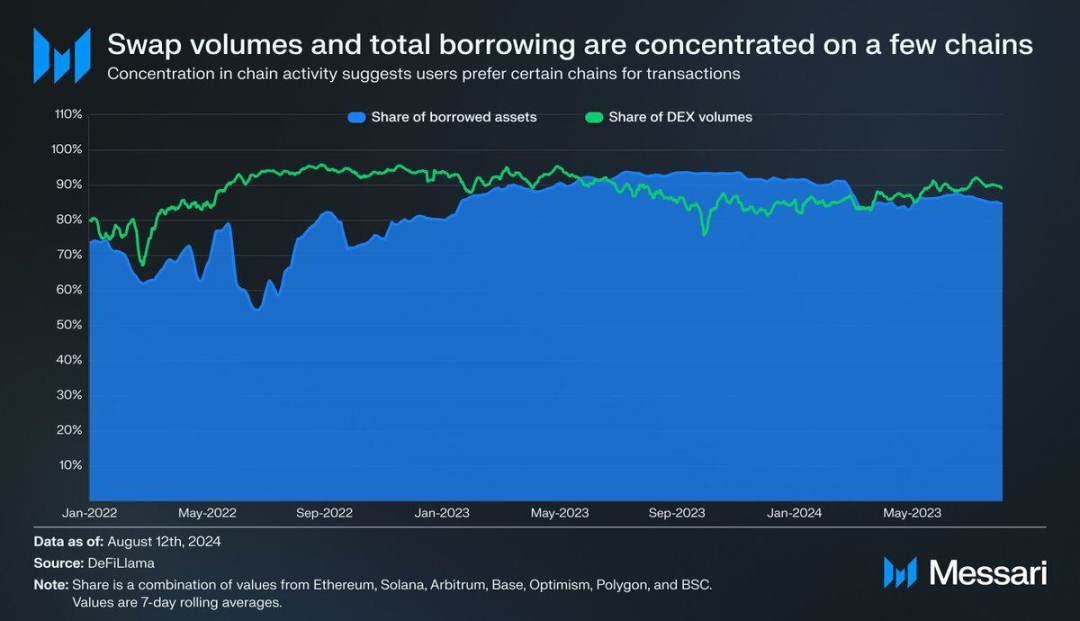
Currently, 90% of DeFi activities are concentrated on 7 blockchains, with Ethereum, Solana, Base, and Arbitrum accounting for 75%. This indicates that users have clear preferences for specific blockchains. This concentration is largely due to limited cross-chain token deployment: users choose blockchains based on where the tokens are available. Since tokens are mostly specific to a chain, there is no need for chain abstraction to decide which chain to use.
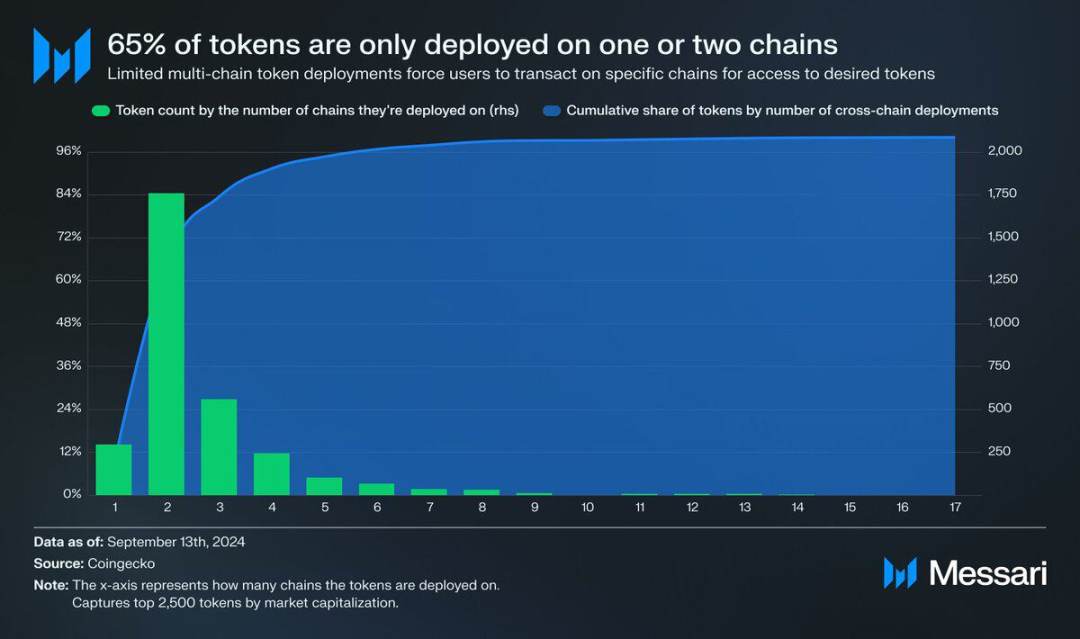
To popularize and succeed in chain abstraction, we need more cross-chain token deployments to allow solvers to determine which chain offers the best choices.
Users Prefer Specific Applications
While limited cross-chain token deployment partly explains the concentration of on-chain activities, it does not fully explain the dominance of certain applications.
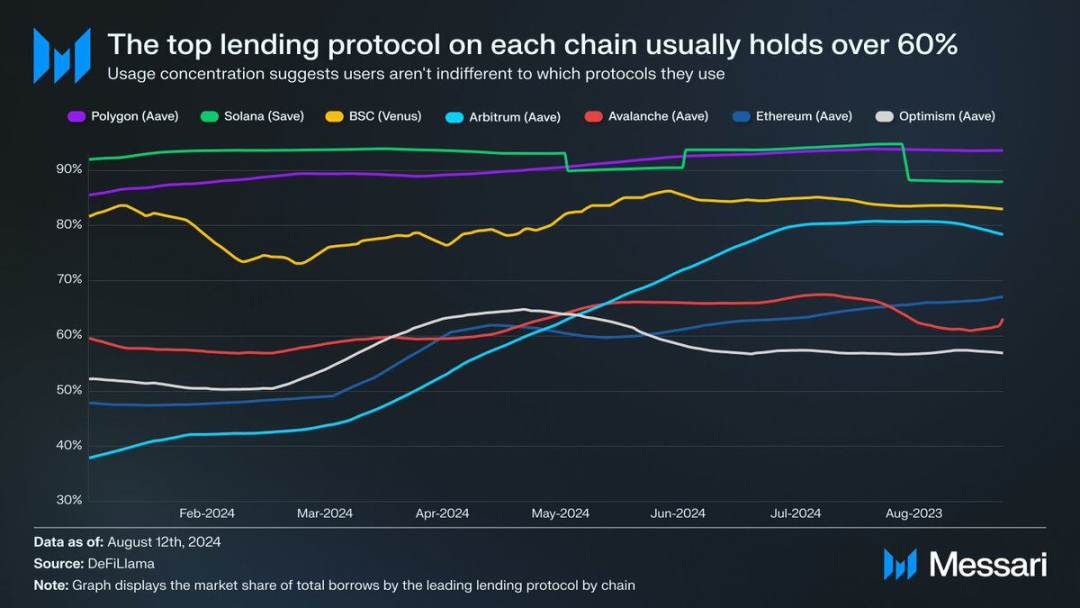
This is because most products in the market are very similar, and there are limited on-chain operations to choose from.
Users typically choose the largest protocols. Unless we see more diverse and differentiated applications, users have no reason to outsource their decisions to protocols. If this diversity increases, users may need to do more research to find the right applications.
Near-term Outlook for Chain Abstraction
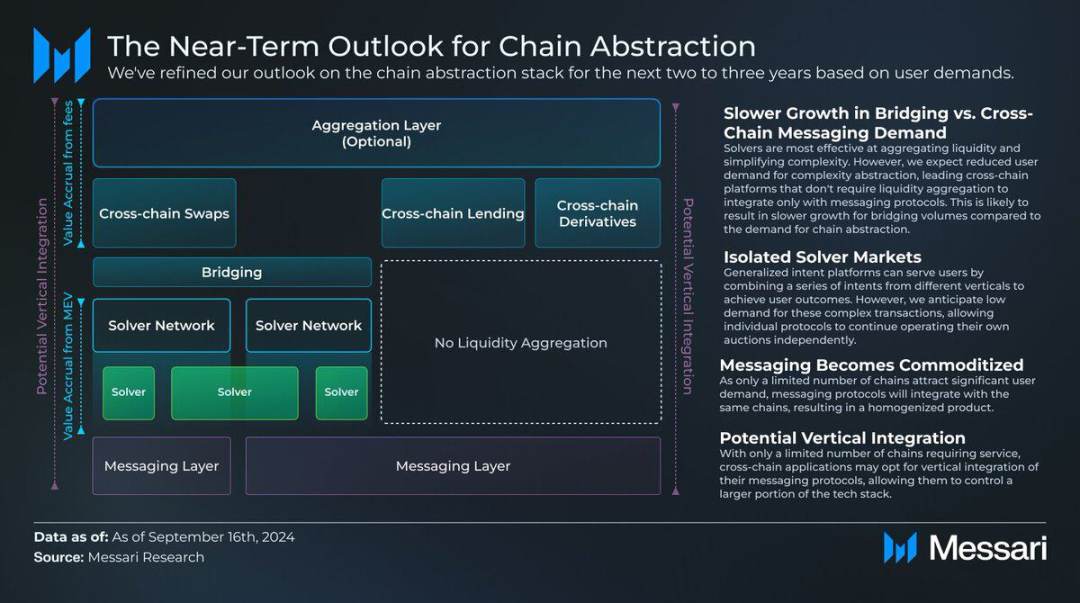
In my opinion, the future development directions of chain abstraction in the next two to three years may include the following:
1. Cross-chain bridges and messaging
As more applications integrate cross-chain messaging, the growth of cross-chain bridges will slow down, and the demand for asset transfers between chains will decrease.
2. Intent-based applications
Intent-based applications can still function as long as their service prices are competitive. Due to limited application diversity, solvers will compete more on speed and price rather than handling complex multi-protocol operations. Users already know which applications they want, so application decisions do not require solvers.
3. Messaging becomes a commodity
Due to the limited number of major ecosystems, inter-chain messaging protocols may become commoditized, competing on price and security, limiting their ability to establish strong network effects.
免责声明:本文章仅代表作者个人观点,不代表本平台的立场和观点。本文章仅供信息分享,不构成对任何人的任何投资建议。用户与作者之间的任何争议,与本平台无关。如网页中刊载的文章或图片涉及侵权,请提供相关的权利证明和身份证明发送邮件到support@aicoin.com,本平台相关工作人员将会进行核查。


