Hong Kong, as the financial center of Asia, has always been at the forefront of regulation in the global virtual currency market. For example, the new Virtual Asset Trading Platform (VATP) licensing system implemented from June 1, 2023, the recent release of the stablecoin issuance regulatory consultation paper, and the sandbox application list all signify important strides that Hong Kong has taken in virtual currency regulation. These measures aim to enhance investor protection and market transparency, strengthen the overall integrity and stability of the market, and provide clear regulatory guidance for encrypted projects operating in Hong Kong, attracting the attention of global investors and encrypted enterprises.
Manquan Law Firm is often asked in consultations about well-known projects that have entered Hong Kong. Therefore, this article briefly lists the main encrypted projects operating under this strict regulatory background, providing reference for entrepreneurs hoping to enter Hong Kong. The following list is not in any particular order, and is only sorted by year of establishment.
The Sandbox
Gaming #Metaverse #Gaming Platform
Year of Establishment: 2012
Official Website: sandbox.game
Financing: $117 million, led by Animoca Brands, Hashed, Kingsway Capital, and SoftBank Vision Fund
Chains: Ethereum, Polygon
Basic Introduction: The Sandbox is a decentralized, community-driven gaming ecosystem where creators can share voxel assets and gaming experiences on the Ethereum blockchain and monetize them. In The Sandbox's economic system, users can use the platform's token SAND to engage in gaming activities on the Ethereum blockchain. Its ASSET (assets) and LAND (land) exist in the form of NFTs. In addition to completing in-game tasks, users can also purchase SAND through other cryptocurrency trading platforms and profit from trading.
Currently, there are no legal regulations and policy supervision in Hong Kong for the release of games. However, The Sandbox involves a large number of NFTs and the trading of the token SAND, and the issuance of SAND may also be considered an Initial Coin Offering (ICO). The assets, land, and SAND in The Sandbox represent the digital expression of asset value and can be used for investment purposes, and should be considered virtual assets subject to regulation. The establishment of a market platform within The Sandbox for the trading of land and assets may also lead to its classification as a service provider of virtual assets subject to government regulation. However, from the actual regulatory situation, the current focus of the government and the Securities and Futures Commission of Hong Kong is mainly on the issuance and trading of tokens that have payment purposes or can be classified as securities, and the issuance and trading of NFTs (land and assets in The Sandbox) that only have commodity attributes have not yet been regulated.
Alchemy Pay
CeFi #Payment
Year of Establishment: 2018
Official Website: alchemypay.org
Financing: $10 million
Chains: Ethereum, BNB Chain
Basic Introduction: Alchemy Pay, established in 2017 and headquartered in Singapore, is a payment gateway aimed at seamlessly connecting cryptocurrencies with traditional fiat currencies for businesses, developers, and users. The platform supports payments in 173 countries.
Alchemy Pay's on-ramp and off-ramp services provide a one-stop solution for buying and selling cryptocurrencies and fiat currencies, and platforms and decentralized applications (dApps) can easily integrate as needed. Its white-label crypto card solution enables businesses and token issuers to provide branded virtual or physical cards for instant global consumption. The NFT checkout feature supports the direct purchase of NFTs through fiat payment methods. ACH is Alchemy Pay's network token, available on the Ethereum and BNB chains. In the increasingly stringent regulatory landscape of encrypted assets, Alchemy Pay has not been knocked down. On the contrary, its forward-thinking compliance operation concept is helping the company rapidly expand and rise in overseas markets. In January 2023, Alchemy Pay's founder Shawn Shi was selected as the "2022 Forbes China Web3.0 Innovation Pioneer". Today, Alchemy Pay has become a payment service provider linking global fiat currencies with encrypted assets for users in 173 countries, and has established partnerships with international payment channels such as Visa, Mastercard, Discover, Diners Clubs, Google Pay, Apple Pay, and hundreds of local payment channels in overseas regions. In March 2024, the cryptocurrency payment gateway Alchemy Pay announced that, in addition to its existing licenses in Arkansas and Iowa in the United States, it has successfully obtained a money transmitter license (MTL) in New Hampshire. In addition, it is actively seeking MTL licenses in other jurisdictions in the United States as part of its efforts to expand encrypted payment services.
Bee Computing
Mining

Year of Establishment: 2018
Official Website: bee-comp.com
Financing: $40 million, and acquired by BIT Mining in 2021
Basic Introduction: Bee Computing, established in March 2018, is the first enterprise to receive investment from a global semiconductor giant. Inheriting the genes of semiconductors, Bee Computing is well-versed in the characteristics and rules of the chip industry, and has partnered with Asia's top chip design company MTK, the world's top semiconductor manufacturer TSMC, and the top IC assembly and testing company ASE to ensure the advanced technology and leading position of its products. The company has now mastered 7-nanometer chip technology, providing advanced mining equipment on the market, and has been developing Ethereum ASIC chips since 2020.
In Hong Kong, cryptocurrency mining is not an illegal activity, but if the activity is conducted on a large scale, it may be subject to regulation under data center laws. Due to the scarcity of land in Hong Kong, operating cryptocurrency mining activities in Hong Kong would involve significant issues related to land use rights. At the same time, mining companies must ensure that the buildings they operate comply with the Building Energy Efficiency Ordinance, a law and regulation aimed at intensive electricity demand.
HashKey Group
CeFi #Asset Management
Year of Establishment: 2018
Official Website: hashkey.com
Financing: $100 million
Basic Introduction: HashKey Group is an end-to-end Asian digital asset financial services group that provides new investment opportunities and solutions for institutional investors, family offices, funds, and professional investors in the digital asset and blockchain ecosystem. The group provides a complete ecosystem in the digital asset field, including venture capital fund HashKey Capital, blockchain node verification service provider HashKey Cloud, tokenization service provider HashKey Tokenization, as well as HashKey NFT, Web3 PFP incubation, and community operation service providers.
HashKey Group holds virtual asset operation licenses issued by the Securities and Futures Commission of Hong Kong and the Financial Services Agency of Japan, and has also obtained operational qualifications exempted under the Payment Services Act from the Monetary Authority of Singapore. On November 10, 2022, Hash Blockchain Limited (HBL), a subsidiary of HashKey Group, was granted a license by the Securities and Futures Commission of Hong Kong to operate a virtual asset trading platform through Type 1 (securities trading) and Type 7 (provision of automated trading services) licenses to serve professional investors. In 2023, it was announced that Hash Blockchain Limited (HBL) had obtained approval from the Securities and Futures Commission of Hong Kong to conduct over-the-counter (OTC) trading of virtual assets, allowing HBL to act as an intermediary to match transactions when there is demand for trading tokens not listed on exchanges. On April 8, 2024, Chief Operating Officer of HashKey Group, Xiaoqi Weng, stated in an interview that they had obtained a comprehensive license for the "Digital Asset Investor Protection System" in Bermuda and would launch the HashKey Global trading platform, initially offering over 20 eligible currencies to retail investors, with plans to introduce futures, collateralized products, and more within a quarter. However, he pointed out that the two platforms have different focuses, with HashKey Exchange, licensed in Hong Kong and surrounding markets, serving institutional clients, while HashKey Global serves retail clients unable to access the Hong Kong market, excluding mainland China, Hong Kong, the United States, and countries explicitly not allowing the operation of virtual asset platforms, with the main customer base expected to be overseas Chinese and users from Southeast Asian countries. On August 3, 2024, the over-the-counter trading department of HashKey Group obtained a payment license from the Monetary Authority of Singapore, which was introduced under the 2019 Payment Services Act, allowing the company to provide "digital payment token" services in Singapore.
OSL
CEX #Broker #Custody #OTC
Year of Establishment: 2018
Official Website: osl.com
Financing: $90 million
Basic Introduction: OSL is an Asian digital asset platform that provides brokerage, custody, exchange, and software as a service (SaaS) to institutional clients and professional investors. OSL is the first company to receive Type 1 and Type 7 digital asset licenses issued by the Securities and Futures Commission of Hong Kong.
In January 2022, the Hong Kong Monetary Authority and the Securities and Futures Commission issued a joint circular allowing registered institutions and licensed entities to collaborate with licensed virtual asset trading platforms of the Securities and Futures Commission of Hong Kong to provide digital asset investment services. In the second quarter report of 2024, the Securities and Futures Commission of Hong Kong emphasized significant progress in digital asset regulation, including the addition of 9 new entities to the list of suspicious virtual asset trading platforms during the quarter, bringing the total number of suspicious virtual asset trading platforms to 42, with only OSL and HashKey being licensed virtual asset trading platforms. OSL CEO Wayne Trench stated that holding a license is not only to comply with regulations, but also to ensure the highest security standards and investor protection.
MaiCapital
CeFi #Asset Management #Hedge Fund
Year of Establishment: 2019
Official Website: maicapital.io
Basic Introduction: MaiCapital is a hedge fund service provider specializing in blockchain and cryptocurrency investments. The company is licensed by the Securities and Futures Commission to operate Type 9 (asset management) and Type 4 (securities advisory) businesses in Hong Kong. Its flagship product, the Blockchain Opportunity Fund, is a multi-strategy hedge fund that utilizes quantitative trading and arbitrage strategies.
MaiCapital's fund management business has a Type-9 licensed permit and also holds a Type-4 investment advisory license. In addition, compared to traditional asset management, cryptocurrency assets have unique risks, so if a licensed asset manager wishes to hold a proportion of virtual assets exceeding a certain threshold in their investment portfolio, they need to uplift on the basis of the Type 9 license and submit additional reports to the SFC to obtain approval. In 2022, the Securities and Futures Commission of Hong Kong (SFC) licensed MaiCapital to manage investment portfolios with up to 100% virtual assets.
MANTRA
Infrastructure #Layer1 #RWA
Year of Establishment: 2020
Official Website: mantrachain.io
Financing: $11 million, led by Shorooq Partners
Basic Introduction: MANTRA aims to be the first RWA L1 blockchain capable of complying with and enforcing real-world regulatory requirements. By accelerating the adoption of tokenized RWA, MANTRA has the potential to unlock a $16 trillion RWA economy through a regulatory-ready blockchain. Through the MANTRA Chain compliance framework, TradFi companies can easily transition to and leverage asset tokenization and blockchain solutions, promoting the growth of global RWA.
Applications built on MANTRA Chain benefit from a compliant environment, allowing them to build, access regulated digital assets, and create a transparent ecosystem. By obtaining the first financial license in the UAE, MANTRA positions itself at the forefront of the rapidly growing RWA industry in the Middle East and Asia. The goal for 2024 is to tokenize a variety of asset portfolios, including real estate, private market funds, private equity, art, and government bonds. In addition, on August 13, 2024, the Hong Kong High Court ordered key figures involved in the MANTRA DAO project to disclose financial records in response to allegations of asset misappropriation and unauthorized control.
Manquan Law Firm Summary
Of course, there are many other Web3 projects based in Hong Kong, such as CrossSpace and Kikitrade in the SocialFi sector, Forkast in the media sector, TokenPocket and HyperPay in the Wallet sector, Linear Finance and Wombat Exchange in the DeFi sector, Animoca Brands and Artifact Labs in the NFT sector, and Brinc in the incubator sector.
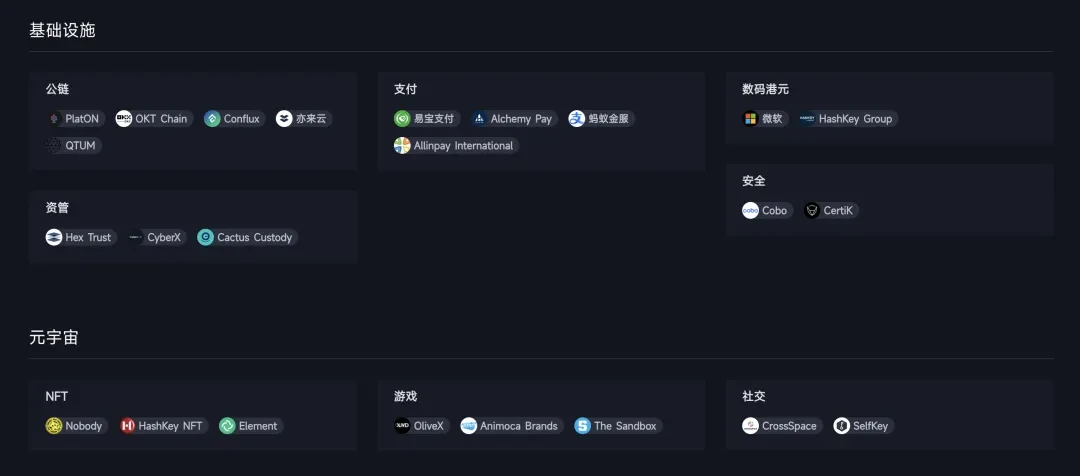
Image Source: Foresight News
Hong Kong's regulation of virtual currencies presents a dual characteristic of "strict regulation and development encouragement." For areas that may pose systemic risks, such as virtual asset trading platforms and security tokens, Hong Kong has implemented strict regulatory measures. However, in areas that encourage innovation, such as DeFi and non-security tokens, it has shown a relatively lenient regulatory attitude.
For virtual asset trading platforms: The Securities and Futures Commission (SFC) of Hong Kong requires virtual asset trading platforms to obtain a license from the SFC in order to operate legally. This means that any platform offering virtual asset trading services in Hong Kong needs to comply with the SFC's strict requirements, including but not limited to anti-money laundering (AML) and know your customer (KYC) regulations.
Regarding security tokens: If virtual assets are classified as security tokens (i.e., possessing traditional security features such as equity or dividends), they will be subject to securities regulations. Projects offering these tokens need to obtain relevant securities licenses and comply with regulatory standards in the Hong Kong securities market.
Additionally, regarding stablecoins: The Hong Kong Monetary Authority (HKMA) and SFC are developing specific regulatory frameworks for stablecoins, especially those pegged to fiat currencies. Issuers of these stablecoins are required to obtain licenses and adhere to strict regulatory requirements to ensure market transparency and investor safety.
Of course, the Hong Kong government maintains a supportive attitude towards innovation in Web3 technology, blockchain, and virtual assets, striving to develop Hong Kong into a virtual asset and fintech center in Asia. Therefore, the government has maintained a certain level of tolerance for certain non-security tokens and decentralized finance (DeFi) projects. Hong Kong has introduced a "regulatory sandbox" program, allowing fintech companies to test their innovative products and services in a limited environment. This mechanism enables companies to innovate while being regulated. Overall, Hong Kong adopts a "tolerant yet cautious" approach to the regulation of virtual currencies, encouraging innovation while emphasizing risk prevention. For Web3 entrepreneurs, Hong Kong is a good place to establish a presence.
免责声明:本文章仅代表作者个人观点,不代表本平台的立场和观点。本文章仅供信息分享,不构成对任何人的任何投资建议。用户与作者之间的任何争议,与本平台无关。如网页中刊载的文章或图片涉及侵权,请提供相关的权利证明和身份证明发送邮件到support@aicoin.com,本平台相关工作人员将会进行核查。