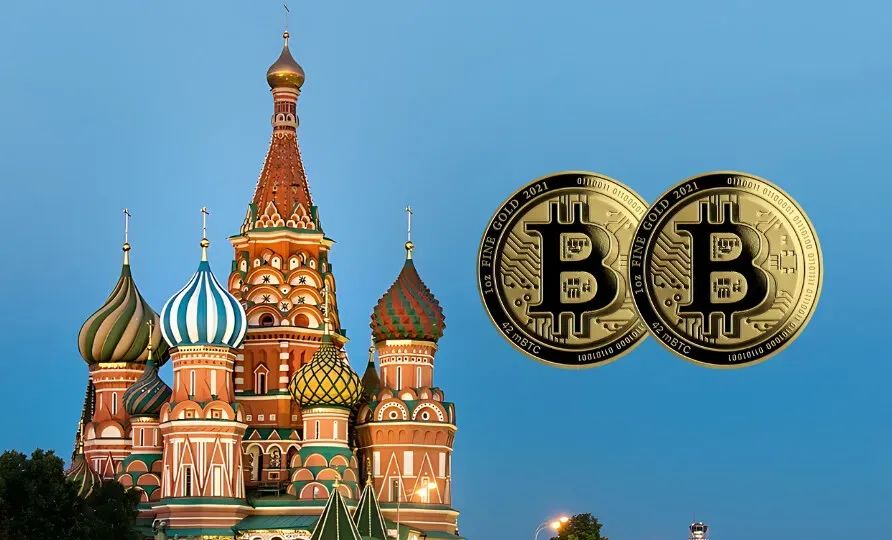
 On July 30, 2024, the Russian State Duma passed a law in the second and third readings, allowing the use of digital currencies in cross-border transactions and exchange trading from September 1, 2024, as part of an experimental legal regime (ЭПР). This includes Ethereum (ETH) and stablecoins (such as USDT), not limited to central bank digital currencies (CBDC). This marks a significant shift in Russia's attitude towards cryptocurrencies and provides an experimental platform for the feasibility and risk control of cryptocurrencies in practical applications. Aiying will combine historical background to analyze the evolution of Russia's cryptocurrency policy in detail and discuss future development directions.
I. The Origin and Initial Attitude of Russia's Cryptocurrency Policy
Before 2017, the Russian government and central bank held a very cautious attitude towards cryptocurrencies. Cryptocurrencies were considered to have extremely high risks, mainly concerned about their use in illegal activities such as money laundering and terrorist financing. The central bank repeatedly warned the public not to invest in cryptocurrencies such as Bitcoin, pointing out their large price fluctuations and high financial risks.
II. Formation of Initial Regulatory Framework
In 2019, Russia began to explore how to effectively regulate cryptocurrencies. The Ministry of Finance and the central bank had differing opinions on this issue, with the Ministry of Finance advocating for a more relaxed regulation, while the central bank tended towards strict control or even banning private cryptocurrencies (The Moscow Times). In 2020, Russia passed the "Digital Financial Assets Law," which recognizes cryptocurrencies as property but prohibits their use for payment of goods and services. This move marked an important step for Russia's legal status of cryptocurrencies, but specific regulatory measures still need to be improved.
III. Further Refinement and Policy Conflict in 2021
After the passage of the "Digital Financial Assets Law," cryptocurrency exchanges and wallet service providers were required to register with Russian financial authorities and comply with strict anti-money laundering (AML) and counter-terrorist financing (CFT) standards. However, there were still significant differences between the central bank and the Ministry of Finance on how to further regulate cryptocurrencies. The central bank proposed a comprehensive ban on private cryptocurrencies, while the Ministry of Finance advocated for a more relaxed regulatory approach. In 2022, President Putin intervened, calling for a compromise between the two parties and emphasizing Russia's competitive advantage in cryptocurrency mining.
IV. Recent Policy Developments and Experimental Legal Regime
The law released yesterday ensures the operation of the ЭПР mechanism in the field of digital innovation in the financial market. At the same time, the Russian central bank is given the function of being the competent and supervisory authority in the field of ЭПР. In addition, the document also specifies that the central bank needs to consult with the Federal Financial Monitoring Service (Росфинмониторинг), the Federal Security Service (ФСБ), and the Russian Ministry of Finance to approve the ЭПР scheme in certain cases. The central bank will monitor the activities of the ЭПР initiators to identify risks that may harm national defense and security, as well as risks of money laundering and terrorist financing. Once these risks are identified, the central bank must notify the Federal Security Service and the Federal Financial Monitoring Service within 10 days.
The current regulations prohibit the use of digital currencies in the settlement of goods (work, services). The new law makes amendments to allow the use of cryptocurrencies as a means of payment for foreign trade activities within the framework of ЭПР. The rights and obligations of the participants, as well as the responsibilities of the foreign exchange control authorities and agents, need to be clearly defined in the ЭПР scheme.
In the second reading, the State Duma supported a series of amendments, including allowing cryptocurrency exchange trading within the framework of ЭПР. The ЭПР scheme must specify the procedures for entering (exiting) cryptocurrency transactions, clarify the requirements of the organizers, and the circumstances under which the trading system conducts such transactions.
The Russian central bank is given the possibility within the framework of ЭПР to create a digital currency operation electronic platform based on the national payment system (НПС), establish its operating rules, and set requirements for its operators.
Therefore, unlike the initial version, the Russian central bank will be able to conduct three experiments from September 1 this year: using cryptocurrencies for foreign trade settlements, conducting cryptocurrency exchange trading, and creating a digital currency operation electronic platform based on the national payment system.
V. Current Situation of the Russian Cryptocurrency Market
According to the data collected by Aiying:
Number of cryptocurrency holders:
In 2024, the estimated number of cryptocurrency holders in Russia is 3.02 million, accounting for 3.6% of the total population. This indicates that although cryptocurrencies are popular globally, their penetration rate in Russia is relatively low.
Exchange data:
Data from one of Russia's largest cryptocurrency exchanges, Exmo, shows that the platform's trading volume reached $30 billion in 2023, a 25% increase from 2022. This reflects the continuous growth in demand for cryptocurrency trading in the Russian market.
Mining data:
In 2023, Russia became the world's second-largest cryptocurrency mining country, with its computing power accounting for 13% of the global Bitcoin computing power, second only to the United States. Russia's mining industry benefits from the country's abundant energy resources and cold climate, which help reduce mining costs and improve efficiency.
Tax revenue:
The Russian Ministry of Finance estimates that starting from 2023, the tax revenue from cryptocurrency trading and mining activities can reach 25 billion rubles (approximately $340 million) annually. This tax revenue provides Russia with new financial resources, especially important in the context of international sanctions.
In the current context of international sanctions, Russia's promotion of cryptocurrency policies is of great significance. Due to multiple rounds of economic sanctions imposed by the United States and its allies on Russia, Russia's position and operations in the international financial system have been severely affected. These sanctions include restrictions on international transactions of Russian banks, asset freezes, etc., greatly limiting Russia's financial operating space in the global market. Aiying will continue to monitor the current development of cross-border payment markets after Russian sanctions and its innovative payment solutions. Stay tuned for updates on the account.
Sources:
http://government.ru/
https://www.themoscowtimes.com/2022/02/21/crypto-a76437
https://www.coindesk.com/business/2023/04/19/russia-plans-to-mine-crypto-for-cross-border-deals-says-central-bank/
https://beincrypto.com/russia-ban-crypto-us-sanctions/
免责声明:本文章仅代表作者个人观点,不代表本平台的立场和观点。本文章仅供信息分享,不构成对任何人的任何投资建议。用户与作者之间的任何争议,与本平台无关。如网页中刊载的文章或图片涉及侵权,请提供相关的权利证明和身份证明发送邮件到support@aicoin.com,本平台相关工作人员将会进行核查。


