Although the accumulation of value is uncertain, the altcoin still has value and should have value.
Author: Arad, Crypto KOL
Translation: Felix, PANews
As the field of altcoins is filled with cynicism, the conditions for re-examining old issues have matured.
(PANews Note: Cynicism here refers to the fact that crypto people are clear about what they are doing, but still do it calmly)
Why do altcoins have value?
If you ask the "old guns" of the crypto world, you will mostly get boring or superficial answers—usually "Oh, altcoins have no value, but I will try to profit from them before they go to zero."
This answer is unsatisfactory because it cannot explain why the altcoin market with a market value of about $860 billion exists.
"Cynicism is a good servant, but a bad master."
This article aims to explain the reasons for the existence of altcoins, how the total market value of hundreds of billions of dollars is reasonable, and will continue to be reasonable. This article is dedicated to the crypto "old guns" mentioned earlier.
Securities Exchange vs. Crypto Frontier
The speculative game of stocks has long been common knowledge—everyone knows that stocks should have a certain value.
People have witnessed many companies rise over generations, and their stock prices have soared. This path has been trodden, leaving little room for imagination. There are two ways to make a profit:
- Cash distribution through buybacks/dividends
- Asset liquidation to reduce debt
These paths are well-defined, easy to understand, and widely replicable.
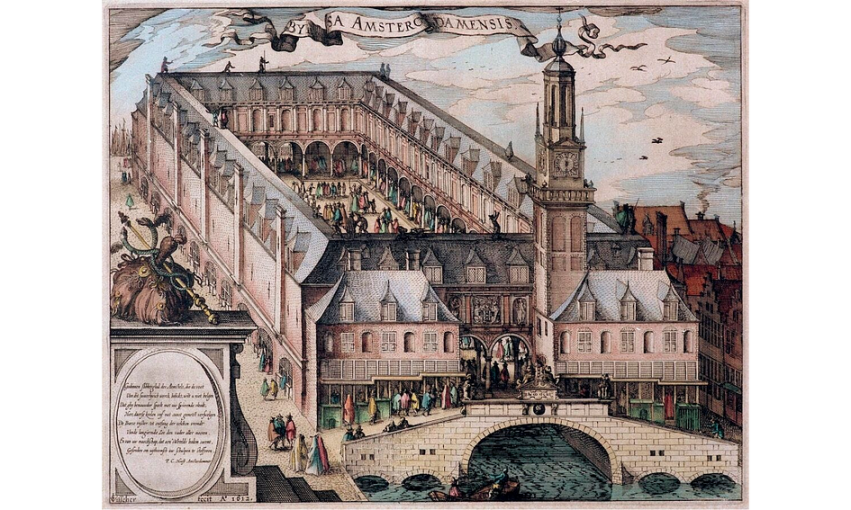
The concept of a securities exchange can be traced back to at least 1602, if not earlier. The development of joint-stock companies can be traced back to ancient Rome.
In sharp contrast is the Crypto market. Despite many people immersing themselves in it every day, the "comprehensive imitation body" (referring to Crypto) imitating the stock market is still largely unknown.
Imagine if you were a farmer in the 17th century, far from the burgeoning legal system, enterprises, and global commerce that were beginning to develop in the cities at that time.
As a 17th-century farmer, everything you produced was done by hand, with a clear use value, and your trading activities boiled down to exchanging physical goods or metal currency. Most importantly, you might only go to a big city twice a year at most.
Therefore, the business model is completely unfamiliar to you, let alone the financial model.
You need a common-sense social framework, which is the "comprehensive imitation body" (referring to Crypto), to tell you: "Yes, you can assign value to the paper of those who claim to own certain abstract, invisible enterprises, and have their ownership guaranteed by abstract bureaucratic institutions and foreign judicial systems."
The 17th-century farmer corresponds to non-internet users today.
These people make up the majority of the population (just like the farmers of the past), they have never been involved in P2P online commerce, never bought or sold purely digital goods, never felt the power of anonymity, never built intimate relationships through the internet, never experienced complete control of their own funds, and cannot understand the value of a borderless, deterministic financial system that comes from an unstoppable world state machine.
The lack of the "comprehensive imitation body" will tell them: "Yes, you can assign important value to tokens that have been cryptographically verified, and these tokens claim legal rights in the purely digital reality"… or something similar.
Now it is understandable why people (even some crypto natives) are skeptical about whether tokens have real value.
Because the value of crypto tokens depends on expectations of an unknown future.
We are currently in a new field. The monetization path for token holders is still unclear at several different levels; tokens face many unknown paths, leading to multiple possible outcomes. Not only is the choice of path unknown, but the nature of the path itself is also unknown. "We don't know what we don't know."
However, although the accumulation of value is uncertain, tokens still have value and should have value.
Gradual consideration of value
Probability can be set for the favorable and unfavorable outcomes of the token framework. One is that at some point in time, a strong framework for allocating value to token holders will never be found; the other is that it will be found at some point in time. Set probabilities for what these paths might look like, when they might appear, or what they might ultimately look like, without knowing what these paths are. For simplicity, assume a "bimodal result"—either completely clear or completely unclear, and allocate a 50% probability to each result.
The second assumption is that Crypto will continue to slowly penetrate the financial system and global commerce (especially cross-border and/or native digital commerce). If the value of the global financial system is X dollars, and the penetration rate of Crypto is 20%, then the total valuation is 0.2X dollars.
Since the probability of "clearing up" is 50%, the total valuation of crypto tokens can be evaluated at 0.1X dollars.
Therefore, the expected total market value is determined based on the set probabilities.
The next step is to perform the same operation for individual tokens, making a second assumption: not only the probability of "finding a framework," but also the expected dominance of the token protocol in Crypto, and its share in 0.1X dollars.
Here's the thing: it's not about really estimating the value of a particular token. That would be foolish and naive.
It's about understanding one thing: although it is currently unclear whether token holders can profit from the success of the protocol, subconsciously, this is how the market can (and indeed does) evaluate tokens at valuations with 9, 10, and 11 digits.
The next time you find yourself or others rejecting a token because its value capture is zero, or mocking its holders, consider the above assumptions and consider what these future possibilities mean for its current valuation.
免责声明:本文章仅代表作者个人观点,不代表本平台的立场和观点。本文章仅供信息分享,不构成对任何人的任何投资建议。用户与作者之间的任何争议,与本平台无关。如网页中刊载的文章或图片涉及侵权,请提供相关的权利证明和身份证明发送邮件到support@aicoin.com,本平台相关工作人员将会进行核查。


