Author: Shew Wang & Bai Ding, Geek web3


Abstract: Perhaps everyone has the impulse to design a game of their own. If various brainstorming ideas in leisure time are combined, can they lead to the birth of a game? If you were to design a full-chain game yourself, how would you do it? It may seem easy to think about but difficult to do. If you really design a full-chain game, the issues to consider are actually more complex than imagined.
This article takes a NFT placement mining game called MOPN as an example. Its main gameplay is to place NFT on limited public land to earn rewards, i.e., placement mining. When designing this game, the game designer not only needs to consider creating scenarios for the native token of the game, but also needs to think about how to counter witches, construct suitable mathematical formulas for key data indicators, and solve the dependencies of full-chain games on third-party components such as oracles.
In the following text, we will analyze MOPN's mechanism design and economic model from multiple perspectives to help more people understand the design ideas of Web3 games and the implementation path of full-chain games.
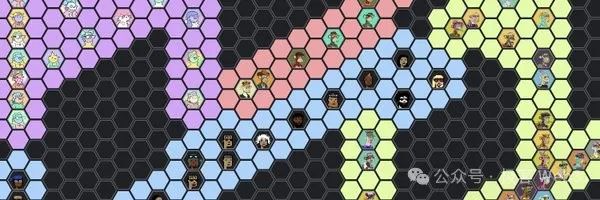
Brief Description of MOPN Game Rules
As a token-based placement game, MOPN's core gameplay is very simple: the game has created an open map containing nearly 1 million plots of land, and players place NFT on the open map to earn rewards. MOPN contains 4 types of assets:
1. MOPN's native token - MT (MOPN Token),
2. MOPN Land used for placing NFT,
3. NFT placed by players on the land,
4. Bombs used to destroy NFT on the land.
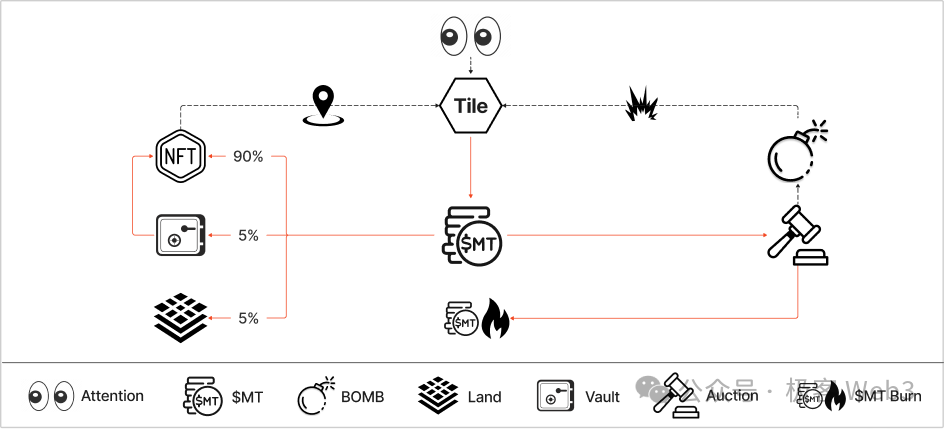
Among them, the MT Token is the core asset in the game, and all economic activities are related to MT. After a player places an NFT on a certain plot of land, they can earn MT rewards based on the NFT's score weight and placement time. 90% of the MT produced by NFT placement mining will be obtained by the owner of the NFT, 5% of the mining output will be obtained by the owner of the land, equivalent to land rent, and 5% will enter the Collection Vault of the IP to which the NFT belongs (such as BAYC has its own in-game treasury) - equivalent to tax.
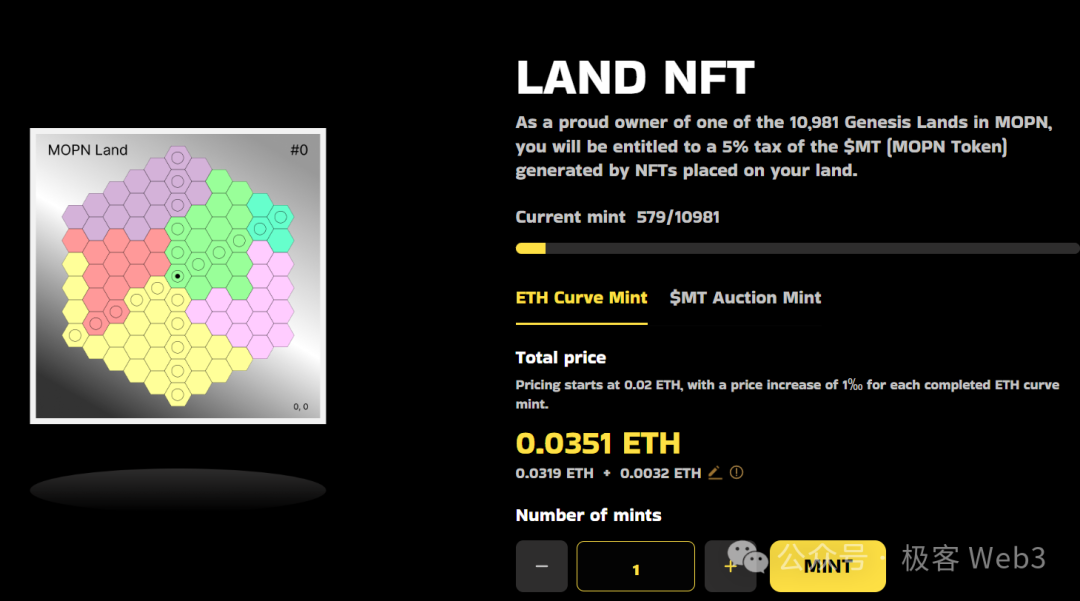
In the design of MOPN, the plots of land belong to NFT called MOPN Land. The total supply of MOPN LAND is 10,981, and each Land covers 91 plots on the map, covering nearly 1 million plots in total.
The ways to obtain Land include casting and auction. After obtaining Land, players can place it on the map, activating the dormant plots, which can only place NFT after being covered by Land. Any player can place NFT on the plots under a certain Land, but must share 5% of the earnings with the landlord (owner of the Land).
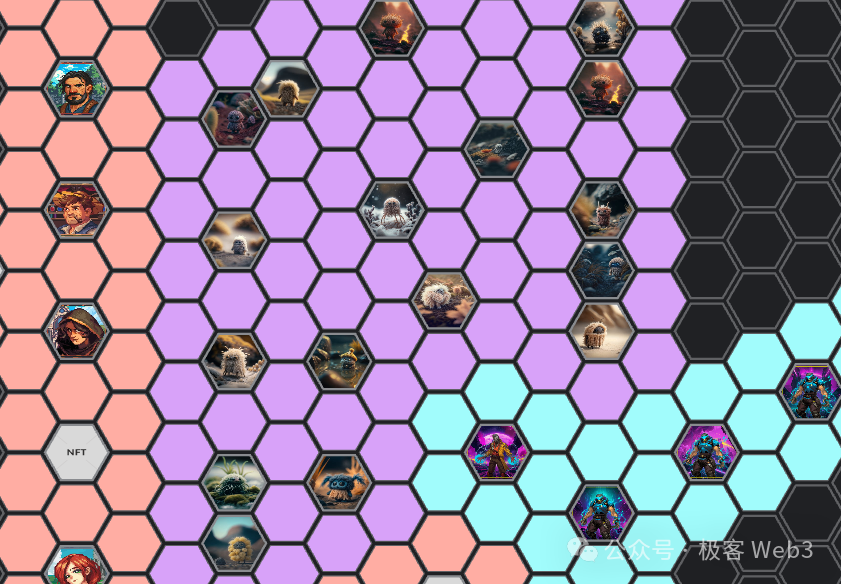
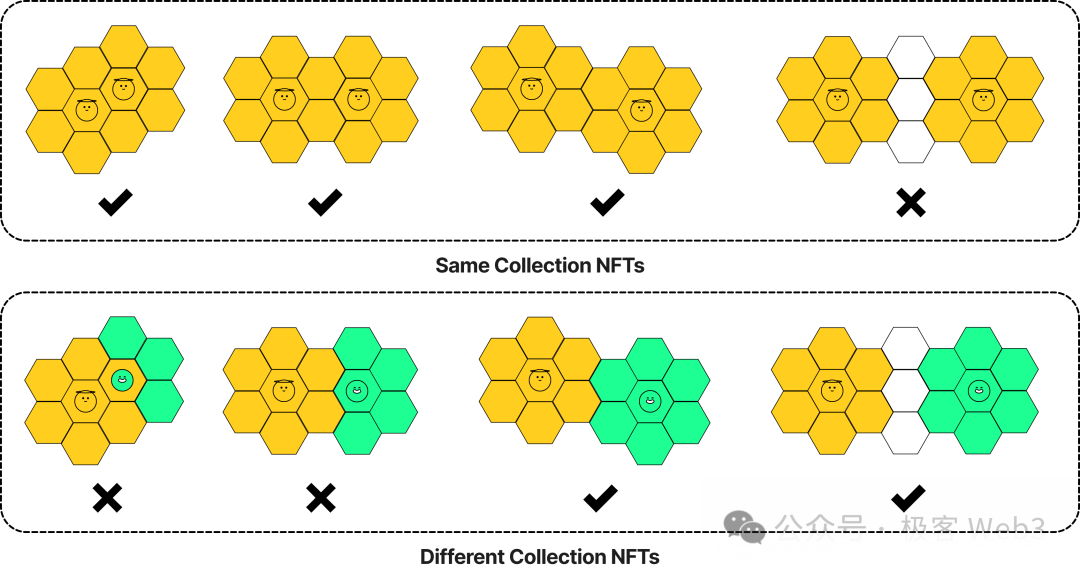
One interesting aspect of the MOPN game rules is that you can use "bombs" to clear out NFT of different types around you. According to the game rules, within the distance of two plots centered on the plot where you place the NFT, there cannot be NFT from other IP series (such as BAYC and Fat Penguins are conflicting IPs). If you insist on placing NFT on this plot, you need to use a bomb to clear out the NFT of different types.
The ultimate effect is as shown in the following figure: Within the distance of two plots around each NFT, there are only NFT of the same type.
In summary, the rules of the game are relatively simple: place your NFT on a plot to earn mining rewards, share a portion of the mining output with the landlord, and ensure that there are no non-similar NFT around you.
In addition, MOPN has equipped specific Collection Vaults for NFT collections participating in placement mining. Since MOPN is a full-chain game, market data related to NFT should not rely on oracles, so MOPN has set up Collection Vaults to obtain off-chain information such as NFT market prices through specific mechanisms (which will be mentioned later).
The above rules establish an economic system centered on the MT Token, as shown in the figure. In the following text, we will briefly introduce the implementation of MOPN from the perspective of the game designer.
Analysis of ERC-6551 Accounts
MOPN has created an ERC-6551 abstract account for each NFT participating in placement mining, and the ERC-6551 account is a core component of the MOPN game system, with a large amount of business logic relying on it for implementation.
The ERC-6551 standard originates from EIP-6551, aiming to create exclusive AA wallet accounts for NFTs, allowing NFTs to have many rights just like ordinary Ethereum users. For example, you can register an ERC-6551 account for BAYC to receive payments and perform on-chain operations. When a user transfers an NFT, the ownership of the corresponding ERC-6551 account will also be transferred.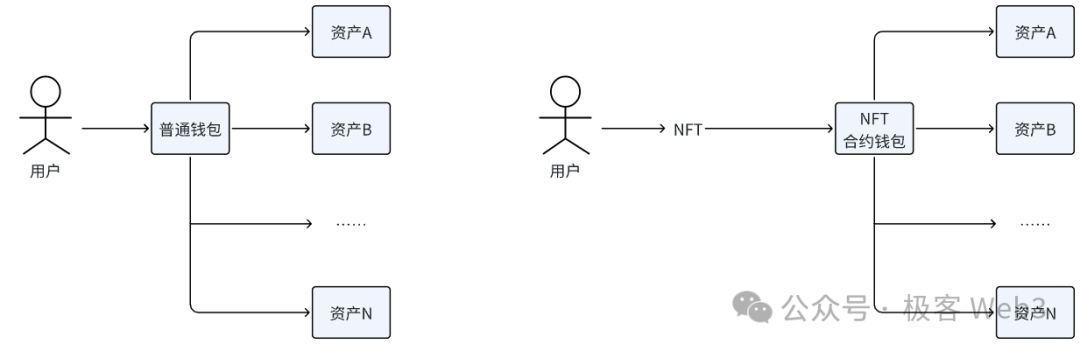
What is the significance of doing this? In a certain game scenario, suppose Ethereum address A owns a virtual game character named Bob, and Bob is implemented in the form of an ERC-721 NFT, holding multiple items (such as hats, shoes, weapons, etc.) and other assets (such as gold coins), which may be implemented in the form of ERC-20, ERC-721, etc. Although these items are considered to belong to Bob in the game setting, from the perspective of the underlying contract, the above assets are associated with address A.
Suppose the controller of address A sells the virtual character Bob to someone else, and needs to transfer Bob and the game assets it holds to the buyer one by one, which is cumbersome and not reasonable in actual operation. The goal of EIP-6551 is to directly create an exclusive wallet account for the virtual character Bob in the game, used to manage the items and assets it holds, making the entire interaction process more concise and rational.
ERC-6551 mainly consists of the following two modules:
Registry. Registry is a factory contract where users can submit their NFT contract address and tokenId, and Registry will generate an exclusive fixed address for them, deploying an account for the user's NFT within this address.
Account Implementation. This module covers the specific implementation details of the ERC-6551 account. Each project will adopt a specific implementation scheme according to its own needs.
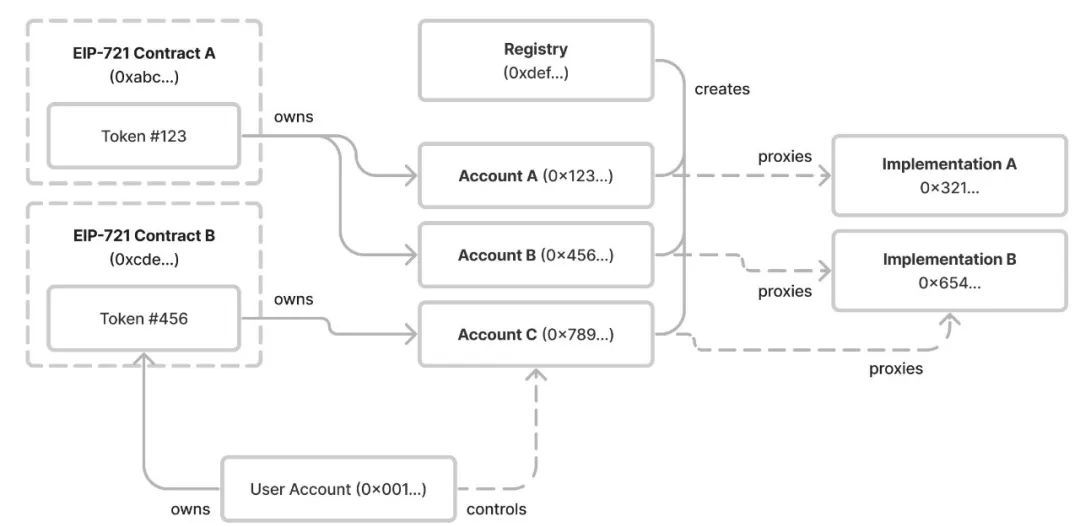
MOPN is equipped with its own Registry and Account Implementation modules. Users can input the NFT contract address and tokenId to deterministically create an exclusive ERC-6551 account for the NFT, used to adapt to various operational needs in the game.
Mechanism Design for NFT Placement Mining
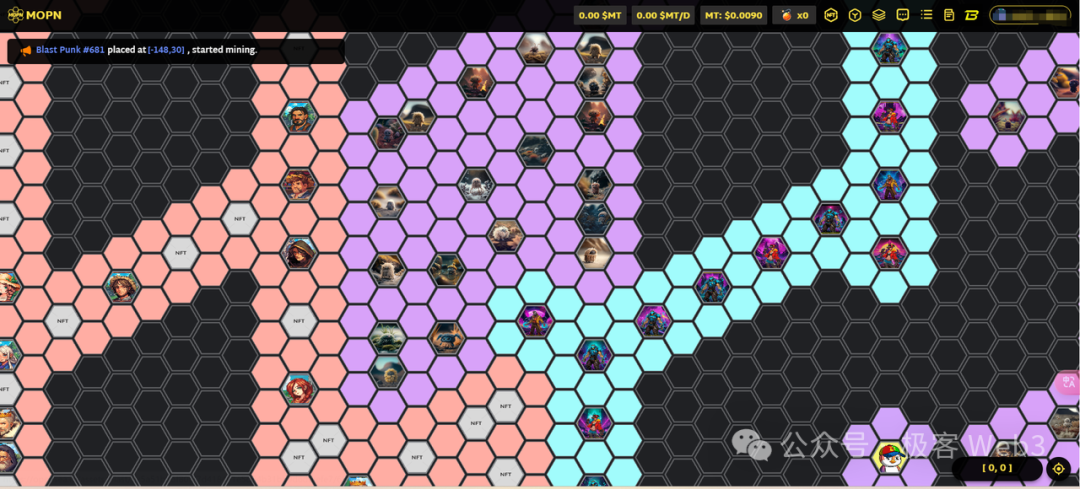
As mentioned earlier, the first step for users when entering the game is to choose an NFT and place it in a suitable area. The following image shows a partial map of MOPN:
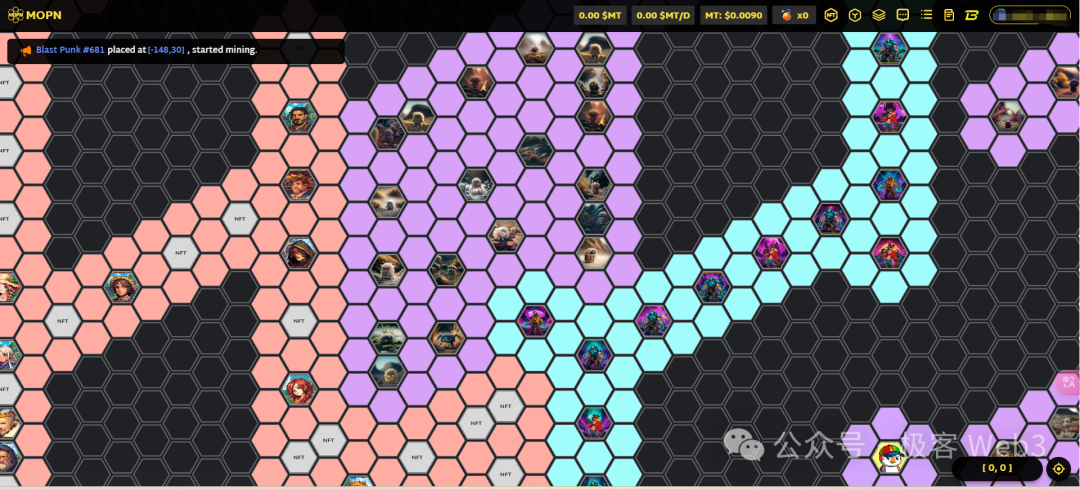
On the game map, we can observe NFT belonging to different IP collections and plots of different colors. Each NFT will radiate a specific color to the surrounding 1 grid of land, and only NFT of the same type can be placed adjacent to each other, with at least two grid distances between non-similar NFT.
For this, MOPN uses hexagonal plots and establishes a coordinate system as shown in the following image:
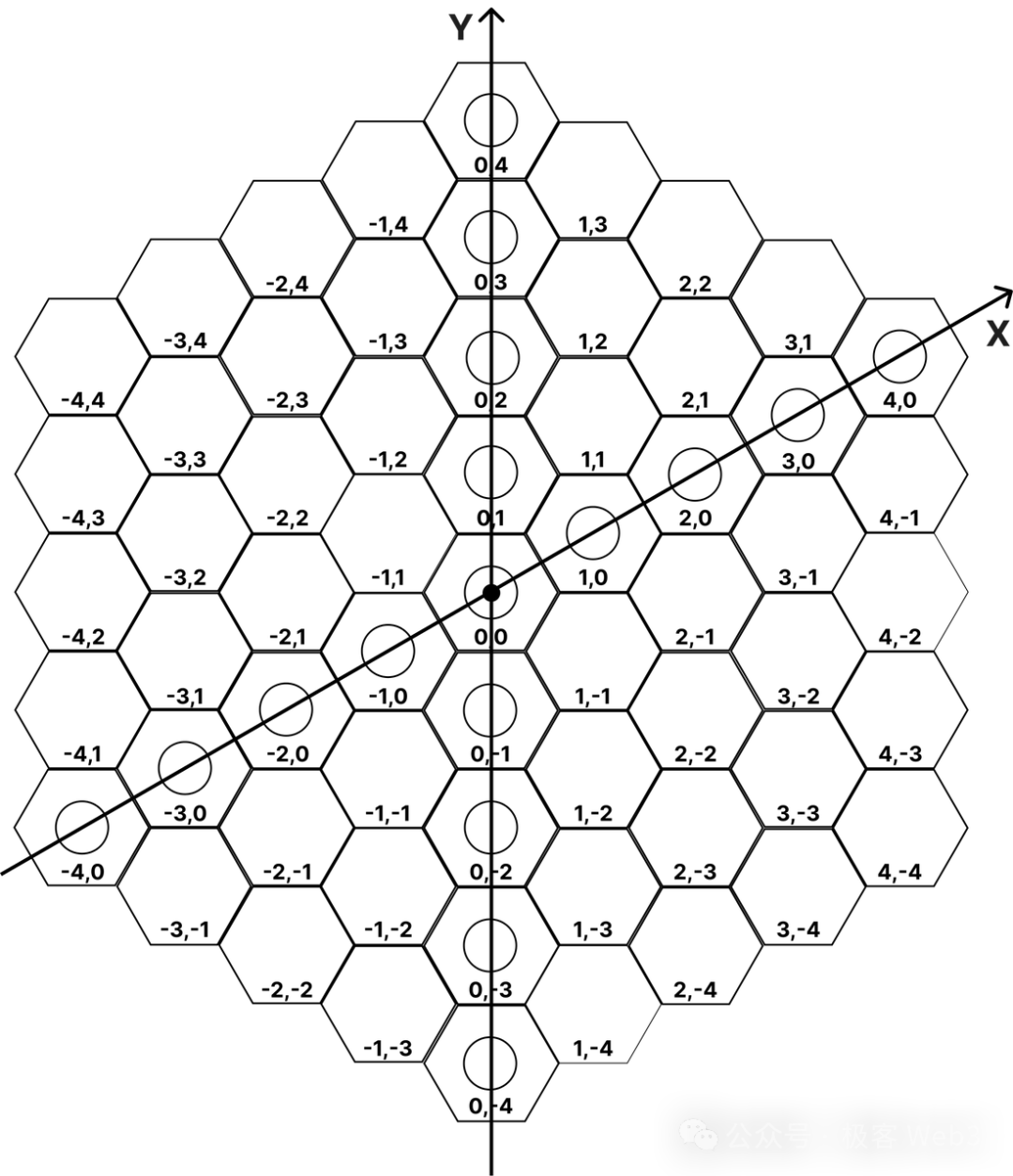
Clearly, each plot on the map has a unique coordinate, and the entire map is divided into 10,981 regions, divided into 10,981 MOPN Lands, each with its own unique LandId. In MOPN's design, the owner of the Land can collect rent from NFT placers, with 5% of the NFT mining rewards flowing into the ERC-6551 account of the land owner.
Each placed NFT has a titleAccounts field in its ERC-6551 account, indicating the collection to which the NFT belongs. When you try to place an NFT on a plot, the relevant contract will read the ERC-6551 accounts of the 19 adjacent plots to check for non-similar NFT based on the titleAccounts field.
The above content is just the tip of the iceberg in the entire MOPN mechanism design. From the perspective of a game designer, you have to consider many troublesome issues. First, in the early stages of the game, you need to consider which NFTs can participate in the MOPN game. If you do not restrict the types of NFTs, some people will place a large number of low-quality NFTs on the map to quickly earn a large amount of MT Token rewards, ultimately leading to severe token inflation, which is essentially an anti-witch problem.
To avoid such situations, restrictions must be implemented, allowing only specific types of NFTs to participate in the game. Before the official launch, MOPN used the following formula to score all NFT collections in the market:

The following is a statistical table provided by MOPN based on recent snapshot information.
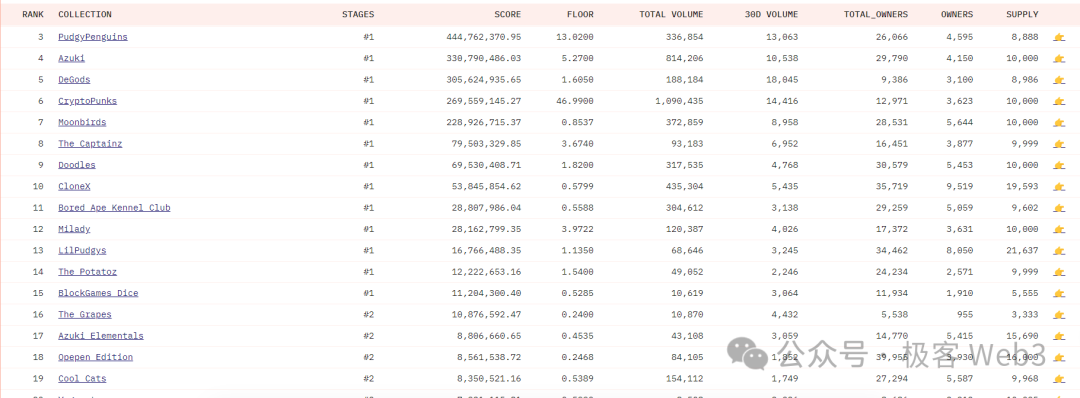
We can see a column in the table called STAGES, representing when NFT series belonging to an IP collection can participate in the game. NFT series marked as Stage1 can participate in placement mining at the beginning of the game, while Stage2 and Stage3 need to wait for the game to reach a certain stage.
The second issue is, who can place NFTs?
The answer is anyone can. The person placing the NFT can be different from the NFT owner, but only the NFT owner can directly claim the placement mining rewards and then share a portion with the person who placed the NFT for them. We call the person who is not the NFT owner but places the NFT for them an "Agent."
According to MOPN's design, when the NFT owner claims the mining rewards or the NFT is moved or destroyed, the Agent can receive a portion of the mining rewards, specifically: a portion of the placement mining rewards

Where n is the number of Agents for that NFT series (for example, if n people act as agents for BAYC NFT placement mining). Clearly, as an Agent, the earlier you participate in the game, the more rewards you can receive.
Finally, the third issue is, how to calculate the placement rewards for NFTs?
This question actually needs to be answered in conjunction with MOPN's own economic model. The total supply of MT is 1 billion, and every time a Blast block is produced (approximately every 2 seconds), MOPN releases a certain amount of Token rewards to NFT miners. MT is initially set to release 60 tokens for every block, and the release amount decays by three thousandths every 50,000 blocks (1.2 days). The specific release curve is as follows:
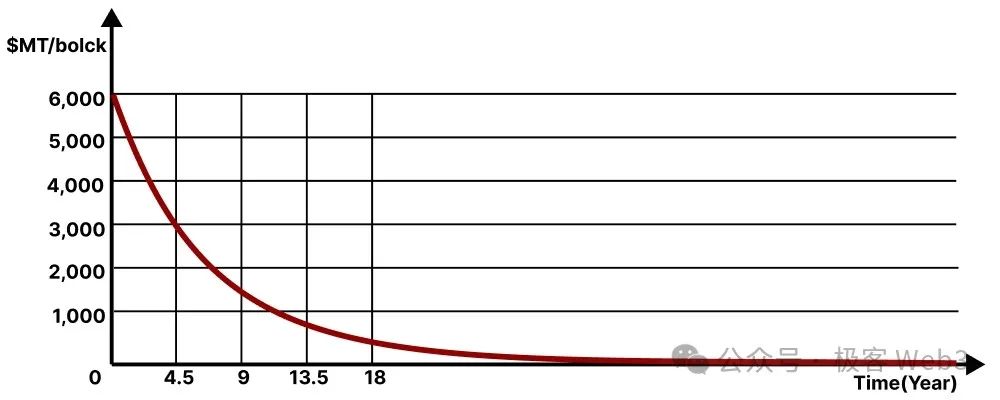
Once we determine the MT release amount per block, we can calculate the mining rewards for each NFT, as the MT released in each block is distributed to different NFTs participating in mining based on their weight. The previously mentioned MOPN Point determines the reward weight for each NFT.

Where Tile Point is classified based on the plot where the NFT is located, divided into +1, +5, and +15, corresponding to three types of plots with different rarity on the map. Collection Point is related to the IP collection to which the NFT belongs and the staking situation, which will be detailed in the section about the NFT treasury later.
Ultimately, each NFT receives a proportion of the MT rewards released in each block based on its Point compared to the total Point of all NFTs.
Land Auction and Bomb Bomb
In the previous section, we mentioned that when placing an NFT on the MOPN map, you must declare the LandId of the target plot. The LandID represents the LAND number to which the plot belongs. When the NFT placer claims the MT mining rewards, 5% of the MT will flow into the account of the owner of the LAND to which the plot belongs (each landowner controls different LAND). In MOPN, the function of the Land is to manage the plots, and the relationship between the plots and NFT is like that of flowers and flowerpots. Therefore, LAND is also one of the core assets in the game.
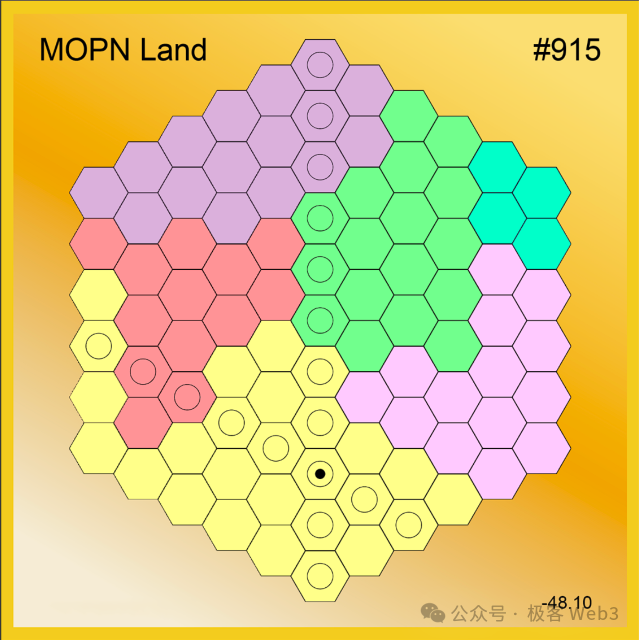
(Land is essentially an NFT, and the coordinates of the central plot of this Land are marked in the lower left corner as (-48, 10) on the MOPN map)
The ownership of LAND is expressed in the form of NFT, and all LAND NFTs are issued in two ways: by minting with ETH or by participating in auction minting with MT Token.
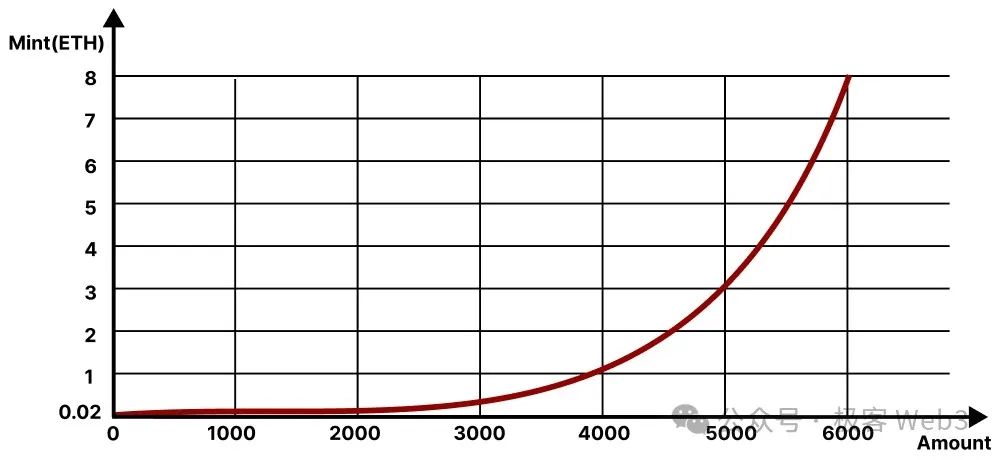
The model for minting Land with ETH is relatively simple, as players can spend a certain amount of ETH to mint and obtain Land. The initial minting price for the first Land is 0.02 ETH, and the price increases by one-thousandth for each subsequent Land minted.
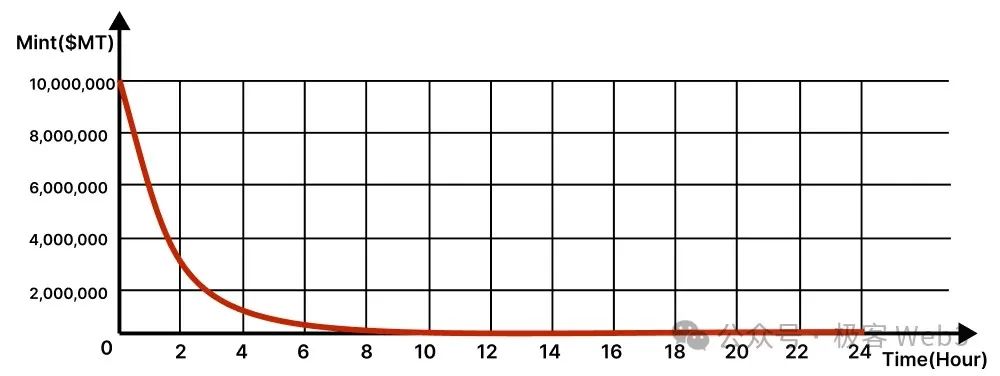
On the other hand, the process of auction minting Land with MT is relatively more complex, using a Dutch auction model. The starting price for each Land is 1 million MT, with one piece of land auctioned per round, and the starting price automatically decreases by 1% every 5 rounds. After one round of auction is completed, the next round will automatically start. All MT used to purchase/mint Land will be burned, making this the first way MT is destroyed in the entire MOPN game.
 Bomb Mechanism
When placing an NFT, if there is a non-similar NFT within a distance of 2 plots around the target plot, a Bomb must be used to destroy the non-similar NFT and clear the plot it occupies. The Bomb is a way to forcibly remove non-similar NFT from the map and must be obtained by burning MT. Once a Bomb is used, it is destroyed, making this the second way MT is destroyed in MOPN.
The pricing of the Bomb follows the formula:

Where MT Production is the MT yield already mined on the target plot, titles represent the number of plots the Bomb needs to clear, and bomb production represents the usage of Bomb in the past 7200 blocks. The more MT has been mined on the target plot or the more times Bomb has been used in the past period, the higher the price of the Bomb.
NFT Collection Vault
As mentioned earlier, MOPN uses a scoring system to allocate rewards for NFTs placed on the map. This scoring system is called MOPN Point, which includes Title Point and Collection Point. Title Point is determined based on the rarity of the plot where the NFT is located, while Collection Point is related to the NFT collection (e.g., BAYC) and its exclusive vault within the game.
Collection Point measures the amount of MT in the NFT vault, with higher MT holdings in the vault resulting in higher placement mining rewards for that NFT. The initial calculation formula is:

Where Vault $MT is the MT balance in the NFT vault. The ways to add MT to the vault include mining tax revenue and staking. As mentioned earlier, any NFT placed in mining automatically submits 5% of the revenue to the vault when claiming rewards (in addition to 5% for land rent). The other method is voluntary staking, where staking MOPN in a specific NFT vault can earn APY.
The NFT vault in MOPN has other functions, such as providing market price data for NFTs. Since the entire MOPN game revolves around NFTs, the market price of NFTs is an important data indicator. However, as a full-chain game, MOPN does not want to rely on centralized components such as oracles.
To address this, MOPN has set up an NFT trading platform similar to AMM (automated market maker) (in essence, it sets up its own pool), where players can buy/sell NFTs. Various arbitrage activities will keep the prices of NFTs on this platform consistent with the external market, allowing the system to obtain NFT pricing information without relying on oracles.
MOPN's NFT trading platform adopts a model similar to Uniswap, essentially a spot pool. However, compared to ERC-20 AMM, NFT AMM is more difficult to implement. On one hand, NFTs are non-fungible, and everyone has their own psychological price for a specific NFT, making it impossible to directly price an IP series. On the other hand, the limited quantity of NFTs means that their liquidity is far less than that of FT, making NFT transactions more difficult.
To address this issue, MOPN combines auctions and AMM, with the vault contract directly participating in the buying and selling of NFTs, contributing liquidity directly. The process of the vault purchasing NFTs from players follows an automatic bidding system, with the initial bid set at 20% of the vault's MT balance. After the first transaction, the initial purchase price for the next transaction will be set at 75% of the vault's last asking price, increasing by 0.05% per block, with a maximum limit of 20% of the vault's balance.
Once an NFT holder believes that the price meets their expectations, they can sell their NFT. The vault will then switch from buying NFTs to selling NFTs, initiating a Dutch auction to publicly sell the NFT it has just acquired. The starting bid for the Dutch auction is 125% of the acquisition price, decreasing by 0.05% per block, with a minimum of 1 MT. After the auction is completed, 0.5% of the transaction price will be destroyed, making this the third way MT is destroyed.
After the NFT is sold, the vault can return to the buying state, providing NFT pricing to the outside world, and the cycle continues.
Compared to the conventional x * y = k model, the auction-based generalized AMM can help fully price each NFT, ultimately allowing the vault to transact at a price close to the optimal bid. If MOPN gains enough influence in the future, a large number of NFTs may be traded in this way, which will to some extent solve the liquidity issue for NFTs.
Since the auction mechanism allows NFTs to be fully priced, we can roughly consider the transaction price of NFTs in the vault as the floor price for the current NFT collection, replacing the oracle's price feeding function.
Returning to the MOPN Point, due to the potential instability of the MT balance in the vault, whether NFTs are bought or sold, the MT balance in the vault will undergo significant changes. For the sake of fairness and stability, after an NFT is sold from a vault, the Point calculation formula changes to:

Where vault last ask-accept price is the amount of MT obtained by the NFT after being sold from the vault, and vault $MT is the MT deposit in the vault before the NFT was sold.
Conclusion
From a technical implementation perspective, MOPN has introduced ERC-6551 accounts, increasing the flexibility and composability of the game system. Additionally, by using an auction-based NFT trading platform, it has provided an NFT market based on a spot pool, solving the reliance on oracles in full-chain games through internal market pricing. As a relatively easy-to-understand example of a full-chain game economic model design, MOPN is worth studying in depth.
免责声明:本文章仅代表作者个人观点,不代表本平台的立场和观点。本文章仅供信息分享,不构成对任何人的任何投资建议。用户与作者之间的任何争议,与本平台无关。如网页中刊载的文章或图片涉及侵权,请提供相关的权利证明和身份证明发送邮件到support@aicoin.com,本平台相关工作人员将会进行核查。


