Authors: Margaux Nijkerk & Sam Kessler, Coindesk
Translation: Felix, PANews
The Ethereum merge has been over a year, and this transformation, called "merge", introduces the concept of "staking," a new method for adding and approving transaction blocks to the blockchain.
In the PoW (Proof of Work) mode, miners compete to add blocks by solving cryptographic puzzles. Now, in the PoS mode, Ethereum validators stake 32 ETH (about $50,000) on the network and are randomly selected to add blocks. In both modes, miners and validators are rewarded with some ETH if their blocks are added to the blockchain.
Through staking, Ethereum has greatly reduced the blockchain's impact on the environment, but it still faces a series of challenges related to centralization, censorship, and the exploitation of certain infrastructure intermediaries. Here are five key points in the Ethereum ecosystem since the merge a year ago:
Ethereum's Energy Consumption Decreases by 99.9%
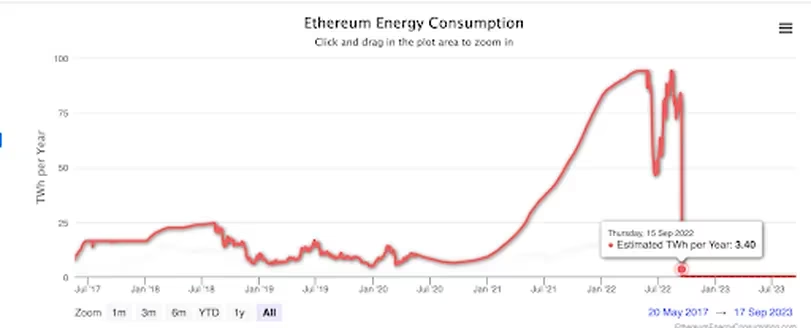
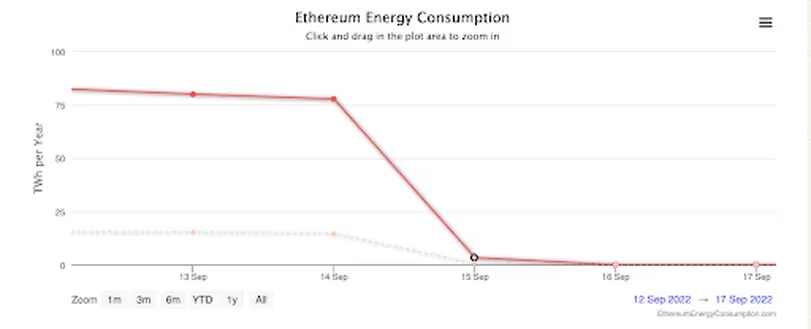
The merge of Ethereum has completely reformulated the network's consensus mechanism—the "decentralized" community of network operators used a power-hungry "mining" system to secure the network and process transactions. The old "Proof of Work" mode used energy-intensive "mining" to operate, with network operators essentially competing to process blocks (and receive rewards) by consuming computational power.
The transition from crypto mining to staking is expected to significantly reduce Ethereum's energy consumption—completely eliminating the energy-intensive system previously used to generate blocks and secure users.
Ethereum's energy consumption before the merge was roughly equivalent to that of a small country, and its energy usage statistics were a major focus of early NFT and DeFi critics. According to the Cambridge Bitcoin Electricity Consumption Index, Bitcoin still uses the PoW mode to power its network, consuming an amount of energy equivalent to that of Singapore.
A year after the merge, Ethereum's new emissions have sharply decreased. The energy consumed by Ethereum's new Proof of Stake system is 99.9% less than that of the old mining system. Regardless of whether other aspects of this upgrade were successful or not, Ethereum is no longer environmentally harmful.
Staking Allocation Sparks Centralization Issues
In addition to being criticized for its high energy costs, Ethereum's old consensus model was also criticized for centralizing power in the hands of a small number of mining entities, which had the funds, specialized hardware, and knowledge to build large-scale crypto mining facilities. Before the merge, just three mining pools dominated most of Ethereum's hashrate—an indicator of the collective computational power of all miners.
As Ethereum transitioned to PoS, the network abandoned mining in favor of staking. By eliminating the hardware requirements and computational costs of PoW, part of the reason was to encourage more people to participate in network operations.
However, a year after the merge, centralization remains one of Ethereum's biggest challenges. To stake on Ethereum, validators need to lock up 32 ETH in the network, approximately $50,000—these funds can earn stable interest, but if validators make mistakes or engage in dishonest behavior, these funds may be revoked. Setting up validator nodes to stake on the network can also be a complex task, meaning that improper setup could result in economic penalties.
Due to the costs and technical barriers of setting up nodes, intermediary services have emerged—such as companies like Coinbase and decentralized collectives like Lido—allowing users to pool their ETH together to create 32 ETH for staking. These intermediary entities take on much of the heavy lifting: they take ETH from users, stake on their behalf, and extract a portion of the rewards obtained from operating validators.
Even before the merge, some anti-PoS individuals were concerned that staking might increase Ethereum's level of centralization—meaning that a small portion of these intermediary entities (or even a single intermediary entity) could disproportionately control which blocks are added to the network.
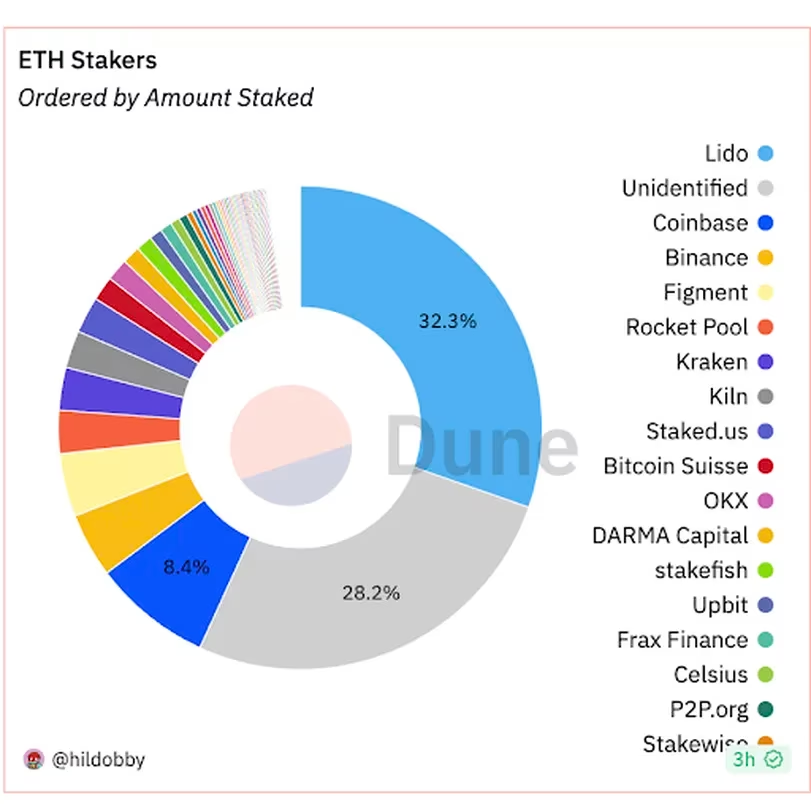
This situation seems to be unfolding. Currently, the largest staking provider is the decentralized staking pool Lido. Lido currently holds 32.3% of the total staked ETH, and as it approaches the 33% mark, it has raised concerns among crypto enthusiasts about centralization, with developers stating that breaking the 33% mark could lead to security issues.
MEV and Censorship
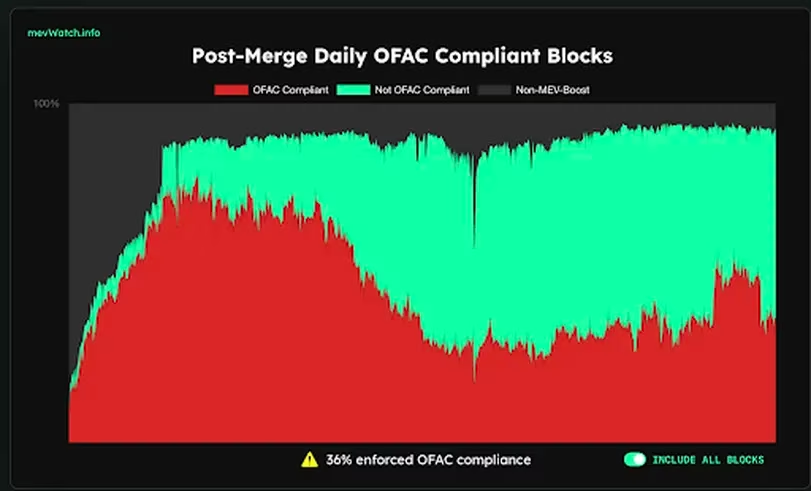
After the Ethereum merge, validators have gained significant additional profits through a mechanism called Maximum Extractable Value (MEV). Validators and builders can strategically insert or reorder transactions to charge users fees before adding transactions to the network.
When MEV unexpectedly became a vehicle for centralization and censorship on the network, third-party interventions attempted to address the issue.
Ethereum research and development company Flashbots invented MEV-boost, a software that validators can run to reduce the negative effects of MEV. However, Flashbots' solution to the MEV problem is controversial. While some believe that MEV should be completely eradicated, Flashbots' introduction of MEV-boost has sparked new centralization concerns.
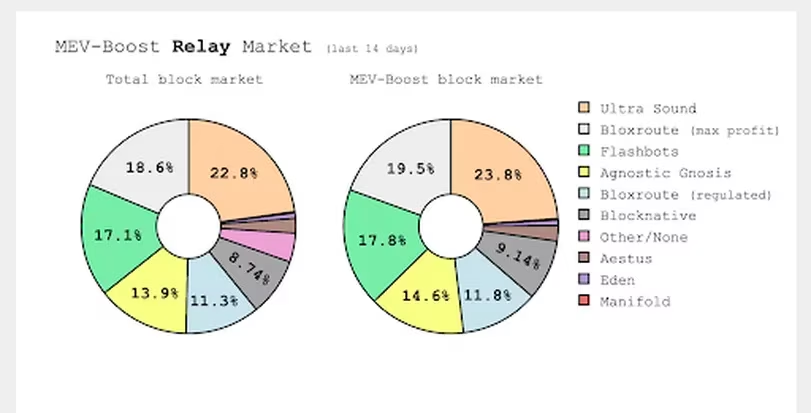
Currently, about 90% of the blocks on Ethereum are processed through MEV-Boost, optimizing how transactions are organized into blocks to extract maximum profits for validators.
The widespread adoption of MEV-Boost has become a focal point of network debate. As mentioned earlier, MEV is seen by some as unfair charges to users. Flashbots' central role in the Ethereum MEV market has been criticized: most of the blocks built using Flashbots software are relayed or delivered to validators by Flashbots itself.
This centralization is seen by some as a potential censorship medium: when the US Treasury Department approved certain Ethereum addresses related to Tornado Cash, Flashbots stopped adding these transactions to the blocks sent to validators. This move sparked opposition from Ethereum builders, who believe that the infrastructure level occupied by Flashbots should be completely neutral and should not make the entire network resemble centralized payment processors like Visa.
Since the merge, the Ethereum community has been working to reduce censorship by configuring MEV-Boost to use non-Flashbots relays. Currently, 17.3% of blocks rely on Flashbots relays to extract MEV, reducing censorship rates to 35%, a huge reversal from the peak of 78% in November 2022.
Liquid Staked Tokens Have Taken Over the ETH Market
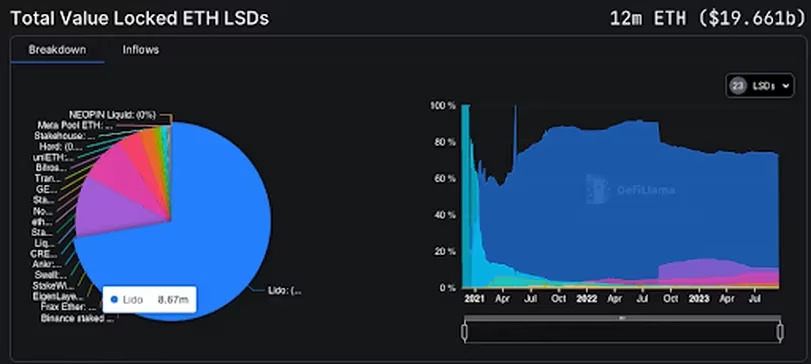
After the merge, liquidity staking has risen in the Ethereum ecosystem.
Anyone can earn rewards and participate in Ethereum's security system by staking, which involves locking up ETH tokens to earn stable interest. However, there is a problem: once tokens are staked, they cannot be bought, sold, or used in DeFi (e.g., as collateral for loans), reducing the appeal to investors who want to maximize their investment returns.
Third-party liquid staking services provide an alternative to traditional staking. Users staking through services like Lido can receive a derivative ETH token representing their staked assets: liquid staked tokens, or "LST."
LST can earn interest just like traditional staked ETH, but the difference is that LST can be traded. This is an attractive investment for DeFi traders looking to participate in ETH staking. An additional benefit is that LST takes on the staking risk without the need for users to commit 32 ETH.
Before the Shapella upgrade in April 2023, stakers could not withdraw staked ETH, so users initially turned to liquid staking to earn staking rewards without the unknown risks of the lock-up period. Once staked ETH can be withdrawn—although eliminating a major risk of Ethereum, it detracts from Ethereum's added value—some believe the liquid staking market may shrink, shifting support back to traditional staking. But that's not the case.
Currently, the liquid staking market is valued at nearly $20 billion and is rapidly growing. This is mainly due to the ubiquity of LST in DeFi and the greater accessibility of LST compared to traditional staking. Lido's token stETH holds the largest share in the LST market, at approximately 72.24%.
ETH Net Supply Decreases
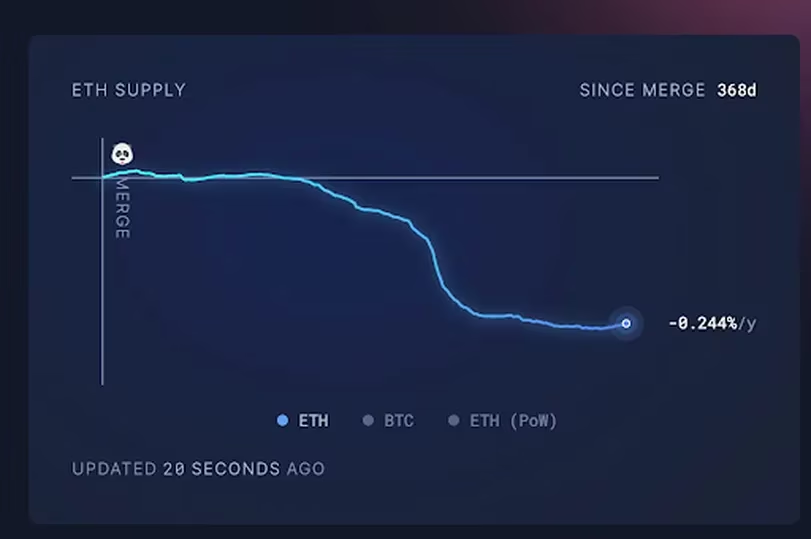
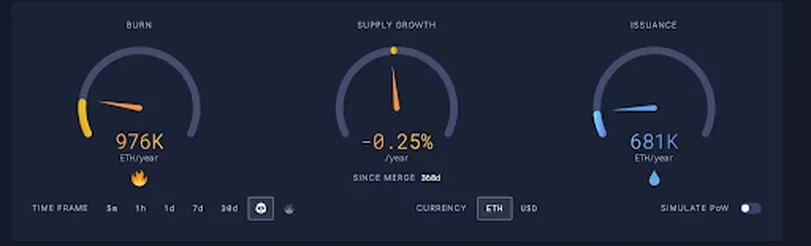
The merge has brought about some changes in the token economics of ETH.
Most notably, this upgrade has resulted in ETH experiencing "deflation" for the first time, indicating that the total supply of ETH is decreasing rather than increasing. The circulating supply of ETH has decreased by 0.24% compared to a year ago. The decrease in supply is partly due to a network upgrade called EIP-1559, which began "burning" some ETH in every transaction on the network, and the appearance of net deflation of ETH is further reduced after the Ethereum merge.
As ETH's supply grows year by year, some investors are concerned that their holdings of ETH will depreciate over time. Some investors hope that deflation will help make ETH more valuable. However, it is still difficult to say whether this has occurred. In the months since the Ethereum merge, the price of Ethereum has not changed significantly. In the short term, macroeconomic factors may have a greater impact than changes in supply.
免责声明:本文章仅代表作者个人观点,不代表本平台的立场和观点。本文章仅供信息分享,不构成对任何人的任何投资建议。用户与作者之间的任何争议,与本平台无关。如网页中刊载的文章或图片涉及侵权,请提供相关的权利证明和身份证明发送邮件到support@aicoin.com,本平台相关工作人员将会进行核查。


