Holding the "official interaction guide" that does not constitute a reference opinion, will I not be anti-plucked?
Author: Loopy Lu
Recently, DeBank announced the plan for DeBankChain, another well-known player joining the altchain craze. According to official information, DeBank Chain will be built as a chain focused on social interaction, adding an asset layer to revolutionize social interaction. The DeBank Chain testnet is now open, and the mainnet will be available before 2024. Testnet chain browser data shows that the number of wallet addresses on the chain exceeds 21,000.
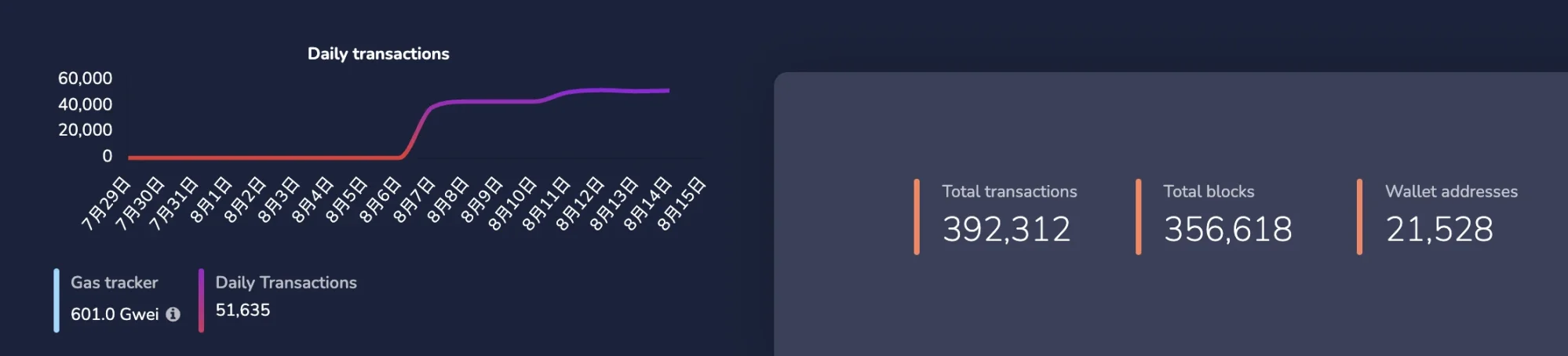
The opening of the testnet has also allowed the "wool party" to see the potential for wealth. However, in recent times, various "wool loss" incidents have occurred frequently. Can DeBank's chain launch plan still allow the wool party to make money?
DeBank Chain: Low-cost social chain
To understand DeBank Chain, we need to start with DeBank. DeBank is a well-known DeFi management dashboard where users can track their investment portfolios and use integrated trading functions for investment operations.
In December 2021, DeBank completed a $25 million equity financing at a valuation of $200 million, with Sequoia China leading the investment, and Dragonfly, Hash Global, Youbi, CoinbaseVenture, Crypto.com, Circle, and Ledger participating.
In January 2022, Debank launched a Web3 social platform and Web 3 ID function, allowing users to follow whale trading dynamics, NFT market trends, track Mirror article updates, and real-time on-chain activities of Web3 friends through the platform.
In October 2022, DeBank also launched the Web3 native communication app DeBank Hi.
As a well-known project, most investors (and media friends who often check on-chain data) are familiar with DeBank, so I won't go into detail here.
DeBank Chain is a new chain named after the DeBank brand, similar to the recent emergence of multiple L2 chains, and is also developed based on OPStack. According to DeBank, this chain has three advantages: minimizing gas costs to the maximum extent; providing a local experience similar to account abstraction; and ensuring the security of L1 assets.
Specifically, DeBank Chain has made significant progress in optimizing the consensus mechanism, reducing gas costs for single transactions by 100 to 400 times. The official also stated that in terms of providing a "next-generation" level of user experience, the chain provides a system similar to account abstraction at the chain level and integrates it locally. This allows users to enjoy an experience close to Web2 while remaining 100% compatible with the EVM standard.
In the new account system, transactions support signing with a dedicated L2 private key, reducing the use of L1 private keys in usage scenarios and enhancing the security of user L1 assets. This also provides a foundation for users to perform higher-frequency operations, and the official believes that this feature "fully adapts" to the high-frequency nature of social interactions on our platform.
How to participate in "wool plucking"?
Currently, I have not found the RPC URL of DeBank Chain, so I cannot manually add it to MetaMask. However, the testnet is now integrated into Rabby Wallet and comes with a test coin faucet built in. If you want to experience it, use this wallet first. The participation process is not complicated:
Download and install Rabby Wallet, import or create a wallet.
Find and click "More" on the main interface.
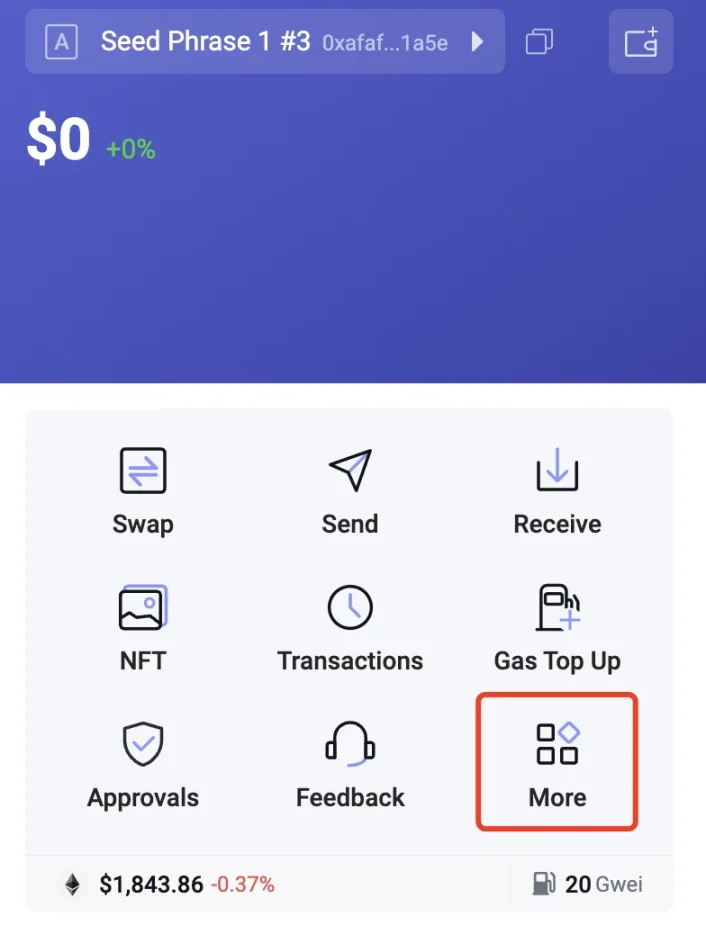
- Click "Request DeBank testnet gas tokens".
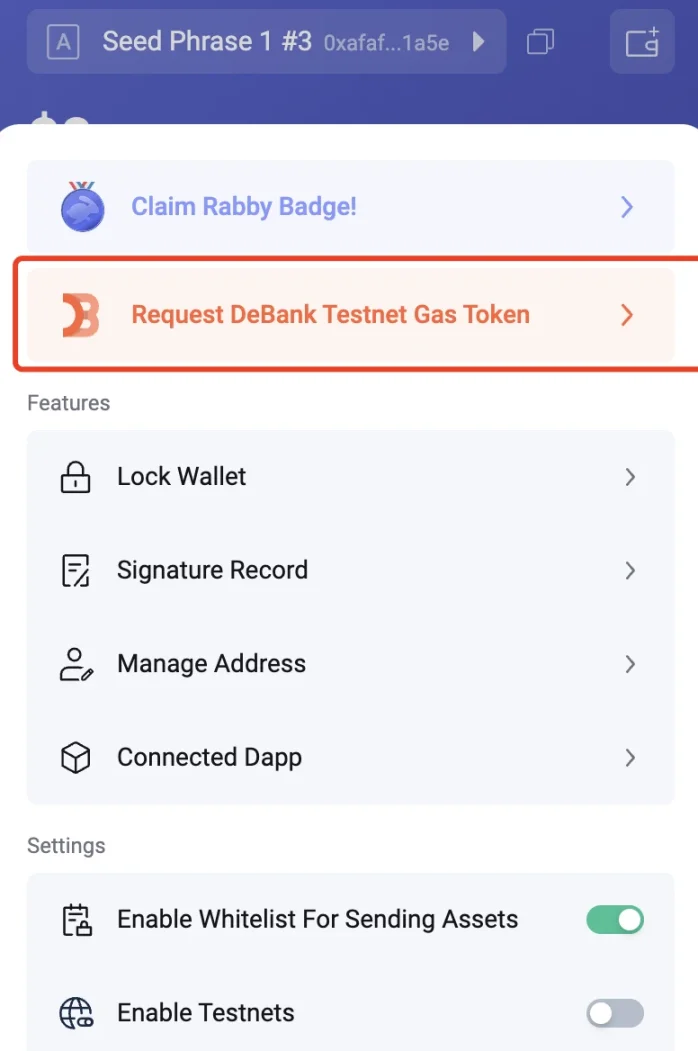
- To obtain testnet gas tokens, you need to meet the prerequisite—hold the "Rabby Badge" and claim this badge first.
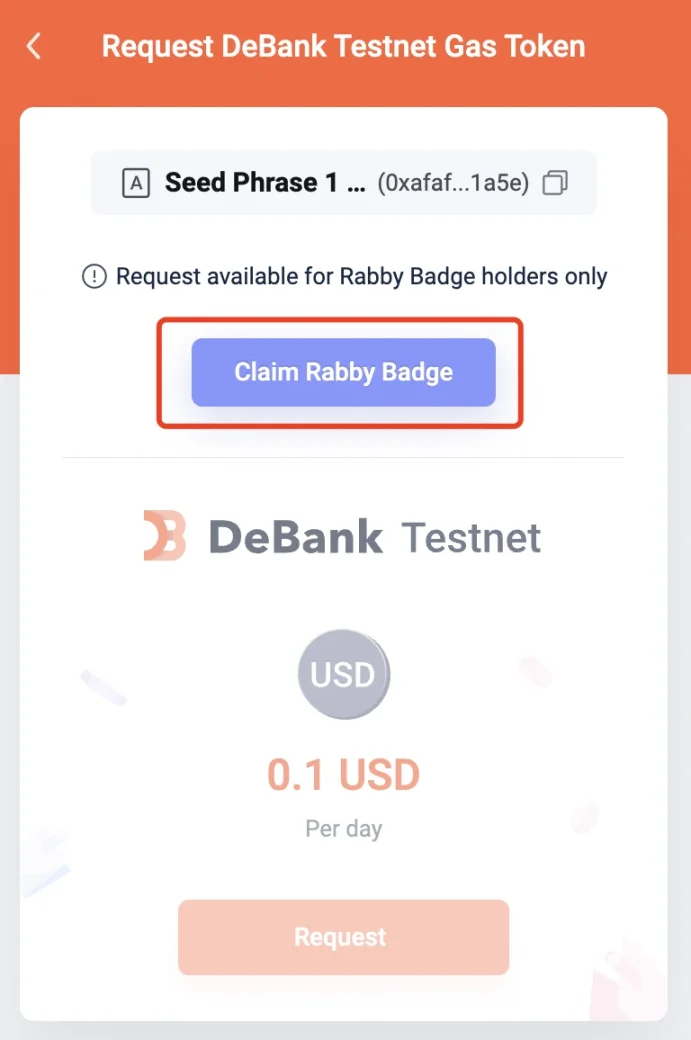
- Follow the wallet instructions, you need to jump to DeBank first, then mint a badge called "Rabby Valued User".
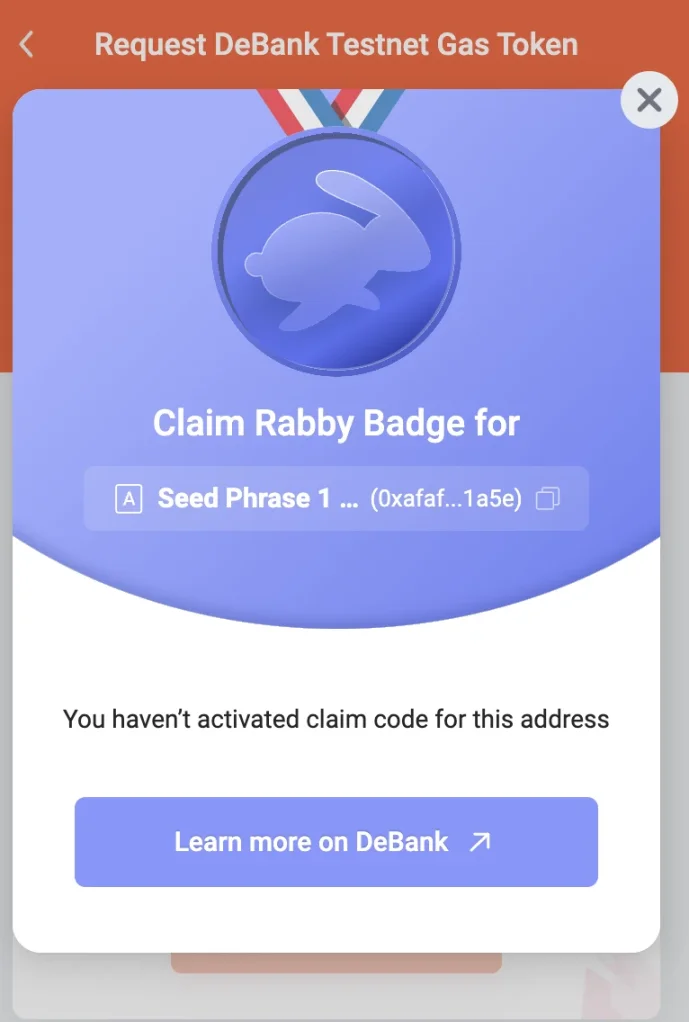
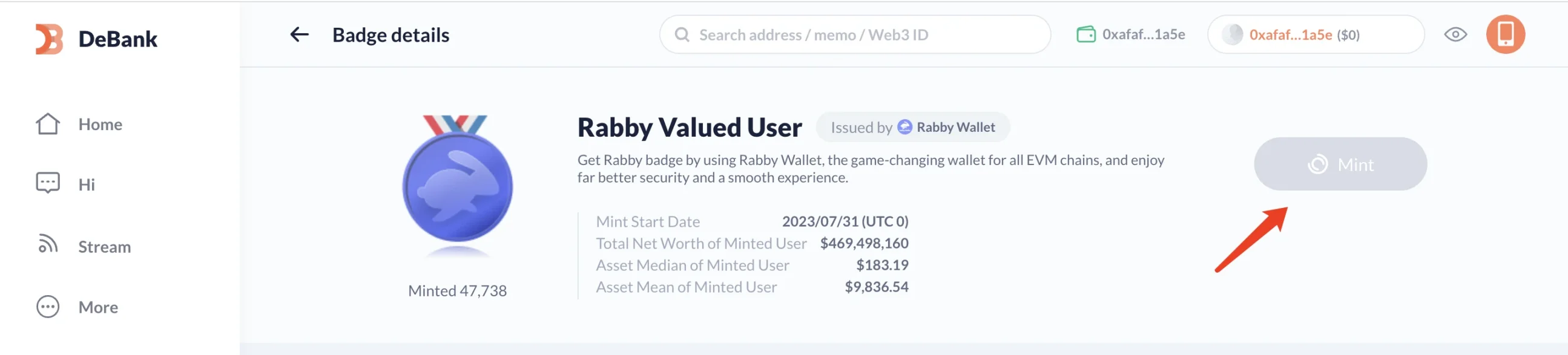
- Once you have the badge, you are eligible to receive gas tokens.
Leaked airdrop rules? Perhaps just a misunderstanding
It should be noted that DeBank has not yet announced detailed airdrop plans, and there is no mention of airdrop specifications.
However, two weeks ago, DeBank's github released a standard for "valuable Web3 users" and explained in the document that witch addresses, "wool parties," and low-net-worth bot addresses are ubiquitous on the chain. This lack of precise, comprehensive, and publicly available high-quality on-chain user data sets makes snapshot behavior lack accuracy. DeBank then selected a group of "valuable users" according to their standards and took snapshots of such addresses.
The standards include: net assets > $1000; "Web3 ID" has been minted; address TVF in DeBank > 0.
It should be clarified again that there is no necessary correlation between these standards and the potential airdrop of DeBank Chain. Many users have already used these standards as the standard for "wool plucking" and have mass-produced accounts. The future results are difficult to predict.
Looking back at recent airdrop events, we cannot help but notice an interesting phenomenon—airdrops have become increasingly difficult to get rich from, and there is even a risk of being anti-plucked.
In the early years, after the wealth effect brought about by some large airdrops, more and more users have started to complete as many interactions as possible through data brushing rather than actual usage. And project teams are often willing to use this FOMO sentiment to continuously launch more on-chain interaction "tasks" to entice users to complete more interaction operations, adding popularity to the cold start of new products.
Recently, after several well-known projects successively announced their airdrop shares, they have sparked community outrage due to the small number of airdrop tokens or high airdrop requirements.
With the launch of DeBank Chain approaching, a new round of airdrop "interaction brushing" will begin. Odaily Star Daily will also follow up on the release of future airdrop details and results.
免责声明:本文章仅代表作者个人观点,不代表本平台的立场和观点。本文章仅供信息分享,不构成对任何人的任何投资建议。用户与作者之间的任何争议,与本平台无关。如网页中刊载的文章或图片涉及侵权,请提供相关的权利证明和身份证明发送邮件到support@aicoin.com,本平台相关工作人员将会进行核查。


