Key Takeaways
- Tom Lee warned bitcoin lacks consensus on quantum defenses, citing a possible 2028 Q-day.
- Jim Cramer plans to sell his bitcoin after concerns from IBM’s Arvind Krishna about a 3-4 year quantum window for BTC.
- Bitcoin developers eye BIP-360, but any quantum upgrade needs broad consensus before 2028.
Bitcoin’s ability to withstand advances in quantum computing is becoming a sharper point of debate, with Bitmine Chairman Tom Lee warning that the network has yet to agree on a defensive path.
Speaking in an interview, Lee referred to the moment when quantum machines could defeat widely used cryptographic systems as “Q-day.” He cited Google researchers as suggesting such a breakthrough could arrive as early as 2028.
“A lot of the crypto blockchains are developing quantum resistance,” Lee said. “But for bitcoin, they haven’t come to a consensus on how to prevent Q-day.”
Lee said networks including Ethereum, Solana and Canton appeared better positioned because developers were already working on quantum-resistant systems. His comments came during a broader discussion about crypto’s recent divergence from the Nasdaq.
The concern echoed remarks from IBM CEO Arvind Krishna, who told CNBC’s Jim Cramer that investors should become more cautious within three or four years.
“I would get rather paranoid about it,” Krishna said when asked about quantum computing and crypto security.
Cramer said the response has convinced him to sell his bitcoin holdings. “Arvind Krishna knows quantum incredibly,” he said. “I’m gonna sell mine.”
Lee widened the warning beyond digital assets. He said banks, financial infrastructure and public systems would also need stronger security as artificial intelligence and quantum tools reduce the time needed to uncover vulnerabilities.
“It’s going to be hard to stay ahead of security vulnerabilities,” he said.
The remarks drew immediate resistance from bitcoin developers and security specialists.
Blockstream co-founder Adam Back challenged the terminology, tweeting that “bitcoin doesn’t use encryption for spending.” Bitcoin instead relies on digital signatures, although sufficiently powerful quantum computers could still threaten certain cryptographic keys.
Bitgo CEO Mike Belshe used the debate to promote institutional custody, saying the company is “quantum safe today” and would adopt new protocols as they become available.
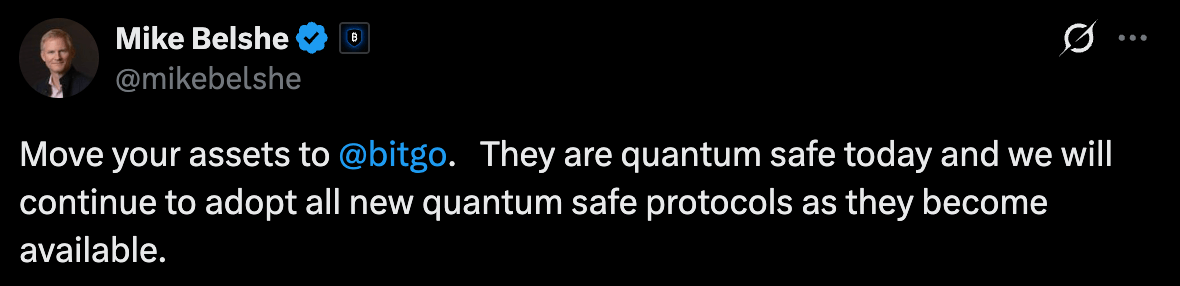
Source: Mike Belshe on X
Within the bitcoin community, attention has focused on possible upgrades such as BIP-360 and the exposure of older wallets whose public keys are already visible onchain. Any major change, however, would require broad agreement across developers, miners, businesses and users.
The immediate threat remains disputed. Yet the market reaction shows that quantum preparedness is no longer a distant technical issue. For Bitcoin, the harder problem may not be designing new cryptography, but reaching consensus before investors decide the clock is running out.
免责声明:本文章仅代表作者个人观点,不代表本平台的立场和观点。本文章仅供信息分享,不构成对任何人的任何投资建议。用户与作者之间的任何争议,与本平台无关。如网页中刊载的文章或图片涉及侵权,请提供相关的权利证明和身份证明发送邮件到support@aicoin.com,本平台相关工作人员将会进行核查。


