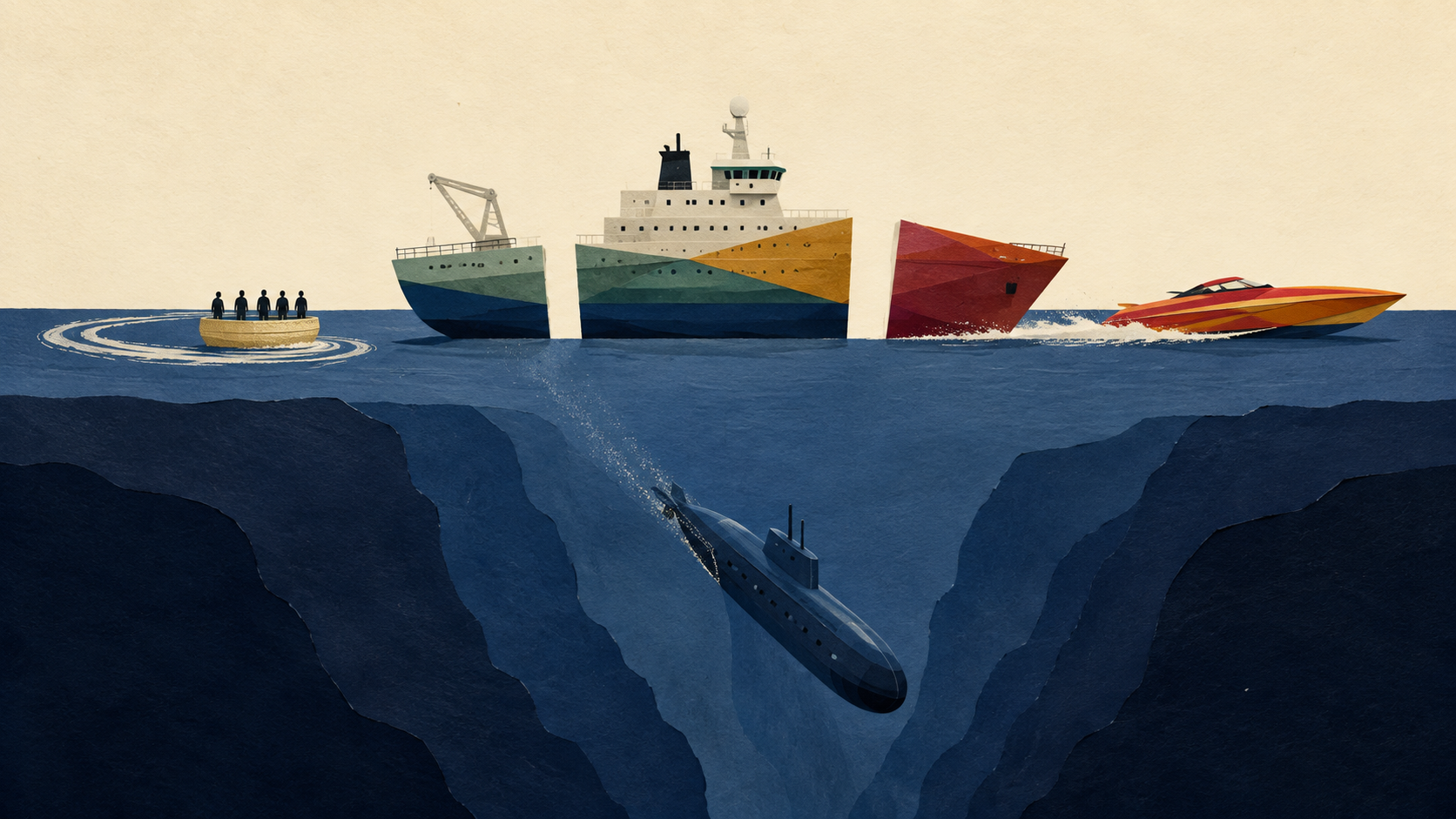
On August 5, 2026, Alphabet CEO Sundar Pichai released an internal letter announcing the most intense personnel and structural reorganization in the history of Google's AI department: Demis Hassabis, who has led DeepMind for many years, stepped down as CEO and took on the role of chairman and chief scientist of Alphabet, distancing himself from daily operations to focus on the AGI strategy; former CTO Koray Kavukcuoglu took over daily operations of the Gemini model development and developer ecosystem; even more shocking, Jeff Dean, Google's 30th employee who has worked for Google for 27 years, left with three senior researchers to establish Discovery Loop. Following the news, Alphabet’s stock price dropped by about 4% in one day. The capital market voted with its feet, expressing concerns over the loss of core technical personnel. Behind this major turnover, is it a comprehensive acceleration of Google's AGI strategy, or a loss of control in organizational structure due to fierce competition in daily model iteration?
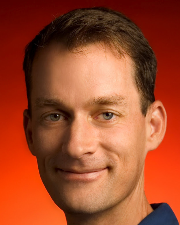
Jeff Dean, former chief scientist of Google, co-founder of Discovery Loop
4% Decline and a 27-Year Farewell
To understand the intensity of this reorganization, one must first recognize what those leaving are taking with them. Jeff Dean has served at Google for 27 years, and as the 30th employee, he participated in the core construction from the early search infrastructure (MapReduce) to deep learning frameworks and the Gemini multimodal model. In the developer community, he is seen as the soul figure who “supported half of Google’s technological history.” The other three co-founders who left to establish Discovery Loop with him are equally influential: Sanjay Ghemawat is the foundational figure of Google's distributed systems, Oriol Vinyals is a VP of research at DeepMind, and Quoc Le is a co-founder of Google Brain.
The collective departure of these four senior researchers directly triggered a severe reaction in the capital market. Alphabet's stock price dropped by about 4% in one day following the announcement of personnel changes. For a large technology giant, a 4% market valuation drop in a single day is not a small figure, reflecting the market's deep concerns over the loss of core technical personnel at Google and the short-term stability of model iterations.
In developer communities such as Hacker News, shock and regret became the mainstream emotions. Developers generally believed that this was not a routine transition of old and new personnel, but rather a physical migration of “half of Google's AI infrastructure and cutting-edge research.” The departure of Jeff Dean and others took away not just individual intellect but also the long-accumulated engineering tacit knowledge and foundational architecture experience within Google. When these pillars supporting the dual engines of Google search and AI become unstable, the market will naturally question whether Google can maintain its original engineering iteration pace in the upcoming arms race of large models.
The Cutting of Hassabis: Stepping Away from Daily Operations to Focus on AGI's Deep Waters
Along with the departures of Jeff Dean and others, another main line of Google AI also underwent fundamental changes. Demis Hassabis stepped down as CEO of Google DeepMind and became chairman of DeepMind and chief scientist of Alphabet. According to the official statement, he will free himself from daily operations to focus on AGI strategy and continue to serve as CEO of Isomorphic Labs (AI pharmaceuticals).
Hassabis's stepping aside is not a marginalization but rather based on Google's judgment of the current stage of AI development. As large models increasingly compete in applications like text generation and multimodal understanding, Google believes that AGI has entered a deep water area requiring the full-time efforts of top scientists. The daily model iteration, product landing, and commercialization are consuming significant management energy. By freeing Hassabis from executive duties, Google is allowing him to fully commit to breakthroughs in AGI and the commercialization efforts of Isomorphic Labs, which is a strategic bet on the long-term vision.
This adjustment is particularly unique in the industry context. While leading AI labs like OpenAI and Anthropic are mired in tug-of-war over safety alignment and speed limitations, even spurring an industry-wide safety anxiety with “1,134 AI employees signing a petition to hit the brakes,” Google has chosen to let its chief scientist directly bypass the conventional safety speed limit debates and focus on scientific discoveries themselves. Hassabis's new role essentially represents a physical division within Google's organizational structure, differentiating the “long-term AGI vision” from the “short-term model commercialization.” Google is attempting to harness a separate team to pursue foundational scientific breakthroughs that may require over a decade to manifest, while leaving the immediate market competition to another group.
Koray's Brawl: Taking Over Daily Development and Commercialization at High Speed
Taking over Hassabis's daily management duties is former DeepMind CTO Koray Kavukcuoglu. He has worked with the DeepMind team for 13 years and is a top expert in the field of deep learning. After being promoted to Google DeepMind SVP, he reports directly to Sundar Pichai and is fully responsible for Gemini model development, cutting-edge AI research, the Gemini App, and the developer team.
Koray has taken over a highly competitive situation. The current large model market is no longer dominated solely by Google; OpenAI's GPT series holds a first-mover advantage in the developer ecosystem, Anthropic's Claude closely trails in long text and coding fields, while emerging players like Moonlight's Dark Side show strong explosive power in specific dimensions. As revealed in a recent article on the platform "From 18th to First: Kimi K3's Method of Surpassing Claude and GPT in Long Context Encoding," competition in vertical fields like coding and long context has entered a fierce stage where the speed of engineering iterations becomes crucial for survival.
The biggest challenge Koray faces upon taking office is how to prove that Google does not lag behind amidst the pressure from competitors like GPT and Claude. He must accelerate the engineering deployment of Gemini and the construction of the developer ecosystem. This implies that DeepMind's focus will inevitably shift from “academic and cutting-edge exploration” to “product and engineering brawl.” Some developers have expressed concerns: After Hassabis stepped away, will the original academic and cutting-edge exploration genes of DeepMind completely yield to product and engineering genes, thus causing Gemini to stagnate in architectural innovation? Can Koray bear the life-and-death speed of commercialization while maintaining innovation at the fundamental level of the model? The answers to these questions will directly determine Google's position in the competition for the next generation of large models.
Jeff Dean’s Side Hustle: Departure of Veteran Employees and Ecological Extension
The departure and entrepreneurial move of Jeff Dean and others is the most dramatic scene in this reorganization. The company they founded, Discovery Loop, is positioned as a public benefit corporation (PBC), aiming to utilize AI to automate the scientific research process, including proposing, running, evaluating, and iterating thousands of concurrent experiments, and exploring “recursive self-improvement,” which means using AI to create stronger AIs.
It is noteworthy that Discovery Loop maintains a capital and computational power relationship with Google. Alphabet is the founding investor of Discovery Loop and has committed to providing computational power support in its first year. The first round of investment was led by Radical Ventures and Khosla Ventures. This arrangement indicates that the departure of Jeff Dean and others is not a mere “talent loss” but rather an “external supplement” to the Google ecosystem.
Within large corporations, due to compliance reviews, departmental barriers, and short-term financial pressure, it is extremely difficult to advance explorations that are ultra-advanced and carry some uncontrollable risks, such as “recursive self-improvement” and “automated scientific methods.” By investing and providing computational power, Google has spun off this part of the business, allowing it to develop independently in an environment unencumbered by the red tape of large corporations, while also transforming it into an ecological ally through founding investment and computational power supply. This is a high-level “internal incubation externalization” solution. Essentially, Google is binding the demand for cutting-edge “AI for Science” with computational power; once Discovery Loop achieves breakthroughs in automated scientific discovery, the underlying computational power ecosystem of Google Cloud will directly benefit. The developer community is excited about the “automated scientific methods,” believing it can break the bottleneck of human sequential iteration, but there are deep safety concerns about “recursive self-improvement” detaching from human feedback loops.
Organizational Tension and Ultimate Judgments: Is It Acceleration or Loss of Control?
In summary, the major overhaul at Google AI is neither merely about accelerating AGI nor about a loss of control in daily model iterations, but rather a strategic trade-off based on competitive pressures. Large companies are experiencing organizational tension between long-term visions and short-term commercialization; Google has chosen to use “cutting” to allow Hassabis to focus on the long term, and “external supplements” to enable Jeff Dean to explore cutting-edge areas while assigning Koray to handle short-term competition.
Sundar Pichai's internal letter framed this change as a “peaceful separation” and an “attempt to try new things.” This three-pronged structure aims to maintain the vitality of cutting-edge exploration while strengthening the market competitiveness of commercial products. For developers and industry observers, the success of this structure depends on two core indicators: first, whether Koray can secure the territory in the brawl, ensuring that the Gemini series models do not lag behind competitors in iteration speed and engineering capabilities; second, whether Discovery Loop can truly give back to Google’s underlying computational power ecosystem, transforming cutting-edge exploration into commercial increments for Google Cloud.
This reorganization is a proactive adaptation to the current competitive landscape of AI. As competition among large models shifts from parameter optimization to engineering and ecological competition, physically separating the academic and engineering factions organizationally may help reduce internal friction. However, the risks are equally apparent: the loss of core veterans is difficult to compensate for in the short term, and Koray faces extreme market pressure with very low tolerance for error. Whether Google AI can achieve a soft landing in this strategic restructuring of cutting and external supplementation will be revealed by the model iteration data in the coming year.
免责声明:本文章仅代表作者个人观点,不代表本平台的立场和观点。本文章仅供信息分享,不构成对任何人的任何投资建议。用户与作者之间的任何争议,与本平台无关。如网页中刊载的文章或图片涉及侵权,请提供相关的权利证明和身份证明发送邮件到support@aicoin.com,本平台相关工作人员将会进行核查。


