
Author: Climber, CryptoPulse Labs
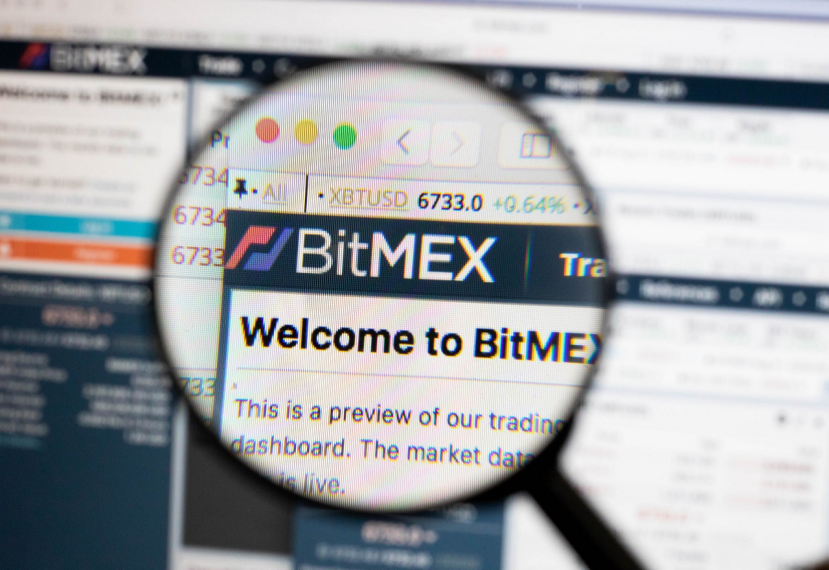
The long-established cryptocurrency derivatives exchange BitMEX unexpectedly announced the official closure of its exchange services and immediately stopped new user registrations. This means that an important platform that once drove the global cryptocurrency derivatives market will end its trading operations after 11 years.
As one of the most influential trading platforms in the early days of the cryptocurrency industry, BitMEX changed the market trading model with its 100x leverage perpetual contracts, pushing cryptocurrency assets from the spot trading era into the derivatives era.
However, with the intensification of industry competition, changes in the regulatory environment, and the transformation of market structure, the platform that once held a leading position began to face new challenges. The exit of BitMEX is not only the curtain call for a trading platform but also a reflection of the changing stages of development in the cryptocurrency industry.
1. From the Pioneer of Perpetual Contracts to Industry Benchmark: BitMEX Once Redefined Cryptocurrency Trading Models
BitMEX was established in 2014, at a time when the cryptocurrency market was still in an early exploratory phase, with the mainstream trading methods primarily focused on spot trading of digital assets like Bitcoin.
Compared to traditional financial markets, the cryptocurrency industry lacked mature derivatives tools, and market participants mainly relied on asset price increases to generate profits.

BitMEX's emergence changed this landscape.
Around 2016, BitMEX launched its Bitcoin perpetual contract product, offering up to 100x leverage, quickly attracting a large number of professional traders. As an innovative financial product, perpetual contracts do not have the fixed expiration date typical of traditional futures, but instead use a funding rate mechanism to keep contract prices closely aligned with spot prices over time.
This design is particularly suited to the characteristics of around-the-clock trading and high volatility in the cryptocurrency market, and it became the core product that many trading platforms rushed to replicate later on.
During the cryptocurrency bull market of 2017, BitMEX entered a phase of rapid development. A large number of investors sought to amplify their profits through leverage, leading to rapid growth in platform trading volume, and it gradually became one of the most important cryptocurrency derivatives trading venues globally.
Particularly during the 2019 to 2020 period, BitMEX became a focal point of market attention. Traders monitored the platform's funding rates, open interest, and liquidation data, using these indicators as key references for assessing market sentiment.
At that time, BitMEX was not just a trading platform; it was like a barometer of risk appetite in the cryptocurrency market. It propelled several industry trends:
First, perpetual contracts became the mainstream product in the cryptocurrency derivatives market. Nowadays, most large trading platforms globally offer similar products, and this model was matured by BitMEX.
Secondly, BitMEX cultivated a group of professional cryptocurrency trading users. A large number of quantitative traders, arbitrage institutions, and high-risk investors entered the digital asset derivatives market through this platform.
Moreover, BitMEX also accelerated the financialization process of the cryptocurrency market. In the past, investors could only obtain profits through buying and holding Bitcoin, while the emergence of derivatives tools allowed for more trading strategies such as long, short, arbitrage, and risk management.
It can be said that BitMEX once represented a key phase in the cryptocurrency market's evolution from asset speculation to a financial trading system.
2. From Leader to Exiter: The Changes in Industry Competition Behind BitMEX's Closure
The closure of BitMEX's trading services does not mean that the cryptocurrency derivatives market is in decline. In fact, derivatives remain one of the most important trading areas in the current digital asset market.
However, the logic of industry competition has changed.
 In the early stages, trading platforms primarily attracted users through product innovation. Whichever platform could be the first to launch high-leverage products or more diverse trading tools would gain a competitive advantage.
However, as more and more trading platforms entered the derivatives space, single product innovation has struggled to form a long-term competitive barrier.
In recent years, large trading platforms such as Binance, OKX, and Bybit have been continuously expanding their derivatives businesses, establishing significant advantages in trading depth, product variety, user scale, and global reach.
For traders, when choosing a trading platform, considerations now extend beyond just leverage multiples to encompass a range of factors, including liquidity, safety, fees, compliance level, and ecosystem service capability. This puts greater pressure on platforms that previously relied on singular innovations for their advantages.
On the other hand, changes in the regulatory environment have also become an important factor influencing industry development.
The early development phase of the cryptocurrency industry emphasized openness, freedom, and globalization, with many platforms attracting users by offering high-leverage products. However, as the scale of digital assets expanded, regulatory bodies began to increase their scrutiny on trading platforms.
Trading platforms now face stricter identity verification, anti-money laundering requirements, and risk management standards.
BitMEX itself has also faced regulatory challenges. In 2020, U.S. regulatory authorities took enforcement actions against BitMEX-related entities, leading the market to reassess the risks associated with high-leverage trading models.
Although BitMEX subsequently strengthened its compliance framework, including implementing stricter user authentication systems, the direction of industry development has already changed.
Meanwhile, the rise of decentralized finance (DeFi) has brought new competition to traditional centralized trading platforms.
In recent years, on-chain perpetual contract protocols have continuously evolved, allowing users to trade directly via blockchain without relying on traditional centralized platforms. Although DeFi still faces challenges like liquidity, security, and user experience, its development trends are driving innovations throughout the entire industry.
Therefore, the exit of BitMEX essentially reflects the cryptocurrency trading industry transitioning from a phase of rapid expansion to a stage of mature competition.
The previous model of rapidly growing through innovative products is decreasing, and future trading platforms will need to establish long-term competitiveness based on compliance, technology, ecosystem, and user trust.
3. Gradual Market Exit: How BitMEX Completes Its Exit After 11 Years of Operations
In the process of its closure, BitMEX has adopted a gradual exit strategy rather than abruptly halting services.
According to official plans, the platform has stopped new user registrations and canceled all BMEX token staking, distributing related assets to user accounts.

Subsequently, BitMEX plans to stop new position opening permissions on August 26, 2026, at 04:00 UTC. By that time, users will still be able to reduce positions but will not be able to open new trading positions.
After that, the platform will gradually withdraw from the market and forcibly liquidate the remaining positions according to plan. Upon final closure of trading services, all open positions will be forcibly closed.
This gradual exit method can reduce market shock and also give users ample time to manage their assets.
Regarding user fund security, BitMEX stated that its reserve proof shows that user assets are fully covered. After trading closes, users will still be able to log in to their accounts to check balances, view history, and continue to initiate withdrawals.
However, the platform also reminds users to complete asset transfers in a timely manner.
If users do not complete withdrawals before the closure, eligible KYC user accounts will incur a management fee, set at $50 equivalent per month or an annualized 1%, whichever is higher.
Additionally, BitMEX specifically warns users to be alert to scam risks.
When several trading platforms have ceased operations in the past, there were instances of impersonated customer service and false withdrawal websites among scam activities. Malicious actors often exploit users' concerns to lure them into clicking phishing links or disclosing account information.
Therefore, users need to operate through official channels to avoid asset losses.
From the experience of operating for 11 years, although BitMEX is about to exit the trading market, its impact on the industry still remains.
It propelled perpetual contracts to become core financial tools in the cryptocurrency market and also promoted the development of the digital asset derivatives system.
Conclusion: The End of BitMEX Marks the End of an Old Era and the Beginning of a New Phase
The exit of BitMEX does not mean that innovation in cryptocurrency finance has stopped. On the contrary, with institutional funds entering, real asset tokenization, and the development of on-chain finance, a new round of financial infrastructure construction is underway.
Each industry transition sees old platforms exit while new forces rise. The greatest value left by BitMEX lies in proving that crypto assets can also establish complex financial market systems.
Its closure signifies the end of one era and the beginning of another.
免责声明:本文章仅代表作者个人观点,不代表本平台的立场和观点。本文章仅供信息分享,不构成对任何人的任何投资建议。用户与作者之间的任何争议,与本平台无关。如网页中刊载的文章或图片涉及侵权,请提供相关的权利证明和身份证明发送邮件到support@aicoin.com,本平台相关工作人员将会进行核查。


