Author: Chris Dixon, a16z partner
Translation: Deep Tide TechFlow
Deep Tide Guide: The GENIUS Act has led to a 50% surge in the stablecoin market in just six months, attracting $13 billion in investments, proving that clear regulation can unleash rather than stifle innovation. Yet stablecoins only account for 15% of the crypto market, and the blockchain networks supporting them still lack federal rules—just like regulating smartphones while ignoring cellular networks. The CLARITY Act aims to fill this gap, determining whether the U.S. can dominate the next generation of financial infrastructure as it did the internet.
Each generation has the opportunity to upgrade infrastructure.
The 1990s were about the internet. Policymakers worried that it would disrupt existing industries and create new risks. However, they did not force this technology into outdated regulatory frameworks but instead created rules that allowed innovation to thrive while protecting consumers. The result was one of the greatest periods of economic growth in U.S. history.
Today, we face a similar opportunity with blockchain networks. Stablecoins make payments faster and cheaper. Tokenization is modernizing capital markets. Both depend on blockchain infrastructure.
These technologies will advance regardless of whether Congress acts. Whether the U.S. can set the standards or cede this territory to others is up to itself.
GENIUS Act Proves Clear Rules Are Effective
The GENIUS Act demonstrates what thoughtful policy can achieve. Stablecoins are digital dollars that move easily over the internet, akin to Bitcoin. Sending $200 from the U.S. to Colombia via traditional channels can cost over $12 and take days. With stablecoins, the same transfer can settle for just a few cents within seconds.
Regulatory uncertainty has impeded stablecoin adoption for years. The GENIUS Act changed that. By establishing reserve requirements and an issuer framework, it eliminated all confusion and unleashed growth.
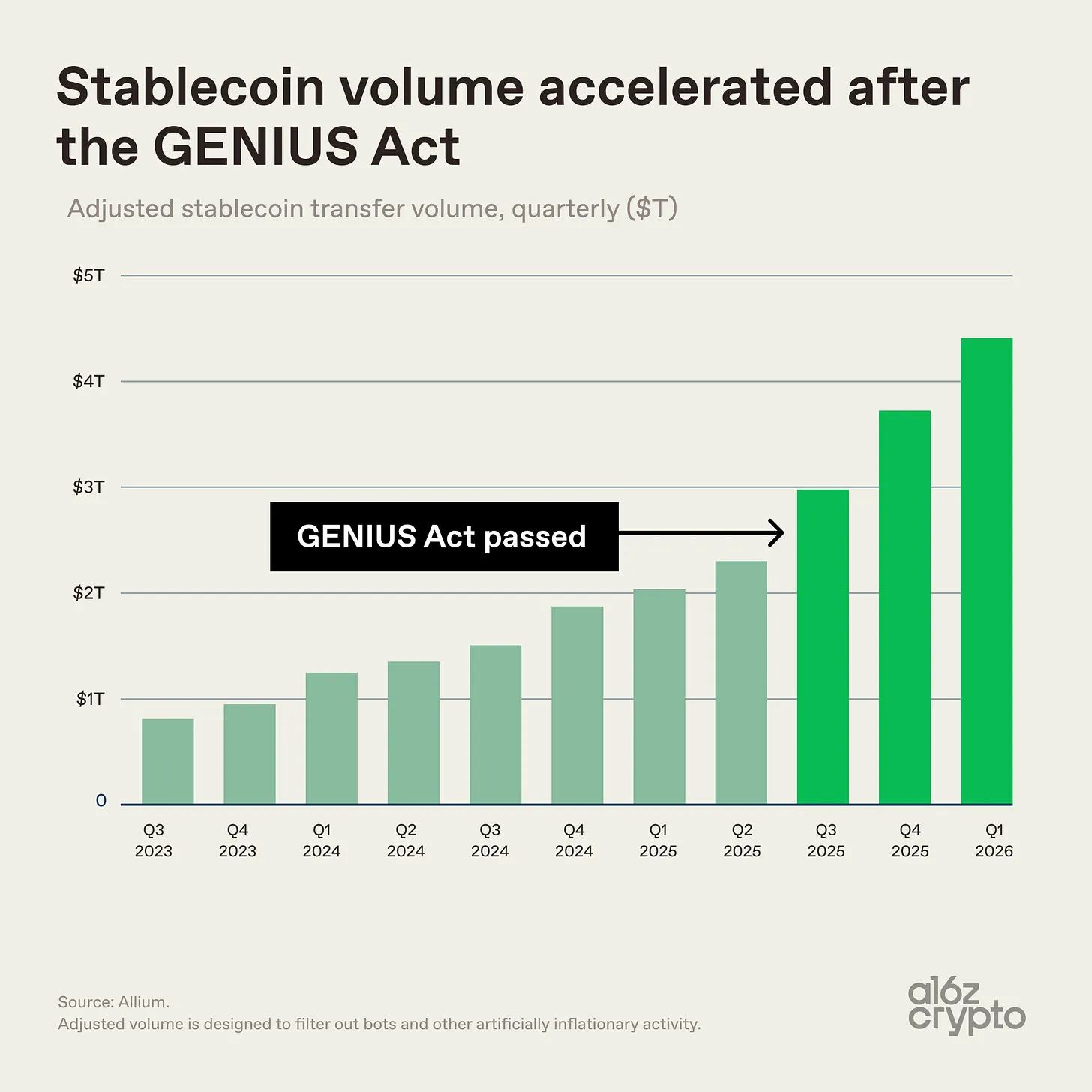
The results are clear. The stablecoin market is now approximately $315 billion, having increased by over 50% in a year, with dollar-backed tokens becoming one of the fastest-growing channels for U.S. money overseas. According to Visa, stablecoins facilitated $1 trillion in transaction volume over the past 12 months. Major institutions—including JPMorgan, Citigroup, Visa, Mastercard, and BlackRock—are becoming more deeply involved in blockchain infrastructure.
The key is that the dollar is winning. Millions of people worldwide without convenient access to traditional dollar accounts can now hold and trade digital dollars through software wallets. Clear rules help anchor this new system to U.S. standards and institutions rather than competitive alternatives.
GENIUS proves that smart regulation expands the market rather than restricts it. But it only addresses part of the issue.
Blockchain Networks Still Lack Rules
Stablecoins account for less than 15% of the crypto market by market cap, but they depend on the remaining 85% of foundational blockchain networks, which still lack a coherent federal framework. This is akin to regulating smartphones while neglecting cellular networks.
The CLARITY Act corrects this.
At its core, CLARITY provides clear rules for blockchain networks and defines the regulatory responsibilities of the digital asset market. It incentivizes transparency, reduces risks, and fosters competition under a set of common standards. It helps prevent the next FTX disaster by authorizing regulators to oversee intermediaries with established principles from traditional finance—appropriate custody, customer asset segregation, and full disclosure. It also paves the way for the next wave of institutional adoption.
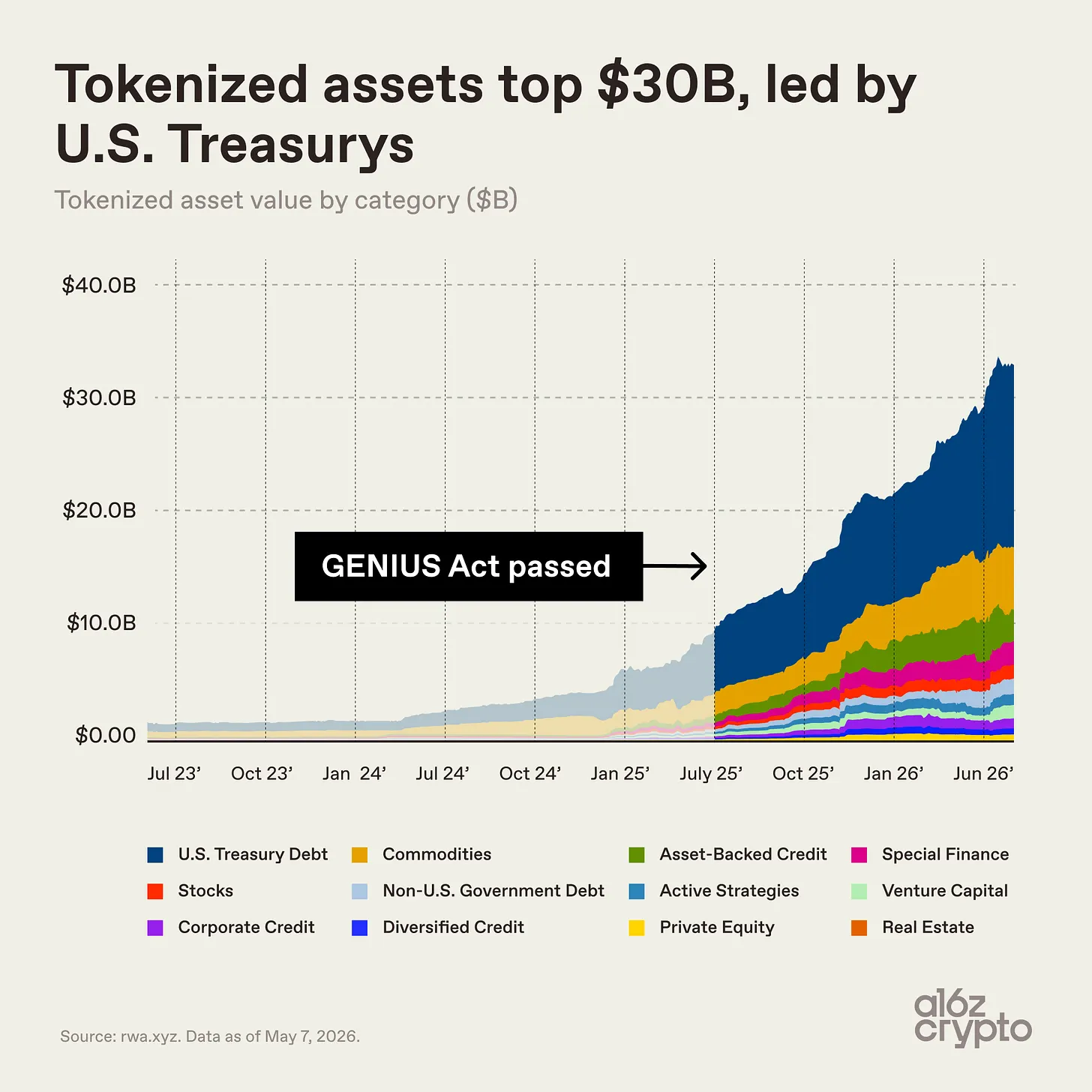
Major companies have already taken action. BlackRock has launched tokenized funds. JPMorgan is building a blockchain-based payment system. The DTCC, which manages $114 trillion in assets, is preparing to expand the tokenized securities market through the Canton network. CLARITY removes barriers to entry and provides a clear path for compliant participation by traditional finance. This benefits not only the crypto industry but also consumers, investors, and the long-term competitiveness of U.S. capital markets.
The Choice Before Us
History shows that open, neutral platforms governed by clear rules create the most value. The internet succeeded because entrepreneurs understood the rules of the game. They could build, attract capital, and compete based on merit rather than regulatory guesswork. Blockchain networks deserve the same opportunity.
The opposition between regulation and innovation is a false dichotomy. GENIUS has already disproven this: in the second half of 2025—after the GENIUS Act is signed into law—over $13 billion will flow into crypto startups, nearly twice the $6.9 billion invested in that sector in the first half of the same year before GENIUS. Meanwhile, forecasts show that the tokenized asset market will grow 100-fold in the coming years. The real choice is between certainty and uncertainty, whether the U.S. can assert its leadership, build the future domestically, or watch it be built elsewhere.

No law is perfect, and the CLARITY Act is no exception. The reality is that cryptocurrencies currently lack any consumer protections. CLARITY puts these protections in place. Like any piece of legislation, no one will get everything they want, but the version released today will push the industry forward. It reflects months of bipartisan negotiations and significant compromises from the industry. Despite any imperfections, the CLARITY Act is clearly better than continuing with no safeguards at all.
The decisions Congress makes this year will determine where the next era of financial infrastructure will flourish and who will write the rules. If the CLARITY Act passes, it will once again put the U.S. in the lead, just as it did with the commercial internet. Inaction means innovation will migrate elsewhere, operating within frameworks designed by others.
免责声明:本文章仅代表作者个人观点,不代表本平台的立场和观点。本文章仅供信息分享,不构成对任何人的任何投资建议。用户与作者之间的任何争议,与本平台无关。如网页中刊载的文章或图片涉及侵权,请提供相关的权利证明和身份证明发送邮件到support@aicoin.com,本平台相关工作人员将会进行核查。


