Author: Flora, CryptoPulse Labs
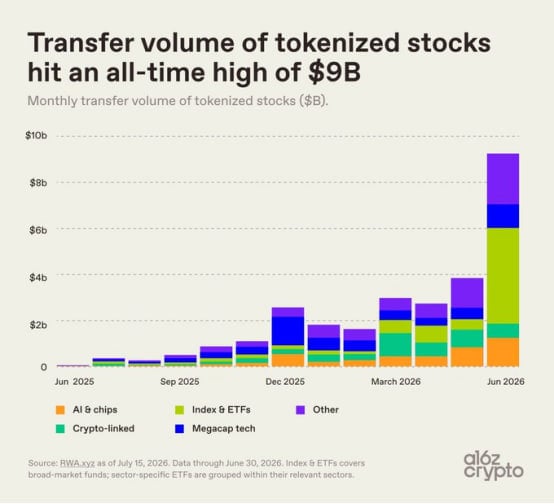
On July 22, a16z crypto stated that on-chain activity for tokenized stocks is rapidly growing. In June this year, the monthly transfer volume of tokenized stocks reached $9.22 billion, compared to only $53 million during the same period last year, a year-on-year increase of over 170 times.
This metric does not purely represent the scale of stock trading but encompasses all related on-chain activities, including transactions, transfers between wallets, and deposits of collateral into DeFi protocols.
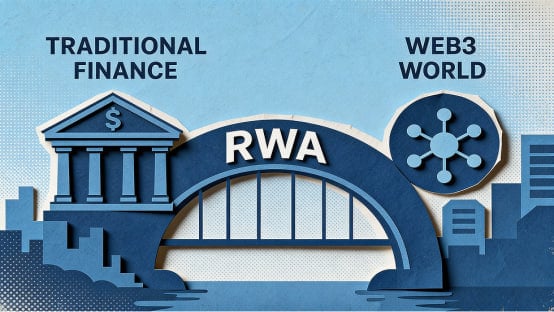
Compared to the traditional stock market, which sees monthly trading volumes reaching trillions of dollars, the current scale of tokenized stocks remains very limited. However, the rapid growth of tokenized stocks in the still nascent RWA market could imply that the on-chain adaptation of real-world assets is transitioning from proof of concept to actual application.
1.Behind the $9.22 Billion: On-Chain Stocks Begin to Truly Flow
In recent years, the core issue of the RWA market has been which real-world assets can be moved to the blockchain.
Assets such as government bonds, money market funds, real estate, and private credit have successively become the focus of the market, while stocks, as one of the largest and most liquid financial assets globally, have also begun the tokenization process.
However, the significance of stock tokenization is not merely about duplicating traditional stocks into an on-chain token. The truly important aspect is that the blockchain may fundamentally change the ways stocks are issued, traded, settled, and utilized.
In the traditional financial system, a stock transaction usually requires multiple steps involving exchanges, brokers, custodians, clearing houses, and banks. There are time lags between different markets, and cross-border transactions require complex financial infrastructure, with asset settlements taking a certain amount of time to complete.
In a blockchain environment, assets can be transferred and settled automatically through smart contracts, theoretically enabling 24/7 trading and circulation between different chain-based financial protocols.
This is also the most fundamental difference between tokenized stocks and traditional stocks. Traditional stocks primarily exist within relatively closed financial systems, where actions such as trading, settlement, and collateralization are conducted by different institutions and infrastructures.
Once tokenized stocks enter the blockchain network, they have the potential to become programmable components within the on-chain financial system. They can not only be bought and sold but also transferred, collateralized, and combined into other financial products.
Therefore, while the $9.22 billion monthly transfer volume reported by a16z crypto cannot be simply equated to stock trading volume, it still holds significant meaning. It indicates that tokenized stocks are beginning to exhibit more real on-chain activity.
Transactions, wallet transfers, and deposits into DeFi protocols as collateral indicate that tokenized stocks are moving from issuance to actual usage.
For any financial asset, issuance scale is merely the first step; what truly determines viability is whether the asset can sustain liquidity and create more application scenarios within the financial system.
2.When Stocks Meet DeFi: On-Chain Finance Begins to Access Traditional Assets
Tokenized stocks are rapidly growing, driven by multiple forces. Firstly, traditional financial institutions are gradually accepting blockchain as a new asset issuance and settlement infrastructure.
In the past, financial institutions viewed blockchain more as the underlying technology for cryptocurrencies, but with the development of stablecoins, tokenized government bonds, and the RWA market, more institutions are starting to realize that blockchain's greater value may lie in transforming the flow of financial assets.
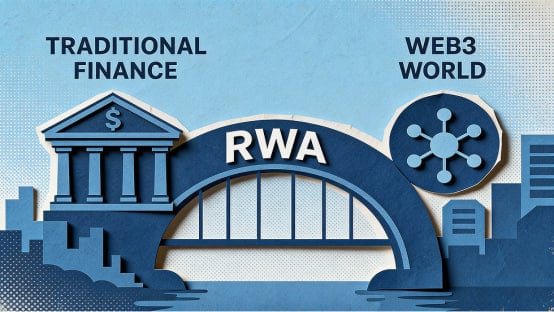
In traditional financial systems, many processes depend on information transmission and manual operations between different institutions, while blockchain can automate parts of trading, clearing, and settlement processes through smart contracts.
In the future, financial institutions will not disappear due to the advent of blockchain; functions such as custodianship, compliance, and risk control will still be important, but the methods of asset issuance and flow may change. Financial institutions will continue to play credit and regulatory roles, while blockchain will serve as the underlying network for asset transfer and settlement.
Secondly, global investor demand for a 24/7 financial market is increasing. The digital asset market has demonstrated that global investors are adapting to a trading system that operates around the clock.
In contrast, traditional stock markets have clear trading time limitations, and there are time differences and market isolation between different countries and regions. If stocks can enter the blockchain network in a compliant tokenized form, there are opportunities to connect with the always-on digital financial market.
However, the most imaginative aspect of tokenized stocks still lies in their integration with DeFi. The past DeFi mostly revolved around BTC, ETH, and various cryptocurrencies, which, while having high liquidity, also experience significant price volatility.
As tokenized stocks, government bonds, and other real assets come on-chain, DeFi may be able to support a richer array of underlying assets in the future.
A tokenized stock can be used for collateralized lending, combined with stablecoins to create new financial products, and included in on-chain indices and structured products.
Investors can even automatically execute investment strategies through smart contracts. This composability is one of the most significant changes when traditional financial assets enter the blockchain.
The long-term value of RWA also lies in connecting massive financial assets from the real world to a more open and programmable financial network. Tokenized stocks, as one of the largest asset classes globally, are likely to become a significant entry point in this process.
3.The Real Test of Tokenized Stocks: From Issuance to Ecosystem
Although tokenized stocks are rapidly growing, this does not mean that the market has matured. Compared to the traditional stock market, the current scale of tokenized stocks remains limited, and the industry still faces multiple issues, including regulation, ownership, liquidity, and infrastructure.
First is the regulatory issue. Stocks inherently belong to the category of securities, and tokenization does not change their securities nature.
Whether a stock token can be opened to global investors, whether investors qualify to purchase, and whether the issuer needs to obtain relevant regulatory approvals are questions that cannot be automatically resolved through blockchain technology.
Different countries and regions have varying regulations regarding the issuance and trading of securities, so tokenized stocks must find a balance between global trading demand and local regulatory requirements.
Secondly, there is the issue of asset ownership. Does a tokenized stock represent direct ownership of the underlying stock or is it merely a financial product tracking the stock price? Who holds the custody of the stocks behind the token? Do investors have voting rights and dividend rights? If the issuance platform encounters risks, can users genuinely redeem the underlying assets? These questions will directly determine the level of trust the market has in tokenized stocks.
Liquidity is also a critical issue. While tokenized stocks can be traded on the blockchain, this does not mean they inherently possess sufficient market depth. Traditional stock markets already have established exchanges, market makers, and investor bases.
If tokenized stocks cannot provide clear advantages in trading costs, settlement efficiency, trading times, and financial applications, it will be challenging to attract investors from traditional markets.
Therefore, the future competition of tokenized stocks will not simply compare who has issued more assets, but who can establish a more complete financial ecosystem. This ecosystem needs to include compliant issuance platforms, custodians, trading markets, stablecoin settlement systems, DeFi protocols, and cross-chain infrastructure.
Only when these parts are truly connected can tokenized stocks evolve from a concept of asset issuance to a real on-chain financial market.
From a longer time perspective, the relationship between traditional finance and crypto finance may not just be a straightforward replacement. A more likely scenario is that traditional financial assets gradually enter the blockchain while blockchain technologies and financial tools are also gradually accepted by traditional financial institutions.
Assets like stocks, bonds, funds, and real estate will not disappear, but the methods of their issuance, trading, settlement, and usage may change.
Conclusion
The $9.22 billion monthly transfer volume of tokenized stocks in June, while still insignificant compared to the traditional stock market, shows a year-on-year increase of over 170 times, indicating that this market is entering a phase of rapid expansion.
In the future, with more issuers and platforms involved, tokenized stocks may become one of the most promising asset classes in the RWA market.
免责声明:本文章仅代表作者个人观点,不代表本平台的立场和观点。本文章仅供信息分享,不构成对任何人的任何投资建议。用户与作者之间的任何争议,与本平台无关。如网页中刊载的文章或图片涉及侵权,请提供相关的权利证明和身份证明发送邮件到support@aicoin.com,本平台相关工作人员将会进行核查。


