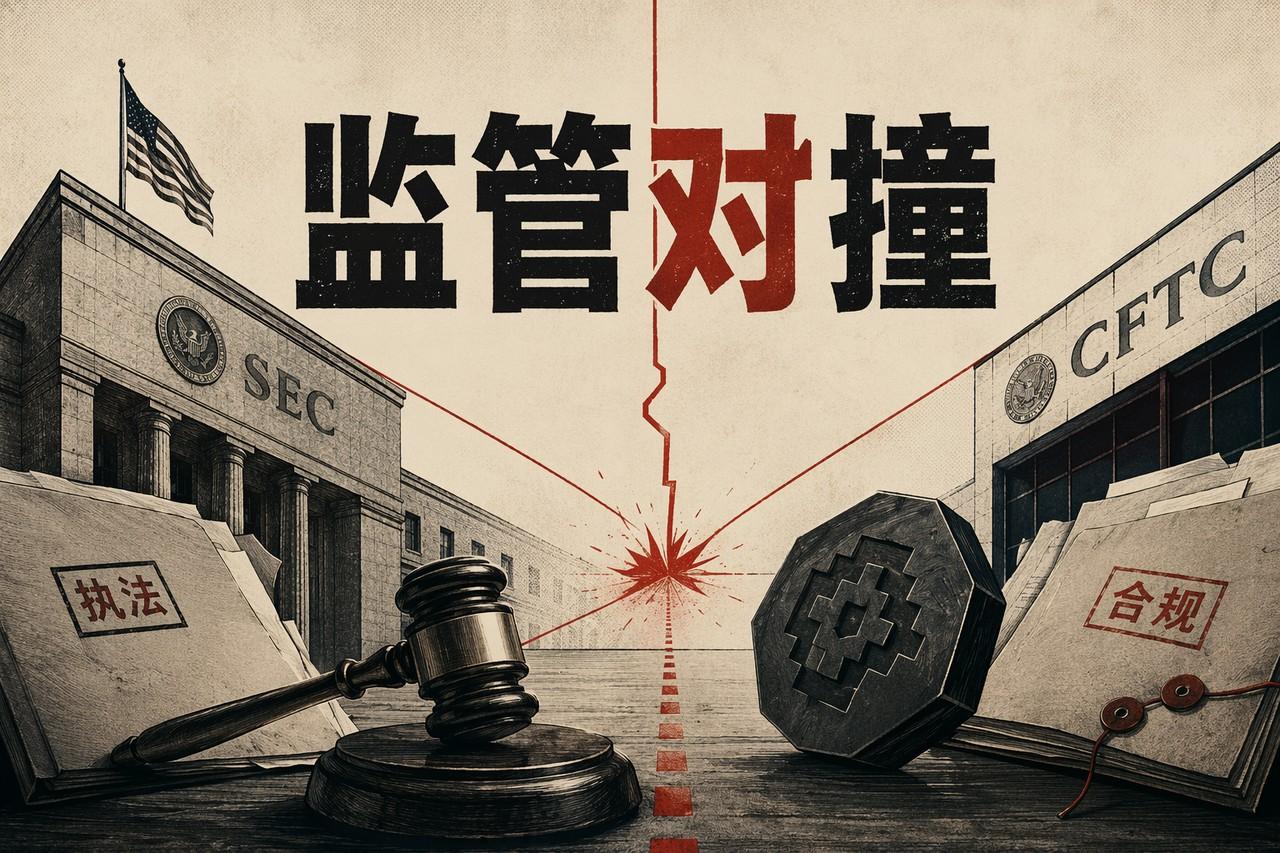
On May 30, 2026, Kyle Samani, the former co-founder of Multicoin Capital, threw out a set of cold, rhetorical-free ideas on X: What regulatory outcomes could the U.S. crypto perpetual contract market face if it continues to slide along three completely different trajectories? In his view, one path leads to a non-regulatory perpetual channel that continues to mature, relying on offshore and decentralized protocols, rendering the CFTC's DCO and DCM licensing systems essentially hollow, with all truly liquid markets for U.S. users remaining outside the licensed system; another path depends on the CLARITY Act currently under review by Congress—protocols that pass eight decentralization tests could operate without registering as a DCO/DCM, pulling decentralized platforms like Hyperliquid, which he calls the “Binance 2.0 without a marketing team,” directly out of the “gray area” into a new exemption framework; the most pessimistic scenario lies between the two: products have overwhelming attraction in terms of technology and users, yet can never be accepted by the CFTC's existing system, struggling to enter regulated prediction market platforms like Kalshi, while also being hesitant to openly serve U.S. users amidst regulatory ambiguity. The core of the conflict is not a specific platform but a regulatory framework designed for centralized institutions, grappling with how to address decentralized protocols that can circumvent licensing while still offering clearing and matching functions. The main thread this article aims to trace is: as Kalshi attempts to carve out a compliant perpetual path within licensing, unlicensed protocols like Hyperliquid continue to expand on-chain, while the CLARITY Act attempts to rewrite exemption boundaries with decentralization tests, where exactly the boundaries of the U.S. crypto perpetual market will be drawn.
The Compliance Cost of Kalshi's Bet on Licensing
For Kalshi, the choice to develop crypto perpetual contracts within a licensing framework is a high-stakes gamble on the U.S. derivatives regulatory framework. It is itself a prediction market platform operating under the CFTC system, already incorporated into the regulatory grid formed by DCO and DCM, and is now attempting to fit crypto perpetuals into this system of clearing and designated contract markets. Several Chinese media outlets have mentioned that Kalshi is promoting “compliant crypto perpetual contract products,” but there is only isolated information on how it is reporting through specific licensing pathways or whether it has been approved as the “first U.S. perpetual futures” as some media put it, with the approval timeline not disclosed, leaving it still in the “to be verified” gray area.
Along this path, the costs and constraints are almost written into the licensing terms. Choosing DCO/DCM means that each contract must undergo a lengthy compliance review cycle, align with traditional futures in market design, risk control, and clearing arrangements, and accept ongoing disclosure of information and regulatory filings; on the user side, there must be thorough identity verification, trading restrictions, and higher thresholds for entry, which naturally conflicts with the experience of opening positions on-chain with just one address. The first scenario described by Kyle essentially compares this all against a timeline: as offshore platforms and non-regulatory decentralized protocols mature, even if Kalshi ultimately goes live with compliant perpetual contracts endorsed by the CFTC, it may only cover that portion of funds that must remain within the U.S. financial system. For existing users and trading volumes accustomed to non-regulatory environments, it is more like a parallel and narrow compliant tributary, rather than a dominant force in the market's flow direction.
Unlicensed Perpetuals and the Binance 2.0 Controversy
Looking down this “non-regulatory main channel,” the current trading volume of crypto perpetuals is indeed being consumed by a number of non-U.S. licensed platforms, including both traditional offshore centralized platforms and decentralized protocols represented by Hyperliquid. Hyperliquid wraps itself in on-chain matching and specific governance models, ostensibly a “teamless operation” protocol, yet in terms of liquidity depth and trading experience, it strives to align as closely as possible with mature centralized exchanges, attracting users accustomed to high leverage and high-frequency trading, effectively transferring derivative operations that should be functioning within a licensed framework into a technical shell that skirts regulation.
It is in this context that Kyle Samani likens Hyperliquid to “Binance 2.0 without a marketing team,” a statement that bears a dual meaning in the industry: on one hand, it acknowledges the product's completeness and attractiveness, implying that it functions similarly to early offshore giants like BitMEX and Binance; on the other hand, “without a marketing team” seems to reflect a compliance posture—minimizing overt signs of gaining new users to reduce exposure to U.S. regulators. However, historical experiences are there: the CFTC's past enforcement actions against unregistered platforms like BitMEX and Binance have consistently focused on “offering perpetual contracts to U.S. users without registration,” and do not fundamentally change based on whether a platform promotes itself aggressively. DeFi Monk noted in an interview that, even amidst regulatory uncertainty and fierce competition, Hyperliquid still has substantial long-term growth potential, especially if a certain regulatory path eventually materializes and provides it with clear boundaries; but with the CLARITY Act yet to be resolved and the CFTC's enforcement scale still uncertain, this “Binance 2.0” style of unlicensed expansion makes each incremental market share gain factor in heavier stakes in the first scenario Kyle envisioned alongside a new wave of enforcement storms.
CLARITY Test and License Exemption
In Kyle's second scenario, the real game changer is not any single platform but the CLARITY Act, which is still under review in Congress. Reports from several Chinese media outlets roughly outline its contours: through eight “decentralization tests” to determine whether a protocol is sufficiently “like code rather than a company,” and if the tests are passed, it can open contract trading to U.S. users without obtaining traditional derivatives licensing such as DCO or DCM. In other words, the act attempts to replace the past regulatory model that could only demarcate based on institutional identities, capital reserves, and licensing thresholds with a set of objective standards regarding technology and governance structures, shifting the distinction of “who needs a license, who can be exempt” from institutional attributes to the protocol architecture itself.
Under this arrangement, Kyle's second scenario finds concrete grounding: as long as CLARITY eventually passes into law and a particular perpetual protocol can pass these eight tests, it can legally provide perpetual contracts within the U.S. without registering as a DCO or DCM within the CFTC system. For protocols like Hyperliquid, this seems like a naturally compatible path—it already prides itself on being decentralized and seeks to operate outside traditional licensing logic; however, reality is far more complex. Currently, regarding “whether Hyperliquid can pass the CLARITY eight tests,” the industry only has one source claiming “it cannot pass,” a statement that lacks publicly verifiable details and is based on a legislative draft that is not yet finalized, so it can only be seen as information pending verification rather than a conclusion. For Kyle, this scenario truly points to a yet-to-materialize regulatory experiment: if one day, protocols like Hyperliquid are officially deemed “test-approved,” it would mean the regulatory boundaries for U.S. crypto perpetuals have been delineated for the first time by code structure rather than by licensing type.
Who Remains at the Table Under Three Outcomes
In Kyle's first scenario, the table is nearly filled with existing non-regulatory perpetual channels. Offshore platforms and on-chain protocols continue to iterate on product experiences, U.S. users still bypass local licensed pathways, executing trades through these channels, with regulation and the market seemingly separated by a layer of glass: the CFTC's DCO/DCM system remains in place, yet licensed institutions like Kalshi find the compliance infrastructure they invested heavily in very difficult to leverage to access the existing demand already occupied by unlicensed perpetuals. The result is that the misalignment between enforcement deterrence and genuine trading volume is further amplified, the regulatory presence remains, but its influence on shaping the actual market structure is diminished.
The second scenario reshuffles the table. If the CLARITY Act ultimately passes and establishes eight decentralization tests as thresholds, then protocols passing the tests will be able to be viewed as legitimate infrastructure to enter the U.S. market without applying for DCO or DCM licenses. For decentralized perpetual protocols like Hyperliquid, compared to Kyle's “Binance 2.0” analogy, this means they are no longer simply categorized as “unlicensed platforms” but rise to a new compliance level: not applying to the CFTC for a license but accepting rules centered on code structure and governance models for examination. DeFi Monk emphasizes that “under conditions where regulatory issues are resolved, there is still long-term growth potential,” and this framework provides a more concrete grounding for that notion—some protocols will be allowed to operate in the light of the “compliance gray area,” allowing U.S. users to access on-chain perpetuals within the local legal framework without going offshore.
The third scenario sees no expansion of the table, rather maintaining a closed institutional framework: products may be extremely attractive to users yet can never gain formal acceptance in the American financial system. The CFTC's licensing framework still revolves around centralized institutions, and legislative processes like CLARITY are slow or veer towards conservatism; American financial institutions and compliance intermediaries cannot access these protocols, thus capital, developers, and high-frequency users vote with their feet—either moving to offshore platforms or directly shifting liquidity to on-chain environments. In the U.S., only licensed attempts like Kalshi seeking limited space in regulatory gaps remain, while those truly driving market structure innovation are rearranging order outside legal boundaries, which is why many Chinese media outlets, while interpreting Kyle's views, regard whether CLARITY becomes the “key to breaking the deadlock” as a critical red line determining who can stay at the table.
Variables in the New Order of U.S. Perpetuals
Returning to the three paths presented by Kyle, they resemble three doors facing the U.S. crypto perpetual market: one door leads to the continued maturation of existing non-regulatory channels, allowing offshore platforms and on-chain protocols to continue their gray prosperity; another door relies on the CLARITY Act to formally include protocols passing the eight decentralization tests into an “exempt from licensing but accountable” path; the third door presents products that have enough attraction yet can never be accepted by the U.S. financial system, lingering on the edge of compliance. The variable lies in that up to May 30, 2026, CLARITY remains in the discussion phase, whether decentralization tests will really be enshrined in law, and what details they will take, is still unanswered; meanwhile, the CFTC holds the centralized derivatives framework of DCO/DCM and has a history of enforcing against unregistered platforms, meaning that decentralized perpetuals like Hyperliquid, described as “Binance 2.0 without a marketing team,” are viewed by figures like DeFi Monk as having long-term space even after regulatory clarity arrives, while having to expend time costs grappling between “seeking future exemptions” and “being seen as offshore risks.” On the other side, Kalshi chose to “first get the CFTC license before developing products,” meaning all innovations must fit into the regulatory track of DCO/DCM, continuously negotiating between compliance costs, product iteration speed, and user adoption, making it hard to provide the market with an immediately available and sufficiently attractive answer in the short term. For the industry, the real focus should not only be on whether CLARITY passes or whether the CFTC's enforcement will tighten further but on whether regulators are willing to lower licensing boundaries to the protocol level, and whether U.S. users will eventually encounter a formally recognized, regulator-reviewable compliant participation path at some point—these variables will collectively determine which door ultimately becomes the entrance to a new order for U.S. crypto perpetuals.
Join our community to discuss and become stronger together!
On-chain Telegram community: https://t.me/AiCoinWhaleData
On-chain community: https://www.aicoin.com/link/chat?cid=N6OVMor5g
AiCoin on-chain Twitter: https://x.com/aicoinwhaledata
Exclusive Hyperliquid benefits for AiCoin: https://app.hyperliquid.xyz/join/AICOIN88
Exclusive Aster benefits for AiCoin: https://www.asterdex.com/zh-CN/referral/9C50e2
免责声明:本文章仅代表作者个人观点,不代表本平台的立场和观点。本文章仅供信息分享,不构成对任何人的任何投资建议。用户与作者之间的任何争议,与本平台无关。如网页中刊载的文章或图片涉及侵权,请提供相关的权利证明和身份证明发送邮件到support@aicoin.com,本平台相关工作人员将会进行核查。