Source: Wall Street Watch
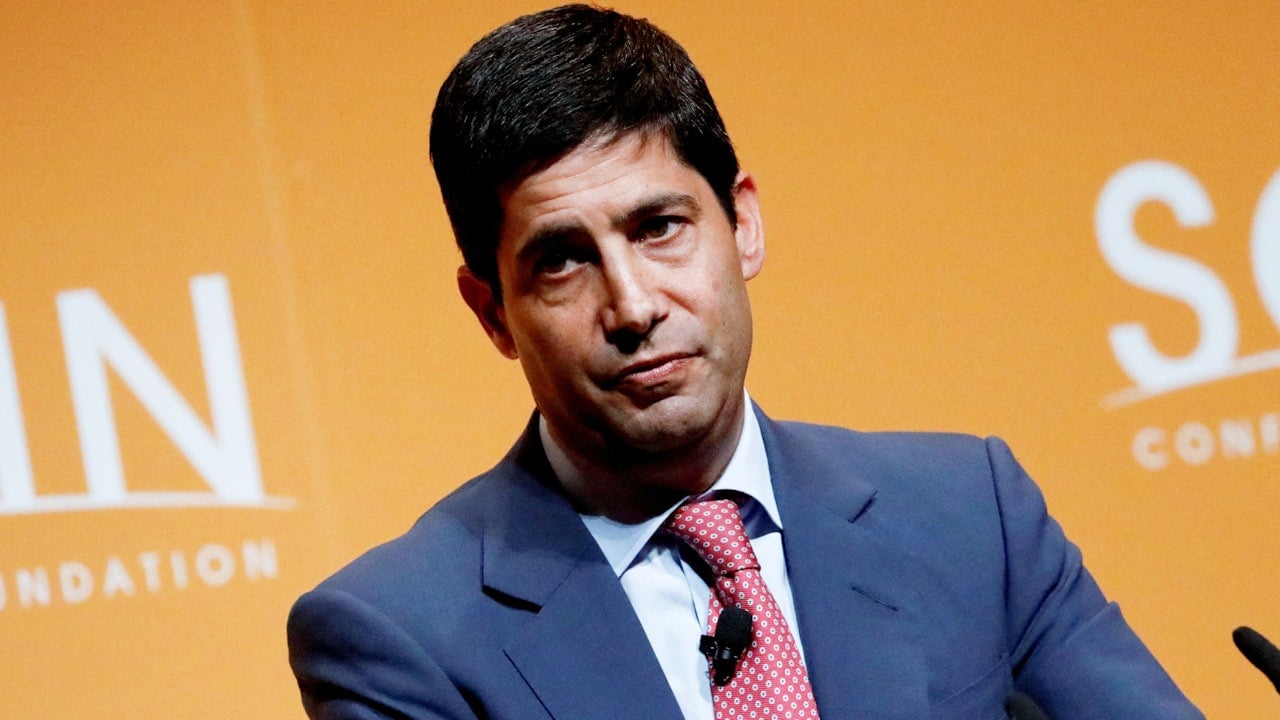
Trump chose Waller to cut interest rates. However, on May 15, when Waller officially took the chair left by Jerome Powell, he inherited not a Fed ready to cut rates at any time, but an FOMC where three governors disagreed even on "indicating that a cut might be next."
Those three dissenting votes—Hammack from Cleveland, Kashkari from Minneapolis, and Logan from Dallas—cast the most unusual dissent since October 1992 at the meeting in late April. They were not opposed to cutting rates but to "the tone being too soft." They believed that, in the current inflation environment, there should not even be hints of rate cuts.
Waller took charge of a central bank that is about to be torn apart from within.
1. A Misunderstood Individual by the Market
The mainstream characterization of Waller by the market comes from two unreliable sources.
The first: Trump chose him because he wants to cut rates. The logic is—he was chosen, so he will cut. The second: During the confirmation hearing, Waller showed some acknowledgment of "the Iranian oil shock being temporary," interpreted as a dovish signal.
Both inferences skip over the most real side of Waller over the past fifteen years.
In November 2010, the Federal Reserve was discussing QE2—whether to purchase another $600 billion in government bonds. Waller voted in favor that day. In the same week, he published a critical article on QE2 in The Wall Street Journal. Voting in support while writing an opposing article is extremely rare in Fed history, referred to by later researchers as "silent dissent"—not true agreement, just a desire not to undermine consensus.
At that time, core PCE had never exceeded 2.5%, while the unemployment rate was as high as 10%. There was no obvious inflation pressure, yet Waller delivered 13 speeches specifically mentioning "upside inflation risks" between 2006 and 2011. While other governors discussed how to support employment, he was already worrying about an enemy that had not yet appeared.
Now that enemy is at the door. April's CPI at 3.8% is a three-year high. The energy shock from the Iranian war caused gasoline prices to rise by 28.4% year-on-year, and fuel prices increased by 54.3%. In Waller's first week, the yield on 30-year Treasuries just touched 5.19%, only a step away from the highs of 2007.
2. Inflation is Not Just Iran's Problem
There is a reasonable core to the dovish argument: the Iranian oil shock is an exogenous event. Once negotiations in Hormuz make progress, and oil prices fall from $100+ to $75-80, energy inflation will quickly dissipate, and CPI numbers will naturally improve, giving Waller a window for rate cuts.
This logic is valid. However, there is a line in the April inflation data that makes it less tidy.
Service sector inflation jumped to a month-on-month +0.5% in April. In March, that number was +0.2%.
Service sector inflation has little to do with gasoline. The rising prices of dining, healthcare, transportation services, and entertainment are not directly related to Hormuz. The housing component saw a month-on-month increase of +0.6%, contributing twice as much. Removing food and energy, core CPI in April saw a month-on-month rise of +0.4%, the fastest single-month increase since late 2025.
In other words, inflation is spreading from the energy side to the service side. Once this process begins, even if oil prices drop back to $80 tomorrow, service sector price pressures will not disappear within two or three months.
This is exactly the old path that the Fed misjudged as "temporary" in 2022. At that time, Powell said inflation was temporary, and when he realized that service sector stickiness had formed, he could only resort to the most aggressive rate hike cycle to catch up. Waller has historically awakened to inflation issues earlier than the market—this time, he is unlikely to make the same mistake.
3. The FOMC He Inherited
Another thing the market has not fully priced in is that the Fed Waller inherited had already split to an unusual degree.
At the meeting on April 28-29, the decision to maintain the interest rate was superficially reflected in an 8-4 vote. The 8-4 itself was abnormal— the last time there was such a dissent was October 1992. But the more subtle point is the direction of those four votes: three opposed indicating a rate cut, and one supported a cut. There were simultaneous dissenting views in the board.
In the FOMC statement, the committee changed its description of inflation from "somewhat elevated" to "elevated." This wording upgrade was underestimated by the market. In the Fed’s linguistic system, this is not a minor adjustment; it is the board explicitly telling the market: our tolerance for inflation is shrinking.
As chair, Waller must build consensus within this board. He is facing three members—Hammack, Kashkari, Logan—who believe that not even hints of "the next step could be a rate cut" should emerge, each of whom is more eager than he is to tighten. If he wants to cut rates, he must first persuade these three individuals.
No one can tell you how he will accomplish this.
4. The Hidden Problem of Neutral Interest Rates
There is another debate that has not entered mainstream discourse, but it may be the most important background for the entire matter.
According to the Fed committee's median estimate, the neutral interest rate (r-star) is around 3.0%. Currently, the federal funds rate is between 3.5% and 3.75%, so viewed from this perspective, monetary policy is in the "restrictive" range—meaning it is stepping on the brakes of the economy, and inflation will gradually decrease.
However, the Cleveland Fed has a model that estimates the neutral interest rate at 3.7%. If this estimate is closer to reality, the current range of 3.5%-3.75% isn’t truly restrictive, at most it is "neutral tight," insufficient to sustain pressure on inflation.
Waller has consistently leaned towards believing r-star is higher than the committee's estimate in his past research and speeches. If he pushes the Fed to reevaluate the assumption of neutral interest rates after taking office, it would mean that not only is there no room for rate cuts, but even the premise that "current policy is tight enough" needs to be discounted.
The market has not priced in this scenario.
5. Another Political Equation
Trump spent nearly a year setting up someone willing to "massively cut rates" in the Fed chair position. This fact has already altered the political ecology of the Fed.
The confirmation vote of 54-45 is the closest in history for a Fed chair, resulting in greater division than any previous term. During Powell's tenure, he was summoned to Congress to testify by Trump's prosecutor and publicly ridiculed as "too late." The renovations at the Fed headquarters were used as a political tool, and the crisis of Fed independence became one of the most discussed topics of 2025.
Waller's current situation is: he was chosen to cut rates, but the conditions for cutting do not exist; if he insists on not cutting, Trump's next reaction is unpredictable; if he is pressured by political forces to cut, inflation will communicate to the market that the Federal Reserve is no longer independent.
This is not a question with a standard answer.
6. How Assets Will Move
Let’s first look at the bond market.
Long-term U.S. Treasuries have consistently been the most honest scorekeeper of this macro narrative. The 30-year Treasury yield has climbed from 4.4% at the beginning of the year to 5.19%, while the 10-year yield has reached 4.67%. Barclays' Ajay Rajadhyaksha clearly stated: 5.5% is not the peak, and they are warning this level will be broken. Citi's macro rates strategist McCormick mentioned that 5.5% has become the new "round number target" for traders.
The mechanism for pushing the long end further up is not complicated: on June 16, for the FOMC, if Waller's statement includes any language close to "not ruling out further tightening," the 30-year Treasury will be repriced to the range of 5.3%-5.4% within 30 minutes that day. At that point 5.5% will not be a prediction, but the next station.
The conditions for nullification: substantial breakthroughs in the Iranian negotiations before the June FOMC, restoring free navigation in Hormuz, and oil prices dropping from $102 to below $80—at that time, significant improvements will appear in the CPI data for May and June, allowing long-term rates the opportunity to decline, which will require a comprehensive revision of this judgment.
Tech stocks are in the second position. The Nasdaq's forward PE has compressed from last year's peak of 33 times to the range of 27 times, but the historical average is around 20-22 times. As long as the 10-year yield remains above 4.5%, it will cap tech stock PE multiples. The first phase of compression is "the disappearance of rate cut expectations," and the second phase is "the rekindling of rate hike expectations"—there is a hurdle between these two phases, and we have just crossed the first one.
Specifically: After the conference call ends, funds will first pay attention to whether there is any hint of a rate cut schedule in Waller’s wording. If there is none—current baseline scenario—Nasdaq's pullback will enter tech weighted stocks within 48 hours. Nvidia, Microsoft, and Apple will be the first to be affected, while secondary tech and growth stocks will follow, but with greater volatility and less predictable direction.
Gold reads most ambiguously within this framework. Theoretically, rising real interest rates are unfavorable for gold, but real interest rates are nominal rates minus inflation expectations—if the market begins to worry about Fed independence, inflation expectations themselves will be revised upward, potentially offsetting the suppressing effect of rising rates on gold. Additionally, as the U.S. fiscal deficit continues to expand and foreign central banks continue to purchase gold as part of de-dollarization, gold could see a situation of "rising rates but prices not falling." This is not the main judgment but an edge scenario to observe.
The dollar is relatively straightforward: rekindled rate hike expectations → dollar strengthens. However, if the market determines that the issue of Fed independence has become structural, this logic will be discounted.
7. The Most Important Thing Before June 17
The progress of negotiations with Iran is the biggest variable in all of this.
Last week, Iranian Foreign Minister Araghchi said the agreement is "a few inches away"—while he stated, "I have no complete trust in the Americans." On May 19, Trump called off planned military strikes against Iran, stating, "serious negotiations are underway." However, Hormuz is still effectively under control, and the issue of transferring 40 kilograms of highly enriched uranium has not been resolved.
If negotiations break down before June 16, oil prices will return to $110+, and the May CPI will likely exceed expectations again, presenting Waller with the worst-case scenario at his first FOMC. If breakthroughs are made before this point, leading to a decline in oil prices and improvement in inflation data, the whole logic of "Waller being cornered" will soften.
The former scenario is negative for both the bond market and tech stocks; the latter gives Waller a temporary respite—but even so, the inherent stickiness of service sector inflation will not disappear; at best, it pushes back the issue for a few months.
8. June 17
The most important date on the Fed calendar this year is June 17 at 2:30 PM—Waller will take the stage to release his first FOMC statement as chair and then answer reporters' questions.
That day, one word will be analyzed repeatedly: whether he uses "patient" or "vigilant," whether he mentions rate hikes, how he describes the persistence of inflation, and how he responds to questions like "What is your dialogue with Trump like?".
The answers will inform the market how much it mispriced Waller and how long it will take to correct that mistake.
免责声明:本文章仅代表作者个人观点,不代表本平台的立场和观点。本文章仅供信息分享,不构成对任何人的任何投资建议。用户与作者之间的任何争议,与本平台无关。如网页中刊载的文章或图片涉及侵权,请提供相关的权利证明和身份证明发送邮件到support@aicoin.com,本平台相关工作人员将会进行核查。


