Compiled by: Yuliya, PANews
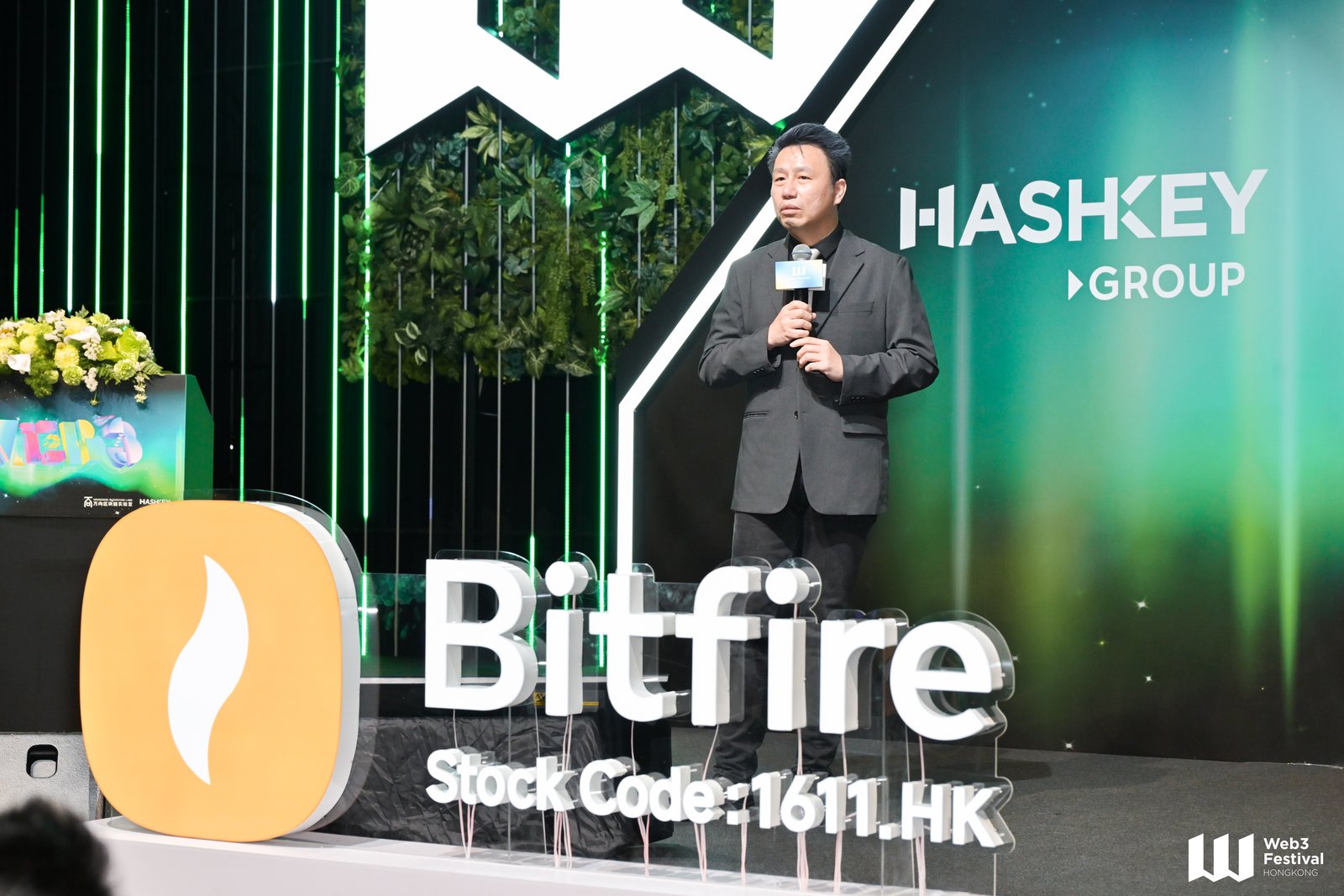
Recently, many people have been asking me a question: Why have I become so close to the cryptocurrency circle?
In fact, this opportunity started around 2022, and it has been about four years now. As a practitioner in the traditional finance field, we have always been closely monitoring and tracking the entire cryptocurrency market's trends.
Today, I am here to give a speech, and the intention is quite simple; I just want to tell everyone a historical story. For me, I consider myself to be a major beneficiary of the last era's dividend. You might see my title as "economist," but I am not a purely academic scholar.
In the past 25 years, my real core experience, which is our core business, is what everyone understands as traditional hedge funds. You may be curious why these traditional capitals and people in traditional finance are starting to pay attention to cryptocurrency assets?
In the past year and a half, I have repeatedly mentioned a viewpoint: the future will definitely be "FICC+C", meaning traditional major asset allocation (FICC) will include a sequence of cryptocurrency (Crypto). Many people want to know the reason, and I will take this opportunity to share a simple explanation. Once you understand this logic, you may already have the answer in your mind regarding how the market will evolve and how asset prices will move.
Today, I will help everyone burst this bubble. We need to rewind time to the origin of FICC major assets—around the late 1970s to early 1980s. Over the past decade, everyone present has clearly recognized that the overall framework and layout of our world are undergoing tremendous changes. This change is most similar to the period from the 1970s to 1980s right after World War II. For example, earlier Xiao Feng constantly mentioned artificial intelligence, and all the guests also mentioned the fusion of AI. As an important technological advancement and productivity, every leap in technology and productivity will reshape various industries.
Here, "various industries" includes all types of businesses, and naturally, it must include the financial sector. Finance is not static. It is definitely not what you see in films like "The Big Short" or "The Wolf of Wall Street"—traders wearing vests shouting orders on the trading floor. Or say, when many people visit the New York Stock Exchange, they might still feel that finance is just the quoting and executing in the pit. Indeed, many reporters still prefer to use such on-floor trading scenes as the background for news reports. If you go to Chicago to visit the earliest interest rate derivatives market or the London Metal Exchange, you can still see traces of this history. That’s right, that was the most traditional finance before the 1960s and 1970s. People dressed in vests for quotes, completing transactions through typewriters and punch machines.
For most people in the Chinese-speaking world, the impression of trading may still be watching stock tickers in a stock hall, staring at prices to fill in order slips and submitting them to the counter, which staff members would then call into the exchange to complete transactions. However, not all finance or trading has remained in that era; the biggest transformation in finance must occur alongside technological advancements.
In the previous technological advancement cycle, productivity and technology represented by semiconductors, computers, personal computers, DOS systems, Windows, and so on reconstructed the new business model of finance from the late 1970s to early 1980s. The familiar FICC major asset trading that we know today, simply put, is the fusion of financial assets such as interest rates, commodities, exchange rates, and stocks, and the inception of FICC occurred in the early 1980s. In the 1970s, the pricing of financial derivatives, such as the Black-Scholes model for options pricing, was something everyone learned in school. But you can imagine, without the widespread application and popularization of computers, pricing a financial derivative or financial asset would require manual calculations taking several minutes, even up to half an hour or more. Under those circumstances, how could we efficiently complete quotations and transactions?
Since 1985, professional investors and investment institutions began to widely use Bloomberg terminals. I probably started using the then-recently launched Reuters 3000 around the 1997-1998 Asian financial crisis, and later the Reuters Extra and Eikon.
In other words, it was the arrival of computers, semiconductors, information technology, and the data era that enabled the later development of FICC. This allowed us to have a richer variety of asset classes, a fusion of assets, cross-asset trading, as well as hedge funds, programmatic trading, and the well-known "grand prize" funds. Without this advancement of productivity, finance might still be in the old perception of traders as pit bosses shouting orders.
At that time, JPMorgan on Wall Street became the largest leader of the entire financial derivatives market. JPMorgan hired a talented graduate from Cambridge, Blythe Masters, who became a foundational figure in the financial derivatives and FICC markets, turning FICC business into the most profitable segment for mainstream financial institutions on Wall Street.
Of course, all of this was also inseparable from the turmoil of the world between the 1970s and 1980s. You must remember one thing: the origin of technological progress is often also the root of world turmoil. At certain historical junctures, leaps in technology always coexist with upheaval in world systems and orders.
In the 1970s and 1980s, we experienced the Cold War, the Middle East wars, the dollar oil crisis, and the surging gold prices along with systemic decoupling. However, the development of human civilization is always accompanied by risks and opportunities.
While the world order seemed chaotic, our computers, semiconductors, and information technology were rapidly rising. I used to joke that in that era, there was a strange investment portfolio that held both "assets representing the future of humanity" and "assets hedging against humanity having no future."
You can recall that without needing to mention a decade ago, perhaps starting around 2019; look at the investment portfolio in your hands—aren't you also holding assets related to "the future of humanity" and "the future of humanity being nonexistent" at the same time?
Today, when we all begin to realize that factors like AI, data, and computing power will become the most important productivity tools of the future and even the next era, our "game" has actually progressed halfway. And this entire first half is precisely what everyone recognizes as traditional "crypto circle."
Why am I mentioning all this?
You must remember, nothing is unchanging; everything is constantly being reconstructed and reborn in the process of development.
Therefore, when we talk about the moment to enter this circle, which is the moment of "FICC+C", I do not know whether this will leave an important mark in history, just like the mark left by Blythe Masters in FICC history. Could this become an important node announcing the end of the early development stage of the past 10 to 15 years and the arrival of a brand-new development stage?
In this alternation between the two phases, investors, participants, market systems, and game rules will undergo tremendous changes, or rather, this massive change is already happening. So I mentioned during a recent interview that the paradigms and mindsets you have become very familiar with in the past 10 to 15 years could undergo disruptive changes in the future.
If you have enough years of experience in traditional finance, you can entirely foresee what is about to happen. Just like in China back in the day, we had large trading venues established by provincial financial offices and a plethora of financial assets. However, as compliance and regulation gradually strengthened, in simple terms, the process of survival of the fittest meant that the quality assets remaining would gradually be included in the asset portfolio of financial institutions. Our entire cryptocurrency market is actually undergoing the same process.
For example, now everyone thinks trading bulk commodities is common, but you should know that before the 1980s, financial derivatives for bulk commodities were not popular, and most people couldn’t actually trade them.
- Today, people feel it is normal to trade assets like copper, aluminum, lead, zinc, and palm oil, but back then, it did not exist;
- People think it is convenient to trade exchange rates now, but that also did not exist back then;
- Today we can easily trade government bonds and interest rate futures, which were similarly unavailable back then.
Doesn't this feeling feel like when we first had stock index futures, options, and other derivatives in 2009?
If you have this feeling, you will understand that we are at the same historical juncture. The technological advancements that propelled the entire traditional finance towards FICC also apply here today, with the driving forces now being data and computing power.
Artificial intelligence, together with underlying cryptocurrency technology or blockchain technology, is reconstructing finance with technology at its core. Our financial industry is undergoing profound transformations, so we have been closely monitoring this field. But honestly, in the past, we did not participate at all.
I often joked that in the early stages, this circle really needed to talk about "faith," mentioning the so-called "fundamentalism." But true capital does not overly engage in such "faith trading" in the early stages. Capital will only be included in the asset management framework when the market has gradually matured and has certainty.
For instance, in the past, would large financial institutions consider trading red beans or green mung beans as part of asset allocation? Impossible. But today, we can turn copper into futures, options, and ETFs and include it in the overall investment portfolio. This process of transitioning to formalization and financialization is actually akin to what the entire cryptocurrency circle's ecosystem is going through.
In 2022, it was my first time to truly engage with the big shots in this circle, which is also a kind of fate. It all started with a comment I made during an interview in 2021 when Bitcoin's price was around 70,000 dollars.
When the reporter asked me for my opinion, I, being direct in personality, said simply: according to our traditional financial paths and frameworks, we truly cannot comprehend what this asset really is. Because the things you talk about regarding faith, we do not recognize; we have our own way of explaining it. For instance, regarding what its value maintenance function actually is, we would use traditional financial frameworks and language to interpret it. At that time, I believed we had not yet arrived at the timing to engage with this type of asset.
I mentioned that we were observing, but I still wasn’t quite clear on the logic you were presenting; my understanding and valuation models had not yet fully formed. However, at that time, I did have a feeling. When the reporter asked me what that feeling was, it stemmed from the fact that at the time, the U.S. Commodity Futures Trading Commission (CFTC) and other financial regulatory agencies had clearly defined it as a commodity, a tradable financial asset. For me, that made it very simple; I could completely use this official definition to understand its asset properties.
I also said a phrase, a blind guess: If in 2022, with the substantial tightening of macro liquidity, it was easy to see those high-valuation assets in our traditional asset circle experiencing a large-scale "valuation killing" market. If my understanding of cryptocurrency assets is correct, it will also experience the same "valuation killing" and liquidity tightening situation alongside traditional valuation assets. I vaguely guessed it would drop by half. This is why, by the end of 2022, when it indeed fell to over 20,000 dollars, many people in the crypto circle came to seek me out, as they suddenly realized: has the era changed?
After communicating over the past few years, I found that many real leaders in the crypto circle are actually quite similar to the magnates in the traditional finance circle back then. In the early stages of the industry, everyone’s development method was relatively rough.
You can think back, including the early figures in China who engaged in commodity futures trading; which one did not grow up in a rough and wild manner back then? Who did not need to "fight for a chance" to turn a bike into a motorcycle? But those who can truly achieve the future are the ones who can quickly absorb new things and complete transformations when it is time for the "turning point"—note, not transformation, but turning point. If they continue to adhere to the early experiences, they will largely be phased out by the times, as the saying goes, "the times will build you up, and the times will also eliminate you."
My personal observation is that 2025 to 2026 may be the historic turning point for the cryptocurrency field. When everyone came looking to communicate back then, it was quite simple; it was mutual learning. You can tell me what you think cryptocurrency assets are, and I would absorb and merge that from a traditional finance perspective to reinterpret this matter; simultaneously, I would also share with you how we traditional finance understand this type of asset using existing paths and logic.
Through several years of mutual tolerance and integration, a new system has already formed. In these past few years, including the end of last year, from our perspective, the macro tightening of the new round of liquidity has brought about valuation compression, while in the crypto circle, stories happened once again in complete synchrony with traditional financial markets. What does this indicate? It shows that the path we are on is correct. Inclusion and integration will eventually lead to indistinction. Just like those traditional stock traders in the 1970s and 1980s, as depicted in "The Wolf of Wall Street," and the people later engaging in FICC major asset allocation have become indistinguishable by the end. Therefore, the future will definitely be the era of "FICC+C", and there will no longer be obvious boundaries between traditional finance and cryptocurrency assets.
Of course, for our traditional financial institutions, the most crucial point is compliance. By 2025, it will actually be an important milestone year. Whether it is stablecoin legislation or the certain regulatory frameworks we see regarding digital assets and cryptocurrencies, the progress of these important legislations has already indicated the final answer for this market. At this point, the logic becomes very simple: in the future, you will see financial institutions on Wall Street, former traditional giants, quickly entering this market. Just like diversifying foreign exchange reserves, institutions will incorporate cryptocurrency assets as part of diversified asset reserves, transforming from a single reserve or trading asset into diversified trading assets. Just as we could include commodities, exchange rates, and interest rates, today, we can similarly include cryptocurrency assets. Remember one thing: when this integration truly occurs, the underlying logic of the market will herald the arrival of a new era, while the habits of the old era will completely become past.
Looking back at history, after the 1980s, the proportion of retail investors directly participating in the U.S. stock market gradually decreased, while the proportion of institutions participating gradually increased. This trend towards institutionalization will similarly happen in any market transitioning from the early to mature stage.
Is the crypto market at this stage now? My answer is: yes. Stablecoins have already separated the payment function of cryptocurrency technology (or blockchain technology). Therefore, you can consider: what exactly is Bitcoin?
A reporter just asked me whether Bitcoin is "digital gold." My next words might be a bit controversial. Why? Because it depends on the audience's level of understanding. For instance, if you say "digital gold" to me, I can immediately comprehend what you are trying to express; however, when you say this to an ordinary investor, their first response may be physical gold. So what exactly is gold? We can only give it a complete definition: it is a tradable commodity asset with value maintenance function.
Some assets may have value maintenance functions, but they do not necessarily possess large-scale financialization or tradability. I will give a simple example: do my son's AJ basketball shoes have value? Regarding the understanding of "value," many people have significant deviations. Another example: do the collectibles you bought have value? Do the Richard Mille watches you purchased have value?
First of all, if "value" here refers to a broad sense, then that's fine; emotional value is value, so is companionship value. However, do they possess large-scale financialization and tradable properties? That is not necessarily the case. You might ask those who enjoy collecting "old school" items: do the woods they have have value? Do walnuts have value? Does the Clivia plant have value? If you say they have no value, that’s definitely incorrect because under a broad definition of value, they indeed have value; but if you are talking about value in terms of financialization and tradability, then it's incorrect to say they do have value since they do not possess those attributes.
Therefore, providing a complete and accurate definition for any asset is very important. Now, regulatory agencies have already provided a clear normative definition for cryptocurrency assets. The core path of development for western financial society is very clear: if not prohibited by law, you may act freely. It encourages innovation and exploration. You first go do it, just like when we were developing financial derivatives. Back then, everyone was saying, my clients had demands for options and swaps, but we did not have this market, nor the corresponding regulations; what to do? You start first. Once you get it going, compliance can step in gradually, allowing the market to mature through layers of nesting. Thus, the entire history of western financial development is a process of "financial innovation—compliance following—entering the mature phase." Cryptocurrency assets follow exactly the same logic.
So now you need to judge: by 2025, has the certainty of financial regulation followed up with clear answers? My answer is: yes. In the future, you will see that the product of blockchain technology applied to trading and payments will be stablecoins.
And what will Bitcoin become?
It will become an asset "with value maintenance function and tradability", this is the most sufficient definition of it. Of course, I know this definition will surely upset those with "fundamentalist" thinking from the last era. But I want to convey to everyone, this is the inevitability of the times, this is a whole evolution process that aligns with the modern financial logical framework. At this stage, traditional capital on Wall Street can fully get involved.
A new chapter is about to begin. I do not know whether my speech today will be recorded in history? Of course, I hope it can be recorded in history, or at least spark some thoughts among you. I believe this will answer many people’s question: "Mr. Fu, as a veteran in traditional FICC, why have you crossed into such a new industry?" I want to say: Because your industry has matured to a point that it can be included in traditional investment portfolios.
That’s all I want to share with you today, thank you all!
免责声明:本文章仅代表作者个人观点,不代表本平台的立场和观点。本文章仅供信息分享,不构成对任何人的任何投资建议。用户与作者之间的任何争议,与本平台无关。如网页中刊载的文章或图片涉及侵权,请提供相关的权利证明和身份证明发送邮件到support@aicoin.com,本平台相关工作人员将会进行核查。


