Author: Jake Nyquist, Founder of Hook Protocol
Compiled by: Blockchain Knight
In 2026, major institutions are launching brand new prediction markets.
From the competitive battles between NFTs and perpetual contract exchanges over the past five years, we have understood that differentiated products can quickly capture market share.
While existing leading platforms boast liquidity and regulatory advantages, they carry a heavy burden of product technical debt, making it difficult to respond flexibly to new players' impacts.
So how should newcomers compete? In my view, the differentiation competition in prediction markets revolves around seven key dimensions:
1. Product Quality
Founding teams can create differentiation in areas such as front-end user experience, API stability, developer documentation, market structure, and fee mechanisms.
Currently, most established platforms have obvious shortcomings: unreasonable tier settings, opaque fee rules, slow and unstable APIs, and a single order type.
A high-quality product experience, especially services aimed at API programmatic traders, is a lasting core advantage that can maintain a foothold even against competitors with stronger channel capabilities.
2. Asset Types and Market Choices
Currently, trading volume in prediction markets is largely concentrated on sports betting and crypto-native markets.
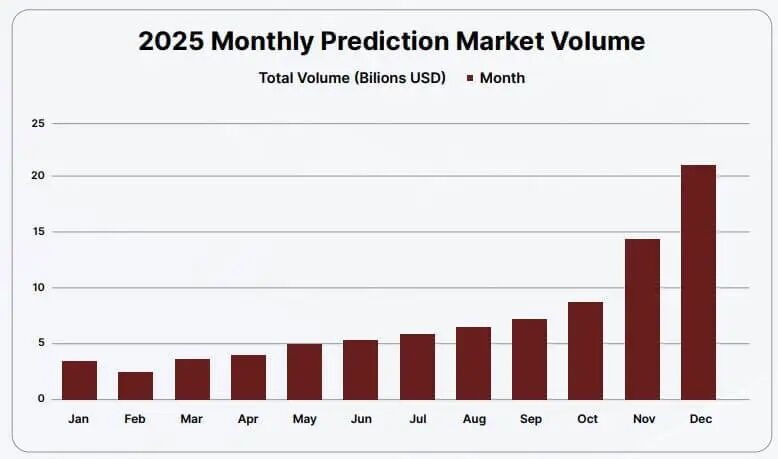
New exchanges can launch exclusive markets that other platforms cannot offer; this advantage, when paired with a vertical field strategy (point 7), can be further amplified.
3. Capital Efficiency
Capital efficiency determines the effectiveness of traders' collateral usage. Currently, there are two core levers:
First, interest-bearing collateral: not letting idle capital earn only treasury yields, but providing higher returns, similar to Lighter supporting LP deposits as collateral and HyENA's USDE margin perpetual contract model.
Second, the margin mechanism. Due to gap risks, the market generally underestimates the leverage value of prediction markets; however, platforms can provide limited leverage for continuous markets or promote portfolio margin for hedging positions.
Exchanges can also subsidize lending pools or act as market-making counterparty to internalize gap risks, rather than having users bear the losses.
4. Oracles and Market Settlement
The reliability of oracle systems remains a systemic shortcoming in the industry, as settlement delays and incorrect results can significantly amplify trading risks.
In addition to improving stability, platforms can implement innovative oracle mechanisms: human-machine hybrid systems, zero-knowledge proof-based solutions, and AI-driven oracles that unlock new markets traditional oracles cannot support.
5. Liquidity Supply
The survival of exchanges hinges on liquidity. Viable paths include: paying to introduce professional market makers, using tokens to incentivize ordinary users to provide liquidity, and adopting Hyperliquid's HLP aggregation liquidity model.
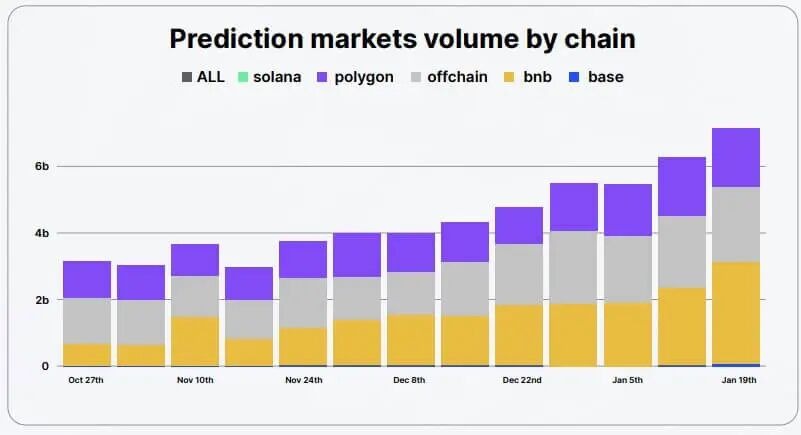
Some platforms can also fully internalize liquidity, emulating FTX's model of relying on Alameda as an internal trading team.
6. Regulatory Compliance
Kalshi, with its compliance qualifications in the United States, has achieved embedded distribution with Robinhood and Coinbase, capturing retail traffic that Polymarket cannot reach.
There are still many judicial jurisdictions and regulatory frameworks available for deployment, and compliant prediction markets can unlock similar channels, such as adapting to gambling regulatory rules in various U.S. states.
7. Vertical Strategy vs. Horizontal Strategy
Horizontal Strategy: Similar to Hyperliquid in the perpetual contract space, focusing on building top-tier underlying trading infrastructure, inviting third parties to build front-ends and vertical scenarios, and encouraging ecosystem builders to add markets and develop revenue-generating front-ends (like phantom) through proposals.
Vertical Strategy: Represented by Lighter, controlling the front-end independently, launching mobile applications, and creating a full-process user experience, focusing on integrating experiences and directly connecting with users.
The resistance of Polymarket to deeply embedded cooperation, contrasted with Kalshi's open attitude, is an intuitive reflection of the trade-offs between the two strategies.
免责声明:本文章仅代表作者个人观点,不代表本平台的立场和观点。本文章仅供信息分享,不构成对任何人的任何投资建议。用户与作者之间的任何争议,与本平台无关。如网页中刊载的文章或图片涉及侵权,请提供相关的权利证明和身份证明发送邮件到support@aicoin.com,本平台相关工作人员将会进行核查。


