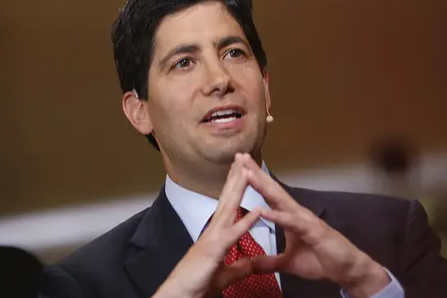
In the current week, Liquid Capital founder Yi Lihua publicly admitted that he was too early in his bullish outlook on ETH, leading to a significant retreat of previously accumulated profits. This reflection from a frontline institutional trader sharply contrasts with two sets of on-chain data: on one hand, whales closed their ETH short positions, locking in approximately $8.5 million in unrealized gains (single source), while on the other hand, the open contract volume of Hyperliquid HIP-3 surged to a historic high of $1 billion (single source). Amidst the intense interplay between spot and derivatives, ETH stands at a crossroads of institutional reassessment: how to reprice ETH's growth potential and overall crypto risk in an environment of escalating volatility has become the most critical question.
Position Bites Back: Yi Lihua's Reflection on ETH
● As a veteran institutional trader, Yi Lihua has maintained high confidence in ETH for some time, expressing this judgment through clear long positions. However, in this round of market activity, he admitted that he "was bullish too early," raising his position too soon, which led to a significant erosion of the profits that were already on the books during subsequent pullbacks. This shift from confidence to reflection itself reflects the rhythm dilemma institutions face with ETH as an asset.
● He mentioned that "position determines mindset," highlighting the cautionary significance of this statement for institutional decision-making: when positions are too heavy, cognition can be hijacked by holdings, easily leading to a passive situation of "either holding on for dear life or being forced to cut positions" during volatility. For professional institutions, position management is not just a risk control measure; it also shapes research frameworks and market narratives, making fundamental judgments inevitably magnified by short-term gains and losses.
● From the results, this round of profit retreat reveals two structural issues: first, there remains a significant divergence in ETH's current valuation, with institutions not converging on its "growth stock" pricing range; second, timing is extremely difficult to grasp. In an environment where spot and derivatives amplify volatility, even if the long-term direction is judged correctly, being slightly early in entry or overly aggressive in position allocation can lead to being "washed out" by volatility along the way.
The Confrontation of Whales Closing Shorts and HIP-3's Volume Surge
● On-chain data shows that a certain whale address recently chose to close a substantial ETH short position, locking in approximately $8.5 million in unrealized gains (information from a single source, requiring further cross-validation from more channels). In terms of motivation, this type of capital seems to be actively realizing profits and recovering liquidity after experiencing a smooth downward trade, reflecting a "phase of satisfaction" with the current price range rather than continuing to bet on a one-sided trend.
● In contrast, the open contract volume in the Hyperliquid HIP-3 market surged to a historic high of $1 billion during the same period (also from a single source). The spike in open positions typically indicates that leveraged funds are accumulating rapidly; regardless of the direction, this suggests that more participants are choosing to amplify their exposure through derivatives rather than simply sitting on the sidelines. This signal points to ETH having shifted from "relatively calm value investment trading" to "highly financialized leveraged battleground."
● One side is locking in profits and actively reducing risk; the other is pushing up leverage and expanding the stakes in the game—these two choices create a rapidly widening picture of bullish and bearish divergence. For institutions, determining the true risk structure of the market amidst the misaligned rhythms of whales "taking profits" and derivatives "continuing to increase positions" becomes the most challenging proposition in this round of volatility.
From Miners to Platforms: BTC Price Anchor and ETH Comparison
● From a more macro asset pricing perspective, the shutdown price for Bitcoin mining is about $75,000 (23.3 W/T), which is increasingly viewed by institutions as a "cost anchoring line." This price range not only corresponds to the survival threshold for miners but also, in an intangible way, constructs a psychological support band for the market: when prices approach or fall below this area, mainstream narratives often quickly focus on discussions of "hash rate clearing" and "long-term security," thereby buffering the continued spread of panic.
● Meanwhile, Binance's approximately $1 billion SAFU fund is seen as a potential force for BTC accumulation—although there is currently no publicly available clear timeline or transaction path, if this safety fund intends to tilt towards BTC, it will provide additional "buying imagination space" for BTC at the expectation level. Institutions view this type of platform-level capital as a form of "invisible endorsement," granting BTC a higher tolerance when assessing downside risks.
● In contrast, BTC narratives lean more towards "cost and safety net"—with multiple anchors such as hash rate, energy costs, and platform safety funds; while ETH's core selling points still focus on technological iteration, ecosystem expansion, and cash flow prospects, which are all part of the "growth narrative." This also leads institutions to increasingly prefer: using BTC to bear "defensive positions" and macro risk hedging, while using ETH to bear "offensive positions" and innovation premiums, thus providing completely different risk budgets and tolerance ranges for the two within the same asset allocation framework.
Rising Risk Aversion: Echoes of Volatility in Precious Metals
● Recently, the Agricultural Bank of China issued a risk warning stating that "the prices of precious metals in domestic and international markets have been highly volatile recently," which confirms from the traditional finance side that global risk sentiment is clearly heating up. Precious metals, which should serve as safe-haven assets, have experienced significant fluctuations in a short period, reflecting the tense state of funds rapidly migrating and repeatedly testing between different risk assets.
● When even traditional safe-haven "ballast" like precious metals experiences severe shocks, the volatility of crypto assets often amplifies in sync. The global reduction of leverage on risk assets means that whether in stocks, commodities, or crypto, all will face the same mainline: a systematic contraction of risk appetite. In such an environment, even if the crypto industry itself does not face fundamental negative news, prices may still be passively suppressed due to tightened liquidity.
● For high Beta assets like ETH, the primary reaction when risk aversion rises is often: institutions compress total positions, reduce leverage multiples, and reassess whether the "growth premium" can still receive sufficient valuation support. In other words, even if there is still optimism about the long-term outlook, short-term positions and pricing will undergo a round of "discounting," which is the dual pressure source ETH faces amid the current profit-taking and rising risk aversion.
New Players in Self-Custody: Tria and Long-Term Narrative
● Amidst the intensifying short-term volatility, infrastructure is quietly advancing. The self-custody digital bank Tria recently announced the establishment of a foundation to promote relevant technology research and ecosystem expansion, aiming to provide users and institutions with safer and more controllable asset self-custody solutions within a compliant framework. Compared to traditional custody models, these new players attempt to find a new balance between technology, security, and compliance.
● For institutions, the evolution of self-custody and compliant infrastructure is one of the key prerequisites for their long-term participation in the crypto market. Only when asset custody, clearing, and compliance review processes are sufficiently mature can institutions dare to continuously increase their exposure on the books—this not only relates to regulatory compliance and operational safety but also directly affects the upper limits and scalability of trading strategies. The advancement of projects like Tria is gradually lowering the "structural threshold" for institutions to enter the market.
● In the context of the ETH narrative, one side experiences intense volatility driven by short-term sentiment and positions, while the other side sees ongoing infrastructure development around the Ethereum ecosystem: self-custody, L2, and re-staking are all accelerating. This tension of "short-term price pressure, long-term ecosystem expansion" is the most challenging part for institutions right now—they cannot ignore the immediate volatility risk while also finding it difficult to completely abandon the layout for long-term network value.
The Next Step for ETH Amidst Intertwined Sentiment and Positions
The pressure currently faced by ETH primarily accumulates on two levels: first, professional funds like Yi Lihua, after experiencing a round of upward movement, choose to take profits or passively reduce positions, leading to increased selling pressure near key price levels; second, the macro-level rise in risk aversion, from precious metals to crypto assets, causes a systematic compression of overall market risk appetite. Under the convergence of these two forces, ETH's short-term pricing inevitably enters a more sensitive and volatile phase.
The structure of this round of volatility is becoming increasingly clear: spot positions, derivatives leverage, and macro risks are intertwined. The whales locking in $8.5 million in profits, the HIP-3 open volume surging to $1 billion, and the shutdown price for miners along with platform safety funds collectively form a complex risk transmission network, where any emotional fluctuation on one side can quickly amplify into price volatility. For institutions, dynamically adjusting the ratio of "offensive positions" to "defensive positions" within this network becomes the core task in the coming period.
Looking ahead, it is essential to observe whether two main lines will experience turning points: first, whether institutions will shift from the previous "early all-in" approach to a more restrained segmented layout, using a finer-grained building rhythm to hedge valuation uncertainties; second, as the BTC cost anchor and platform capital expectations continue to strengthen, whether BTC will become the "benchmark coordinate" for ETH pricing over a longer cycle, thereby locking ETH's volatility more within the framework of "premium/discount relative to BTC." How these two lines evolve will largely determine the shape and ceiling height of ETH's next market movement.
Join our community to discuss and grow stronger together!
Official Telegram community: https://t.me/aicoincn
AiCoin Chinese Twitter: https://x.com/AiCoinzh
OKX benefits group: https://aicoin.com/link/chat?cid=l61eM4owQ
Binance benefits group: https://aicoin.com/link/chat?cid=ynr7d1P6Z
免责声明:本文章仅代表作者个人观点,不代表本平台的立场和观点。本文章仅供信息分享,不构成对任何人的任何投资建议。用户与作者之间的任何争议,与本平台无关。如网页中刊载的文章或图片涉及侵权,请提供相关的权利证明和身份证明发送邮件到support@aicoin.com,本平台相关工作人员将会进行核查。