Author: BlockWeeks
In the world of cryptocurrency, attention is currency, and X (formerly Twitter) has always been the largest wholesale market for attention globally.
For a long time, users here have been accustomed to a fragmented existence: searching for "Alpha" (excess return information) on X, then quickly switching to TradingView to check candlestick charts, and then jumping to exchanges to place orders. This "friction cost" caused by app switching often determines the profit and loss of a high-frequency trade.
However, with the official announcement by X's product head Nikita Bier in early 2026 about the upcoming launch of Smart-Cashtags, this fragmented state may soon become history. This is not just an update of a UI component; it marks the most critical piece in Musk's puzzle of building "The Everything App"—the closed loop of financial information flow—finally falling into place.

Farewell to "Impostors": On-chain Confirmation of Token Identity
For any investor who has experienced the "meme coin season," the first and most painful pain point that Smart-Cashtags addresses is "identity confirmation."
In the old system, a Cashtag (like $ABC) was merely a blue search hyperlink. In a decentralized world, anyone can issue a token named $ABC. This leads to situations where, when a prominent figure calls out a trade, scammers often deploy a token with the same name within minutes and confuse the public by inflating search results, causing many retail investors to buy the wrong contract address.
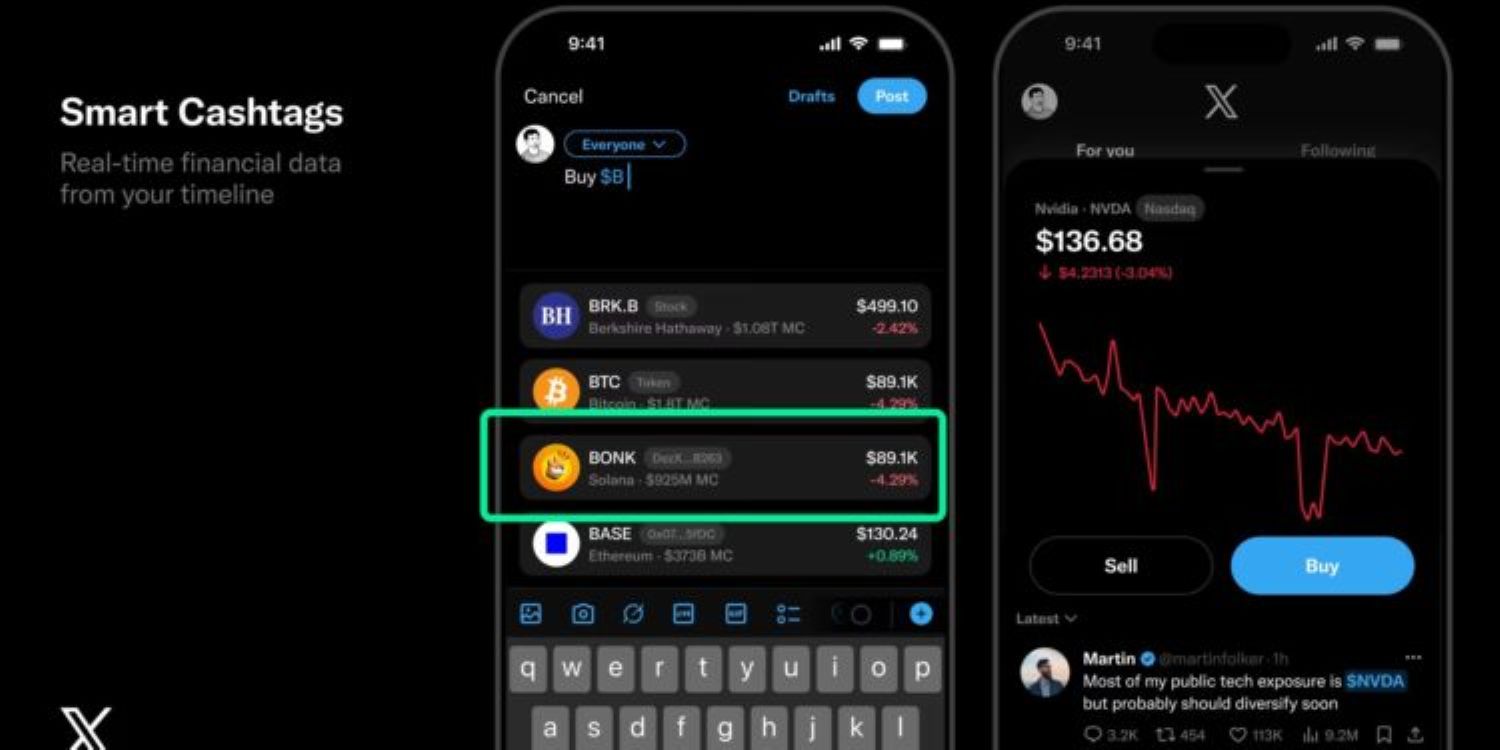
The core transformation of Smart-Cashtags lies in its introduction of "hard binding of semantics and contracts." According to currently disclosed information, the new feature will allow posters or communities to directly associate a specific smart contract address when entering the $ symbol.
This means that in the future, $SOL will no longer be a vague label; it will directly point to the native asset on the Solana chain. For those highly liquid and short-lived meme coins, this is akin to introducing a "security watermark" on a social level. X is attempting to use technology to clean up the rampant scam noise on its platform, paving the way for compliant finance.
The "Bloombergization" of the Social Interface: When Information Flow Directly Becomes Trading Flow
If "anti-counterfeiting" is the foundation, then transforming X into "the retail investor's Bloomberg terminal" is its ambition.
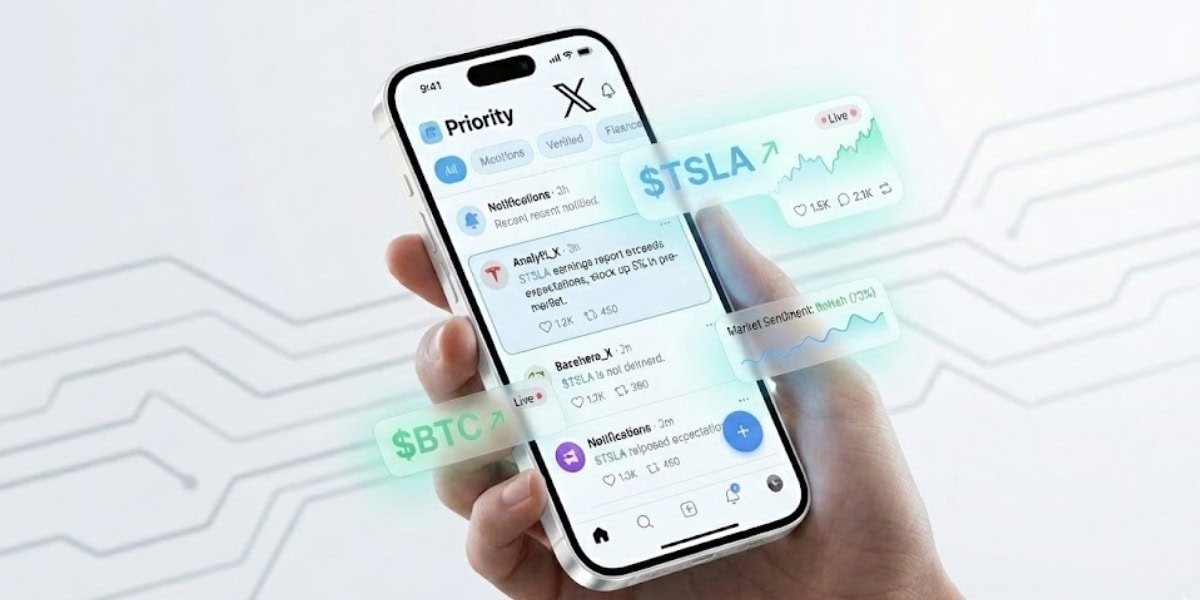
In traditional finance, the reason Bloomberg terminals are expensive is that they integrate news, data, and trading on one screen. Smart-Cashtags are doing the same for retail investors. Once the feature is launched, clicking on a tag will no longer redirect to a tweet search stream but will directly invoke a floating financial dashboard.

Imagine this scenario: you come across breaking news about a DeFi protocol being hacked. In the past, you would need to exit X, open a market analysis software to confirm the drop, and then decide whether to buy the dip or cut losses. In the future, you will only need to click on the tag in the tweet, and real-time prices, trading volume changes, and on-chain fund flows will immediately be displayed on the current page.
This "zero-jump" experience will greatly shorten the time window from "gathering information" to "making decisions." For the market, this means that the speed of emotional transmission will further accelerate, and X's immediate influence on asset pricing will reach unprecedented heights.
The Endgame of Social-Fi: A Direct Challenge to Telegram
We cannot view this update in isolation. Behind Smart-Cashtags is an invisible war between X and Telegram over the "Web3 traffic entrance."
In the past two years, Telegram has successfully captured a large amount of mobile trading demand with trading bots like Unibot and Banana Gun. Users see messages in Telegram groups and can directly buy with one click through bots, a user experience that has left X in the dust.
Smart-Cashtags is X's powerful counterattack. Although the initial features focus on market display, combined with Musk's acquisition of payment licenses in multiple states across the U.S. and the "in-app wallet" feature that X is testing, we have reason to speculate: integrating "Buy/Sell" buttons directly on the tag page is just a matter of time.
Once the payment layer is connected, X will instantly upgrade from a "debate square" to the world's largest "social exchange." It will have a more open public opinion arena than Telegram, a more complete algorithmic recommendation system, and a larger institutional user base.
Conclusion
2026 is destined to be a year of authenticity in Social-Fi.
The emergence of Smart-Cashtags signifies that X is no longer content to merely be a "traffic guide"; it wants to step in as the "cash register." For ordinary investors, this may mean more convenient tools; but for professional crypto practitioners, this heralds a new battlefield: whoever can first leverage this new tool to capture emotional value will gain a foothold in the new traffic distribution mechanism.
It is reported that this feature is expected to be rolled out to global users in February. At that time, every time we click the $ symbol, we may be participating in a small rewriting of financial history.
免责声明:本文章仅代表作者个人观点,不代表本平台的立场和观点。本文章仅供信息分享,不构成对任何人的任何投资建议。用户与作者之间的任何争议,与本平台无关。如网页中刊载的文章或图片涉及侵权,请提供相关的权利证明和身份证明发送邮件到support@aicoin.com,本平台相关工作人员将会进行核查。