Video: Moonshots
Compilation: Paradigm English
On January 6, 2026, Tesla founder Elon Musk was interviewed by renowned futurist and Singularity University founder Peter Diamandis and investor Dave Blundin.
In this podcast titled "Moonshots#220," the three engaged in an in-depth conversation lasting three hours. Musk explicitly stated that 2026 is the "Year of Singularity" and elaborated on the industrial, technological, and economic foundations supporting this argument, painting a picture of a future reshaped by technological transformation.
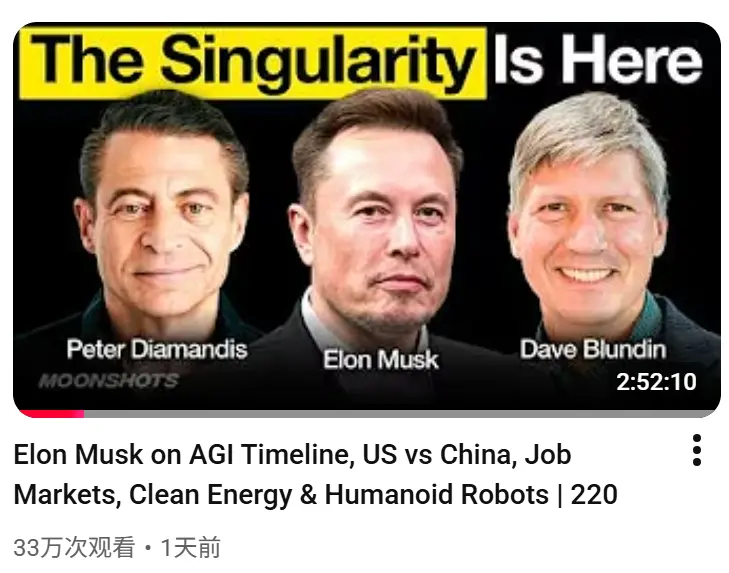
The dialogue covered nearly ten topics, including artificial intelligence, labor market transformations, energy development, education and talent, health and longevity, space exploration, and innovation and entrepreneurship, totaling 85,600 words, with many insights and foresights.
To help everyone quickly grasp the core points of the interview, we have organized and summarized the key content to share with you!
1. AI Beyond Imagination, Intelligence Level to Exceed All Humanity by 2030
Host Peter asked Musk, "Why are you so optimistic?"
Musk did not answer directly but instead threw out a more shocking observation: "We are not heading towards the Singularity; we are already living in it."
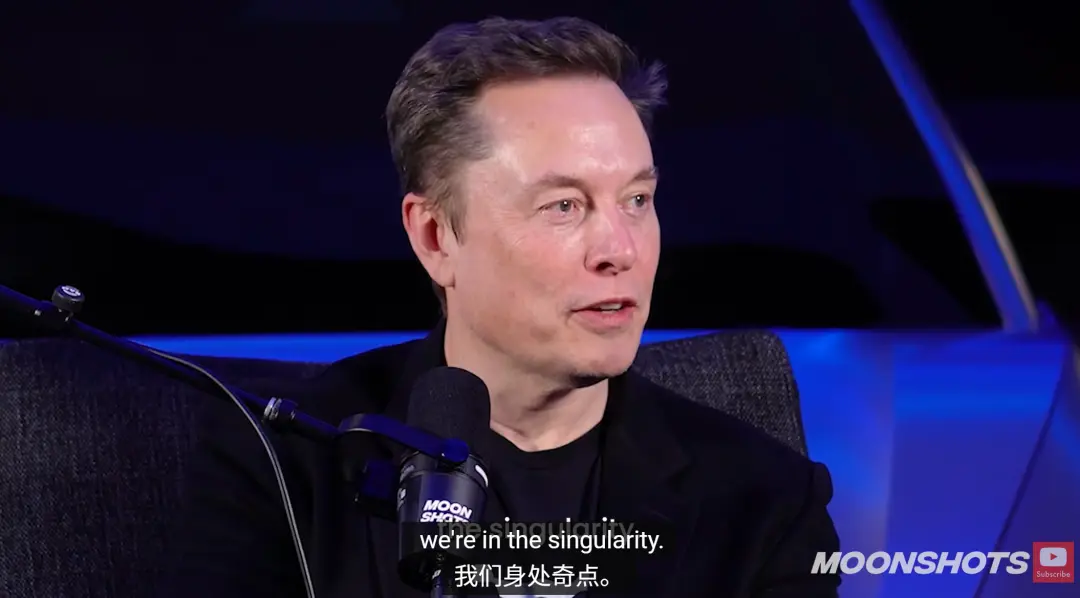
He explained that the speed of AI advancement has become so rapid that he is shocked several times a week—just when he thinks a breakthrough is astonishing, a new shock appears two days later, showcasing the power of exponential growth.
Musk predicts that AGI (Artificial General Intelligence) will be achieved by 2026, and by 2030, AI's intelligence level will surpass that of all humanity combined.
2. Disruption in Healthcare, Medical School Will Be Meaningless
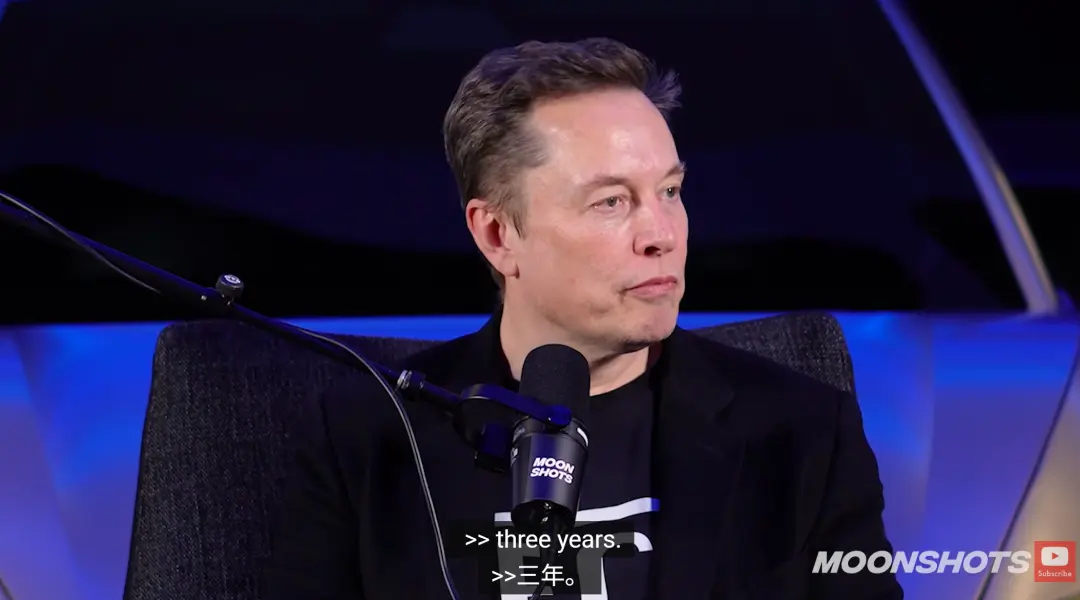
In light of the current shortage of doctors and excellent surgeons, Musk predicts that within three years, the Optimus robot will become a better surgeon than any human, and it will be applied "at scale."
"In the future, the best healthcare will basically be free," Musk stated.
Why can this happen so quickly?
Musk provided three exponential growth advantages of robotic doctors:
- First is the exponential growth of AI capabilities;
- Second is the exponential growth of chip performance;
- Third is the exponential growth of electromechanical dexterity.
The multiplication of these three exponential curves results in a rocket-like explosion in speed.
Musk added that more importantly, there is the "recursive effect" of robots, meaning that the experiences of robots can accumulate, and all robots share the same knowledge base.
10,000 robotic doctors performing surgeries can each have the experience of 10,000 surgeries. They can accurately grasp every detail under different patients, different emergencies, different complications, and even under the full spectrum of infrared, ultraviolet, and X-rays; they won't be distracted by a family argument the night before, nor will they make mistakes due to fatigue after four hours of continuous surgery.
Musk believes that (in the future, attending medical school) is "meaningless. Unless you are doing it for social reasons."
3. US-China AI Competition, China's Computing Power Will Far Exceed Other Regions
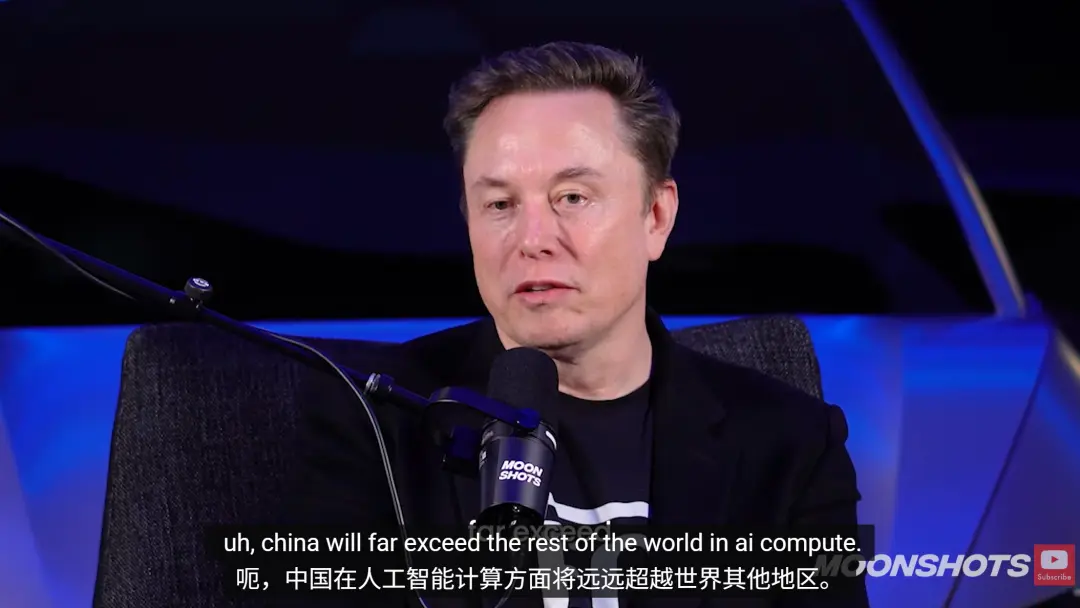
Regarding the current AI competition landscape, Musk confidently asserted: based on current trends, China will far exceed the rest of the world in AI computing power.
He provided three key reasons:
1) Power Advantage Crushing
By 2026, China's electricity generation will reach three times that of the United States. Last year, China added 500 terawatt-hours of electricity, 70% of which came from solar energy. Musk couldn't help but comment, "It seems they listened to every word I said and immediately took action."
2) Chip Generation Gap Closing, Moore's Law is Dead
From 3nm to 2nm, chip performance only improved by 10%, indicating that Moore's Law has failed, and the US chip advantage is continuously diminishing, making it easier for China to catch up.
3) Unmatched Execution Power
Musk admitted, "I have seen too many Chinese engineers; when the demand is clear, their execution speed and scale are unimaginable."
He predicts that the final world AI competition landscape will be XAI, Google, and China.
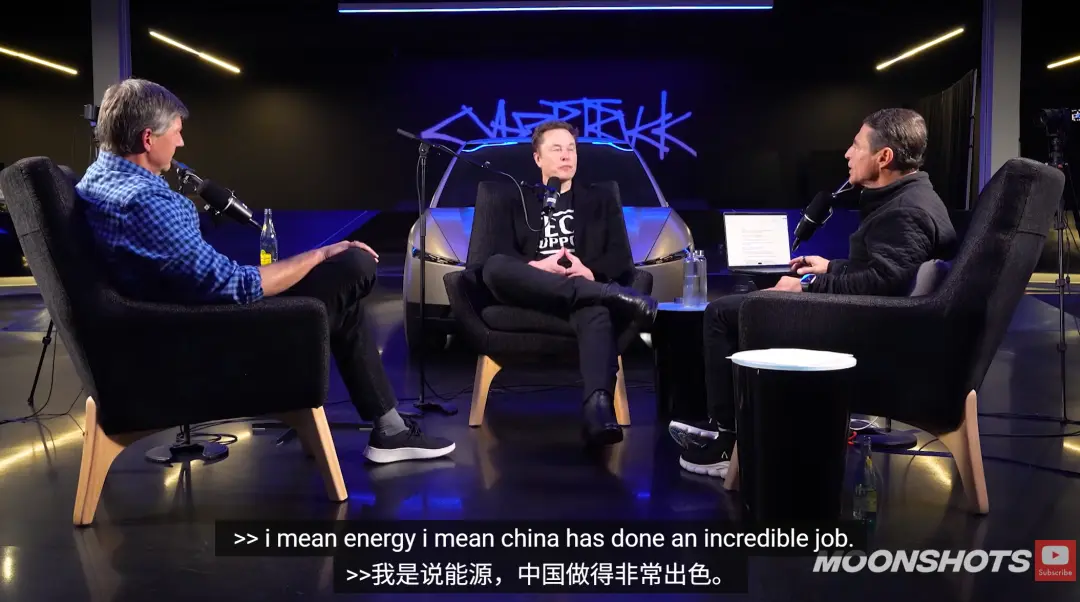
4. Energy Revolution, Solar Energy is the Only Answer
Regarding the prospects of solar energy, Musk's stance is exceptionally firm:
"The sun accounts for 99.8% of the mass of the solar system; doing nuclear fusion on Earth is like making ice cubes in Antarctica—there's a giant free nuclear reactor 93 million miles above us, why build a small one on Earth?"
He outlined a three-step plan for utilizing solar energy:
Step One: Double the Efficiency of the Existing Power Grid
At night, power plants have a lot of idle capacity, but during the day, there is not enough power during peak usage. The solution is to use Tesla's Mega Pack batteries to store idle electricity at night and release it during peak times, effectively doubling energy throughput without building any new power plants.
Step Two: Launch Solar Energy into Space
AI satellites are in an environment where it is daytime 24 hours a day in space, maximizing solar energy utilization. About 8,000 satellite launches are needed, launching once an hour for an entire year to complete deployment.
Step Three: Build Satellite Factories on the Moon
To capture solar energy on a larger scale, we cannot rely solely on launching satellites from Earth. Musk's ultimate plan is to build factories on the Moon, using local materials to manufacture satellites and then sending them directly into orbit from the Moon.
Musk emphasized, "The future currency is essentially energy—once you have energy, you can drive AI, create anything, and change the physical world."
5. Economy and Currency, Money May No Longer Matter in 10-20 Years
This is one of the most disruptive viewpoints: "Don't save money for retirement."
Musk explained that in 10-20 years, either we will no longer exist, or money will no longer matter.
Many people worry that AI will lead to unemployment, but Musk introduced a new concept—"Universal High Income" (UHI). This is not the government's "Universal Basic Income" (UBI), but a more fundamental change in economic logic:
AI and robots will cause the output of goods and services to grow faster than the growth of the money supply, leading to a price collapse and production costs approaching zero. When the output of goods and services grows faster than the money supply, it will lead to a price collapse.
Because material abundance will be extreme, everyone will easily obtain the goods and services they desire.
However, he also warned that the next 3-7 years will be very turbulent:
We will simultaneously experience radical change, social unrest, and immense prosperity, which is an inevitable transitional period. If none of this happens, it means we are facing a bigger problem—such as a stagnation in AI development or a collapse of civilization.
6. Careers and the Future, Work Will Become Optional
Musk predicts that in less than 20 years, work will become optional, and AI and robots will turn work into a "hobby" within 10-20 years, allowing people to freely pursue their interests.
He also expressed concern about the declining global birth rate, believing that a population decline poses a significant threat to the existence of civilization because "more people mean more consciousness, which helps humanity understand the universe."
7. Education and Growth, The Essence of Learning is Returning to Curiosity
Musk pointed out that the traditional education model is dead.
Due to his own poor educational experiences, he does not like the current education model—"I found school painful. It was boring, and in South Africa, it was very violent."
He believes that for many years, the driving force behind his continuous learning has been "curiosity about the nature of the universe. I am just curious about the meaning of life and the reality we live in."
With the rapid development of AI, he admitted that AI can clearly become a personalized teacher. It is infinitely patient and can answer all your questions. But you still need curiosity; you still need to want to learn. He has already launched a pilot program for AI personalized education in El Salvador.
At the end of the interview, Musk also admitted that he was once very pessimistic and even suggested slowing down AI development multiple times, but ultimately realized: rather than being a pessimistic observer, it is better to be an optimistic participant.
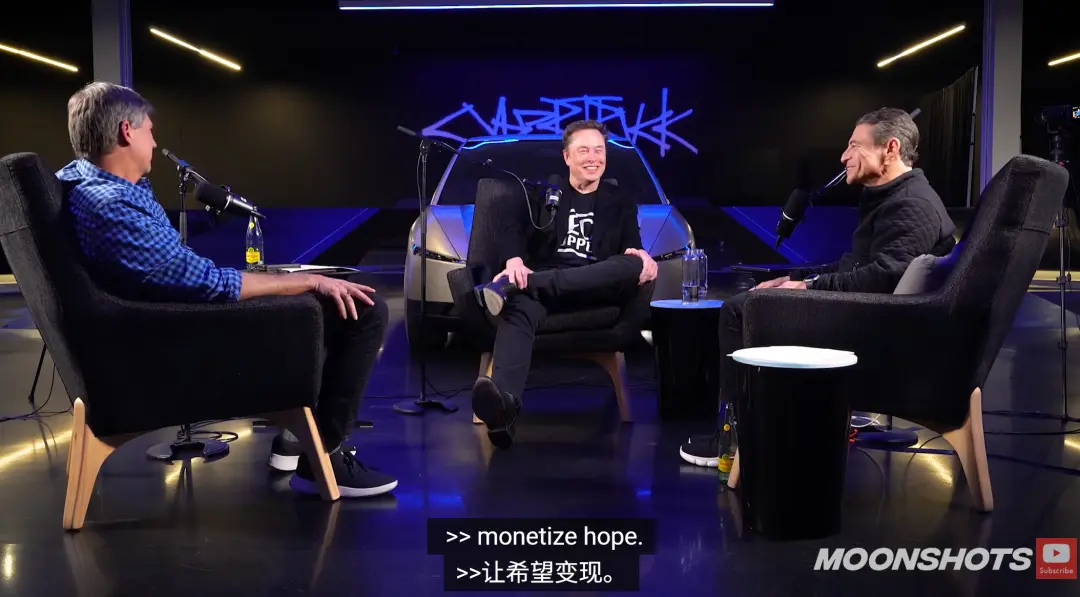
He sincerely shared a message with everyone: let hope materialize!
Let’s encourage each other!
免责声明:本文章仅代表作者个人观点,不代表本平台的立场和观点。本文章仅供信息分享,不构成对任何人的任何投资建议。用户与作者之间的任何争议,与本平台无关。如网页中刊载的文章或图片涉及侵权,请提供相关的权利证明和身份证明发送邮件到support@aicoin.com,本平台相关工作人员将会进行核查。


