He wrote AI policies for Trump, and the invested company made $200 billion.

CN
链捕手
Follow
2 months ago

Prologue: A Million-Dollar Dinner

In July 2025, Washington was stiflingly hot. In a neoclassical hall near the White House, an unprecedented artificial intelligence summit was taking place. U.S. President Trump stood at the podium, flanked by his newly appointed AI and cryptocurrency czar—David Sacks.

The audience was a who's who of the tech world: Nvidia CEO Jensen Huang, AMD CEO Lisa Su, and many of Sacks' friends, colleagues, and business partners from Silicon Valley. Almost everyone would benefit from the executive order Trump was about to sign.

But the backstory of this summit was far more intriguing than the speeches on stage. According to The New York Times, Sacks initially planned for his podcast All-In to exclusively host this White House event. Sponsors were invited to pay $1 million in exchange for tickets to a private reception and the chance to be with the president.

White House Chief of Staff Susie Wiles intervened at the last minute, insisting that another company co-host the event. But this minor incident revealed a larger issue: where is the line between public interest and private interest when a billionaire with 708 tech investments becomes the architect of national tech policy?

01 PayPal Mafia—From Startup Partners to Power Brokers

Silicon Valley's Most Powerful Circle

In 1999, 27-year-old David Sacks left McKinsey to join a startup called Confinity. This company later rebranded as PayPal, and Sacks became its Chief Operating Officer. Three years later, eBay acquired PayPal for $1.5 billion, making a group of young people just over 30 millionaires overnight.

Image

Young David Sacks, Source: The New York Times

This group later became known in the media as the PayPal Mafia—not because they engaged in illegal activities, but because their influence in Silicon Valley was nearly ubiquitous. They founded or invested in YouTube, LinkedIn, Palantir, SpaceX, Tesla, Yelp, Yammer… almost every company that defined the internet landscape over the past two decades has ties to the PayPal Mafia.

But the true significance of the PayPal Mafia lies not in their individual achievements, but in the tight network they formed. As Sacks himself said: back then, we couldn't recruit anyone else, so we relied on our network of friends. This tradition of mutual support continues to this day—they invest in each other's companies, serve on each other's boards, and endorse one another.

From Business Network to Political Capital

In 2016, when Silicon Valley overwhelmingly supported Hillary Clinton, Peter Thiel became the only heavyweight in the tech world to publicly back Trump. He donated over $1 million to Trump's campaign and spoke at the Republican National Convention.

Interestingly, both Sacks and Musk supported Hillary at the time. But by 2024, the situation had completely reversed.

Image

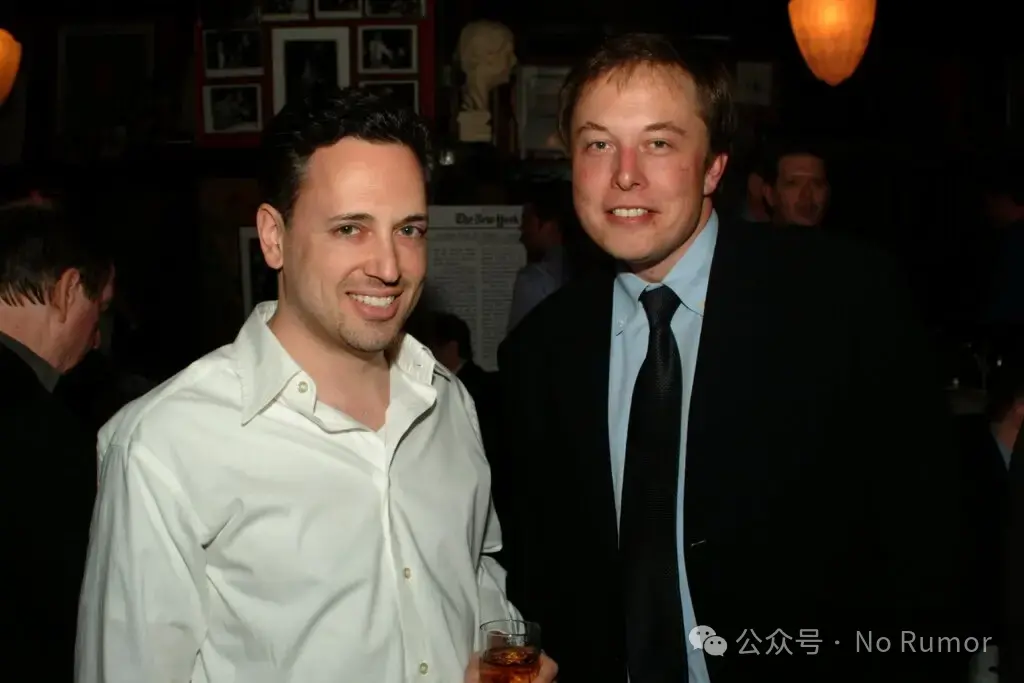
Young Sacks and Musk, both at PayPal at the time, Source: The New York Times

Elon Musk donated over $200 million to Trump's campaign and created his own super PAC. Sacks hosted a fundraising dinner at his mansion in San Francisco, with tickets priced at $300,000 each, raising over $12 million for Trump. At the dinner, Sacks strongly recommended JD Vance as a vice presidential candidate—Vance being a protégé of Thiel who was groomed and recommended to Trump.

In July 2024, Sacks took the stage at the Republican National Convention, completing his transformation from Silicon Valley investor to political figure. Five months later, Trump announced his appointment of Sacks as the White House AI and cryptocurrency czar.

Taking Over Washington

The Economist wrote after Trump's victory: the PayPal Mafia will take over the U.S. government. This was no exaggeration.

JD Vance—Thiel's protégé—became vice president. Elon Musk was appointed to lead the Department of Government Efficiency (DOGE). David Sacks became the AI and cryptocurrency czar. Ken Howery—PayPal co-founder—was appointed ambassador to Sweden. Jim O'Neill—former CEO of the Thiel Foundation—was nominated as deputy secretary of the Department of Health and Human Services. Jacob Helberg—senior advisor at Thiel's Palantir—was appointed deputy secretary of state for economic growth, energy, and environmental affairs.

This was an unprecedented situation: a group of friends who had worked together at the same startup now occupied core positions in the U.S. government. Their business interests and policy decisions were deeply intertwined, and their personal relationships rendered traditional oversight mechanisms nearly ineffective.

A Tailored Position

David Sacks had one condition before accepting his appointment: he could continue to run his venture capital firm, Craft Ventures.

According to Fortune magazine, when Trump extended the invitation in December 2024, Sacks made it clear that he would only accept the position if he could retain his partnership at Craft Ventures. The White House agreed.

This arrangement was possible because Sacks was appointed as a Special Government Employee (SGE)—a category established in 1962 that allows private sector experts to work for the government for no more than 130 days a year while retaining their private business. Traditionally, SGEs have been medical experts on FDA advisory committees or physicists on nuclear regulatory boards—providing narrow technical advice rather than formulating policies that impact trillion-dollar industries.

But Sacks pushed this system to its limits. His spokesperson told Fortune magazine: given the SGE regulations, David can spend a significant amount of time consulting for the government without leaving Craft. Sacks himself announced on social media: I expect to spend 50% of my time in Washington guiding policy and 50% in Silicon Valley staying at the forefront of technology.

Image

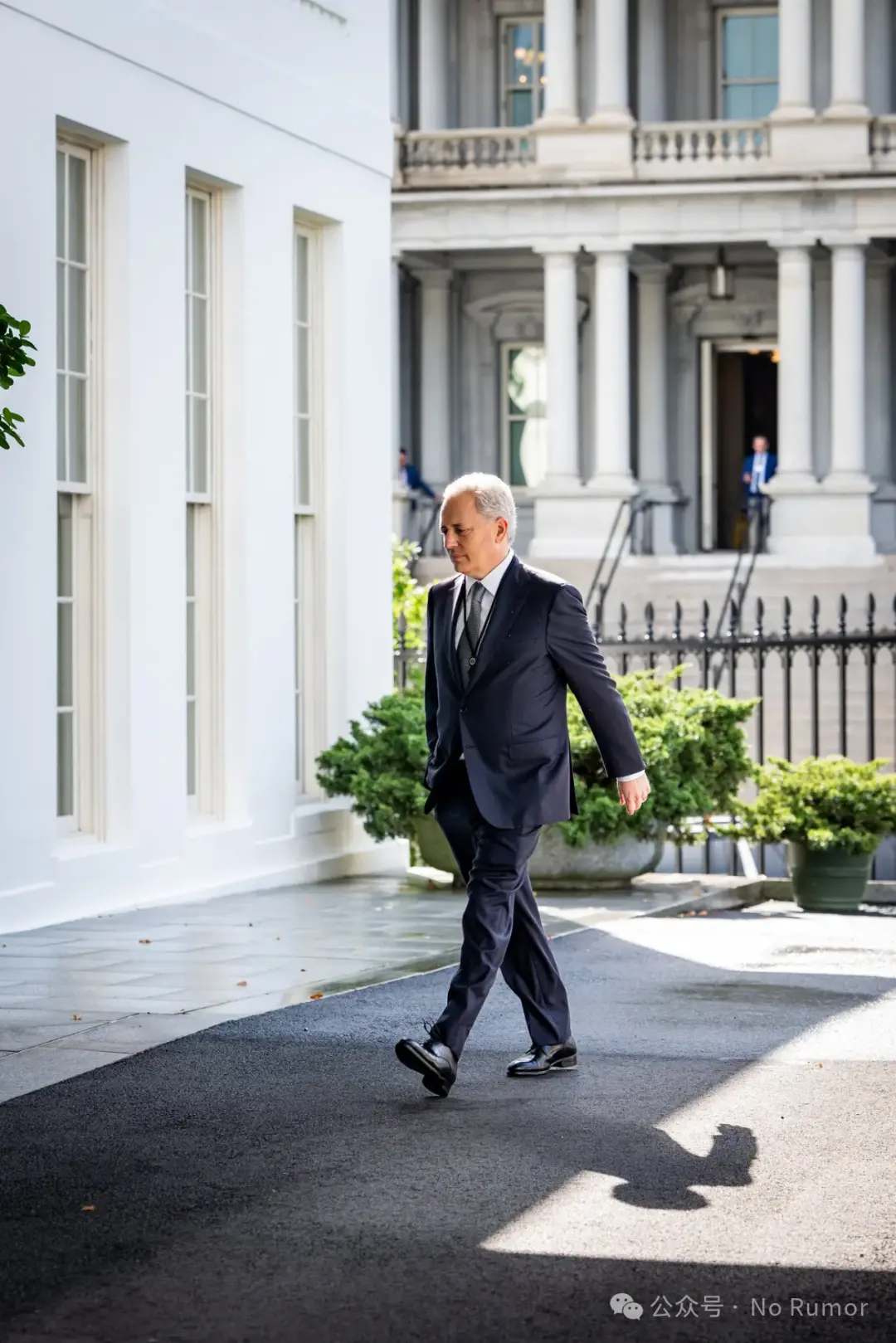
David Sacks, Source: The New York Times

To address potential conflicts of interest, the White House issued two ethical waivers to Sacks in March and July 2025. According to the memos, Sacks and Craft Ventures sold over $200 million worth of crypto assets. However, he retained hundreds of investments through Craft Ventures—including 449 AI-related investments and 20 cryptocurrency-related investments.

02 When Policymakers Become the Biggest Beneficiaries

708 Investments and the Inescapable Questions

An analysis of Sacks' financial disclosure documents by The New York Times revealed the scale of the issue: he holds 708 tech investments, of which 449 are related to artificial intelligence and 20 involve cryptocurrency. Many of these investments could directly or indirectly benefit from the policies he promotes in the White House.

Even more concerning is the missing information in the disclosures. His public ethical declaration did not disclose the value of remaining shares, nor did it specify when he sold the assets he promised to divest. This makes it difficult for outsiders to assess how much profit his government service has brought him.

Kathleen Clark, a government ethics expert at the University of Washington, bluntly told TechCrunch after reviewing Sacks' ethical waivers: this is corruption.

The most criticized aspect comes from:

Military Contracts with Anduril

Anduril Industries is a defense tech company that produces AI-driven night vision equipment, and Craft Ventures is one of its investors. In September 2025, the U.S. Department of Defense announced it would pay Anduril $159 million to design a new generation of soldier equipment prototypes.

The background of this contract is worth noting. The Trump AI Action Plan, which Sacks led the drafting of, explicitly promotes contracts between U.S. AI companies and the Pentagon. In other words, the policymaker pushed a policy, and the company he invested in happened to be the primary beneficiary of that policy.

An Anduril spokesperson told The New York Times that the company won the contract not because of Sacks' connections, but because founder Palmer Luckey is the best virtual reality headset designer in the world. Anduril also emphasized that they had been in talks with the Army before the AI Action Plan was introduced.

But as one commentator noted: when your advisor is a venture capitalist with stakes in an AI military company, who writes you a plan calling for AI's military expansion, and then your Pentagon signs a contract with that company—you would need a great deal of imagination to say this is just wise government policy.

BitGo and the GENIUS Act

BitGo is a cryptocurrency infrastructure company that offers stablecoin-as-a-service products. Craft Ventures holds a 7.8% stake in the company. In September 2025, BitGo submitted an IPO application, preparing to go public.

Image

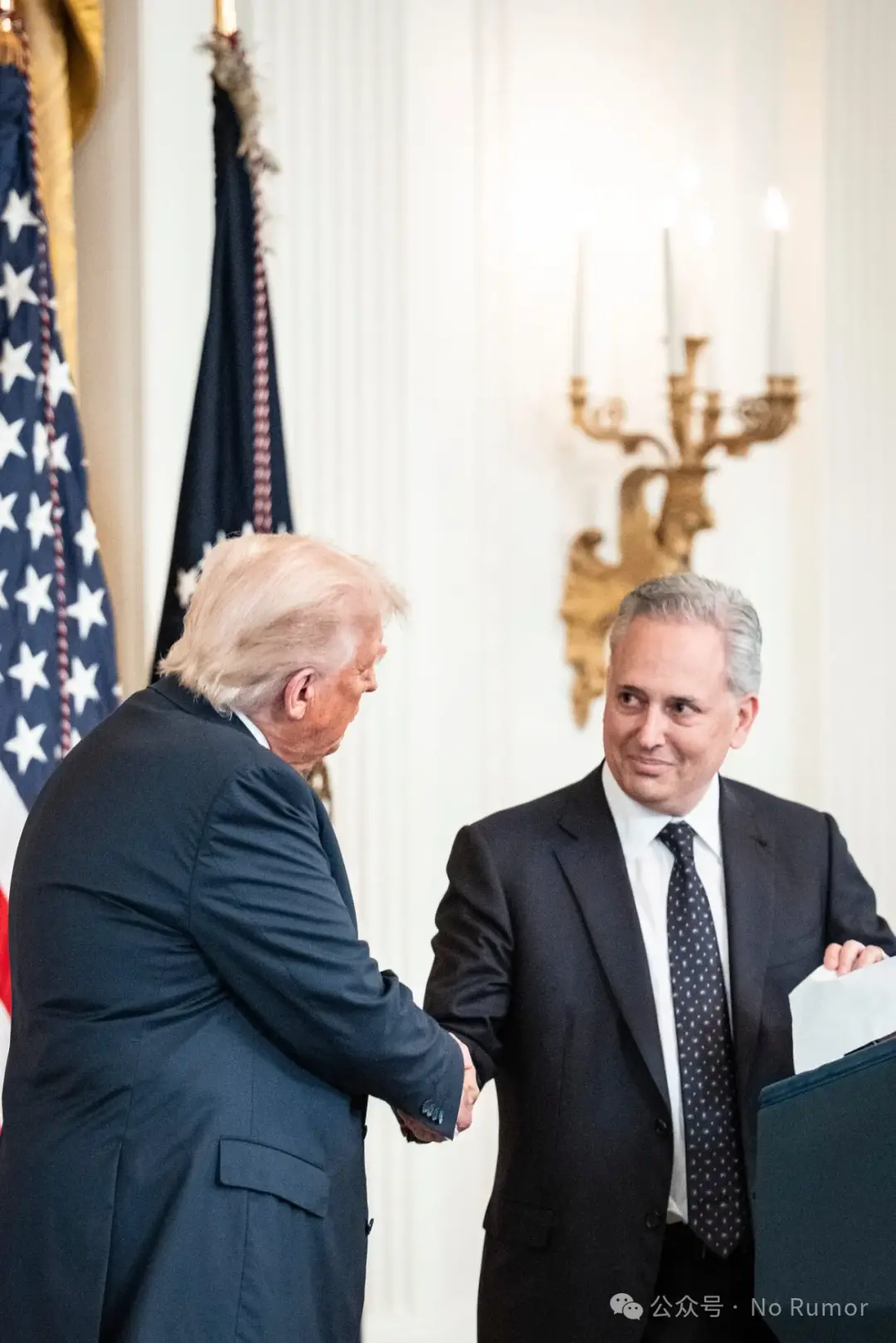
Trump with Sacks before signing the GENIUS Act, Source: The New York Times

Prior to this, Sacks was one of the main proponents of the GENIUS Act. This act provides a regulatory framework for stablecoins and is seen as a significant boon by the cryptocurrency industry. After the act passed, several cryptocurrency analysts predicted that institutional adoption of stablecoins would increase significantly.

For BitGo, this means that its core business will gain legal certainty, potentially leading to a substantial increase in its IPO valuation. And Craft Ventures—of which Sacks is still a partner—will directly benefit from this.

Vultron and Federal Contracts

In September 2025, a startup named Vultron announced it had completed a $22 million funding round. Vultron's business is to provide AI tools to federal contractors to help them win government contracts.

In the funding announcement, Vultron specifically highlighted one investor: Craft Ventures, the company co-founded by White House AI advisor David Sacks.

The irony of this case is that the U.S. AI czar invested in a company that helps businesses win federal contracts, while his policies will directly influence which contracts can be approved and which companies can qualify.

Craft Ventures stated that this investment occurred before Sacks joined the government. However, critics argue that the key issue is not the timing of the investment, but rather that Sacks continues to benefit from these investments while formulating policies that affect their value.

Nvidia and the $200 Billion Windfall

Among Sacks' numerous interactions with the White House, perhaps the most notable is his relationship with chip giant Nvidia.

In early 2025, the AI diffusion rules set by the Biden administration were about to take effect. These rules classified countries into three tiers, restricting the export of high-end AI chips to all but 18 allied nations. Chip manufacturers like Nvidia and AMD strongly opposed this policy, claiming it would stifle American innovation and hand the market over to competitors.

The New York Times reported that Sacks grew close to Nvidia CEO Jensen Huang this spring. At Sacks' suggestion, the Trump administration decided to repeal Biden's AI diffusion rules. The Department of Commerce's statement echoed Sacks' longstanding position almost word-for-word: Biden's AI rules were too complex and bureaucratic, threatening to stifle American innovation.

The beneficiaries of this policy shift are clear. Reports suggest that after the repeal, Nvidia's global sales could increase by as much as $200 billion. Following the announcement, Nvidia's stock price surged.

Sacks' lawyer denied any improper relationship between the two. But the core issue remains: how can the public trust that policies are made in the national interest rather than personal interest when a government advisor influencing chip export policy has a close relationship with a chip company CEO?

Regulatory Windfall for Cryptocurrency

As the cryptocurrency czar, Sacks' policies have brought regulatory benefits to the entire crypto industry. The SEC has withdrawn or suspended several enforcement actions against cryptocurrencies, including a lawsuit against Coinbase. The GENIUS Act provided a legal framework for stablecoins. Cryptocurrency prices surged under the Trump administration's friendly policies.

Meanwhile, the Trump family launched their own cryptocurrency project, World Liberty Financial, reportedly raising billions. After a UAE prince invested $2 billion in the project, the White House approved the sale of hundreds of thousands of high-end AI chips to the UAE—this deal was reportedly brokered by Sacks.

Critics point out that this intertwining of policy and private interests has surpassed the traditional revolving door issue. This is not about an official leaving the government to join a private company, but rather an investor crafting policies that benefit their own portfolio while continuing to profit from those investments.

03 Silicon Valley's Collective Defense and Criticism from All Sides

Unity in the Tech World

After The New York Times' investigative report was published, Sacks launched a counterattack on social media platform X, calling it a product of a "scam factory." Immediately, tech leaders from Silicon Valley rallied to his defense.

Salesforce CEO Marc Benioff stated that the article was not news—almost a strategic sabotage. Coinbase CEO Brian Armstrong called The New York Times a political propaganda machine. Venture capitalist Marc Andreessen described Sacks as a return to America's great era, when the most capable private sector citizens selflessly volunteered to serve the government in times of national crisis.

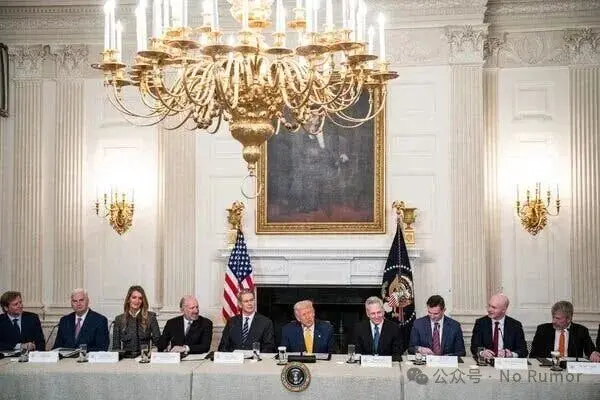
A line of people sit at a long table under a large chandelier, with President Trump at the center and Mr. Sacks to his right.

In March of this year, at a digital assets summit held at the White House, Sacks sat to the right of President Trump. Since mid-2024, Mr. Trump has appeared on the "All-In" podcast three times. Source: The New York Times

OpenAI's Sam Altman, hedge fund manager Bill Ackman, Meta CTO Andrew Bosworth, and Elon Musk also publicly defended Sacks. Bosworth wrote that he hopes those who have made money and made friends in their fields can participate in government work.

Sacks' spokesperson Jessica Hoffman stated: the claims of conflict of interest are incorrect. Sacks complied with the regulations for special government employees, and the government ethics office determined which investments he should divest. His government role has cost him rather than benefited him.

Criticism from Unexpected Directions

However, not everyone agrees with the logic that investors should set the rules.

Democratic Senator Elizabeth Warren has repeatedly criticized: Sacks leads a company investing in cryptocurrency while also being responsible for formulating national crypto policy—this is a clear conflict of interest, which is typically prohibited under federal law.

Perhaps the most surprising criticism comes from within Trump's camp. Right-wing media figure and former Trump advisor Steve Bannon views Sacks as a typical representative of the tech brotherhood gone awry. He warned: they are steering the White House toward a path of emerging technocratic oligarchy.

John Pelissero, director of government ethics at Santa Clara University's Markkula Center for Applied Ethics, pointed out: there are numerous potential conflicts of interest. As an advisor to Trump, Sacks' position does not require him to set aside his business interests.

Epilogue: Who Sets the Rules and Who Benefits

Five reporters from The New York Times spent five months investigating David Sacks. They found no obvious illegal behavior—because the rules themselves have been redefined to accommodate this unprecedented arrangement.

The core issue of this story is simple: when the rule-makers and the beneficiaries of the rules are the same group of people, can we still trust that the rules are fair?

Sacks' supporters argue that only those deeply involved in the industry can understand the technology and formulate policies that do not stifle innovation. Critics contend that even if the law is not explicitly violated, when personal interests and public responsibilities are so deeply intertwined, judgment cannot help but be affected.

As of the time of publication, Sacks still serves as the White House AI and cryptocurrency czar. Reports indicate that he is carefully calculating his workdays to ensure he does not exceed the 130-day limit allowed for SGEs, allowing him to remain in this position for as long as possible. As one insider told Semafor: he has no intention of leaving.

Meanwhile, the companies he invests in continue to win federal contracts, the policies he promotes continue to reshape the tech industry, and the value of his portfolio continues to fluctuate with each new policy announcement.

This is a story about power, money, and rules. In an era where the boundaries between Silicon Valley and Washington are increasingly blurred, David Sacks' story may just be the beginning.

A spokesperson for The New York Times, Charlie Stadtlander, stated in a statement: "Reporting on powerful figures who influence the financial and industrial policies affecting millions of Americans is a core responsibility of The New York Times. Our reporters do not have a preset agenda—they investigate leads, sincerely verify with the parties involved, and then publish confirmed content."

Epilogue: When the Revolving Door Stops Turning

Let us return to that stifling night in Washington in July 2025.

In the neoclassical hall near the White House, David Sacks stood beside Trump, with a full audience of his friends, colleagues, and business partners. They collectively witnessed the signing of an executive order—an order that would reshape the landscape of the American AI industry, and nearly everyone present would benefit from it.

This scene itself is a perfect metaphor.

The traditional notion of the "revolving door" describes the movement of personnel between government and the private sector: officials leave government to join companies, corporate executives enter government positions, and the cycle continues. This door is criticized because it blurs the lines between public service and private interests.

But David Sacks' story reveals a new possibility: the revolving door no longer needs to turn.

When one person can stand on both sides of the door—both as a policymaker and a beneficiary of the policy; both as a writer of the rules and an arbitrageur of the rules—the revolving door loses its meaning. This is not crossing boundaries, but rather the dissolution of the boundaries themselves.

The five reporters from The New York Times spent five months investigating Sacks, and they found no obvious illegal behavior. This may be the most thought-provoking part of this story: not because there are no issues, but because the rules themselves have been redesigned to accommodate this unprecedented arrangement. When the rule-makers and the beneficiaries belong to the same circle of friends, and when they jointly define what is "compliant" and what is a "conflict," the boundaries of the law become a movable dotted line.

In 1999, a group of young people fresh out of school gathered at a startup called Confinity. Twenty-six years later, some of this group became vice president, some led the Department of Government Efficiency, and some became the czar of tech policy. Their tradition of mutual support in business has now extended to the highest levels of national governance.

This is a story about a successful America, but also a cautionary tale about how power reproduces itself.

The rise of the PayPal Mafia demonstrates the astonishing efficiency of Silicon Valley's network; their takeover of Washington exposes an expanding crack in the American democratic system—when the concentration of wealth reaches a certain level, when the complexity of technology surpasses the understanding of regulators, and when "only insiders understand the industry" becomes an unspoken consensus, how long can the firewall between public interest and private interest hold?

The question raised in the prologue remains unresolved: when a billionaire with 708 tech investments becomes the architect of national tech policy, where is the line between public interest and private interest?

The answer may be: the boundary never disappeared; it was quietly moved to a position more favorable to those with the power to redraw the lines.

In an era of accelerating convergence between Silicon Valley and Washington, David Sacks' story is not the end, but a signal—heralding the arrival of a new type of political-business relationship. In this relationship, the revolving door no longer turns, because both sides of the door have become the same room. And the people in the room are writing the rules, and the name of the rules is "the future."

As for who this future belongs to, the answer lies hidden in the guest list from that stifling night.

Original link

免责声明:本文章仅代表作者个人观点,不代表本平台的立场和观点。本文章仅供信息分享,不构成对任何人的任何投资建议。用户与作者之间的任何争议,与本平台无关。如网页中刊载的文章或图片涉及侵权,请提供相关的权利证明和身份证明发送邮件到support@aicoin.com,本平台相关工作人员将会进行核查。

Share To
APP

X

Telegram

Facebook

Reddit

CopyLink