Why is a Chinese mining company being pointed at as a potential threat to the U.S. power grid?
Written by: Lin Wanwan
At the end of 2025, a Chinese cryptocurrency equipment company, Bitmain, was placed on the U.S. national security review list.
On November 21, the U.S. Department of Homeland Security launched Operation "Red Sunset," putting Bitmain under scrutiny on national security grounds. The accusations were severe: investigating whether its equipment had remote backdoors and whether it could deliver a fatal blow to the U.S. power grid in extreme situations.
Why would a Chinese mining company be pointed at as a potential threat to the U.S. power grid?
This reflects the extreme anxiety in the U.S. over core resources. At this moment, Silicon Valley is witnessing the most expensive "silence" in the history of technology.
In AI data centers, tens of thousands of NVIDIA H100 GPUs are quietly lying on the ground gathering dust. These chips, priced at $30,000 each and referred to as "industrial gold" by Jensen Huang, should be running at full speed, injecting soul into GPT-5 or Sora, but at this moment— they have no power.
The world's top assets are now stuck due to the most primitive physical bottleneck.
The power shortage in the U.S. has reached an incomprehensible level. The gap is 44 gigawatts, equivalent to the total power generation capacity of a moderately developed country like Switzerland. In this so-called most technologically advanced country, the average waiting time to power a newly built AI data center has stretched to over 48 months.
The U.S. power grid resembles an aging elder.
Just when the AI giants, holding hundreds of billions of dollars, found themselves in despair without a power outlet, they discovered that their lifeline appeared in the most unexpected place—Bitcoin mining farms.
Wall Street suddenly realized: this group holds the most scarce asset of the AI era—massive power already contracted with energy companies.
But they also realized: the survival rule of "computing power equals electricity" had already been brilliantly interpreted by a group of Chinese engineers across the ocean a decade ago.
Because the first circle of "power training grounds" for the U.S. AI era had already been completed in China a decade ago and was relocated to the U.S. three years ago due to a ban.
The game between the two sides of the ocean hides inevitability in coincidence. Just as the torrent of the times cannot change course, each generation has its own destiny, and every footnote tells us: greatness cannot be planned.
U.S. Power Inheriting "Chinese Heritage"
History always tends to write down the answers first and then wait for the questioner to appear.
In June 2024, the U.S. Bitcoin mining company Core Scientific announced a shocking piece of news to Wall Street: they signed a $3.5 billion agreement with CoreWeave, which claims to be NVIDIA's favored child, to lease the power infrastructure originally used for Bitcoin mining to the latter for training AI models.
These news pieces caused a stir in Silicon Valley, referred to as the "computing power marriage." However, for miners and officials in China who experienced the "5.19" storm back then, these messages read with a different flavor.
Because Core Scientific, IREN, Cipher, and other mining companies used to house NVIDIA H100s, a significant portion of that infrastructure actually flows with Chinese genes.
To some extent, the first circle of "power defense works" in the U.S. AI era is entirely the industrial legacy after the massive diversion of computing power from China.
And the person who inadvertently drew the blueprint is named Jihan Wu.
Jihan Wu, a typical tech guy who graduated from the Institute of Microelectronics of the Chinese Academy of Sciences, should have had a life trajectory of writing code and drawing circuit diagrams, quietly becoming a technical expert in a tech park.
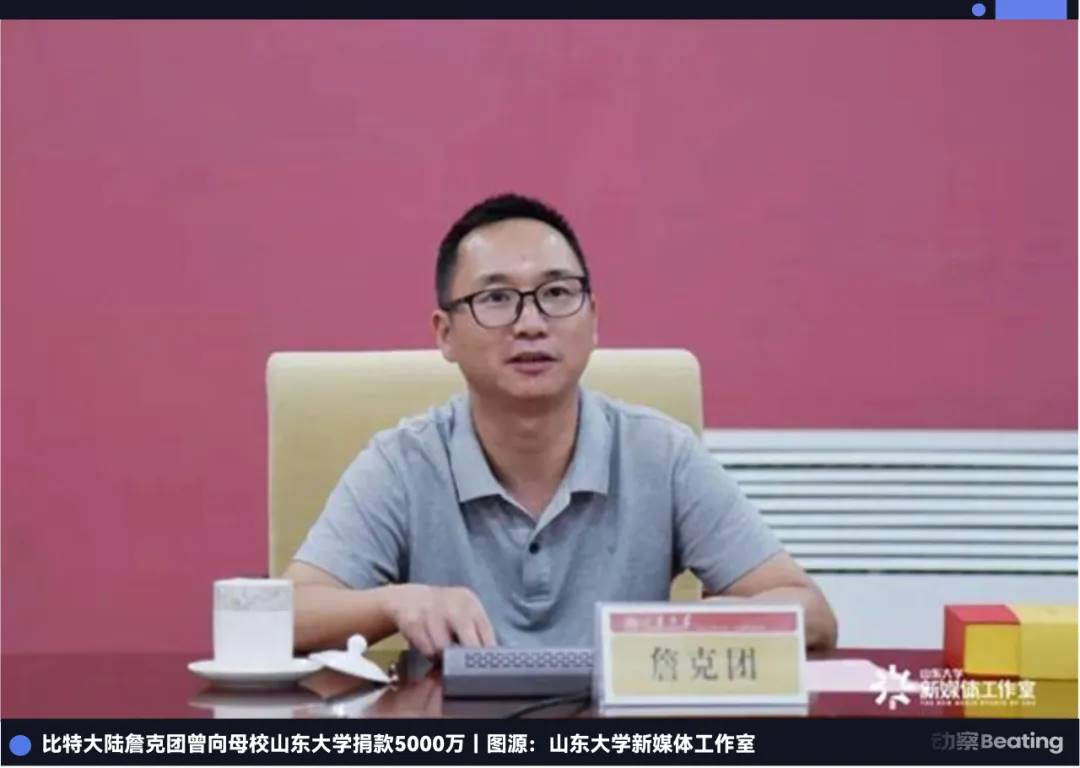
Until 2013, Jihan Wu co-founded Bitmain with Micree Zhan.
It is said that Jihan Wu spent only two hours reading the Bitcoin white paper. He may not have understood the future of currency, but he grasped the essence behind that mathematics—this is a numerical game about hash collisions.
In 2016, Bitmain made a shocking decision: to place massive wafer orders with TSMC. The Antminer S9, equipped with TSMC's most advanced 16nm FinFET process, emerged, not only a miracle of production capacity in chip history but also created an unprecedented "thermodynamic furnace."
In Jihan Wu's eyes, the S9 is a chip; but in the eyes of the State Grid, it is a pure industrial load.
It does not operate like a factory day and night, nor does it fluctuate with temperature. It runs 24 hours a day with a smooth power curve, indifferent to voltage and background. From that moment, a new system was born in the world: electricity, once a public service, became a "B-end raw material" that could be instantaneously priced, traded, and monetized; electricity, which is difficult to store at low prices once generated, parasitized its value in a string of numbers; Bitcoin mining began to become an industry: from hydropower in the mountains of Sichuan to wind power on the grasslands of Inner Mongolia, Bitcoin mining machines operated on every piece of land with surplus electricity in China.
Jihan Wu may not have realized at the time that the industrial standard he defined for Bitcoin mining machines inadvertently rehearsed a perfect energy supply plan for the extremely thirsty U.S. AI a decade later.
In the wildest year of 2018, Bitmain alone swallowed 74.5% of the global market share. But that was not the most terrifying part; the most terrifying part was that the remaining share was also entirely held by Chinese companies. Whether it was the mining machine founded by Yang Zuoxing, the former chief chip designer of Bitmain, or the ASIC pioneer Canaan Creative, they all had Chinese faces.
This was not global competition but a "Chinese engineer civil war" spanning 2,000 kilometers: from the Aobei Technology Park in Haidian, Beijing, to the Zhiyuan in Nanshan, Shenzhen, 99% of the world's computing power heartbeats with a Chinese pulse. An absolute closed loop that the Chinese supply chain completely locked down, forcing Silicon Valley to look up.
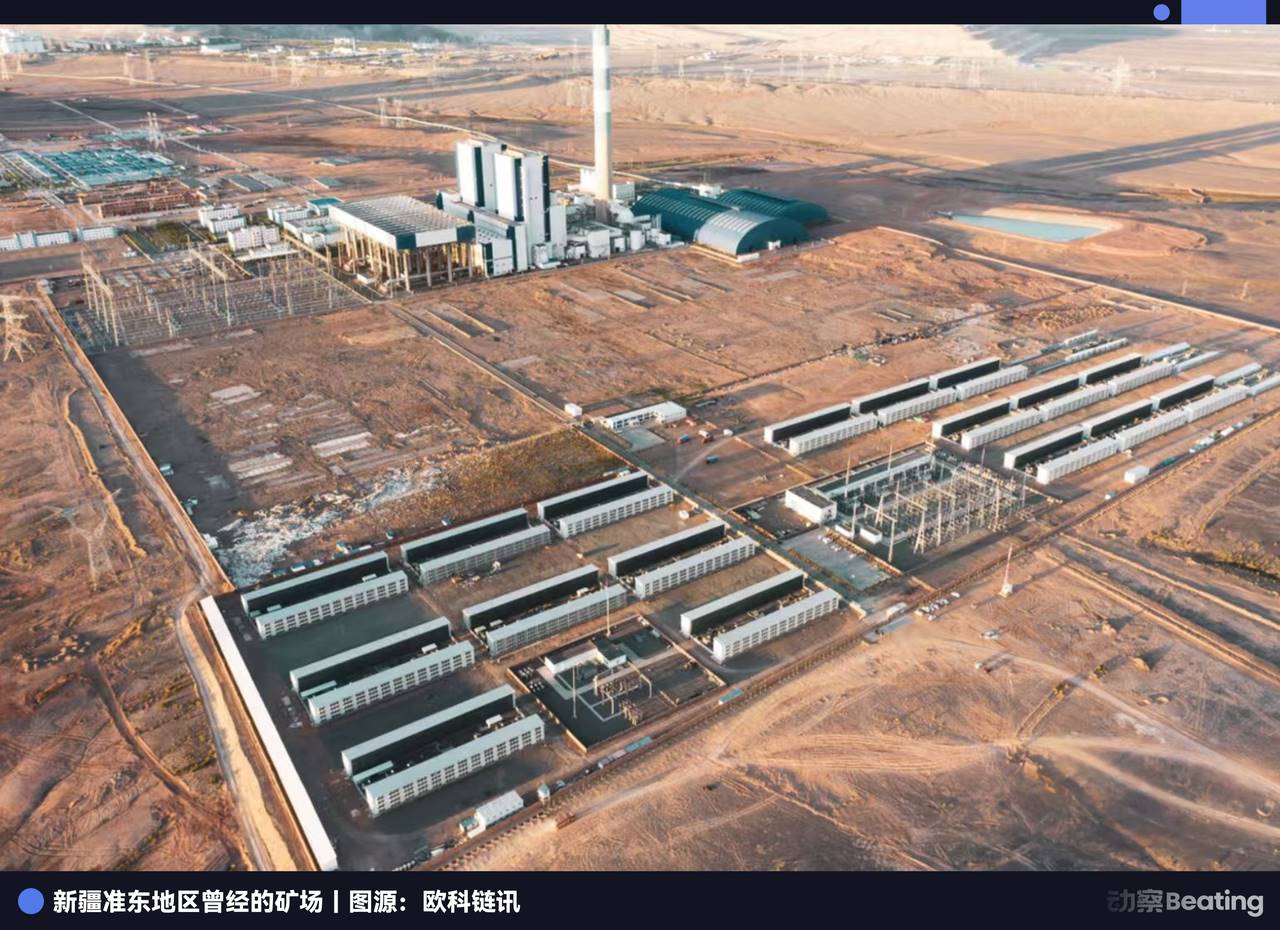
Until May 2021, with a regulatory ban, the roaring sound along the Dadu River came to an abrupt halt.
For the country, this marked the end of a power-consuming industry; but for the industry, it was the beginning of an epic "technological migration." Thousands of containers were loaded onto cargo ships, crossing the ocean, carrying not only the latest generation of Antminers designed by Jihan Wu but also a unique "power survival philosophy" honed in China.
One of the destinations: Texas, USA.
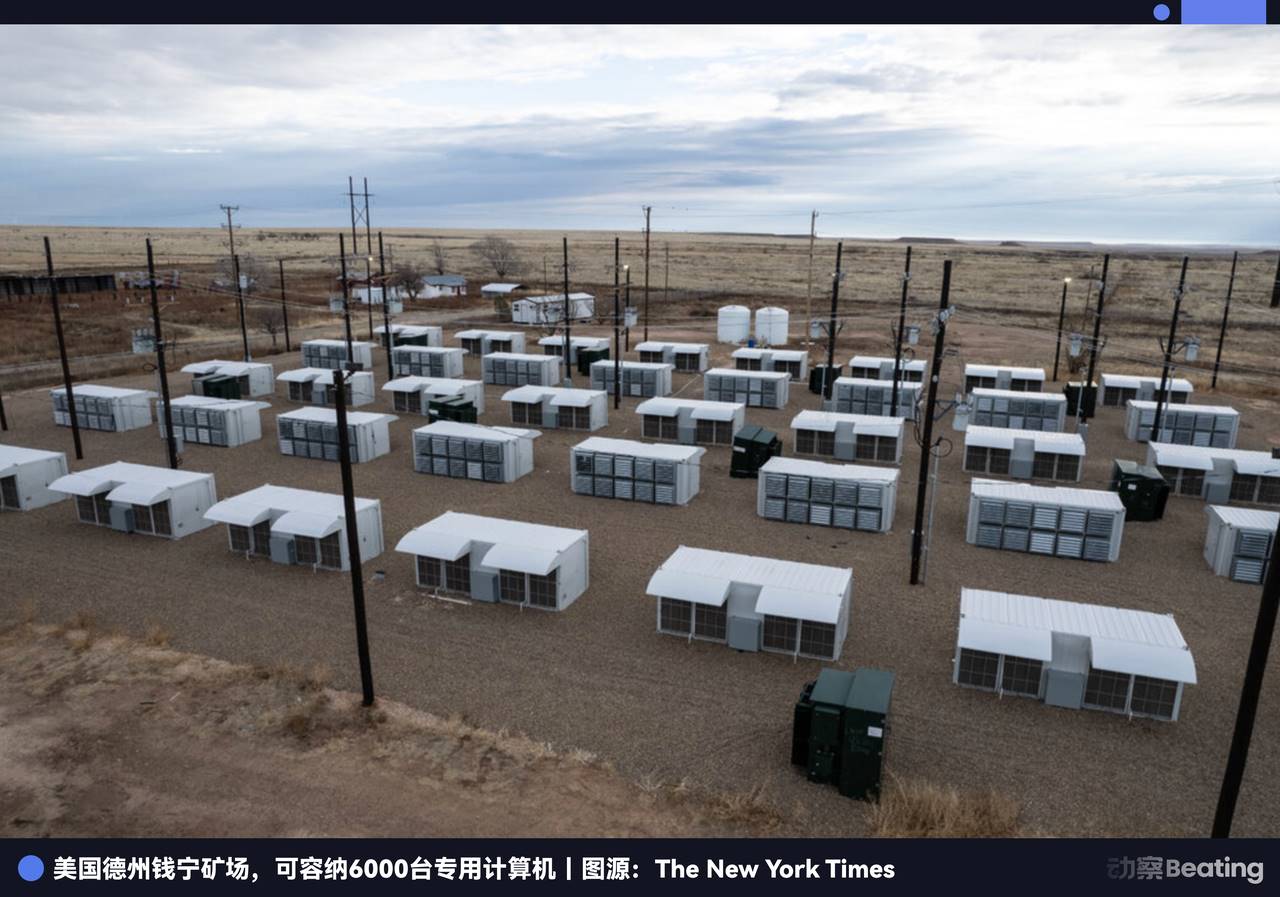
Here, there is an independent ERCOT grid, with the most free and wild electricity trading market in the U.S. For this group of "computing power refugees" from the East, it was like a magnified version of "Sichuan + Inner Mongolia."
However, when these Chinese people actually landed, the U.S. energy sector was surprised to find: these were not refugees; they were clearly a well-equipped "energy special forces."
The mining companies, back in Sichuan, relied on drinking heavily with power station managers and building relationships to secure low-cost electricity, signing a kind of "tacit agreement" based on personal connections. However, upon arriving in Texas, this logic was quickly upgraded to high-frequency trading algorithms.
Texas electricity prices fluctuate in real-time, changing every 15 minutes, and can spike from 2 cents to $9 in extreme cases. Traditional Silicon Valley data centers (like Google, Meta) avoid such fluctuations, as they are used to lying on fixed rates like greenhouse flowers.
But what was the reaction of Jihan Wu's "disciples"? Excitement.
They turned their past experience of manually controlling switches in China into automated demand response programs. When electricity prices are negative (which happens when there is too much wind power in Texas), they turn on at full power, crazily consuming electricity, and the grid even has to pay them to use power; when a heatwave hits and prices soar, they can cut off hundreds of megawatts of load within seconds, "selling" electricity back to the grid, earning price differences much higher than mining.
This "energy arbitrage" method left veteran U.S. power traders dumbfounded. U.S. mining giants like Riot Platforms and Marathon thrive and can pivot to AI data centers precisely because of this set of power algorithms brought from China.
Another major legacy of the Jihan Wu era is the extreme pursuit of the speed of physical infrastructure.
The traditional construction cycle for U.S. data centers is 2-3 years, a meticulous process for elite engineers. But the "mining circle" does not adhere to this; their logic is: every second of downtime is a crime against profit.
Thus, on the Texas plains, a "Chinese speed" that left local builders astonished emerged: no exquisite glass curtain walls, no complex central air conditioning, just huge industrial fans roaring. This "modular, container-style, minimalist cooling" infrastructure plan compressed the construction cycle to 3-6 months.
This rough yet extremely efficient engineering capability was initially mocked by Silicon Valley as an "electronic junkyard," but has now become highly sought after—because the explosion of AI computing power is too rapid; OpenAI and others cannot wait three years; they need this "plug-and-play" infrastructure capability now.
Clearly, in Silicon Valley, graphics cards can be bought with money, but time cannot.
This "time" is the crazy legacy from a decade ago. Back then, to mine Bitcoin, Chinese miners and their successors frantically acquired land and built substations in the U.S., hoarding the now invaluable "grid capacity."
Electricity quotas have become the new hard currency of American capital. The so-called "inheritance" is not inheriting a pile of silicon scrap but inheriting the right to connect to the grid.
Mining companies can secure hundreds of millions in contracts simply because they hold the key to starting the AI era amid the current power shortage in the U.S.
The Night of the "Invisible Champions" Migration
These brutal pleasures will ultimately end in brutality.
2018 was a hidden watershed in business history. That year, ChatGPT founder Sam Altman was still worrying about the survival of a non-profit organization; Elon Musk had just barely survived a near-bankruptcy situation, and the computing power in their eyes was still just obedient servers in data centers.
But across the ocean, Jihan Wu and his Bitmain had already turned computing power into an industrial giant. They did not understand the future of AI, but that did not prevent them from mastering the key to the future: how to tame those greedy silicon-based chips in gigawatts.
This is a story about grassroots heroes, national will, and historical irony. China took seven years to silently nurture a power-devouring giant in the rapids and coal seas of the West; then, on a summer night in 2021, for higher financial security and dual carbon goals, it uprooted it.
To understand why the U.S. can bow to mining companies to accommodate the explosion of AI power today, one must comprehend the "energy drill" that took place a decade ago along the Dadu River in Sichuan, China.
Let's pull the lens back to August 2019.
That was the most glorious moment for Bitmain and a brief window for China's mining industry to "turn from gray to white." At that time, the Sichuan provincial government introduced a policy called the "Hydropower Consumption Demonstration Zone" to address the long-standing issue of "water abandonment during the flood season" (i.e., when electricity generated from water cannot be transmitted and is wasted).
This is a real document from the red-headed files in places like Garze and Aba in Sichuan.
According to reports from Caixin at the time, under this policy, Jihan Wu's mining machines were no longer "black households" hiding in the deep mountains but became honored guests helping the local power grid "peak shaving and valley filling."
At that time, Bitmain effectively acted as a "supercapacitor" for the energy network in western China. Jihan Wu was proud not only of the 7nm chips but also of the ability to instantly convert surplus electricity into digital assets.
At that time, China controlled 75% of the global Bitcoin computing power. From Wall Street to London, everyone wanting to participate in this game had to look to Jihan Wu and rely on the power loads from Sichuan and Xinjiang.
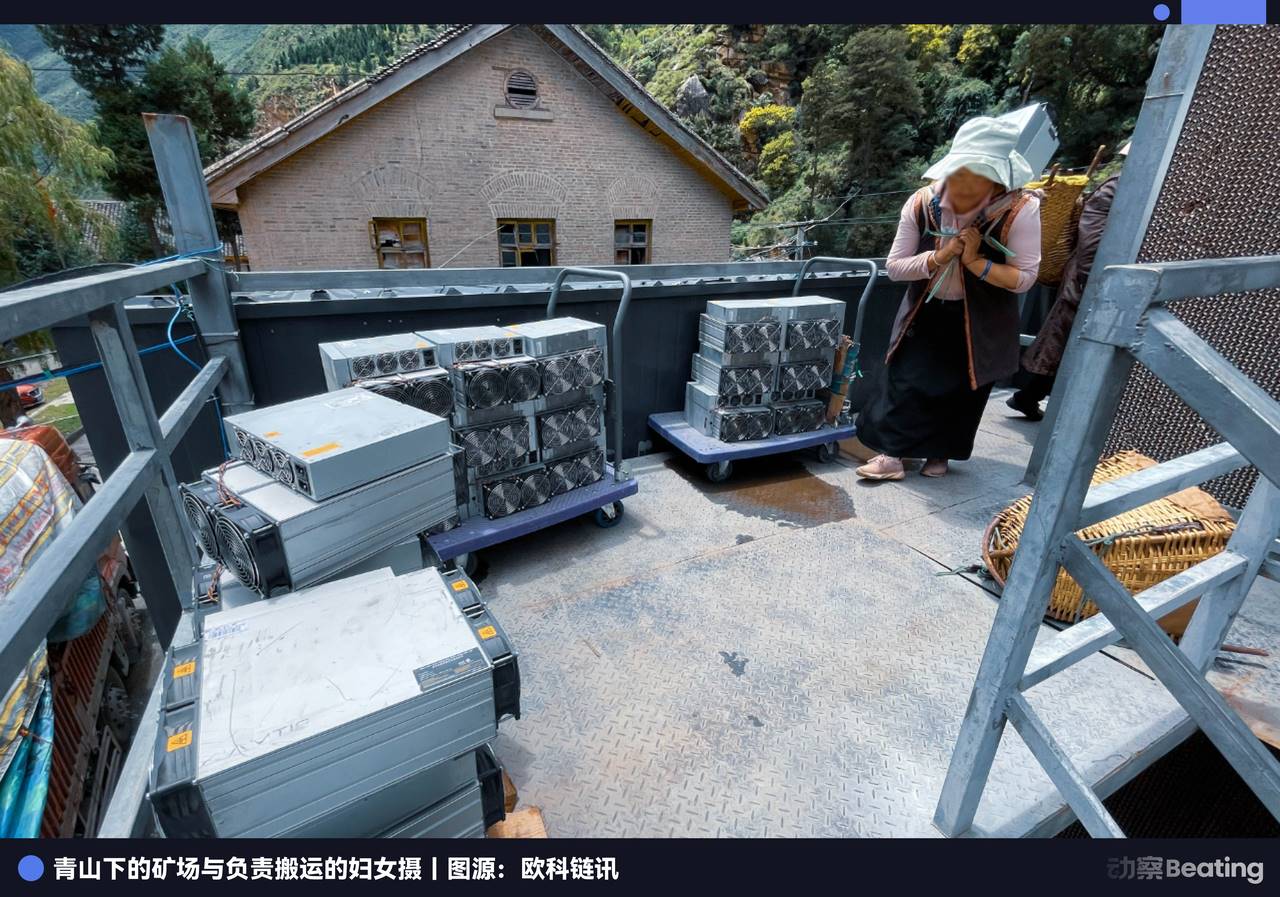
However, behind this "gray prosperity," two swords of Damocles always hung overhead.
The first was "financial security." Regulators had long realized that this was not just technological innovation but a massive capital channel operating outside foreign exchange controls.
The second was "dual control of energy consumption." With the introduction of the "3060 dual carbon" target in 2020, the flow of every kilowatt-hour of electricity became a political account. The mining industry, characterized by "high energy consumption, low employment, and no physical output," was destined to be sacrificed on the macro-strategic scale.
The turning point in history was precisely fixed on May 21, 2021.
That evening, the State Council's Financial Stability Development Committee held its 51st meeting, and a sentence with very few words but heavy weight appeared in the meeting's transcript: "Crack down on Bitcoin mining and trading activities."
This was no longer the past's "risk warning" or "development restrictions," but the highest-level "zeroing order."
The following month was the most thrilling 30 days in the history of China's computing power industry. Inner Mongolia was the first to respond, directly cutting off power to coal-fired mining sites; Xinjiang soon followed with a sweeping inspection.
The climax occurred late at night on June 19, 2021.
On this day, the Sichuan Provincial Development and Reform Commission and the Energy Bureau issued a notice requiring the cleanup and shutdown of virtual currency "mining" projects. This became known in the industry as the famous "Sichuan Shutdown Night."

Real videos from that night still circulate online: in a super mining farm in Aba Prefecture, as the clock struck midnight, the staff, with tears in their eyes, pulled down the switches of the high-voltage distribution cabinets one after another. The roar of cooling fans, which had been like an airplane taking off for years, disappeared in an instant.
The indicator lights of millions of mining machines went out simultaneously. The world suddenly became eerily quiet, with only the sound of the Dadu River still rushing.
At that moment, the global Bitcoin network's computing power plummeted by nearly 50%. China decisively severed this industry, which consumed over a hundred billion kilowatt-hours of electricity annually, from the veins of the national power grid.
We successfully defended the financial line and freed up valuable energy space. But in the gaps of this grand narrative, an unexpected foreshadowing was buried: we left the electricity but expelled those who "knew best how to use electricity."
However, the machines that were cut off from power did not disappear; they began to wander.
In the second half of 2021, the Yantian Port in Shenzhen experienced unprecedented congestion. According to descriptions from freight forwarding companies at the time, tens of thousands of containers piled up, all filled with S19 mining machines dismantled from Sichuan and Xinjiang.
This was a "Dunkirk evacuation" of computing power.
The story returns to the beginning.
In 2024, when ChatGPT ignited the world, AI giants suddenly found themselves lacking electricity, lacking substations, and lacking high-power data centers that could be quickly deployed.
China had cleaned up "backward production capacity" that year but had completely packaged and delivered the capability of "how to build and operate ultra-large-scale, high-energy-consuming computing centers" to the world.
This was a strategic trade-off concerning national financial sovereignty, resolutely abandoning this high-risk digital stronghold. From a macro-prudential perspective, this was an absolutely correct and necessary strategic action at the time. However, the irony of history lies in the fact that the massive bubbles and surplus computing power that were actively squeezed and expelled ultimately solidified across the ocean into the most unshakeable foundation of stability for the opponent's power grid and energy system.
But if one thinks that the end of this great migration of computing power is merely "the East loses, and the West gains," then they have only seen the chips on the table and not the table itself.
The arms race in AI, when stripped down, is the endless consumption of energy by computing clusters, which will ultimately lead to a battle over electricity costs. In this war of attrition, no country is better positioned than China.
The U.S. needs miners as "flexible loads" to patch and prolong the life of the grid, treating miners as a remedy for the grid's "aging disease."
But China is different, possessing the State Grid as a central brain. By utilizing ultra-high voltage transmission (UHV), it continuously and low-loss delivers the cheapest clean energy from the west to the data center clusters in the east, like arterial blood transfusions.
Regardless, under the torrent of history, Bitmain, the master of power management in China's computing power era, inadvertently became a strategic force reshaping the global energy landscape. They offered the skills honed along the Dadu River to the other side of the ocean, repairing the first circle of power walls for the impending American AI era.
The Fate of the "Recruited" Mining Companies
So, did these "former Bitcoin miners" who were recruited really step onto the AI era's stage in one leap?
The answer may lie in the calculations of the giants. Have you ever wondered why tech giants like Microsoft and Google, with cash flows in the hundreds of billions, truly handed over the lifeblood of electricity to mining companies? Is it merely because they find the construction time too long?
Of course not. The fundamental reason is that they are more wary of historical lessons than anyone else.
Looking back at business history, the redwood desks of Silicon Valley tycoons actually hold an invisible tombstone inscribed with a name that once echoed through the skies: Global Crossing.
This was the infrastructure giant that suffered the most during the 2000 internet bubble. At that time, American elites firmly believed that the entire world would enter the internet age within a few years, and by then, people would need faster and faster internet speeds. In this religious fervor, founder Gary Winnick borrowed hundreds of billions of dollars in just a few years, madly laying down over 100,000 kilometers of fiber optic cables in the deep sea, connecting the Americas, Europe, and Asia.
When the internet bubble burst, ".COM" websites only needed to shut down their servers and lay off employees to complete their bankruptcy liquidation. However, infrastructure suppliers faced enormous asset burdens: those fiber optics buried on the ocean floor, capable of transmitting trillions of bytes per second, overnight became the most terrifying "dead assets" in the eyes of shareholders—unsellable, unmovable, and could only quietly lie in the dark sea, slowly rotting on the balance sheet.
In 2002, Global Crossing collapsed under $12.4 billion in debt. The most ironic outcome was that Li Ka-shing's CK Hutchison Holdings later wanted to pick up these assets for less than 1% of their original value, like picking up scrap metal.
Global Crossing proved a brutal truth with its own corpse: in the early stages of technological transformation, whoever bears the irreversible heavy assets becomes the first scapegoat during a downturn. They thought they held the arteries of the future world’s data, only to turn themselves into sacrifices of infrastructure.
Today, Microsoft CEO Satya Nadella and Google CEO Sundar Pichai surely remember this tombstone better than anyone.
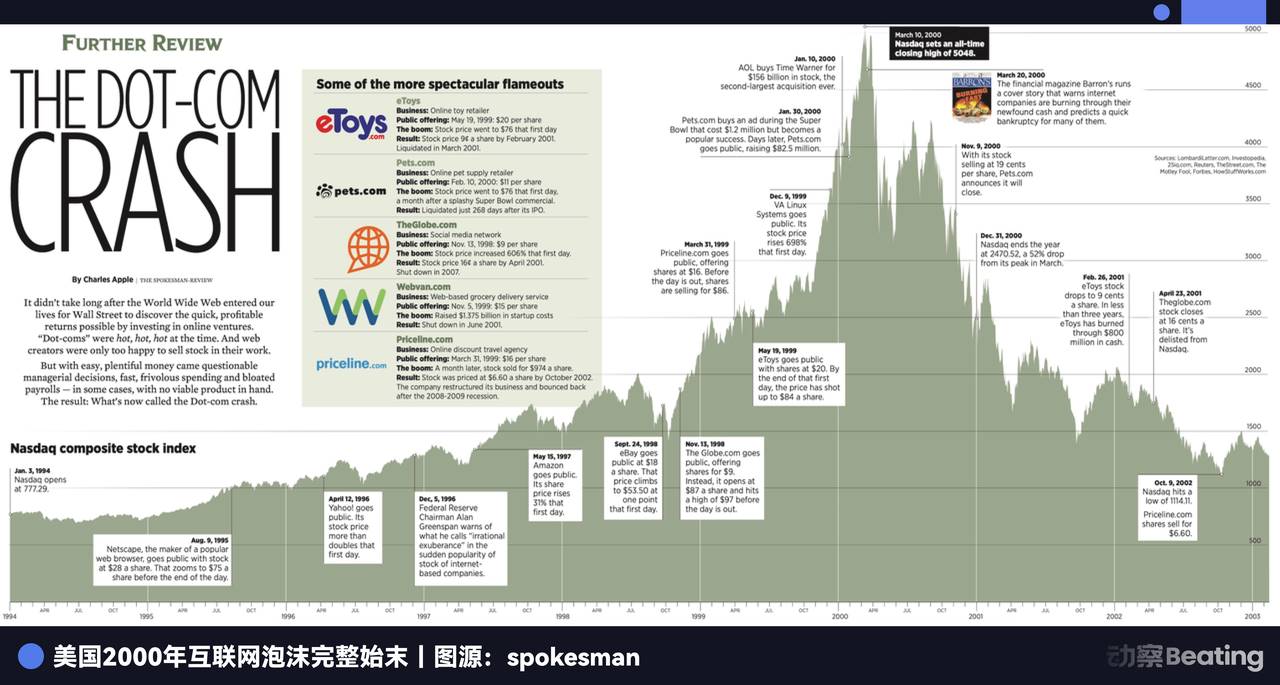
So, when you look at the financial reports from the past two years, you will find that their core risk control consists of just four words: asset isolation.
The capital expenditures (CapEx) of AI giants are skyrocketing, but every penny is calculated down to the bone: on one side are GPUs and custom servers, relatively "generic" assets that can pivot quickly and can be sold at a discount if necessary; on the other side are data center buildings, cables, and cooling systems, typical "specialized heavy assets," which they try to separate as much as possible.
The real calculation lies here: they want to share that "pit" with others.
AI giants try to use long-term computing power contracts, electricity contracts, and park leases to create a chain that "looks like OpEx operating expenses but essentially shifts CapEx risks to others."
For those recruited miners and infrastructure players eager to transform, the giants' lines are tempting: "You handle the money to build the factory, you take care of the liquid cooling transformation, and I will sign the electricity contract. As long as AI becomes the era's dividend, you collect rent according to the contract, and I get business growth and stock price returns."
It sounds like shared risk, but upon closer inspection, it resembles the popular saying: "If my friend dies, I won't."
But what if AI ultimately proves to be another Global Crossing-style illusion?
The giants would only have to pay a penalty and record an asset impairment to exit gracefully and continue telling the next story. The ones truly facing the bank's collection letters and needing to explain to creditors how to deal with those specially customized buildings for high power density that can only accommodate H100s, are the infrastructure players who thought they had finally "made it to the table."
Furthermore, some may ask: what if the AI bubble bursts? The mining companies could just unplug the GPUs and plug back in the mining machines to continue mining coins?
The more realistic scenario is that most "AI-transformed" mining farms cannot simply switch hardware: AI data centers require GPU+ liquid cooling, while Bitcoin needs extreme cost-cutting ASIC containers, and the two systems are almost incompatible. The capital market has already given you a round of premium as "AI infrastructure stocks," and announcing a return to mining would mean throwing the valuation anchor back to "high-energy-consuming miners," with the buildings still standing, but the story and market value being liquidated first.
Thus, history does not repeat itself, but it always rhymes. The fiber optics of yesteryear lie on the ocean floor, while today's data centers stand on the plains; the payers have changed, but the roles have never altered.
Greatness cannot be planned.
Now, in the chess game of U.S.-China AI competition, computing power and electricity are two key winning hands.
Although the U.S. has lost to China's ultra-high voltage construction speed in terms of grid construction efficiency, it unexpectedly gained a massive "shadow inventory." When the construction of data centers in Silicon Valley is choked by environmental regulations and supply chains, these mining farms can immediately step in to provide power for the training of GPT-5 and GPT-6.
The charm of the business world lies in its unpredictability. All strategic planning is essentially looking at the road through a rearview mirror.
This is a strategic assistance that no one anticipated. It was not planned by policymakers in the White House, nor was it simulated by the Pentagon, but rather constructed inadvertently by wandering Chinese engineers and a group of profit-seeking speculators in the chaotic market game.
The world is always full of "precise errors" and "ambiguous truths." This may be the fable left by business history: greatness can never be planned.
免责声明:本文章仅代表作者个人观点,不代表本平台的立场和观点。本文章仅供信息分享,不构成对任何人的任何投资建议。用户与作者之间的任何争议,与本平台无关。如网页中刊载的文章或图片涉及侵权,请提供相关的权利证明和身份证明发送邮件到support@aicoin.com,本平台相关工作人员将会进行核查。


