Author: Crypto, Distilled, Crypto KOL
Translation: Felix, PANews
TL;DR: Reasons include project saturation, token surplus, continuous improvement of market intelligence, and the disruption of the traditional altcoin season by Bitcoin ETF.
After the Bitcoin halving, altcoins used to soar, which was the "rule" of the previous bull market. However, the much-anticipated "altcoin season" has not yet appeared. Crypto KOL Crypto, Distilled has analyzed the reasons for this phenomenon and provided optimization strategy recommendations for investors.
What is the "Altcoin Season"?
When the performance of altcoins surpasses that of Bitcoin and prices soar across the board, it is considered the altcoin season. This is a period of vigorous development in the altcoin market driven by optimistic sentiment, much like a rising tide lifting all boats. The altcoin season drives the development of almost all tracks, with a large influx of liquidity driving the market.

Tracking Liquidity
Historically, liquidity mainly comes from two sources:
- Retail funds flowing in through centralized exchanges (CEX)
- Bitcoin flowing out from CEX to altcoins on CEX
Then, liquidity flows down the "ladder" of market capitalization. OGs are very familiar with this dynamic, often referring to it as the "altcoin season path."
Lalapalooza Effect
The "altcoin season path" in 2021 was clear, but now it has disappeared. The author believes that the reasons are multifaceted, the result of several factors working together.
The power of individual factors is not enough to change much. But when they combine and exert influence in the same direction, the effect is enormous. Renowned investor Charlie Munger describes this effect as the "Lalapalooza Effect." (Note: The Lalapalooza Effect refers to the extremely amplified effect produced by the superposition of multiple interrelated factors.)
So, what impact do these combined factors have?
1. Project Saturation
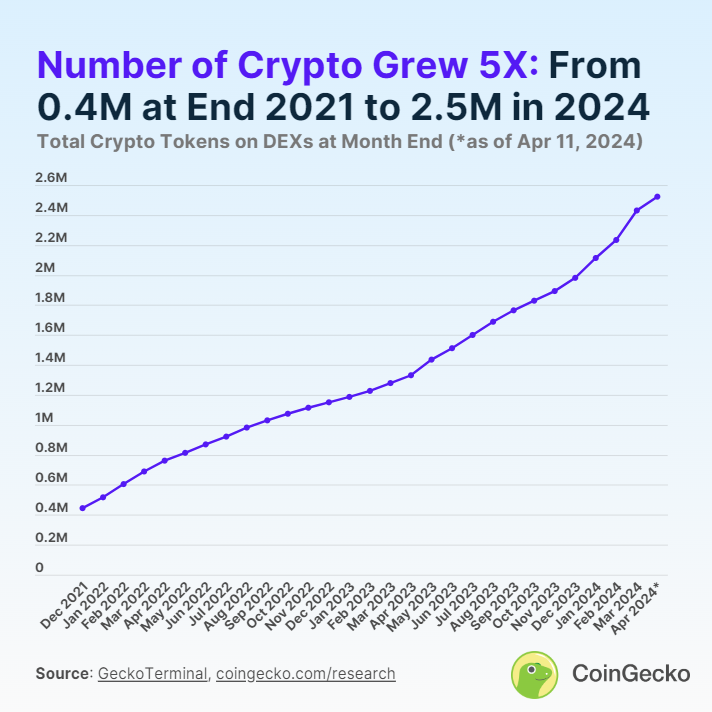
Although market liquidity is abundant, projects are extremely saturated. Imagine more ships in the sea than waves.
Only in certain areas, such as the AI field or the SOL ecosystem, will one truly feel the wave of the "altcoin season." The former "rising tide" has evolved into a selective rotation game, similar to the PvP nature (project mutual rolling) in the movie "The Hunger Games."
2. Token Dilution: The Invisible "Brake"
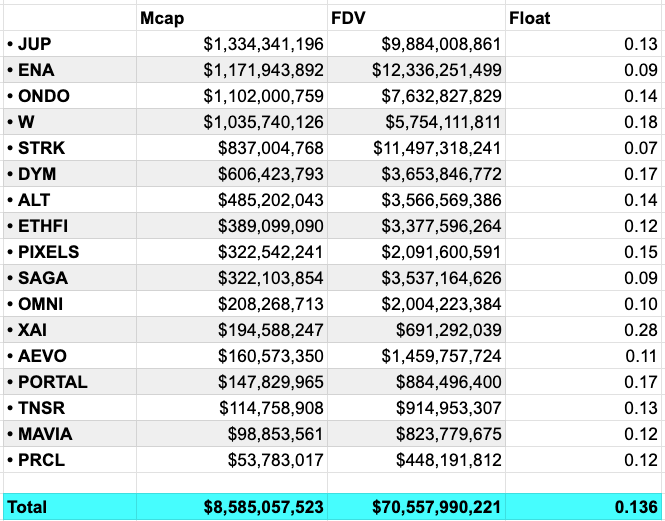
Token dilution (especially from token unlocks) has stifled the altcoin season seen in 2021. This often overlooked factor has absorbed a large amount of liquidity. No matter how good a project's technology is, if supply exceeds demand, prices are unlikely to rise.
Community user @thor_harvisten conducted a sampling survey of tokens launched up to 2024. The average circulation rate of these project tokens (circulating supply/supply) is about 14%, with around $700 billion in tokens waiting to be unlocked.
What happens when project oversaturation combines with token surplus? The altcoin season becomes unsustainable.
3. Increased Adoption is a Double-Edged Sword
Increased adoption in traditional fields is both good and bad. On one hand, it enhances the credibility of cryptocurrencies; on the other hand, it makes the field more competitive. If more smart people switch to cryptocurrencies, it becomes harder to find industry opportunities.
4. Bitcoin ETF: A New Dynamic
The approval of a Bitcoin spot ETF has changed the landscape of altcoins. Before the ETF appeared, the main access channel for Bitcoin was through CEX. This was good for altcoins, as investors could easily switch from Bitcoin to try out altcoins.
This time, the buyers are different. The path for those who buy Bitcoin through ETFs to enter the altcoin market is not as direct.
5. Impact of the COVID-19 Pandemic
Why was 2021 so unusual for altcoins? It is largely related to the special environment. In a lockdown environment, both fund flows and screen time were very high, creating perfect conditions for attracting retail investors to cryptocurrencies.
Given the rarity of this situation, it is reasonable to consider 2021 as an outlier. Everyone is still immersed in the climax of 2021, but the glory is no longer there.
In summary, the reasons for the "disappearance" of the altcoin season in the current market environment are:
- The altcoin market has rapidly shifted from a rising trend to a rotational game.
- As market intelligence continues to improve, finding opportunities requires more effort.
- Project saturation, combined with surplus supply, is depleting liquidity.
- The traditional altcoin season path has been disrupted by the Bitcoin ETF.
So, how should users respond in the current market environment?
Pay close attention to fully diluted valuation (FDV) and saturation rate.
Keep a close eye on the development of ETFs and areas with significant institutional participation, such as RWA. In the coming years, these may offer different tracks and even more favorable dynamics.
In a market flooded with altcoins, do not just look at the dollar value of projects. Comparing altcoin valuations with Bitcoin valuations can provide a more accurate assessment of altcoin strength.
Work harder to gain an advantage. This is not only to increase assets but also to improve knowledge, skills, and connections.
Conclusion
There are still plenty of opportunities in the crypto market, but it requires more effort and a completely new perspective. The situation is constantly changing, and those who can adapt quickly are more likely to succeed.
Related reading: Exclusive Interview with Shrimp: The main incremental funds enter through ETFs, and this bull market may not have an altcoin season
免责声明:本文章仅代表作者个人观点,不代表本平台的立场和观点。本文章仅供信息分享,不构成对任何人的任何投资建议。用户与作者之间的任何争议,与本平台无关。如网页中刊载的文章或图片涉及侵权,请提供相关的权利证明和身份证明发送邮件到support@aicoin.com,本平台相关工作人员将会进行核查。


