The true number of GPUs in aio.net has become a mystery? What are the problems with decentralized AI protocols?

CN
PANews
Follow
1 year ago

Article: @rargulati, MartinShkreli

Translation: Plain-language Blockchain

@ionet is a decentralized computing power network built on Solana, belonging to the Depin and AI sectors, and has received funding from Mult1C0in Capital and Moonhill Capital, with the funding amount undisclosed.

io.net is a decentralized cloud platform for GPU-based machine learning training based on Solana, providing instant, permissionless access to global GPU and CPU networks. The platform has 25,000 nodes and uses revolutionary technology to aggregate GPU clusters, saving up to 90% of computing costs for large-scale AI startups.

Currently built on Solana, it belongs to the currently popular Depin and AI sectors. Today, let's take a look at the analysis of @ionet's GPU and existing issues by the two individuals on X:

How many GPUs does @ionet have (Graphics Processing Unit, a chip for graphics processing)?

On X, @MartinShkreli analyzed four answers:

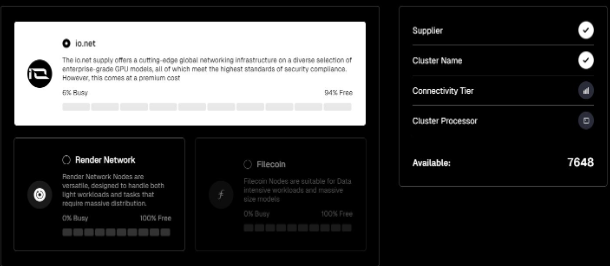
1) 7648 (attempted during deployment)

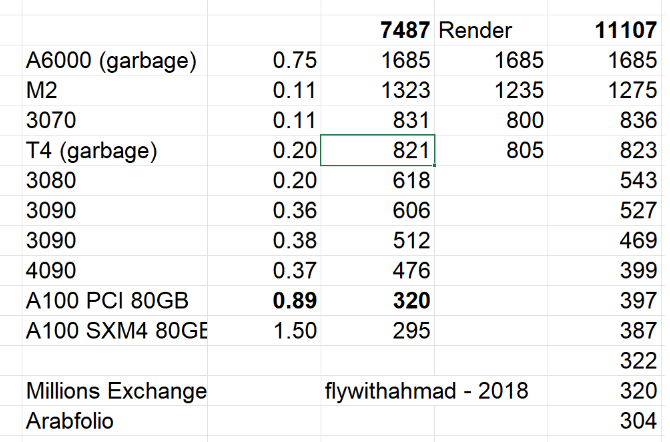
2) 11107 (manually calculated from their resource manager)

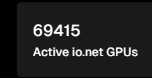
3) 69415 (an inexplicable number, unchanged?)

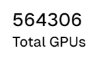
4) 564306 (there is no support, transparency, or substantive information here. Not even CoreWeave or AWS has this many)

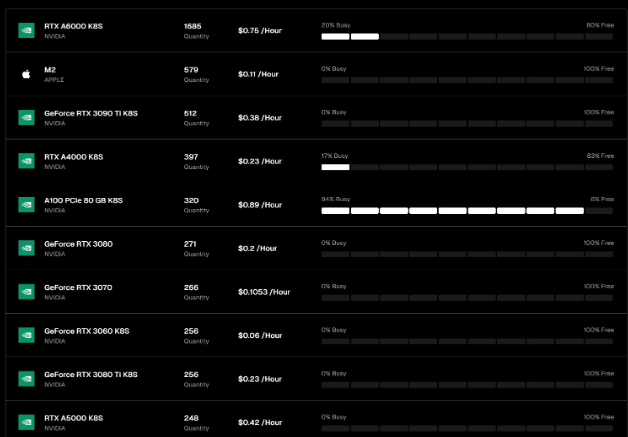
The actual answer is believed to be 320.

The real number of GPUs on io.net is puzzling? What are the problems with the decentralized AI protocol?

The real number of GPUs on io.net is puzzling? What are the problems with the decentralized AI protocol?

The real number of GPUs on io.net is puzzling? What are the problems with the decentralized AI protocol?

The real number of GPUs on io.net is puzzling? What are the problems with the decentralized AI protocol?

Why 320?

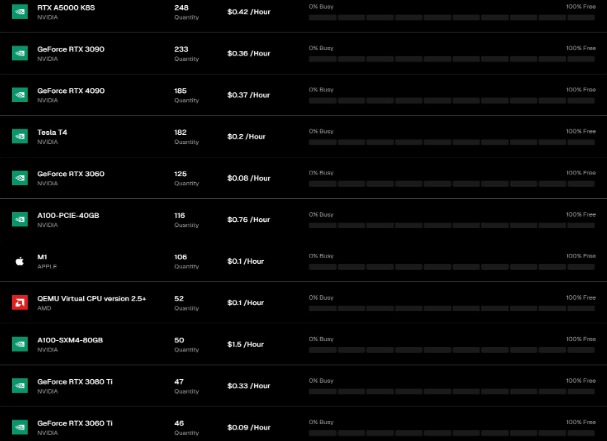
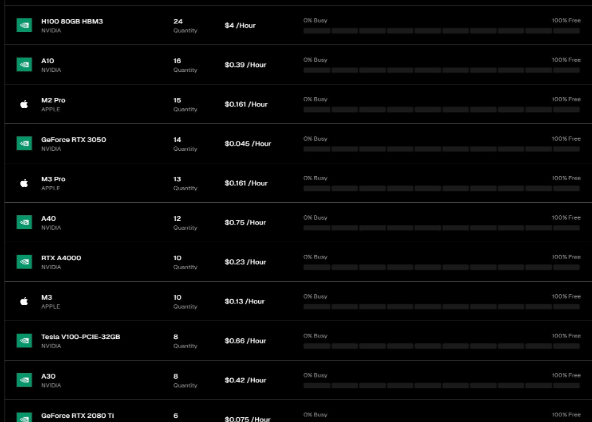
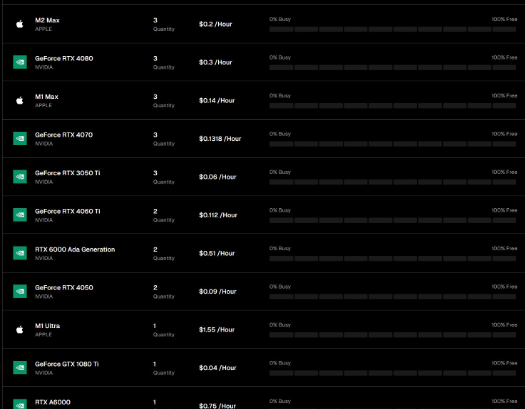
Let's take a look at the resource manager page together. All GPUs are "free," but you still can't rent one. If they are free, why can't you rent them? People want to be rewarded, right?

In reality, you can only rent 320 of them.

If you can't rent them, then they don't actually exist. Even if you can rent them, it will increase…

The real number of GPUs on io.net is puzzling? What are the problems with the decentralized AI protocol?

The real number of GPUs on io.net is puzzling? What are the problems with the decentralized AI protocol?

The real number of GPUs on io.net is puzzling? What are the problems with the decentralized AI protocol?

The real number of GPUs on io.net is puzzling? What are the problems with the decentralized AI protocol?

@rargulati stated that Martin's questioning of this matter is completely correct. The decentralized artificial intelligence protocol has the following problems:

1) There is no cost-effective and time-effective way to conduct useful online training on highly distributed general-purpose hardware architecture. This requires a major breakthrough that I am currently unaware of. This is why FANG spends more money on purchasing expensive hardware, network connections, data center maintenance, etc., than all the liquidity of cryptocurrencies.

2) Conducting inference on general-purpose hardware sounds like a good use case, but the rapid development in hardware and software has led to poor performance of general decentralized approaches in most critical use cases. Reference can be made to the latest delays from OpenAI and the growth of Groq.

3) Conducting inference from correctly routed requests, coexisting closely with gpu clusters, and using decentralized cryptocurrencies to lower capital costs to compete with AWS and incentivize enthusiasts to participate sounds like a good idea, but due to the multitude of suppliers and the liquidity dispersion in the GPU spot market, no one has integrated enough supply to provide to those operating real businesses.

4) Software routing algorithms must be very good, otherwise there are many problems with the operation of general-purpose hardware for consumer operators. Forget about network breakthroughs and congestion control, if someone decides to play games or use any content using webgl, you may encounter a service interruption from an operator. Unpredictable supply-side disruptions will trouble operators and bring uncertainty to demand-side requesters.

These are all tricky problems that will take a very, very long time to solve. All bids are just a joke.

免责声明:本文章仅代表作者个人观点,不代表本平台的立场和观点。本文章仅供信息分享,不构成对任何人的任何投资建议。用户与作者之间的任何争议,与本平台无关。如网页中刊载的文章或图片涉及侵权,请提供相关的权利证明和身份证明发送邮件到support@aicoin.com,本平台相关工作人员将会进行核查。

Share To
APP

X

Telegram

Facebook

Reddit

CopyLink