Viewpoint: Three Major Changes in the Virtual Asset Market After the South Korean National Assembly Election

CN
PANews
Follow
1 year ago

Author: Daniel Kim, Tiger Research CEO & Founder

Translation: Felix, PANews

According to the recent election results of South Korean National Assembly members, the ruling party in South Korea suffered a devastating defeat in all 300 seats, while the largest opposition party, the Democratic Party of Korea, and its satellite party won 175 seats. Therefore, some people predict that in the next 4 years (the term of the National Assembly), South Korea's major regulations will shift from conservative legislation to progressive legislation. Based on the election results, the potential market changes are detailed below according to the Democratic Party's campaign promises.

During the campaign, the Democratic Party of Korea made various commitments to revitalize the digital asset market. Most importantly, the party focused on stimulating the virtual asset market by listing Bitcoin ETFs and reducing the tax burden on individual investors. This means that individual investors can invest in virtual assets in a more favorable environment.

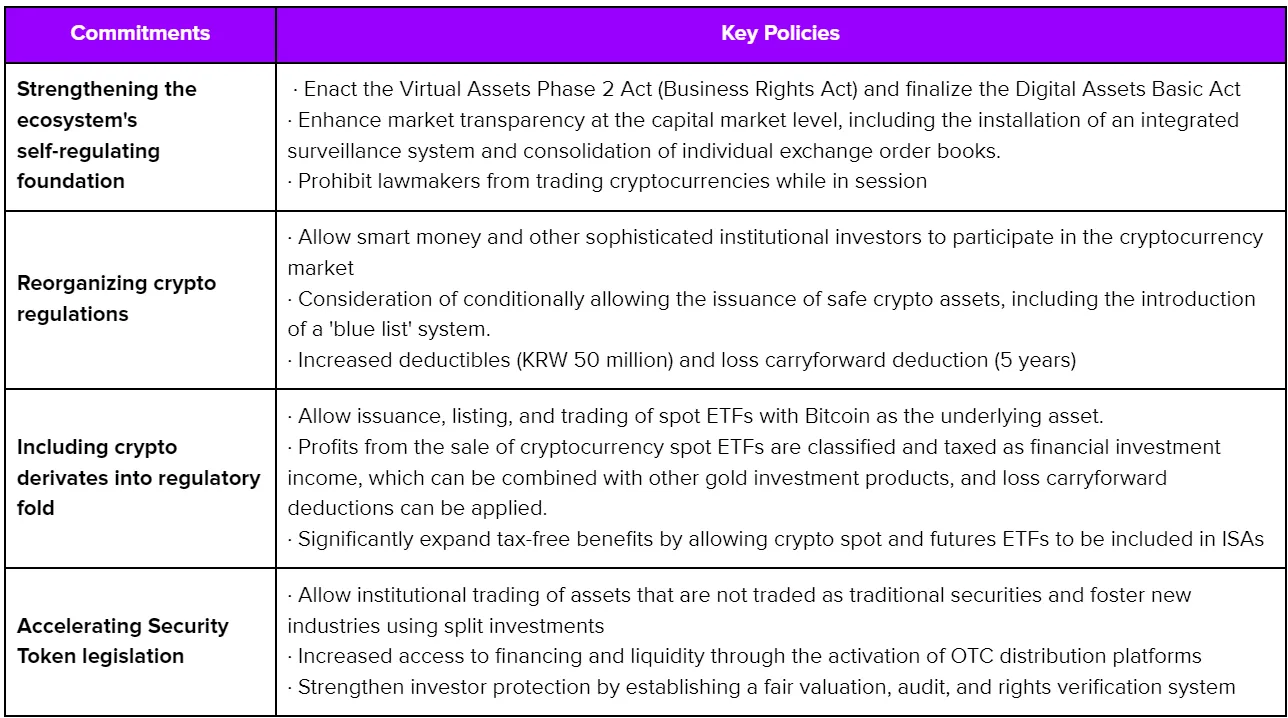
The Democratic Party of Korea's commitments in the cryptocurrency field:

Viewpoint: Three major changes in the virtual asset market after the South Korean National Assembly election

The 22nd election pledge of the Democratic Party of Korea, Source: Democratic Party of Korea

The main commitments of the Democratic Party of Korea are:

  1. Promoting the listing of Bitcoin spot ETFs
  2. Reducing the tax burden on individual investors in cryptocurrency investments
  3. Institutionalizing the cryptocurrency market and strengthening investor protection

The Democratic Party of Korea's policy direction focuses on promoting the growth of the cryptocurrency market while enhancing investor protection to improve the market's health. If these commitments are fulfilled, it is expected to create a safer and more convenient environment for retail investors to invest in cryptocurrencies within the regulatory framework.

Listing of Bitcoin ETFs and institutionalization of tokenized securities

The Democratic Party of Korea has stated that it will allow the issuance, listing, and trading of Bitcoin spot ETFs. This will provide an opportunity to integrate mainstream virtual assets, including Bitcoin, into the existing financial system, similar to ETFs in the United States. In addition, the party plans to legislate the issuance, sale, and disclosure system of tokenized securities to promote the adoption of blockchain in traditional financial markets.

Although the listing of Bitcoin spot ETFs and guidelines for tokenized securities have been discussed before, progress has been slow. The guidelines for tokenized securities have been released for a year, but they have not yet been passed by the National Assembly. It is worth paying attention to whether the Democratic Party can expedite this process.

Rationalizing virtual asset taxation and loss deduction

The Democratic Party announced that it will significantly raise the tax exemption threshold for virtual asset investments from the current $2,000 to $40,000. It is expected to substantially reduce the tax burden on small-scale investors. At the same time, the Democratic Party plans to introduce loss offset and five-year loss carryover deductions for losses generated from virtual asset investments. These tax incentives will encourage individual investors to participate more actively in the virtual asset market.

The ruling party is urging to postpone the imposition of cryptocurrency taxes. Although the government and the parliament have postponed the implementation date of cryptocurrency taxation to January 2025, further extension is unlikely based on the election results.

The Democratic Party also insists on implementing the financial investment income tax next year as scheduled. The financial investment income tax imposes a 20% tax on stock income exceeding 50 million South Korean won (approximately $36,500) and overseas stock income exceeding 2.5 million South Korean won (approximately $1,800). Due to the relatively low tax burden in the cryptocurrency market, there is a possibility of funds flowing into the cryptocurrency market.

Restricting large exchanges and strengthening investor protection

The Democratic Party also proposed measures to restrict large exchanges by integrating the order books of small exchanges and commercializing trading services. Previously, a state-owned exchange in Indonesia also implemented similar actions. This is aimed at preventing excessive concentration of trading on exchanges and improving market fairness. These policies are expected to have a significant impact on the market, especially in South Korea, where Upbit has long held about 80% of the market share of cryptocurrency exchanges.

Viewpoint: Three major changes in the virtual asset market after the South Korean National Assembly election

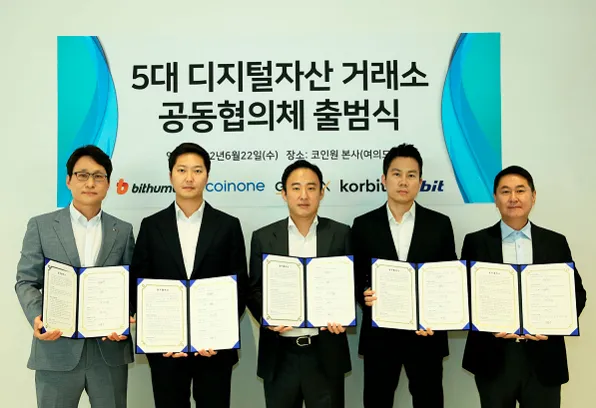
Source: DAXA

In addition, the Democratic Party plans to introduce a "blue listing" system to protect investors. This system only allows high-quality virtual assets to be listed. This measure is similar to the "white/green listing system" adopted by the Japan Virtual Currency Exchange Association (JVCEA), providing a framework for reviewing encrypted assets. Under the new system, asset screening will be conducted by independent third-party institutions such as the Korea Exchange, increasing the transparency of listing encrypted assets.

This policy is considered a necessary measure for the long-term healthy development of the South Korean cryptocurrency market. Currently, there is a self-regulatory organization focused on Korean won exchanges—the Digital Asset Exchange Association (DAXA). Therefore, the relationship between these institutions and the Democratic Party of Korea remains to be observed.

Conclusion

It is worth paying attention to how the "Virtual Asset User Protection Act" and other legislation will be implemented in July. If the Democratic Party of Korea's commitments are successfully implemented, the South Korean cryptocurrency market is expected to move away from its current ambiguous state and have clearer, more organized rules.

Furthermore, it is expected to promote the adoption of blockchain by traditional financial institutions, such as tokenized securities and cryptocurrency ETFs, whose adoption rates are slower compared to other countries. Creating various investment and business opportunities and investor-friendly policies in a sound and safe environment will help revitalize the future of the South Korean virtual asset market.

Related reading: The Cryptocurrency Circle in South Korea: The Crazy Kimchi Premium and the Get-Rich-Quick Dream of Coiners

免责声明:本文章仅代表作者个人观点,不代表本平台的立场和观点。本文章仅供信息分享,不构成对任何人的任何投资建议。用户与作者之间的任何争议,与本平台无关。如网页中刊载的文章或图片涉及侵权,请提供相关的权利证明和身份证明发送邮件到support@aicoin.com,本平台相关工作人员将会进行核查。

Share To
APP

X

Telegram

Facebook

Reddit

CopyLink