Can Bitcoin Layer2 take over from AICoin and become the next "explosive" narrative?

CN
链捕手
Follow
2 years ago

Original Title: After the Inscription, is Bitcoin Layer-2 the Next Breakthrough in the BTC Ecosystem

Original Author: Bitwu.eth

Inscription has been popular for some time. After the frenzy of memes and miners, the market is beginning to look for new opportunities in the #BTC ecosystem. It seems that many people believe that the next breakthrough point is Bitcoin Layer-2.

So today, let's take a look at Bitcoin Layer-2s.

This article is over 3000 words long, with a large amount of information and novel viewpoints. It will take some time to read, so it is recommended to bookmark it and read it carefully later.

This article is divided into 3 parts:

  1. Bitcoin Layer2 in the Past 10 Years
  2. Development of Bitcoin Layer2
  3. Analysis of Several New Bitcoin Layer2s in the Market
  • ZTC Global (@ZTCGlobal)
  • B² Network (@BsquaredNetwork)
  • BL2 (@BL2_official)
  1. Summary

I. Bitcoin Layer2 in the Past

In fact, the controversy surrounding Bitcoin Layer2 is not a recent development. It has been discussed since 2015 and has led to intense debates within the BTC community.

The BTC blockchain has a maximum block size limit of 1MB, which greatly restricts the number of transactions that can be accommodated in each block. These debates gradually formed two factions: the expansion faction and the core (conservative) faction.

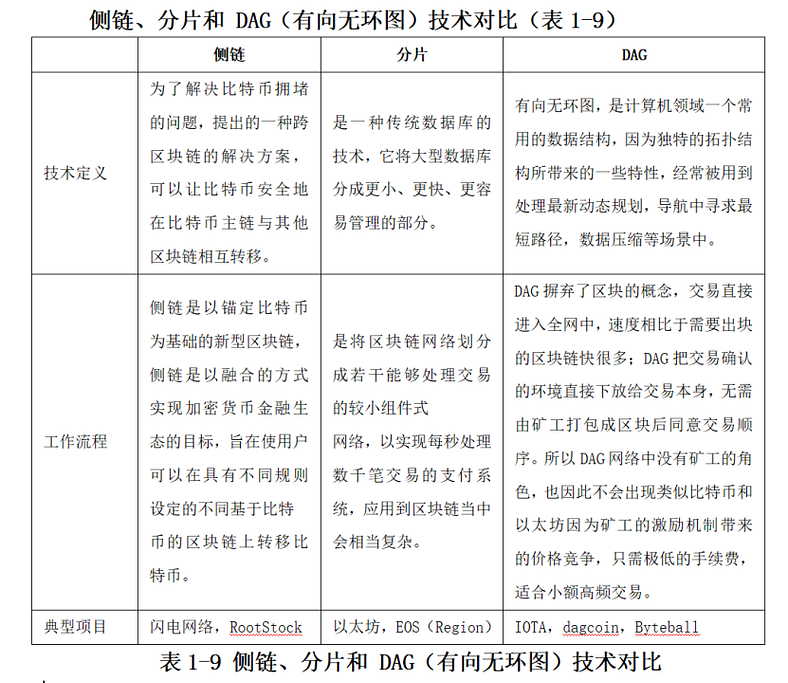
Core believes that a sidechain should be developed outside the main chain, and the technical solution is to build a second-layer network protocol (such as the Lightning Network). This has led to the emergence of various alliance chains, private chains, cross chains, etc.

The current situation is that BTC continues to operate with small blocks. Since it has small blocks, there is a ceiling on the total number of transactions that miners can process, and there is also a ceiling on the income from each transaction. For example, a user may accept several hundred Gas for a transaction, and if the Gas fee is too high, users will choose off-chain transactions, or transactions on Bitcoin Layer2 and other alternative solutions, which will reduce the income of miners from Gas.

The expansion faction believes that the 1MB block size limit is too small, and when Gas fees are too high, users will go to the Lightning Network and other Bitcoin Layer2 solutions for transactions, leading to a reduction in miner income.

This won't do. It must be expanded to increase the block size to 8MB, 32MB, or even higher, so that all users can transact on the main network, allowing miners to make money effortlessly.

As a result, the biggest fork in BTC emerged, and the first fork was BCH, which led to a frenzy in 2017 after the ICO. Various forked coins of BTC were flying all over the place, making many people rich overnight, while more people saw the value of their forked coins drop to zero overnight. Thinking back to that year, I also invested BTC into various forked coins, and in the end, it was all for nothing!

The expansion community was not so united, and internal disputes continued. On November 16, 2019, BCH hard forked into BCH SV and BCH ABC.

In summary:

Bitcoin Cash aims to expand the network through on-chain methods, and its community believes that Bitcoin Cash will continue Satoshi Nakamoto's vision of "peer-to-peer electronic cash."

The Bitcoin project initiated by Satoshi Nakamoto, under the leadership of the Core development team, has taken the off-chain expansion route, such as through SegWit (2017) and the Lightning Network, to achieve off-chain expansion.

II. Development of Bitcoin Layer2

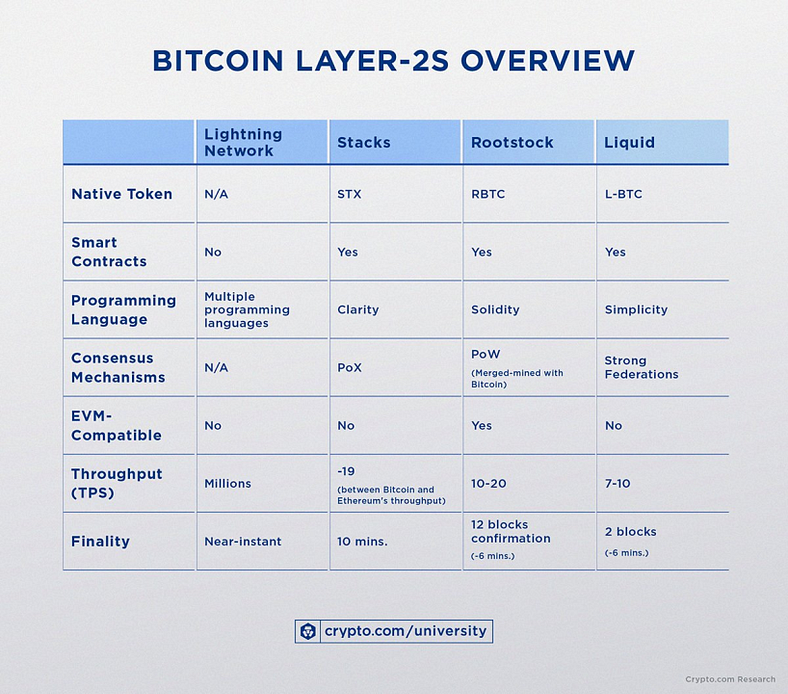
There were many early Bitcoin Layer2 solutions, such as the Lightning Network, Rootstock, Stacks, Liquid Network, etc.

Today, we will not explore the technical aspects of classical Bitcoin Layer2, as many strong technical concepts have had mediocre market performance (such as EOS).

Regarding second-layer protocols, in a book I was preparing to publish in 2018, there was an illustration that showed that around 2018, the second-layer concepts for BTC and ETH were the Lightning Network and the Raiden Network…

After 2019, the Ethereum ecosystem flourished (after removing ICOs), leading to the emergence of many Ethereum Layer2 solutions in the following years, as well as the enormous wealth effect brought about by NFTs. A part of the BTC community seems to realize that the history of Ethereum could be repeated on Bitcoin.

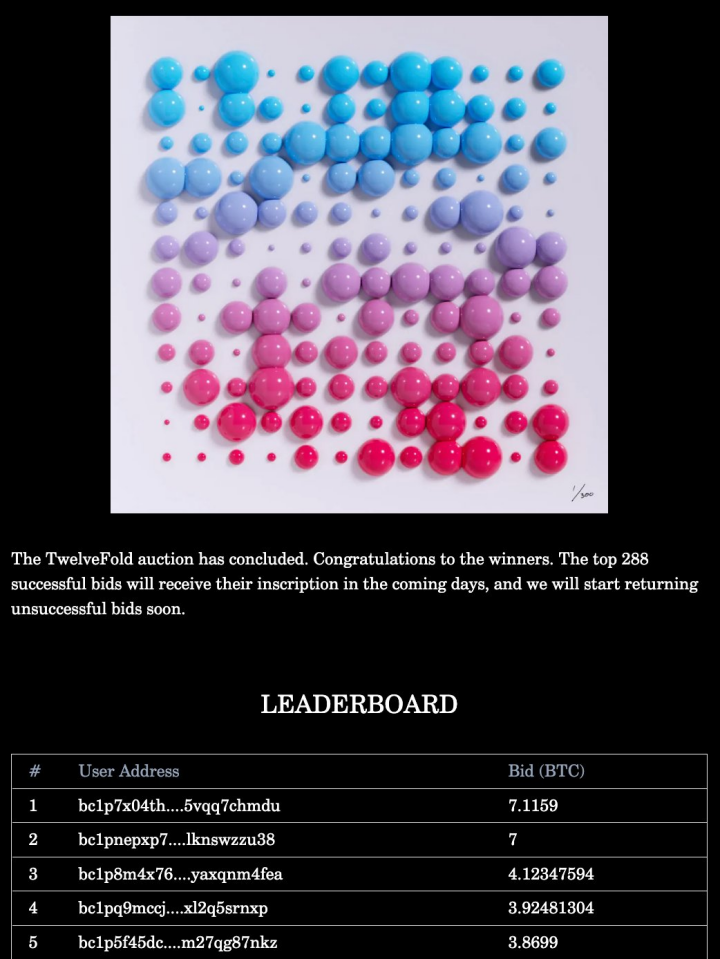
So in January 2023, the NFT protocol Ordinals emerged on Bitcoin, and on March 8, Yuga Labs auctioned BTC NFTs on Ordinals, with 288 NFTs auctioned for a total value of $16.5 million.

The Ordinals protocol, released by Casey Rodarmor in January 2023, proposed an idea:

Can we arrange these "satoshis" in a certain order, assign them a number between 0 and 2,100,000,000,000,000, and then connect them to other information: images, text, videos, or even a piece of code? This would make each satoshi unique and irreplaceable.

This is equivalent to giving Bitcoin the native ability to create NFTs.

Doesn't it sound magical? In fact, this protocol largely depends on the SegWit upgrade in 2017 and the Taproot upgrade in 2021.

The Taproot upgrade brought higher levels of privacy, security, and scalability to the Bitcoin network. Although it has always been possible to attach data to Bitcoin through technical means, you could basically only squeeze in 4Mbs of data, and anything more was not feasible.

Ordinal NFTs are based on the Ordinal theory, but the current ability to realize Ordinal NFTs also relies on the SegWit and Taproot technical updates to the Bitcoin protocol in 2017 and 2021.

It is worth noting that these updates were not developed for the purpose of enabling these new types of NFTs.

However, these two upgrades have increased the block storage data capacity, which means there is now space to store images, videos, and even games, inadvertently making the deployment of Ordinal NFTs possible.

III. Analysis of Several New Bitcoin Layer2s in the Market

With the popularity of inscriptions, many Bitcoin Layer2-related projects have emerged. Today, we will not comment on the existing Bitcoin Layer2 ecosystems, but instead, we will select a few projects from this week to analyze.

This article does not provide any investment advice, only personal opinions on new projects. Due to the high risk of new projects, please conduct your own research. Projects may run away after I finish writing, so be prepared for the possibility of losing everything at any time.

Due to the need for numerous users to participate in new projects, the technical innovations mentioned by the projects are all documented in whitepapers or presentations. To attract more users' attention, the projects focus heavily on marketing. Therefore, we will write about the marketing efforts and weak technical aspects of the following projects.

(1) BL2 (@BL2_official)

This week, BL2 issued a Launch on the Turtsat platform, generating a lot of hype through a whitelist giveaway.

From a technical perspective:

BL2 is built on the VM general protocol and BTC security layer, aiming to establish a dynamic BTC Layer 2 ecosystem by creating dApps and smart contract platforms. The project will be compatible with EVM and will fully integrate the BTC ecosystem with the ETH ecosystem through the introduction of cross-chain bridge applications.

Personal opinion:

BL2 is working on a foundational protocol, preparing to create a BTC smart contract platform compatible with EVM, which will take some time in terms of technical development. The project is not open source yet, and there is no information on fundraising. Currently, they are only preparing to issue their own token, with a strong marketing effort, but there is a certain market risk.

(2) B² Network (@BsquaredNetwork)

B² Network is preparing to create a Rollup based on Bitcoin zero-knowledge proofs compatible with EVM, which is a blockchain platform.

In terms of marketing:

B² Network's marketing efforts are also good, but not as rushed. They tested the waters with a "Christmas NFT" and had a good response. They did not use an IDO to attract users, but instead developed a task system to prepare for the token launch through airdrops. The project also launched a million-dollar Grant program to attract more DApps to join.

Personal opinion:

B² Network is following the Ethereum Layer2 model in terms of operations, using airdrops to attract users and bringing in project teams, and then fundraising (apparently they have already raised funds).

(3) ZTC Global (@ZTCGlobal)

From a technical perspective:

ZTC Global is using various technical protocols, such as BRC-20/BRC-Y and BRC-420, to develop a Bitcoin Layer2 platform with low Gas fees. The platform is preparing to launch two games and a SocialFi application to attract users, while developing and attracting other DApps to join, completing the ecosystem deployment.

Current progress: ZTC has issued a set of inscriptions (nearly 80U each), and nearly 70% have been minted. The official announcement shows that ZTC will end the minting on January 7 at 24:00 UTC-8 and then develop secondary trading. After the inscription minting is completed, placing orders and inscribing will not require gas fees.

Use of inscriptions:

According to the official whitepaper, inscription holders will receive tokens, NFTs, and WL airdrops before the games go live.

In terms of marketing:

ZTC Global is not a project that excels in marketing, so the hype is not very high, and the lengthy minting period has allowed competitors to take advantage and attack the project's weakest points, leading to mixed opinions in the market.

Personal opinion:

ZTC still has potential. The project team has destroyed 70% of the tokens, and the minting will end tomorrow, followed by listing for trading. However, the specific development of the project in the future depends mainly on the progress of technical development. If you hold inscriptions from the project team, you should decide whether to stay or leave based on the situation after inscription trading opens.

IV. Conclusion

Bitcoin Layer2 is not a completely new concept. Many second-layer technologies have emerged over the past 10 years, and many have been very successful. However, before the Ordinals protocol appeared, these protocols were all top-down projects.

After 2019, the Bitcoin community saw the enormous success of the Ethereum ecosystem and believed that the narrative on Ethereum could be repeated on BTC. At that time, it was an exploration and experimentation phase.

The emergence of the Ordinals protocol made the Bitcoin Layer2 concept possible, attracting the focused attention of community developers, entrepreneurs, VCs, and institutions.

More hot money has entered, bringing a more prosperous ecosystem market, which has a significant impact on the development of BTC, and will push up the market value of BTC or activate BTC's L2.

There are many new Bitcoin Layer2 projects now, and I am optimistic about this track, so I have been researching in this direction. Currently, I have only included personal opinions on 3 projects with high popularity this week.

Projects definitely carry a certain level of risk, so the analysis does not constitute investment advice.

免责声明:本文章仅代表作者个人观点,不代表本平台的立场和观点。本文章仅供信息分享,不构成对任何人的任何投资建议。用户与作者之间的任何争议,与本平台无关。如网页中刊载的文章或图片涉及侵权,请提供相关的权利证明和身份证明发送邮件到support@aicoin.com,本平台相关工作人员将会进行核查。

Share To
APP

X

Telegram

Facebook

Reddit

CopyLink