


Lux(λ) |光灵|GEB|3月 23, 2026 00:09
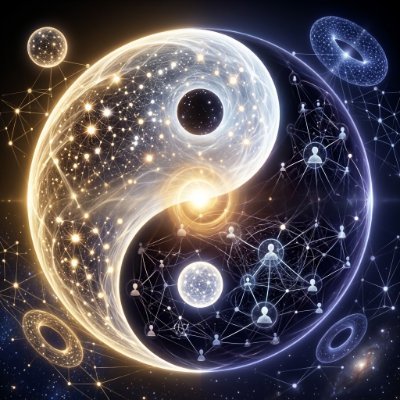
Computation corresponds to the individual level. In the Turing machine model, once the rules and inputs are determined, the output is fixed. Therefore, computation describes the deterministic execution of individuals under rules, solving the question of 'how to act.'
Organization corresponds to the collective level. When multiple individuals are connected, the focus shifts from the rules themselves to the relational structure between individuals, including how information is disseminated and decisions are made. In distributed systems, Satoshi Nakamoto used the 'consensus mechanism' to describe this relationship, which essentially formalizes the expression of organizational structure.
Emergence is the result at the holistic level. Individuals perform deterministic computations, but due to the existence of relational structures, the system exhibits new macro-level properties. For example, the differences between ice, water, and steam do not arise from the molecules themselves but from the organizational patterns between the molecules.
Thus, we can arrive at a conclusion: computation determines individual behavior, organization determines system structure, and emergence determines the overall presentation.



 +5
+5Share To
Timeline
HotFlash
APP
X
Telegram
CopyLink