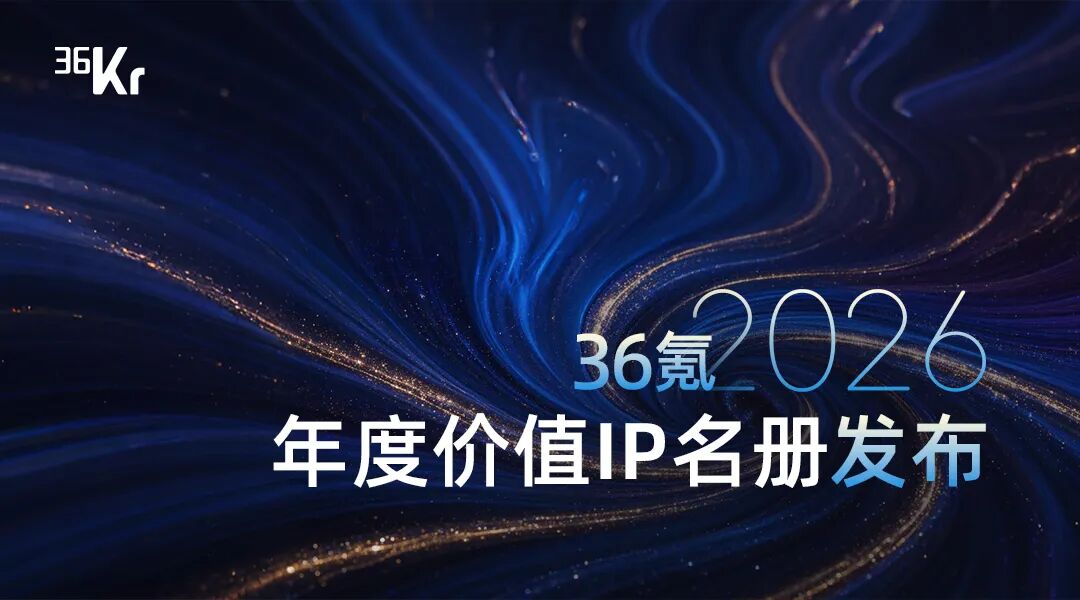
“Most Valuable Post-Investment Empowerment Institution in China / Best ESG Investment Practice Investment Institution in China.”
Author|36Kr Investment Research Institute

In 2026, the primary market is genuinely warming up, and the differentiation is also real.
According to relevant data statistics, in the first three quarters of 2026, there were a total of 9,442 equity investment events in China's primary market, with a disclosed total amount of 10,935.7 billion yuan, already surpassing the total for 2025. However, in this round of warming, what deserves our attention is the market’s “K” type differentiation.
On the project side, funds are speeding up their concentration on leading targets, with ultra-large transactions of over 1 billion yuan in the third quarter only accounting for 1.2%, yet taking away 45.8% of the funds. For the vast majority of early-stage startups, the perceived temperature of the financing environment is not as high as the statistics suggest. On the institutional side, the activity level of state-owned assets in the primary market has significantly increased, with the proportion of participating investment events in the third quarter breaking through 50% for the first time. In terms of sectors, AI, embodied intelligence, aerospace, and other frontier technology industries are crazily attracting capital under national strategic support. Even though some valuation bubbles emerged in certain areas in the latter half of the year, institutions are becoming more cautious in their actions, but the concentration in sectors is still continuing to consolidate.
When most funds flow into the same sector, when state-owned LPs occupy the main investment force, and when the narrative space for project valuation is repeatedly squeezed, the true gap between GPs lies not only in whether they can seize good projects, but also in another, more difficult-to-quantify and evaluate question: What value can investment institutions create for enterprises?
This is exactly the original intention of the 36Kr selection of the annual value IP roster for 2026, to see the soft power of investment institutions beyond finances, to study how they empower enterprises, and how they lead the development of various sector ecosystems.
Part01
Post-Investment Empowerment:
Value Creation Across Cycles
In the era of legacy stocks, exits have become a pressing problem for the primary market.
With nearly 12 trillion yuan of existing private equity funds, it constitutes a massive pool of existing assets, and its exit channels have undergone structural changes. In the past, institutions were more accustomed to relying on the IPO window for exits, but now mergers, S deals, and other diverse exit channels are becoming more normalized. Whether a company can develop into a form attractive to potential successors, and whether it can be reasonably priced in an S transaction, as well as whether institutions can deliver impressive DPI report cards, all depend to some extent on what institutions do in the years following their investment.
> The second half of post-investment: New roles of venture capital institutions hidden in over 400 real cases
In this research, the Anfuxun Investment Research Institute collected 1-3 cases from each registered institution, including how the institution empowers, the changes in enterprise metrics before and after, whether experiences can be reused, etc. After breaking down, categorizing, and cross-comparing all over 400 cases, a picture far more complex than the four words “post-investment management” emerged: post-investment empowerment is transitioning from a backend function into a systematic competition using industrial resources as ammunition, with DPI and IPO as the rewards, and replicable methodologies as barriers.
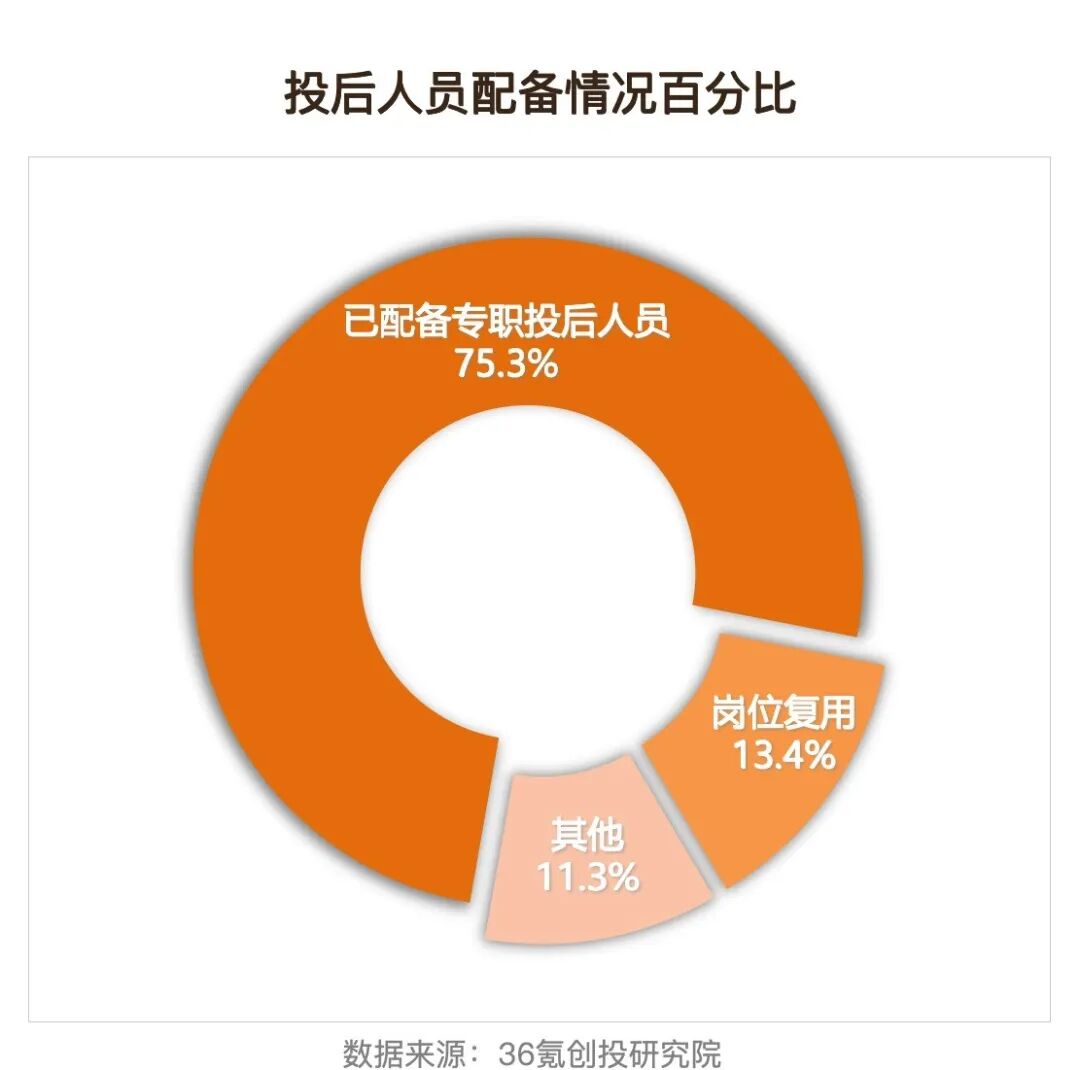
In terms of staffing for post-investment personnel, research data shows that 75.3% of institutions have established dedicated post-investment management personnel, 13.4% of institutions adopt a role-reuse model, where investment teams or supporting departments also manage post-investment, while another 11.3% have not provided explanations. Dedicated positions and role reuse correspond to two different modes of investment. Establishing dedicated positions means institutions are willing to allocate independent human budget for post-investment, with clear responsibility boundaries, and it is easier to form institutionalized, systematic post-investment management standards; role reuse is more a practical option under labor and cost constraints, allowing those familiar with the project to manage post-investment affairs, which is more flexible, but the depth and continuity of service depend on the person's level of investment.
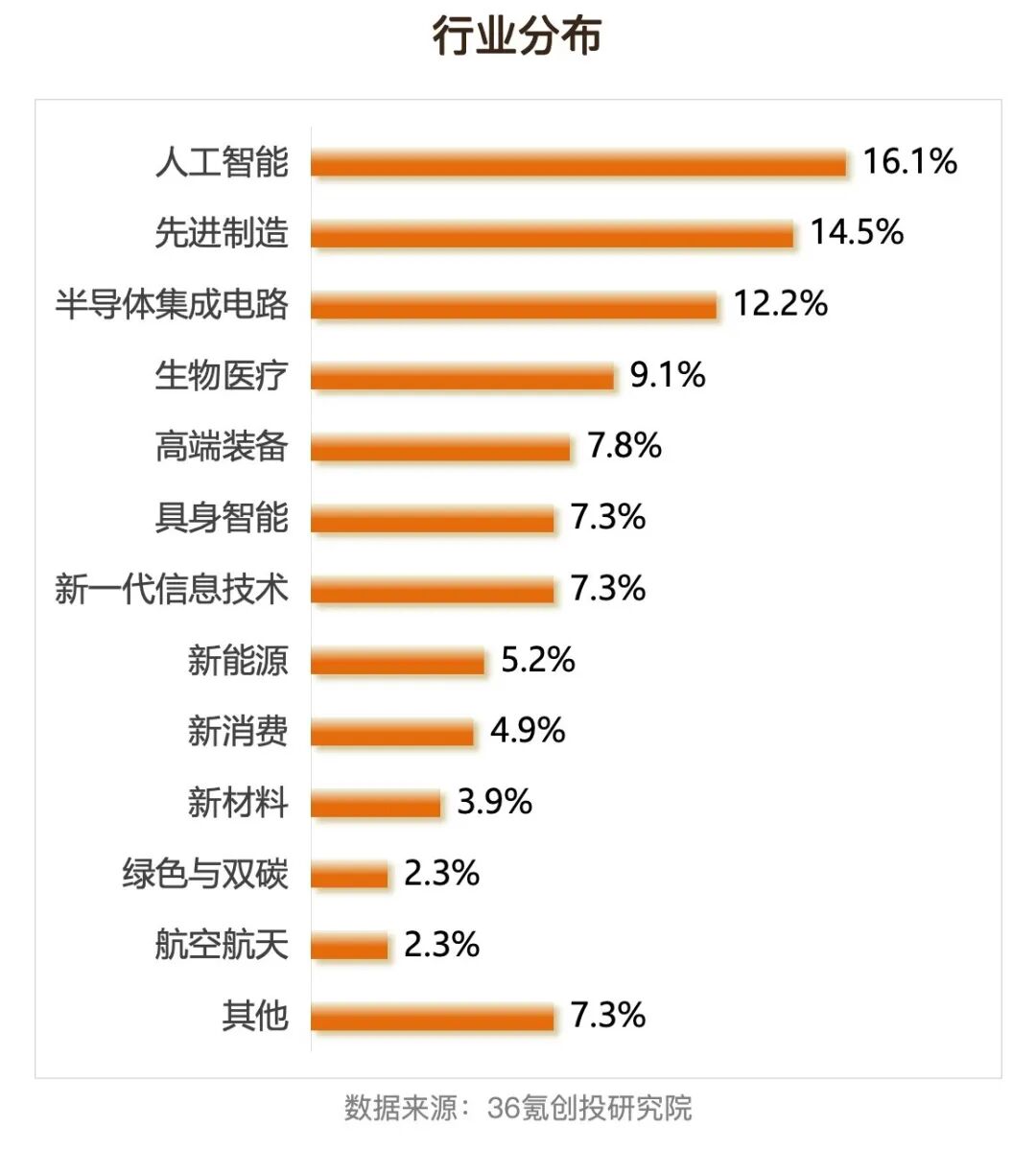
From the perspective of industry distribution, the main investment line in this batch of cases is “invest early, invest small, invest in hard technologies.” Projects in artificial intelligence, advanced manufacturing, and semiconductors rank in the top three, while biomedicine, high-end equipment, and embodied intelligence follow closely behind, with the five hard technology sectors contributing over 2/3. In terms of stage distribution, early cases such as angel rounds, seed rounds, and early Series A rounds together account for nearly half, with a significant tilt of the empowerment focus towards the early stage.
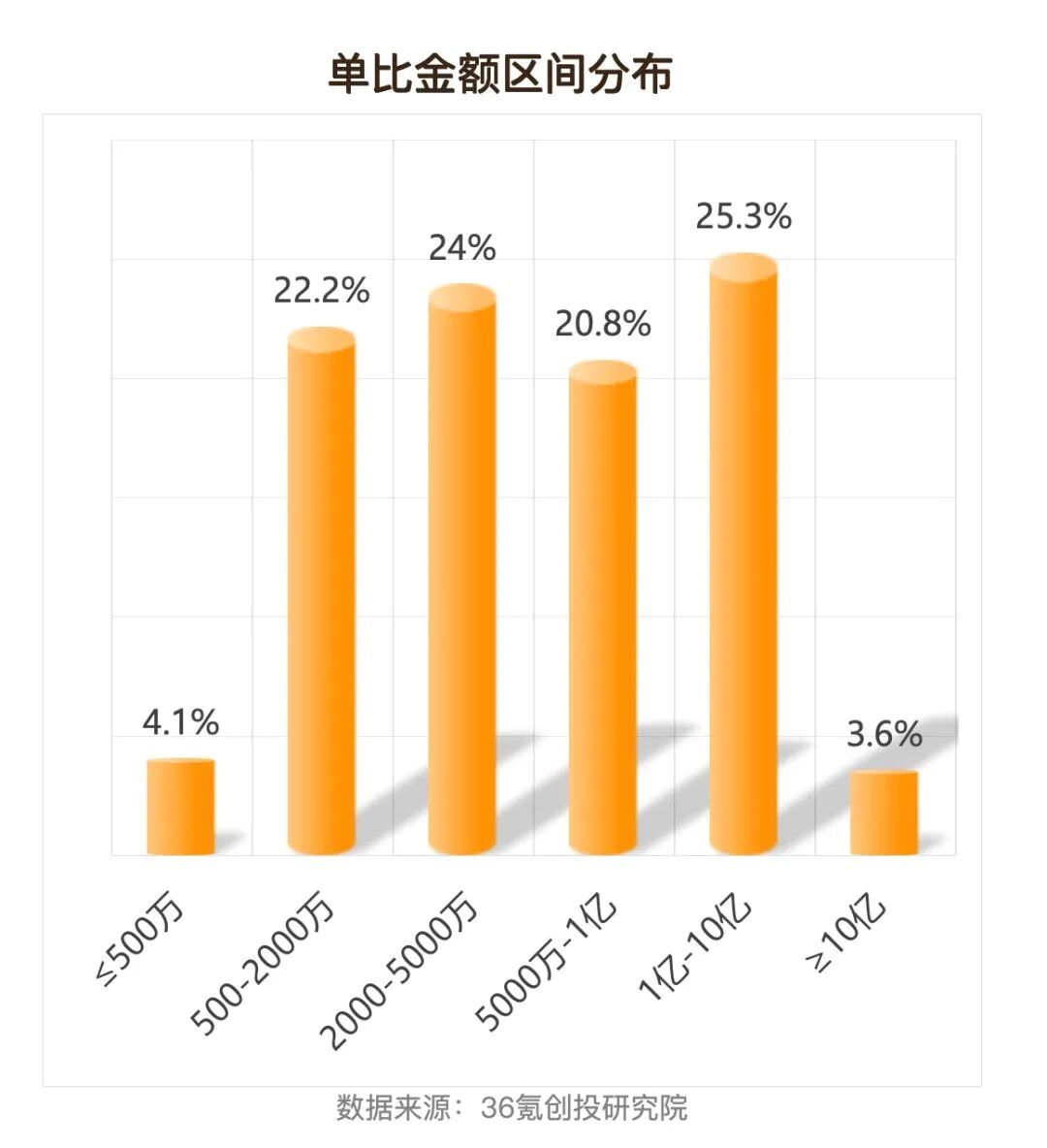
In terms of single investment amounts, the investment amounts mainly fall within the range of tens of millions to hundreds of millions. In terms of empowerment methods, 75% of institutions list “industry resource matching” as a core empowerment action. It is worth noting that early projects at the seed or A round mainly consist of small investments; the post-investment management in this stage covers a complete chain from strategic planning to daily operations. In contrast, investments in mature companies are relatively larger, with post-investment management focusing more on optimizing macro operational strategies and capital operations.
> Aside from commonality, differentiated post-investment empowerment models
Despite both being “empowerment,” state-owned platforms mobilize land, policies, and government credibility, industrial capital mobilizes group scenarios and orders, and market-oriented institutions rely on cognition, companionship, and global network resources to empower enterprises. Each institution possesses different chips, thus their empowerment methods vary naturally.
Space and Credit: State-owned platforms assist industrial grounding through land, policies, and endorsements
Samples with state-owned backgrounds, such as Beijing Zhongguancun Science City Company, Shanghai Guotou Empowerment, Guangzhou Industrial Investment, and Xichuang Investment, account for roughly one-sixth of the application list. Their post-investment actions have a distinctive “sense of space”: providing space, policy, credit, and grounding plans.
Beijing Zhongguancun Science City Company, relying on its “six-in-one” innovation service system, provides comprehensive in-depth empowerment for returning scholars' startup Chaozhen Intelligent, through “space, computing power, capital, branding, government affairs, and living,” etc. Shanghai Guotou Empowerment Company is the main force in charge of undertaking Shanghai Guotou's core functions of “5+X” scientific empowerment. The company creates three service lists of “basic, core, strategic” and constructs a “financial, industrial, technology, talent, comprehensive” five-in-one high-value empowerment service system. In 2026, under the guidance of the municipal State-owned Assets Supervision and Administration Commission, they will represent Shanghai Guotou to build and operate the municipal post-investment empowerment collaborative platform for Shanghai State-owned Funds, creating a post-investment empowerment “Shanghai model.” Guangzhou Industrial Investment is oriented towards the overall development of the integrated circuit industry in Guangdong Province, solely participating in the construction of the Yuxin Semiconductor project’s stages one, two, three, and four; leading and attracting hundreds of millions in funds, profoundly practicing the investment philosophy of “patient capital,” showcasing another depth of state-owned assets. Sichuan Innovation Investment Group intervened proactively when the invested company ZL faced credit issues, achieving deep empowerment from four dimensions: bond financing, equity succession, capitalization process, and policy qualifications. Xichuang Investment's empowerment of Yiyou Robotics is typically a three-phase model of “land, factory, production line”: promoting the establishment of a 34-acre industrial base in Xishan District, planning 30 production lines with an annual output of 3 million joint modules, helping the company break through delivery capacity bottlenecks for top clients like Zhiyuan.
Overall, the post-investment management logic of state-owned platforms is to use government credibility and spatial resources to exchange for the grounding of hard technology industries locally.
Orders and Scenarios: Industrial capital turns groups into post-investment toolboxes
Capital Allies, Lenovo Ventures, and iFLYTEK Ventures are industrial capitals that convert group platform resources into core capabilities for post-investment empowerment. Capital Allies relies on the group’s large-scale wafer manufacturing and supply chain resources, promoting in-depth procurement cooperation between invested companies like Zhongkexin Semiconductor and Silicon Cool, with cooperation amounts increasing over 400% compared to the previous year. At the same time, it assists chip design companies such as Zhongjing Xinyuan and YaoXinwei in accelerating production launch, with cooperation production capacity from 6 mass production outsourcing projects amounting to around 38,000 pieces/month, forming long-term synergy between enterprise growth, group main business development, and domestic ecosystem construction. From investment to intelligent manufacturing, Lenovo Ventures opens intelligent manufacturing, engineering, and supply chain resources to embodied intelligent invested companies like Daimeng Robotics and Kuawei Intelligent through the Southern Intelligent Manufacturing Base, providing manufacturing empowerment from concept validation to mass production conversion. iFLYTEK Ventures collaborates with the iFLYTEK AI Research Institute and the founding team of Cambricon for pre-joint development and scenario grounding verification, promoting business orders exceeding ten million after the launch of its first chip.
It can be said that the supply chain, laboratories, procurement lists, and scenarios of industrial groups themselves are the toolbox for post-investment.
Cognition and Companionship: Market-oriented institutions sediment services into institutional systems
Sequoia China, Matrix Partners, Inno Venture Capital, ZhenFund, and GSR Ventures possess true chips of cognition, companionship, and judgment on key turning points for enterprises. These empowerments are difficult to quantify but to a degree determine whether a company can cross to the next level.
Sequoia China systematically hosts “CXO Day,” “Hyper Nexus Corporate Exchange Visits,” “YUÈ Startup Accelerator,” “AI DAY,” “Evergreen Tea Talks,” and other events to elevate post-investment services to before investment. In October of this year, Sequoia China jointly established the “ShanYu·Creation Plan” with Yushu Technology to focus on discovering and investing in early projects in embodied intelligence, robotics applications, and their upstream and downstream key technologies, as well as other frontier hard technologies, empowering the industry ecosystem. For enterprises, Sequoia represents not just funds, but also resources and connections. BAI Capital's post-investment empowerment positions itself as a “co-pilot,” not replacing the founder's decision-making but providing an industrial judgment framework and strategic advice. In 2017, upon encountering Laifuchuanbo, the company faced dual challenges of product iteration and generational handover, and BAI, as the lead investor, firmly invested, helping the company stabilize supply chain relations and market confidence. After nine years of long-term companionship, Laifuchuanbo listed on the Hong Kong Stock Exchange in June this year, becoming “the first stock listed for harmonic reducers in Hong Kong.” GSR Ventures implements a “free Bain consulting before investment” model, deeply empowering invested enterprises to co-create strategies, resulting in a reusable empowerment methodology for new consumption and overseas expansion projects.
More institutions choose to make “companionship” into platforms and courses. Matrix Partners established an entrepreneur empowerment platform “Billion Entrepreneur Camp,” focusing on key topics such as enterprise strategy, organizational construction, business growth, and macro trends. Nearly 500 company founders have participated, building a high-frequency, efficient, and high-quality exchange and learning field for entrepreneurs. Fengnian Capital’s Fengnian Management Center (HMSC) has been helping technology enterprises improve management capabilities over the years, while the Fengnian Management System (HMS), based on lean thinking, helps companies enhance management abilities across the entire value chain from sales, research and development, supply chain, and operations, thereby achieving competitive advantages in quality, delivery, cost, and innovation. Inno Venture Capital has initiated the “Small Angel Growth Plan” since 2016, cultivating over 200 top students from global leading universities through full support from first-line investors, extending post-investment services into industry talent team building, creating a virtuous cycle of talent delivery and ecosystem expansion. Shumwood Alumni Fund leverages its years of accumulated co-evolution ecosystem, gathering resources from Tsinghua alumni scientists, industry executives, and entrepreneurial mentors, having successively launched entrepreneurship guidance classes, innovation competitions, Tsinghua project roadshows, and incubation camps since 2015, building a platform for entrepreneurs to communicate and collaborate with investment institutions, dedicated to creating a Tsinghua alumni entrepreneurship ecosystem with long-term impact.
What these market-oriented institutions can offer is not land and policies, but cognitions, resource networks, and the courage for enterprises to make judgments during transitions.
Global Capital Network and Cross-Border Channels: Local institutions leveraging global resources to open international markets
The global capital market network and cross-border transaction capabilities are often the least replicable abilities for local institutions. From forward-looking investments to empowering global industrial resources, Cathay Capital continues to support the technical innovation and commercialization development of Kimi, while also relying on its unique global industrial ecosystem to promote Kimi connecting with overseas industry partners to expand international markets and application scenarios, aiding China's leading AI technologies transition from global technological competition to global value creation. 01VC, leveraging overseas resources and cognitive advantages, promotes invested enterprises like Huolala, Hairou Innovation, and XTransfer connecting with upstream and downstream offshore channels and assists in expanding overseas commercial landing scenarios, winning recognition in international markets. Huaqing Fund's global empowerment resources stem from its industrial investors LP and its industrial ecosystem network. Investors such as Charoen Pokphand Group and JD.com possess extensive overseas business scenarios and experiences, providing reliable resource foundations for invested enterprises going abroad. Based on this, Huaqing organizes dozens of leading technology enterprises to discuss pathways for going abroad, promoting Moole Thread to explore the construction and operation of overseas computing power centers, and jointly with the China Export-Import Bank to open up outbound policy financial channels. SourceOne Capital opens a two-way channel for “bringing in” and “going out” brands with a global vision. For overseas brands, SourceOne accompanies brands like Spain's trail running brand NNormal, American golf apparel brand Malbon, and South Korea's premium eyewear brand GentleMonster in establishing their market presence and store entry in China, promoting the rapid growth of their business scale in China. For Chinese brands, SourceOne aids laser engraving machine companies like xTool and leading smart glasses brand Even Realities in achieving global layout and landing.
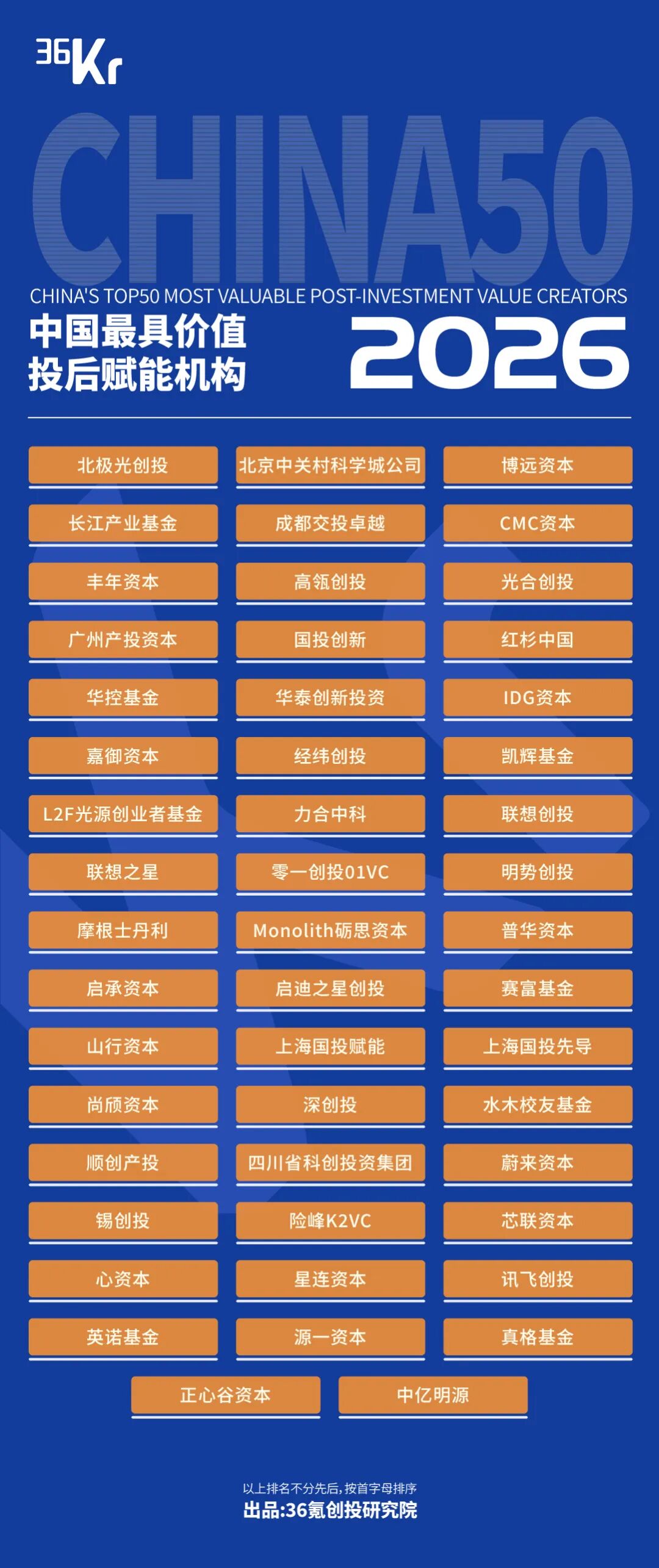
Based on this, the 36Kr Investment Research Institute officially releases“2026 Annual Most Valuable Post-Investment Empowerment Institutions in China TOP50”. This roster focuses on whether enterprises have improved due to institutional involvement.
Part02
ESG: When Sustainability Becomes the Foundation of Investment
The China Listed Companies Association released the “2026 Sustainability Information Disclosure Situation Analysis Report of Mandatory Disclosure Entities,” which indicates that as of June 30, 2026, a total of 2,718 A-share companies disclosed 2025 annual sustainability reports, with an overall disclosure rate of 49.8%.
Nearly half of listed companies have incorporated ESG disclosure into regular actions, and the investment logic in the primary market is quietly changing. ESG is no longer just an embellishment in project roadshow PPT, but is becoming a verifiable compliance capability. So, how far have investment institutions come facing this “hard constraint”?
> Four dimensions to evaluate the ESG practices of investment institutions
The Anfuxun Investment Research Institute conducted in-depth offline visits and online surveys in the primary market. Based on the collected data, we broke down the question of whether investment institutions are doing well with ESG into four observable and verifiable dimensions.
Institutional Level: Has ESG entered the strategic planning of the institution?
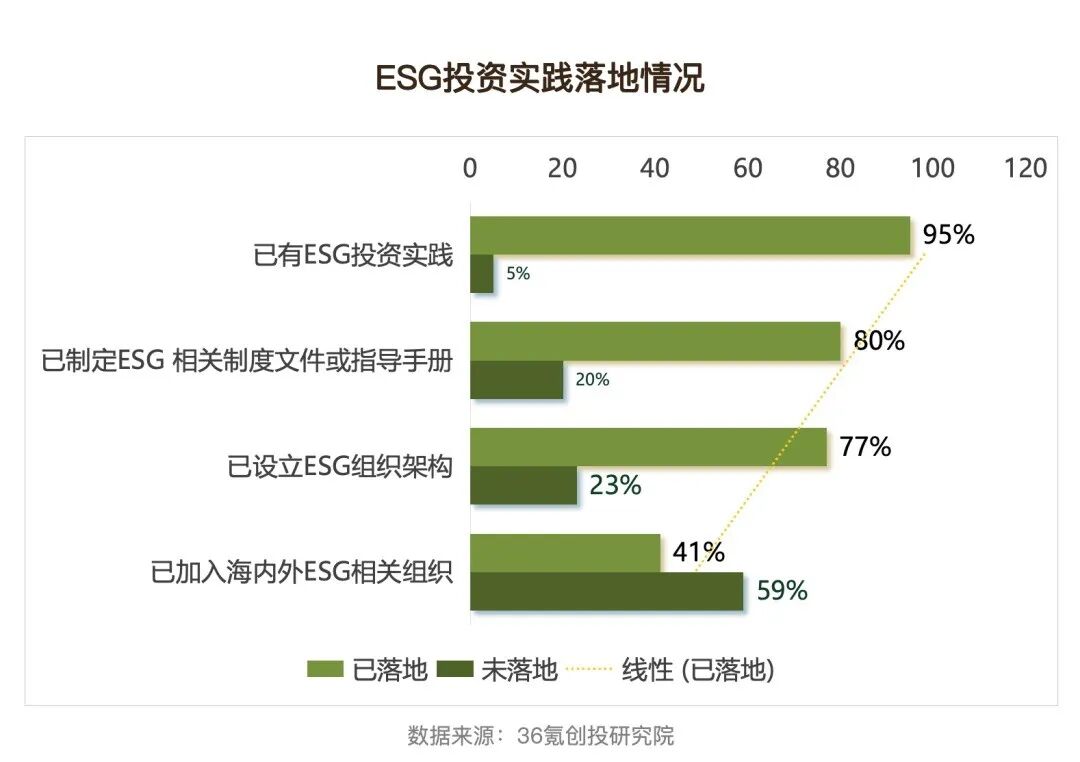
This set of data reflects two signals. First, the recognition and popularization of ESG are basically complete. Most institutions have practiced ESG investing, while a small number of remaining institutions stated that they currently have no implemented projects but are still monitoring in the long term. This indicates that ESG investing has become a “must-have” in the venture capital industry. Second, from practice to institutionalized implementation, ESG investing shows a pronounced slowdown trend. Strategic documents can be revised at any time, and organizational structures can be adjusted accordingly; however, joining external organizations implies accepting more transparent information disclosures and peer scrutiny, making institutions more cautious.
Organizational Structure: Is there a dedicated person, responsible for, and budgeted for ESG?
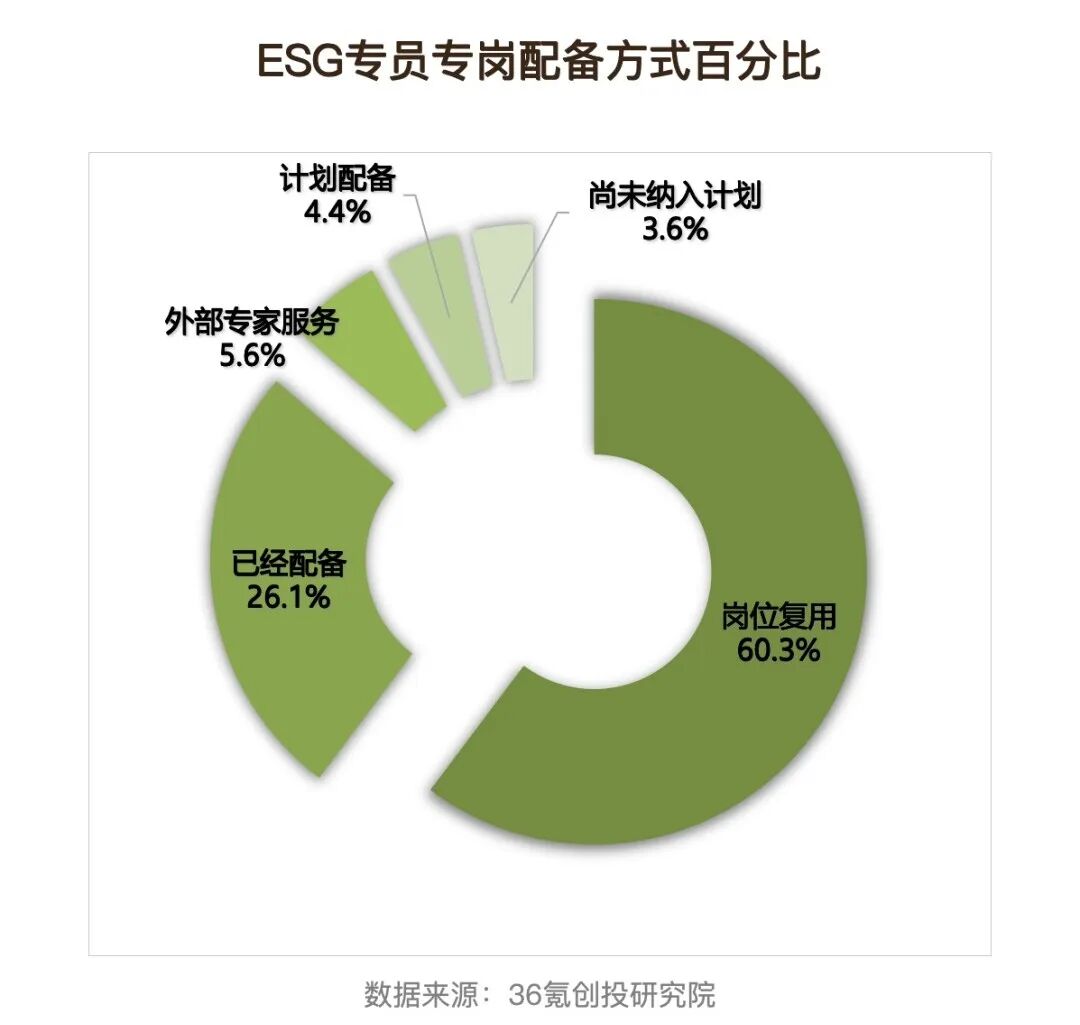
Is ESG an independent function within the institution, or is it an “add-on” responsibility that is done as a matter of convenience?
Research found that while 80% of institutions have formulated ESG-related strategic regulations, only 26.1% of institutions have equipped specialized ESG personnel, while 60.3% of institutions use a “role reuse” personnel arrangement. This indicates that most institutions are willing to draft a strategy for ESG and set up a department, but are unwilling to establish dedicated positions.
Underlying Logic: Why do institutions engage in ESG investing?
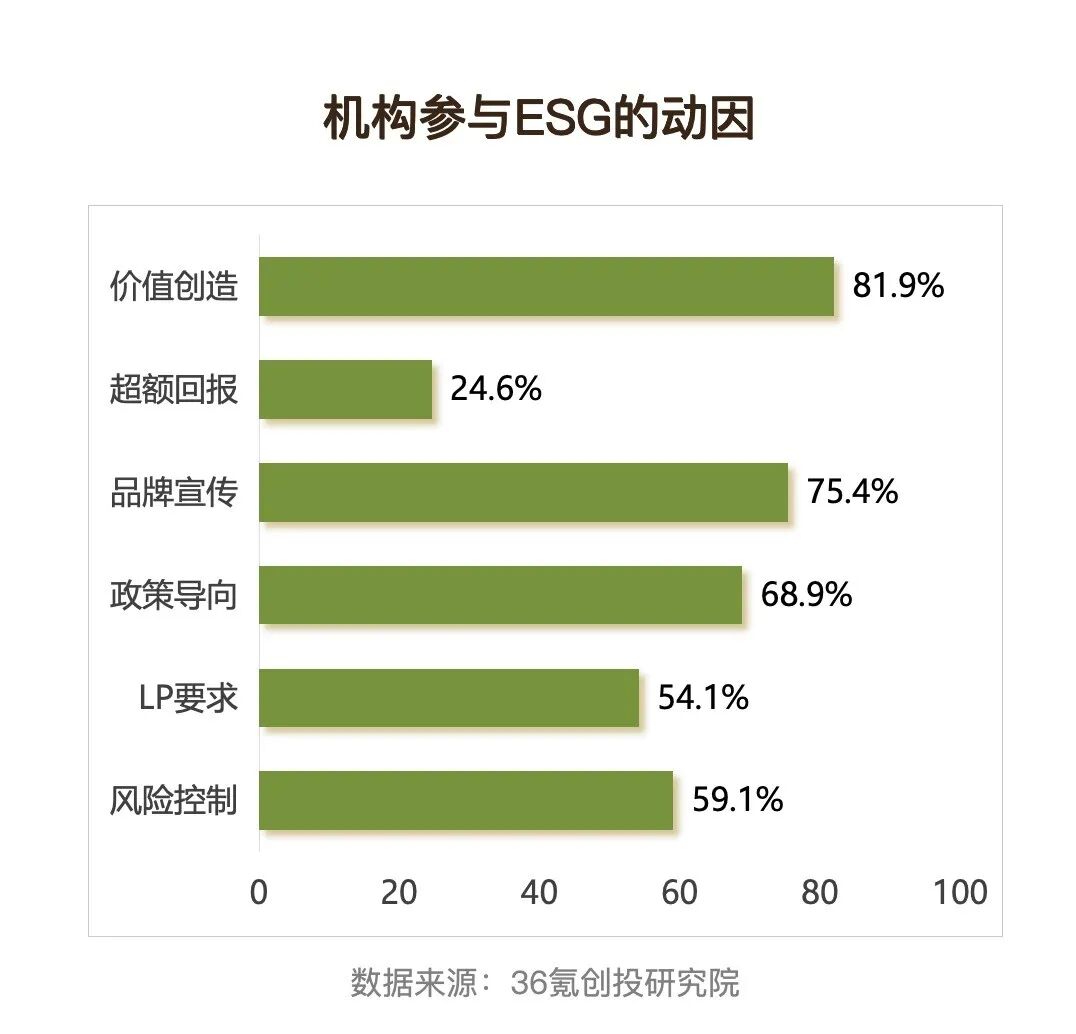
Research found that most institutions see ESG as a “tool for value creation and risk management,” and they are not convinced that ESG investing can bring them excess financial returns, but the increasingly stringent policy orientation, special requirements from some LPs, and the bottom line of risk control and compliance make institutions unable to ignore ESG.
Investment Impact: Value Creation That’s Hard to Quantify
Direction: In Sync with National Strategy. In the cases applied for this time, directions such as renewable energy, new materials, photovoltaic wind power, and digital intelligence represented by large models and computing power all fall within the industrial layout explicitly outlined in the 14th Five-Year Plan. The directions of institutions’ investments resonate with the industrial points directed by policies at a macro level.
Landing: Six Different ESG Exploration Paths. The ESG investment practices of the institutions that made it onto the list can be divided into six differentiated landing paths, each with notable examples.
The first category: Environmental and social benefits from a consumption scene perspective.
This is the most common entry point for institutions investing in new consumption sectors.CMC Capital focuses on its invested companies in the consumption sector, paying attention to their social issues related to green transitions, carbon neutrality goals, and gender perspectives, establishing a 1 billion yuan carbon neutrality fund in 2023. CPE's investment in Mixue Ice City continuously offers directional advice on corporate governance, food safety, and the development of upstream and downstream of the industry chain. GSR Capital invests around green technology, responsible consumption, inclusive healthcare, and compliant overseas expansion, encouraging invested consumer enterprises to deepen market penetration and expand employment in counties and grassroots, guiding companies to place high importance on food safety and environmental protection, integrating sustainable practices into daily operations. Dehong Capital strengthens supplier entrance, qualification review, and third-party testing requirements through the control of Gaoxin Retail and Sunshine Valley Foods, focusing on food safety and promoting scientific farming and rural revitalization.
The second category: Exploration of frontier medicine from a responsible investment perspective.
Polar Light Venture Capital positions in projects like Saint InBio, Hongxing Xianghe, Chengfan Pharmaceutical, Faith Pharmaceutical, and Inno Pharmaceutical, focusing on globally innovative (First-in-class) therapies that cover major chronic diseases, rare diseases, anti-infection, and tumors/self-immune disorders, responding to unmet clinical needs with “Chinese solutions.” Haier Capital invests in Erlimedi, continuously linking the project with industry and sector communication resources, assisting its core technology's industrial promotion. The self-researched surgical light and magnetic guidance system provide accurate support for complex multidisciplinary surgeries, enhancing surgical safety through the innovation of domestic medical equipment, embodying the ESG investing理念 of inclusive healthcare. China Life Equity supports Qiang Brain Technology in applying non-invasive brain-machine interface technology to scenarios such as intelligent bionic hands and autism rehabilitation training, promoting the extension of frontier technology from technological iteration to public welfare areas.
The third category: Promoting the construction of sustainable industry ecological platforms.
Green Action Capital has specifically established a Green Technology Research Institute, building its green technology assessment system and is the first private equity investment institution in Asia to publicly announce passing the ISO 14097 certification in 2022, continuously releasing green impact reports. Yunfeng Capital's “Australia Carbon” established with leading investment is currently the only professional carbon exchange funded by social capital and operating overseas in China, aiming to serve the national “dual carbon” goals and facilitate China's connection to the international environmental product market. The value of these institutions lies not in funding any good project but in advancing sustainability across entire industries.
The fourth category: Ecological co-construction of global green innovation competitions.
Fengfeng Investment, together with Temasek Foundation, hosts the GFIC “Green Intelligence Future” sustainability challenge, covering more than 70 countries and attracting over 1,000 green innovation projects to compete. Yusheng Capital annually hosts the TERA-Award Smart Energy Innovation Competition for 5 consecutive years, with participation from over 2,600 businesses. These explorations are not only channels for discovering early green technology projects but also showcase the value of ESG practices.
The fifth category: Using frontier technology to promote resource recycling and carbon reduction.
Fengrui Capital's angel investment in Qingxi Biological relies on bio-manufacturing technology to explore recycling rare earth materials from rare earth mine slag and magnetic material waste as a substitute for some traditional high-energy consumption, high-pollution chemical smelting processes. Yusheng Capital's investment project Yisle uses waste edible oils such as gutter oil to produce sustainable aviation fuel, reducing the risk of discarded oils returning to the dining table. TianTu Investment, in managing the A-Classify project, actively coordinates resources from governments and enterprises to accelerate the installation of smart recycling machines, helping companies build closed-loop systems of “points - stations - venues,” effectively promoting urban garbage classification standardization and carbon reduction goals.
The sixth category: Long-term empowerment of philanthropy and social value.
Apart from empowering at the business level, some institutions extend their ESG practices to philanthropy. Photon Venture Capital supports youth AI science and technology education through the China Welfare Association and provides scholarships to needy college students in Yunnan's Yongping County. Zhongwei Capital jointly initiated the “Zhongwei Digital Talent Training Program” with Focus Media, promoting balanced education in county areas through “popular science classes + AI classes.” These measures constitute the deep societal responsibility backdrop of institutions under their ESG governance.
Closed Loop: Embedding ESG into the Full Process of a Deal. In a specific investment process, what tests an institution’s prowess most is how ESG is embedded into every step from pre-investment to post-investment. Beyond direction and landing points, we also pay attention to who provides substantive ESG empowerment to invested enterprises.
Shishi Capital invites professional institutions to conduct ESG training for invested enterprises, assists in compliance guidance and report preparation before listing, and builds a four-level governance structure of “Board of Directors—ESG Department—Investment Committee—Functional Departments.” Gobite Venture Capital embeds ESG into investment terms and implements it post-investment: newly invested enterprises access a cloud platform during delivery, tracking environmental, social, and governance data annually; at the same time, they empower continuously through accelerators, workshops, and training, incorporating the maturity of ESG into the Investment Committee scoring based on the 2026/27 annual roadmap. Blue Lake Capital embeds ESG into the full process of pre-investment entry and post-investment management, customizing differentiated indicators for the tech sector and establishing a “decision-making—tracking—disclosure” management mechanism based on the UN PRI disclosure framework. Xianghe Capital’s ESG due diligence discovered occupational health and safety risks that need close attention in the company’s production operations, thus halting investment decisions. Once the company completes phased rectifications and obtains related assessment reports with significantly reduced risks, only then does the investment decision resume, forming a verifiable and negatable full-cycle action.
Furthermore, other institutions’ empowerment is more manifested as ongoing process guidance: helping invested enterprises complete overseas compliance assessments, guiding carbon accounting, assisting enterprises in achieving green certifications and qualification declarations, building ESG data systems… These common actions are not grand narratives, but they are solid evidence of the transition of ESG from “intent” to “implementation.”
In summary, the 36Kr Investment Research Institute officially releases“2026 Annual Best ESG Investment Practice Institutions in China TOP50”, this roster evaluates not attitudes and intentions, but the capability of an institution to embed ESG into the entire investment practice process and maintain it through every quarter and every interaction post-investment.
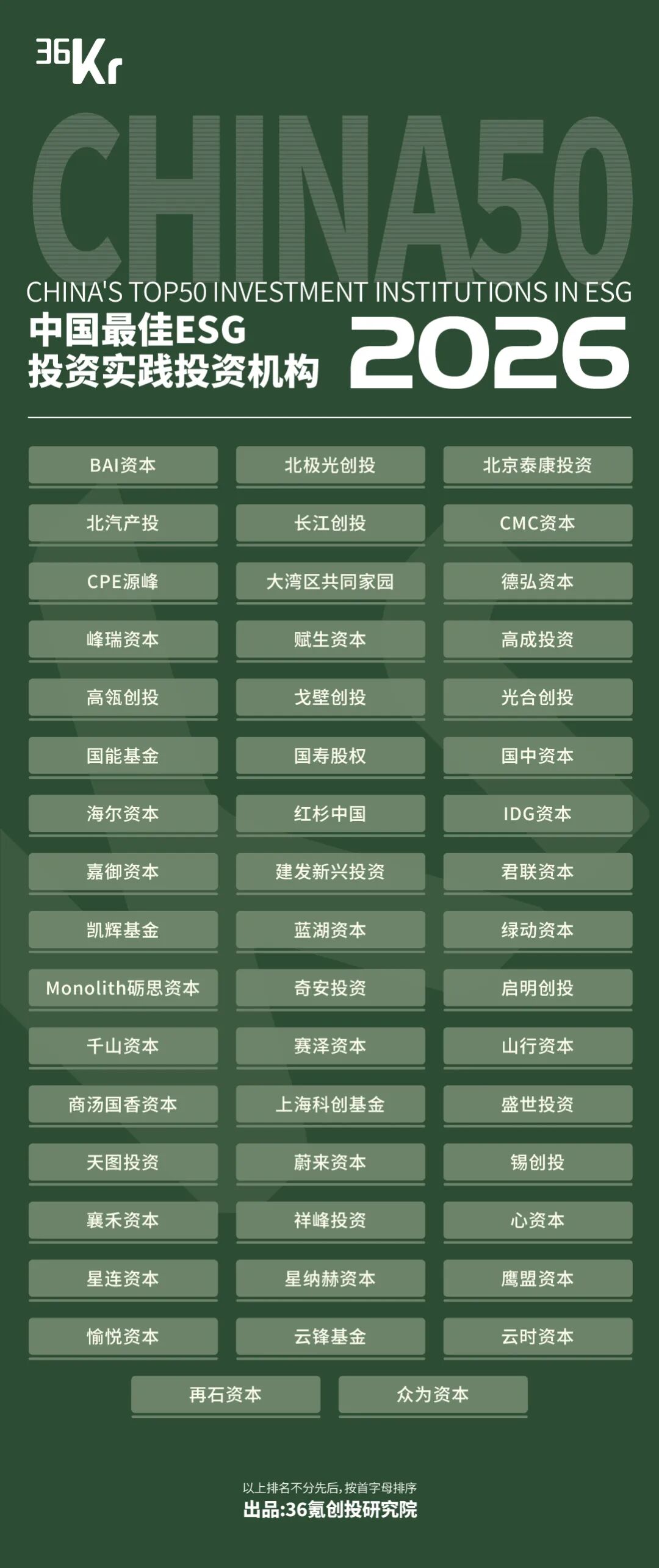
Two measures, two rosters.
When looking at the above two threads together, the primary market in 2026 actually raised the same question:
In a market where the total volume is warming but structure is differentiating, state-owned assets lead while policy is tightening, sectors are hot but narratives are converging, post-investment management is transitioning from risk control to the limits of value creation, and ESG is sedimenting from compliance constraints into verifiable competitive advantages. The migration of these two capabilities constitutes two lists for LPs and companies when choosing GPs, and forms two measures for the 36Kr Investment Research Institute's evaluation of institutional value. The value of investment institutions is no longer defined by how many star projects they have invested in, but by whether they can truly enhance the performance of the projects they have invested in.
These two rosters are our record of this transition.
Typesetting|Guo Xujun
免责声明:本文章仅代表作者个人观点,不代表本平台的立场和观点。本文章仅供信息分享,不构成对任何人的任何投资建议。用户与作者之间的任何争议,与本平台无关。如网页中刊载的文章或图片涉及侵权,请提供相关的权利证明和身份证明发送邮件到[email protected],本平台相关工作人员将会进行核查。