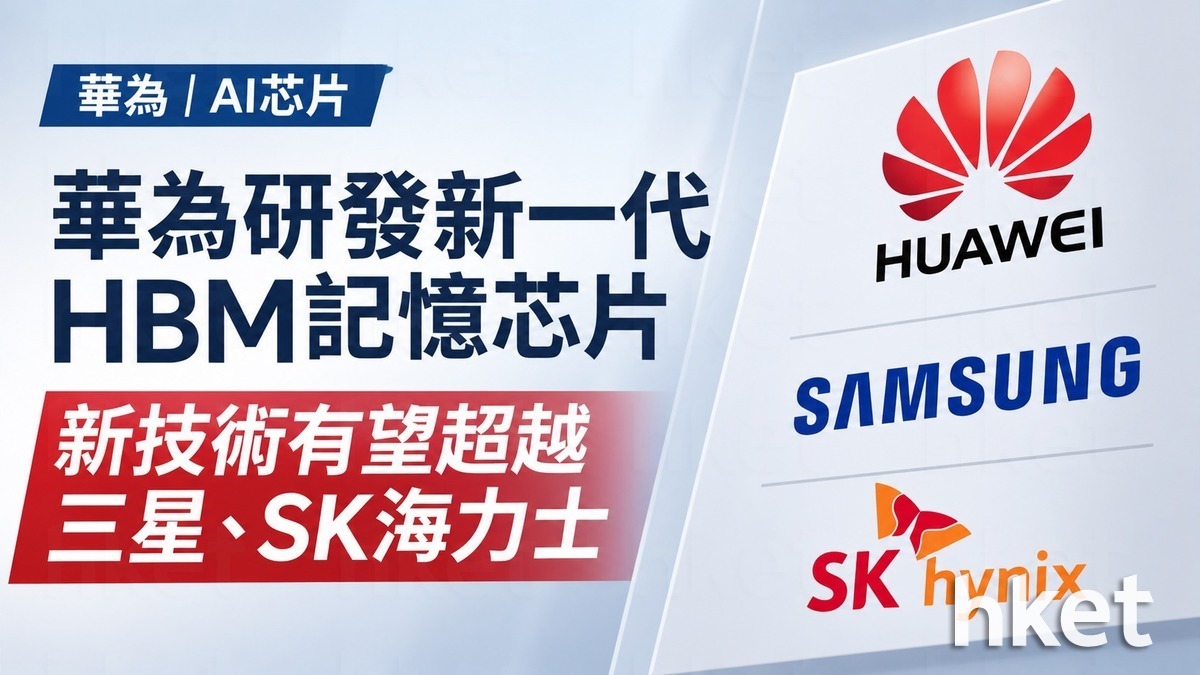
Huawei Technologies Co., Ltd. and its Hong Kong software partner announced breakthrough progress in the field of domestic chip design tools based on Huawei's Tau Scaling Law. According to the South China Morning Post, this is the latest effort by China to cultivate an independent semiconductor supply chain, and Huawei is also planning to build a global ecosystem to compete with Nvidia.
Key Progress in Domestic Chip Design Tools
According to the South China Morning Post, Huawei announced at its annual intellectual property event in Beijing that it has collaborated with Phlexing Technology, headquartered in Hangzhou, to develop extraction and verification tools for electronic design. Phlexing Technology is a Hong Kong company focused on electronic design automation (EDA) software.
This advancement revolves around Huawei's Tau Scaling Law and marks a localization breakthrough in the key tools for chip design. Chip design tools are a core upstream component of the semiconductor industry chain, which has long been dominated by overseas manufacturers. This breakthrough is seen as an important step for China in building an independent and controllable semiconductor supply chain.
The Role of Hong Kong Tech Companies in Chip and AI Fields
As Huawei's software partner, Phlexing Technology's participation highlights the role of Hong Kong tech companies in the national chip design ecosystem. The report from the South China Morning Post points out that Huawei is looking to build a global ecosystem to compete with Nvidia.
This trend aligns with Hong Kong's recent policy direction to promote innovative technology development. Hong Kong has several world-class research universities and tech talent, has advantages in basic research and software fields, and is expected to play a unique role in cutting-edge technology industry chains such as chip design and artificial intelligence.
Vision and Challenges of Building a Global Ecosystem
The report from the South China Morning Post clearly states that Huawei plans to promote the construction of a global ecosystem, aiming to become a competitor to Nvidia. This indicates that Huawei's ambition goes beyond achieving an independent supply chain; it hopes to occupy a place in the global high-end chip and computing ecosystem.
Achieving this vision requires a complete toolchain, a broad developer community, and strong hardware product support. The collaboration between Huawei and Phlexing Technology on chip design tools is one of the foundational elements of building this vast ecosystem. Future progress will depend on technological iteration, the expansion of ecological partners, and market acceptance.
References
This article is compiled and written by Techub News based on the above public reports, and the facts are based on the original texts of various media, and do not constitute investment advice.
免责声明:本文章仅代表作者个人观点,不代表本平台的立场和观点。本文章仅供信息分享,不构成对任何人的任何投资建议。用户与作者之间的任何争议,与本平台无关。如网页中刊载的文章或图片涉及侵权,请提供相关的权利证明和身份证明发送邮件到[email protected],本平台相关工作人员将会进行核查。