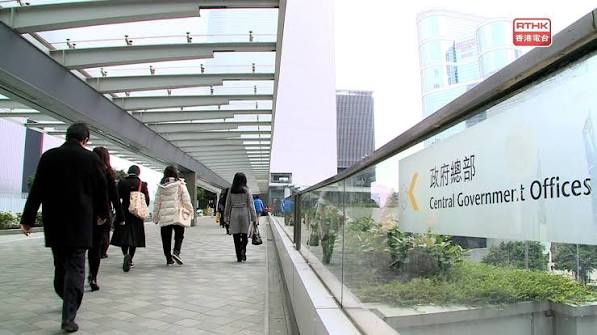
The Hong Kong Special Administrative Region Government plans to cut approximately 50% of the civil service positions in the 2026/27 fiscal year, mainly involving junior clerical positions across the salary scale from point 0 to 15. The Secretary for Financial Services and the Treasury, Christopher Hui, stated in a written reply to Legislative Council members on November 25 that this direction aligns with the development of artificial intelligence (AI) and information technology, and the government is gradually using technology to handle tasks that originally required a large workforce.
This government is expected to cumulatively cut over 10,000 positions during its term
The Special Administrative Region Government plans to reduce civil service positions by 2% in both the 2026/27 and 2027/28 fiscal years according to the previous year’s establishment. The Secretary for the Civil Service, Ingrid Yeung, explained in April this year that along with the positions cut under the early years' zero growth policy for civil service establishment, it is anticipated that the current government term will see a total reduction of over 10,000 positions. As of April 1 this year, the overall civil service establishment has been reduced to approximately 188,000 positions.
The reduction in establishment involves the number of positions approved by the government and cannot be directly equated to the dismissal of the same number of serving civil servants. Each department will review service needs and vacancies, integrate work, rearrange job priorities, and allocate manpower. Yeung pointed out that departmental salary allocations are calculated based on establishment rather than the actual number of staff employed, and reducing establishment can directly reduce allocations.
By the end of next year, AI applications are expected to expand to at least 200 administrative procedures
The Office of Digital Policy has provided an AI solution catalog and toolbox to government departments, assisting employees in drafting documents, organizing meeting notes, searching for information, analyzing data, processing images, and providing customer service. The authorities aim to cover 100 administrative procedures with AI applications by the end of 2026 and increase this to no fewer than 200 by the end of 2027.
The Digital Office has also launched an online basic AI training course in conjunction with the Civil Service College, allowing civil servants to master the relevant knowledge and tools. The government hopes that existing manpower can focus on tasks requiring professional knowledge and strategic judgment.
The government has not independently estimated how much expenditure can be saved by AI
The Special Administrative Region Government, through the "Resource Efficiency Optimization Plan," plans to cut 2% of recurrent expenditure annually from 2025/26 to 2027/28, alongside a 1% reduction in the 2024/25 fiscal year, resulting in a cumulative reduction of 7% during this government’s term. These measures are predicated on not affecting comprehensive social security assistance, public welfare funds, or statutory expenditures.
Christopher Hui stated that the application of technology and the reorganization of workflow are both cost-saving measures, but the government has not distinguished the savings attributable to either. Therefore, the current figures released do not reflect how much public funds can be saved solely through AI, nor can it be determined how many positions have been directly eliminated due to AI applications.
Latest videos
This article is reprinted from unwire.hk, with copyright owned by the original author and media.
免责声明:本文章仅代表作者个人观点,不代表本平台的立场和观点。本文章仅供信息分享,不构成对任何人的任何投资建议。用户与作者之间的任何争议,与本平台无关。如网页中刊载的文章或图片涉及侵权,请提供相关的权利证明和身份证明发送邮件到[email protected],本平台相关工作人员将会进行核查。