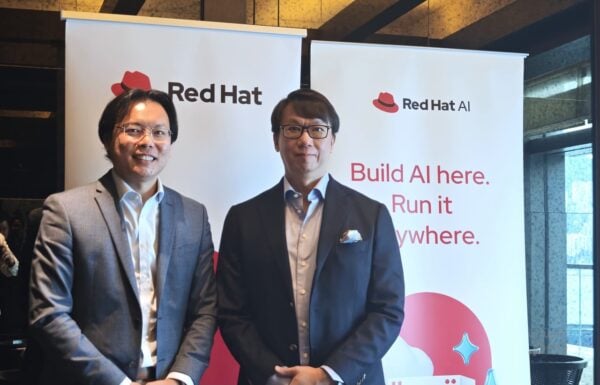
In recent years, companies have significantly adopted AI, yet many management teams have fallen into the predicament of relying on external cloud services: external models can be taken down at any time, cloud services carry the risk of disconnection, hardware supply is constrained by external factors, and in the future, there may also be concerns about subscription price increases and data leakage. Damien Leong, Chief Technology Officer of HKT, shared practical experiences at a media roundtable on how the group responds to these challenges with its own Sovereign AI. His core direction is that while models can be replaced at any time, the control over data, computing power, and system rules must not be outsourced. Companies of various sizes should hold the initiative based on their business needs, rather than entrust core operations to external suppliers.
AI Becomes Core Operating Model with About 100 AI Agents Deployed in Own Data Centers
HKT positions AI as part of the company's operating model rather than an external tool. Damien Leong stated that the group has deployed all GPUs, models, AI agents, and data in its two highly available data centers, with approximately 100 AI agents currently in operation, successfully preventing 84 cases of base station outages this year. When discussing the trade-offs of building Sovereign AI, he clearly stated that even if it is slightly more expensive than external subscriptions, they would proceed with it, as data security and system stability are more important than cost, which is a secondary consideration. Regarding how different-sized enterprises should start, he believes the level of control to be held depends on the size, with a grocery store managing with a Mac Studio already considered as using Sovereign AI, while managing thousands of agents would require an enterprise-level platform.
Three Main Reasons for Building Sovereign AI: Preventing Data Leakage and Breaking Free from External Constraints
Damien Leong pointed out that the group's choice to build Sovereign AI is primarily based on three considerations. The first is to prevent data leakage; customer data and corporate intellectual property remain within the internal environment. Even if cloud service providers promise confidentiality, he still prefers to supervise it himself. Recently in Hong Kong, there have been several data leakage incidents, affecting about 820,000 members of SOGO, around 110,000 people from OneDegree, and applications from the Pamela Youde Nethersole Eastern Hospital. The Office of the Privacy Commissioner also pointed out on November 24 that the affected industries have extended to retail and finance.
The second reason is to avoid being constrained by external suppliers. He shared his experience that external models can be taken down unilaterally at any time, for example, when GPT-4o was replaced by GPT-5, but GPT-5 is designed with a focus on limiting token usage, which might not perform better, thus affecting output quality. External services also carry the risk of interruption; for instance, Microsoft Outlook experienced downtime for several hours on November 13, which affected the operations of the financial industry in Hong Kong. To address the risks of supply chain and export restrictions, coupled with existing collaborations with Huawei on network equipment, the group simultaneously adopts both Nvidia and Huawei NPUs at the hardware level. Regarding models, they have tested multiple options like Qwen, DeepSeek, GLM, Mistral, and gpt-oss, because "you cannot bet on who will win," and it is necessary to maintain flexibility to switch at any time.
The third reason is to lock in costs. Once GPUs are purchased, their prices are fixed, whereas external AI subscription fees fluctuate with the market. Damien Leong believes that many AI suppliers are still operating at a loss and may increase prices in the future.
Average Utilization of Computing Power at About 70% Beats Subscriptions
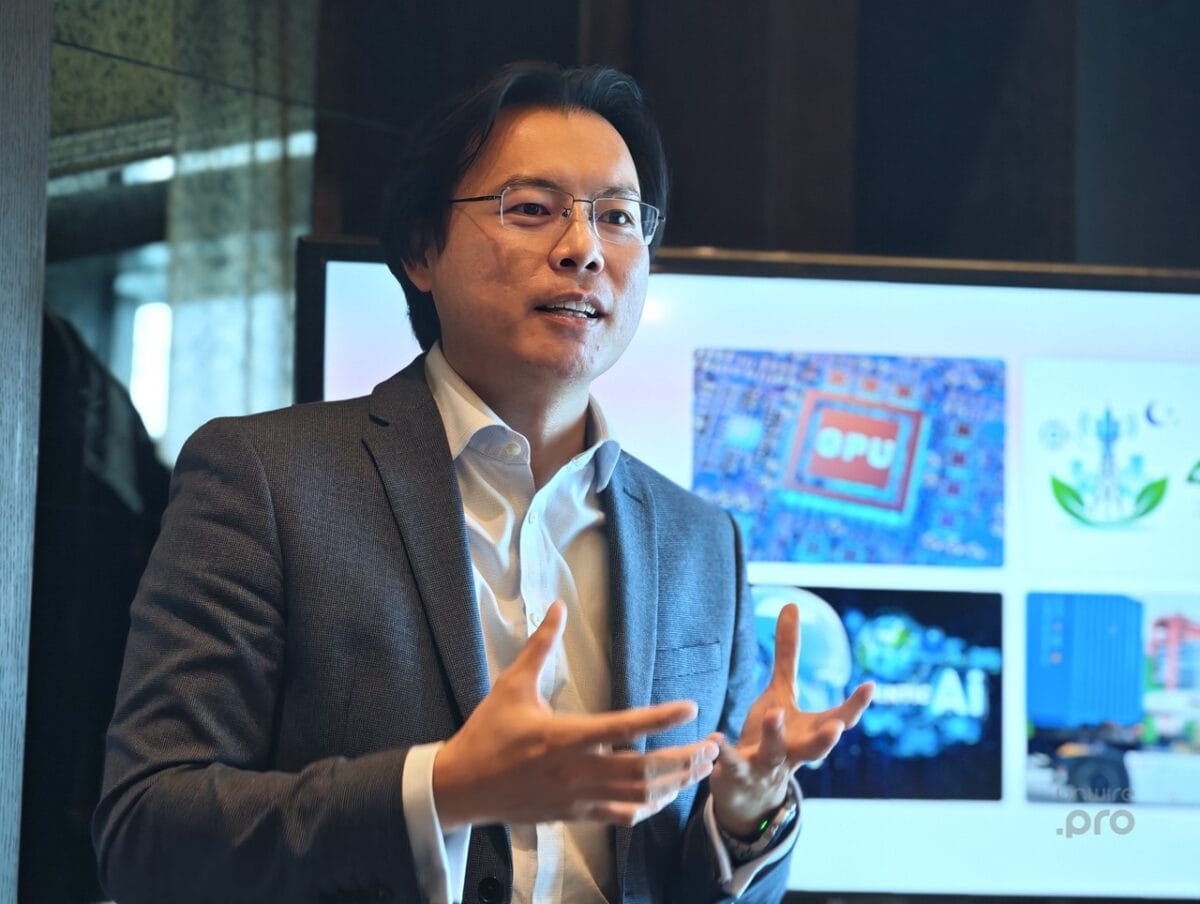
From the perspective of the Chief Financial Officer (CFO), when does self-built computing power possess cost advantages? Damien Leong estimates that as long as the average utilization rate of self-purchased GPUs is maintained at about 70%, expenses will be cheaper than external subscriptions. He added that depending on hardware and model configurations, utilization rates ranging from 40% to 70% might also reach break-even. That 70% is an average, and nighttime usage will not always maintain that level.
Damien Leong also pointed out that deploying GPUs requires certain specifications for the data center. The telecommunications company already possesses its own data center, equipped with ample racks, air conditioning, and power supply systems, allowing for cost advantages and faster deployment. He added that it is not only telecommunications companies that have data centers; other companies can also possess such infrastructure. However, as the group increases its procurement of GPUs, one of his main concerns is the rise in electricity prices, as the data center also needs to achieve a balance in power distribution.
In practical operations, HKT adopts a hybrid model, continuing to use cloud subscription services for general non-sensitive paperwork (like drafting presentations), while core tasks involving customer data are retained locally.
Network Maintenance Practice: Preventing 84 Base Station Outages and Reducing Carbon Emissions by 400,000 Kilograms Annually
In terms of physical network operations, HKT has deployed several AI agents into daily operations. For base station rooms that have not installed temperature sensors, the team inputs the manufacturer’s manual into AI to find the commands for reading the motherboard CPU temperature, then combines pattern recognition to identify abnormal overheating, successfully preventing 84 base station outages so far this year. After typhoons, checking if antenna directions have shifted used to require manual verification for over a day; now, after about a week of stable data post-storm, analysis can be completed in about half an hour using AI.
For MTR's passive antenna monitoring, AI analyzes daily traffic patterns, and once a faulty antenna is detected, it notifies the MTR and automatically adjusts settings to steer users' phones away from the affected frequency band. Damien Leong states that among the four telecommunications operators sharing antennas, only HKT proactively reports issues to the MTR.
Energy conservation and emergency scheduling are also key applications. The group uses AI to determine which frequencies can be shut down appropriately to save power, adjusting according to people flow in large venues such as the Kai Tak Sports Park, with the overall scheme reducing carbon emissions by about 400,000 kilograms annually. When base stations lose power, the system will sequentially shut down high-capacity frequency bands to maintain basic calls, and in case of flooding, AI will also automatically arrange contingency tasks. The group also provides network support to Hong Kong International Terminals (HIT), allowing autonomous trucks to mix with manually driven vehicles, with the relevant fleet set to start operations on April 21, 2026.
Challenges in AI Agent Governance: Aiming to Build an Agent Factory by 2027
As the number of AI agents increases, Damien Leong stated there are still many unresolved governance issues, including how to establish identification for agents, define data access permissions, and regulate cooperation between different agents.
At this stage, all new models must first be tested in a sandbox environment and require human involvement for approval. Currently, most internal AI agents primarily provide analysis and recommendations, with a low proportion directly executing actions. Damien Leong envisions that in the future, system rules will be locked in, with a "police agent" monitoring and reporting anomalies. The group aims to establish an Agent Factory by 2027, enabling AI agents to autonomously apply for the creation of new agents based on business needs.
Management Direction: Efficiency is Just the Floor, Making Good Use of Small Models and Internal Training
Damien Leong emphasizes that using AI to enhance efficiency is just the "floor," and management should seek a new "ceiling": previously, employees believed that "predicting the future" was impossible, but now it has been achieved to preemptively handle situations before base station outages. He believes that tasks that can be accomplished by 7B small models should not involve large models, and decision-making tasks may not necessarily require language models.
Regarding talent and organizational structure, HKT has only hired one external AI engineer, with the rest trained internally. The company has also newly created a position for "LLM Lifecycle Manager" responsible for model replacement, and Damien Leong requires each member of the technical team to think of one or two application ideas.
Cooperation Background: Based on Red Hat OpenShift Architecture
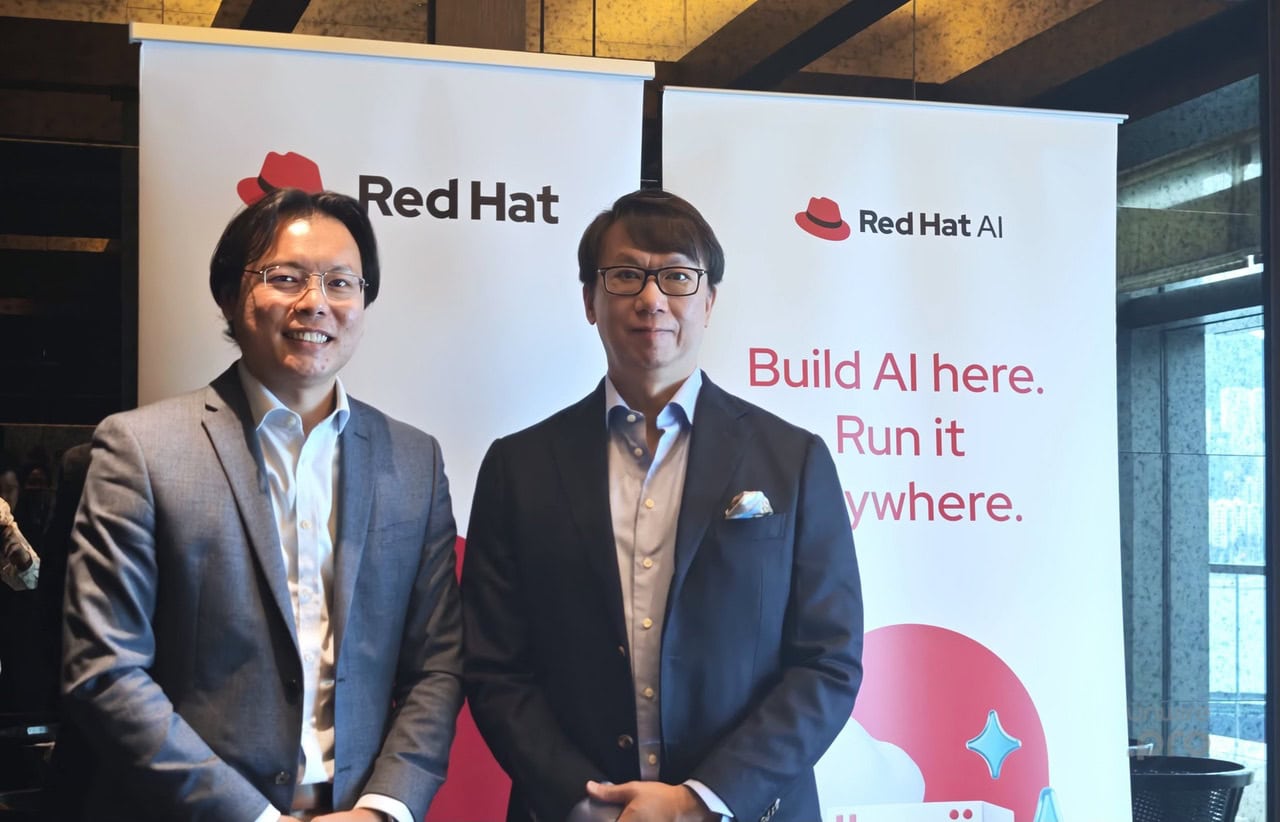
The cloud architecture of HKT is based on Red Hat OpenShift and has won the Digital Transformation Award at the Red Hat APAC Innovation Awards 2025 in Hong Kong. When discussing the collaboration with Red Hat, Damien Leong mentions that most other software in the market focuses mainly on mobilizing computing resources, whereas Red Hat provides a more comprehensive open standard architecture. Even if a partner is changed in the future, or in extreme cases where a supplier disappears, the company can still retrieve the open-source system to continue operations without worrying about being stopped due to geopolitical issues. He adds that while companies can download open-source software themselves, moving from technology to product level requires extensive testing, support, and discussions on development needs, making it impractical to build from scratch. Regarding its own use case, Damien Leong states that in their tests, Red Hat's vLLM solution yields a higher token output compared to other software. Red Hat claims that its solutions can generally help enterprises save about 30% to 70% of resources.
This article is reproduced from unwire.pro, and the copyright belongs to the original author and original media.
免责声明:本文章仅代表作者个人观点,不代表本平台的立场和观点。本文章仅供信息分享,不构成对任何人的任何投资建议。用户与作者之间的任何争议,与本平台无关。如网页中刊载的文章或图片涉及侵权,请提供相关的权利证明和身份证明发送邮件到[email protected],本平台相关工作人员将会进行核查。