TL;DR
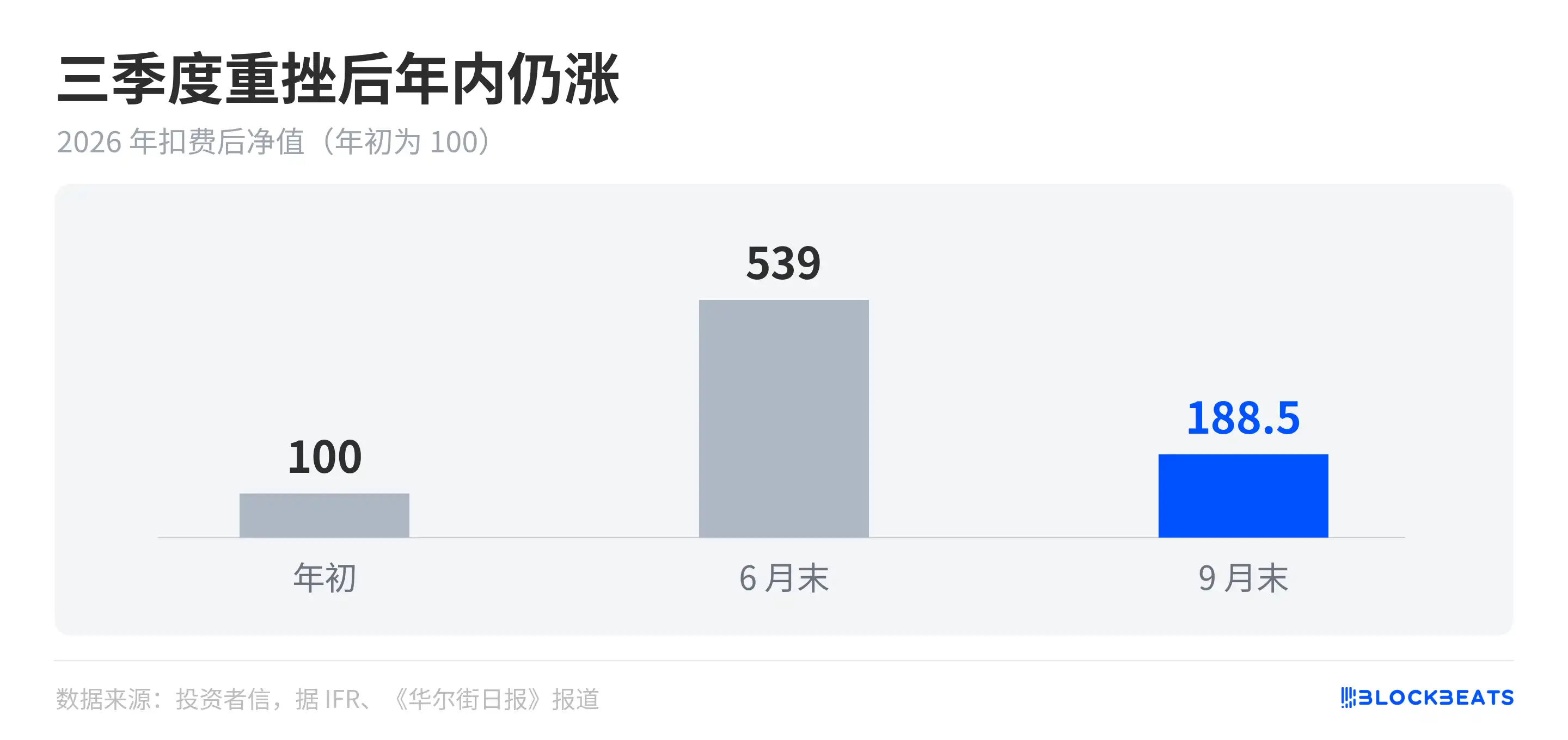
· Former OpenAI researcher Leopold's fund Situational Awareness LP disclosed in a letter to investors that after fees, it lost 65% in the third quarter, but as of the end of September, it is still up 88.5% for the year.
· After being forced to sell public stocks at a discount to Castle Investment in July, the fund entity continued to operate, with the nominal value of its public U.S. stock holdings shrinking 92% to $1.58 billion in the third quarter, with 66.3% of the nominal value now converted into bullish options on AI computing power, electricity, and storage.
· Related targets: Anthropic (ANT), SharonAI (SHAZ), Bloom Energy (BE), Nebius (NBIS)
Former OpenAI researcher Leopold Aschenbrenner's fund Situational Awareness LP revealed in its latest investor letter that it lost 65% in the third quarter after expenses and admitted it is striving to learn from past mistakes.
The contrast is that despite the single-quarter loss, as of the end of September, the fund is still up 88.5% for the year after fees. He also informed clients in the letter that this is the highest potential return opportunity since the fund's inception, as it continues to invest in recent months but has not yet accepted new capital.
Looking at this investor letter in conjunction with the quarterly holdings report disclosed on November 17, a more realistic picture emerges: this 25-year-old "AI stock god" has indeed replaced the deadly leverage, but the faith in heavily investing in AI infrastructure remains unshaken.
From a massive gain of 439% to selling at a loss in July, why is it still up 88.5% for the year?
To understand why a 65% loss in the third quarter still allows for an 88.5% gain for the year, one must first look at how crazy the first half of the year was. In the late summer of 2024, Leopold established the fund with a 165-page essay, betting on an explosion of AI computing power and heavily investing in electricity, data centers, and storage chips.
During the favorable period, high concentration combined with leverage of up to four times created a myth. In the first half of 2026, the fund earned a staggering 439% after fees, and the total asset scale including leverage surged to about $45 billion in early July, with its public U.S. stock holdings ballooning from an initial $225 million to $20.24 billion.
However, in July, the global semiconductor and AI sector plummeted, combined with a short squeeze in software stocks, causing the fund to trigger a series of margin calls, resulting in a drop of about 67% in a single month. To avoid a collapse, he was forced to sell approximately $16 billion worth of public stock at a discount to Castle Investment, but the fund entity did not close down.
After restructuring positions in August and September, performance stabilized slightly, with the third quarter loss narrowing to 65%. Calculating with compounding, an initial $100 grew to $539 by the end of June, and even after a 65% drawdown, about $188.5 remains, which translates to an 88.5% gain for the year; however, investors who entered at the peak faced significant losses.
Public holdings shrink by 92%, switched to options to avoid forced liquidation risks
After apologizing to clients in late July, Leopold completely changed his tools in the third quarter. The 13F report disclosed on November 17 (which details U.S. institutional investors' quarterly long positions in U.S. stocks) showed that his public holdings' nominal value plummeted 92.2%, falling from $20.24 billion to $1.58 billion.
He cleared out core long positions in companies like SanDisk, Micron, and TSMC, with long positions now only around $533 million, where the largest public holding is the computing service provider SharonAI, accounting for 27.9%. According to the nominal value in the 13F report, the remaining 66.3% of public positions were all converted into call options.
These options remain highly concentrated in familiar tracks, including fuel cell manufacturer Bloom Energy (24.7%), computing cloud Nebius (21.1%), SanDisk, and storage ETFs, with the top three public holdings collectively accounting for over 70%.
This switch directly addresses the lesson from July: financing to buy long stocks can lead to forced liquidation during a sharp drop, while the maximum loss when buying call options is limited to the premium paid, with no risk of additional margin calls. Moreover, the 13F combines the market value of long stocks with the nominal value of options, with the actual cash capital used for options far less than the $1.05 billion.
Billion-dollar cards outside 13F and why he remains optimistic
Seeing the public holdings shrink by 92%, it is easy for outsiders to mistakenly believe the fund has run out of capital. However, the 13F only accounts for long positions in the U.S. secondary market and does not include unlisted equity, cash, or short positions, so it is far from the full picture of Situational Awareness LP's total assets.
According to reports from the Financial Times and other media in mid-November, the fund currently still has a total management scale of over $10 billion, with the core underlying asset being an estimated $5 billion equity stake in Anthropic, which was completely retained within the fund when forced to sell public stocks in July.
However, this chip is difficult to monetize in the short term. Although Anthropic landed on Nasdaq on November 19, the prospectus set up a maximum of one year, phased lock-up period for pre-IPO shareholders, divided into 23 tranches, and combined with its stock closing below the $83 offering price for two consecutive days after listing, liquidity is still constrained.
Even so, Leopold stated that the current potential returns are the highest since the fund's inception, reasoning that the sharp decline has widened the odds, and the gap in computing and electricity has not been filled. Despite facing inquiries from the SEC regarding cooperation with banks and rumors of a "2.0" relaunch, he still chooses to remain at the table.
The rapid fall of AI after October is testing the new options strategy
By switching from financing long stocks to call options, although he avoided the trap of forced liquidation, another hard constraint was introduced—time decay. If the stock price remains sluggish before the option contract expires, the call options will not just face unrealized losses waiting, but will expire worthless.
It is noteworthy that the 13F report and the 88.5% return are both as of September 30 and do not disclose the strike prices, expiration dates of options, or any adjustments after October. In the past month, many AI targets that were heavily invested at the end of the third quarter have experienced significant pullbacks.
For Leopold, surviving July was only the first half. Whether the quarterly report for the fourth quarter due in February next year can prove that these call options weathered the autumn-winter correction, and the valuation performance before and after the unlocking of Anthropic will ultimately determine whether this "AI stock god" reboot can stand.
Click to learn about job openings at Rhythm BlockBeats
Welcome to join the official community of Rhythm BlockBeats:
Telegram Subscription Group: https://t.me/theblockbeats
Telegram Discussion Group: https://t.me/BlockBeats_App
Twitter Official Account: https://twitter.com/BlockBeatsAsia
免责声明:本文章仅代表作者个人观点,不代表本平台的立场和观点。本文章仅供信息分享,不构成对任何人的任何投资建议。用户与作者之间的任何争议,与本平台无关。如网页中刊载的文章或图片涉及侵权,请提供相关的权利证明和身份证明发送邮件到[email protected],本平台相关工作人员将会进行核查。