Original author: Yang Chen
Source: Wall Street Watch
Investor Michael Burry, who became famous for shorting the US real estate market in 2008, has adjusted his investment portfolio amid the current tech stock sell-off. After clearing out his put options on the Nasdaq 100 index, his overall position has shifted from shorting to being more bullish, marking his most bullish stance in some time.
Burry stated in his Substack column "Cassandra Unchained" on Wednesday morning: "Globally, my portfolio is more bullish than it has been for some time, with fewer shorts."
He added that besides the put options on Palantir and MetLife, he is "currently almost entirely long." He mentions it is "temporary" because he is still actively assessing shorting opportunities.
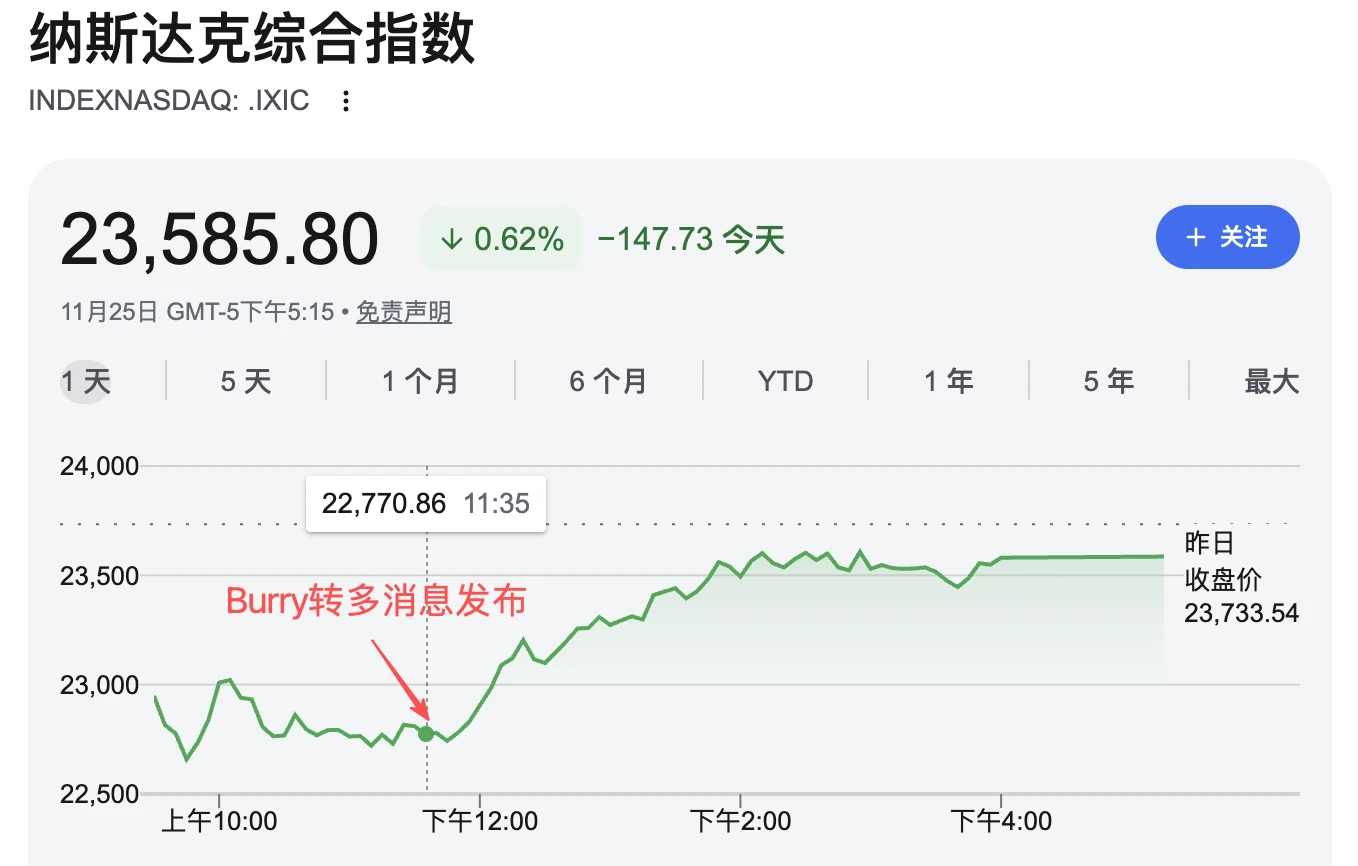
On Wednesday afternoon, US stocks narrowed their declines, with trading volume rising, indicating increasing investor interest in unwinding some bearish positions. The Nasdaq 100 index fell over 4.7% at one point before reducing its losses to about half; the Dow Jones Industrial Average briefly turned positive.
The timing of this rally coincides almost exactly with Burry's announcement of selling his remaining tech stock put options.
About 25% cash, still holding Nvidia call options bought last Friday
Burry revealed that about 25% of his portfolio is in cash, and he is actively investing this money into the market.
He also holds the Nvidia call options bought last Friday. "These options are far out of the money, I only spent a few dollars to buy them. They have already doubled, and I haven't decided how to handle them," he said. "My plan is to short again when market optimism rises, close to $200 per share for Nvidia. Now is not the time."
Main positions disclosed: Latin American e-commerce and Chinese concept stocks included
Major positions revealed by Burry include MercadoLibre Inc., Temple & Webster Group Ltd., and JD.com Inc.
He also holds stocks in Adobe Inc., Birkenstock Holding Plc, Deckers Outdoor Corp., Molina Healthcare Inc., HCA Healthcare Inc., Lululemon Athletica Inc., Fiserv Inc., Veeva Systems Inc., PayPal Holdings Inc., and Build-A-Bear Workshop Inc.
Additionally, Burry holds subordinated preferred shares of Fannie Mae and Freddie Mac, preferred shares of QXO Inc., and long-term LEAP call options on Sprouts Farmers Market Inc. and Zoetis Inc.
Market impact: Position rebalancing amid decline in AI trading
Burry explained the reasons for the failure of put options strategy in the current environment.
He noted that under rising VIX index and falling markets, even robust companies barely related to AI have their put options priced very expensively. "This makes shorting regular stocks the main tool for expressing bearish views right now.
Although cost-effective, the asymmetric direction of shorting stocks is wrong," he wrote. The assets he currently holds in long positions include "undervalued common stocks, LEAP call options, and preferred stocks."
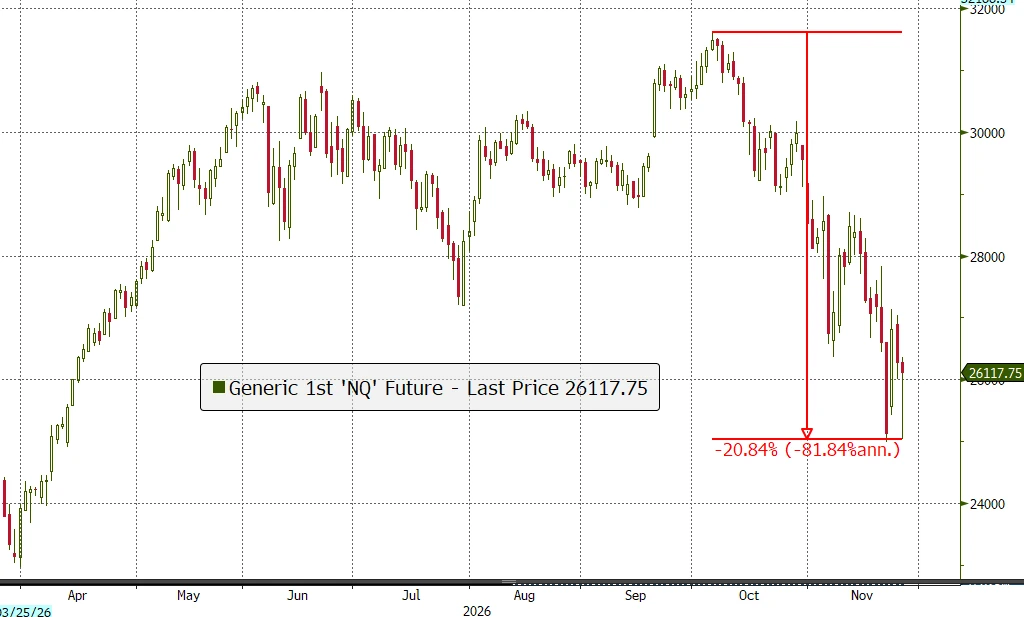
Burry's position adjustments occur against the backdrop of significant pullbacks in tech stocks. The Nasdaq 100 index hit the bear market threshold during trading, reflecting deepening market concerns about the sustainability of the AI-driven rally.
For investors, Burry's movements provide a perspective on how professional investors are reallocating risk amid increasing volatility: high costs of put options diminish hedging efficiency, while direct shorting isn't cost-effective under asymmetric risk, prompting some funds to shift towards undervalued individual stocks and long-term options.
Burry explicitly stated that his current bullish stance is "temporary," and shorting opportunities are still under assessment.
He indicated a reference price for shorting Nvidia again at $200 per share and advised waiting for market optimism to rise. This condition suggests that he does not believe the current decline is over but is waiting for a better shorting entry point.
免责声明:本文章仅代表作者个人观点,不代表本平台的立场和观点。本文章仅供信息分享,不构成对任何人的任何投资建议。用户与作者之间的任何争议,与本平台无关。如网页中刊载的文章或图片涉及侵权,请提供相关的权利证明和身份证明发送邮件到[email protected],本平台相关工作人员将会进行核查。