TL;DR
· On November 25, "Big Short" Michael Burry disclosed that he has closed out the remaining Nasdaq 100 index put options, and is currently almost fully long except for short positions in Palantir and MetLife, with the value of his long call options on Nvidia having doubled.
· This is not an indication that the big short believes tech stocks have bottomed out and is completely turning bullish, but rather that he took profits from shorts during the substantial decline and is using out-of-the-money call options to hedge against a rebound; he plans to short again when Nvidia nears the $200 mark and market sentiment turns optimistic again.
· Related stocks: Nvidia (NVDA), Palantir (PLTR), MetLife (MET), Nasdaq 100 index (NDX)
On November 25, investor Michael Burry, known for shorting subprime mortgages, revealed in a paid column that he sold half of his remaining Nasdaq 100 index put options, capitalizing on the weakness in tech stocks. His long position ratio has risen to its recent high, with almost only two stocks remaining short.
What surprised the market even more is that this long-time bear on the AI bubble also holds deep out-of-the-money long call options on Nvidia (cheap contracts with strike prices far above the current price), whose value has now doubled. Upon hearing the news, many speculated whether he believes the decline has bottomed and is preparing to go fully bullish.
However, Burry quickly poured cold water on the speculation. He clearly emphasized that the current long position is only "temporary," and that Nvidia is not yet at a shorting opportunity around $149 where it currently stands; he is preparing to short again when the stock price approaches $200 and market sentiment becomes optimistic again.
Fourteen-day rhythm switch, how to buffer a short squeeze during Nvidia's surge?
By stringing together the dramatic market movements over the past two weeks, one can understand why Burry suddenly "changed his face." He is not abandoning his bearish stance, but rather cashing out short profits in batches during the steep decline while simultaneously using cheap call options to hedge against a rebound.
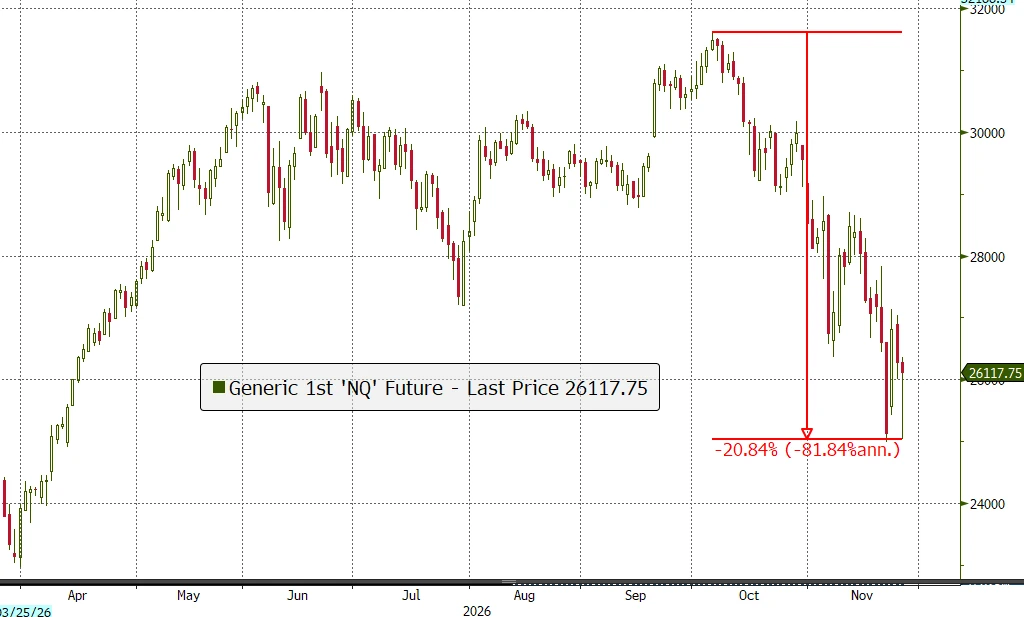
In mid-November, Nvidia faced selling pressure due to rumors of executive turmoil and an accounting review, with Jensen Huang temporarily stepping down. Burry had already doubled his Nasdaq 100 put options (contracts betting on price declines) and reopened semiconductor ETF short positions on November 12; when Nvidia fell another 14% on November 20, he decisively closed out half of his chip and index shorts to lock in profits.
Shortly afterward, on November 23, Nvidia’s board unexpectedly announced the reinstatement of Jensen Huang as CEO, with the stock price soaring 31.5% in a single day. The decision to halve his position in advance significantly buffered the short squeeze from the surge, and the Nvidia call options he used to hedge against the rebound also doubled in value.
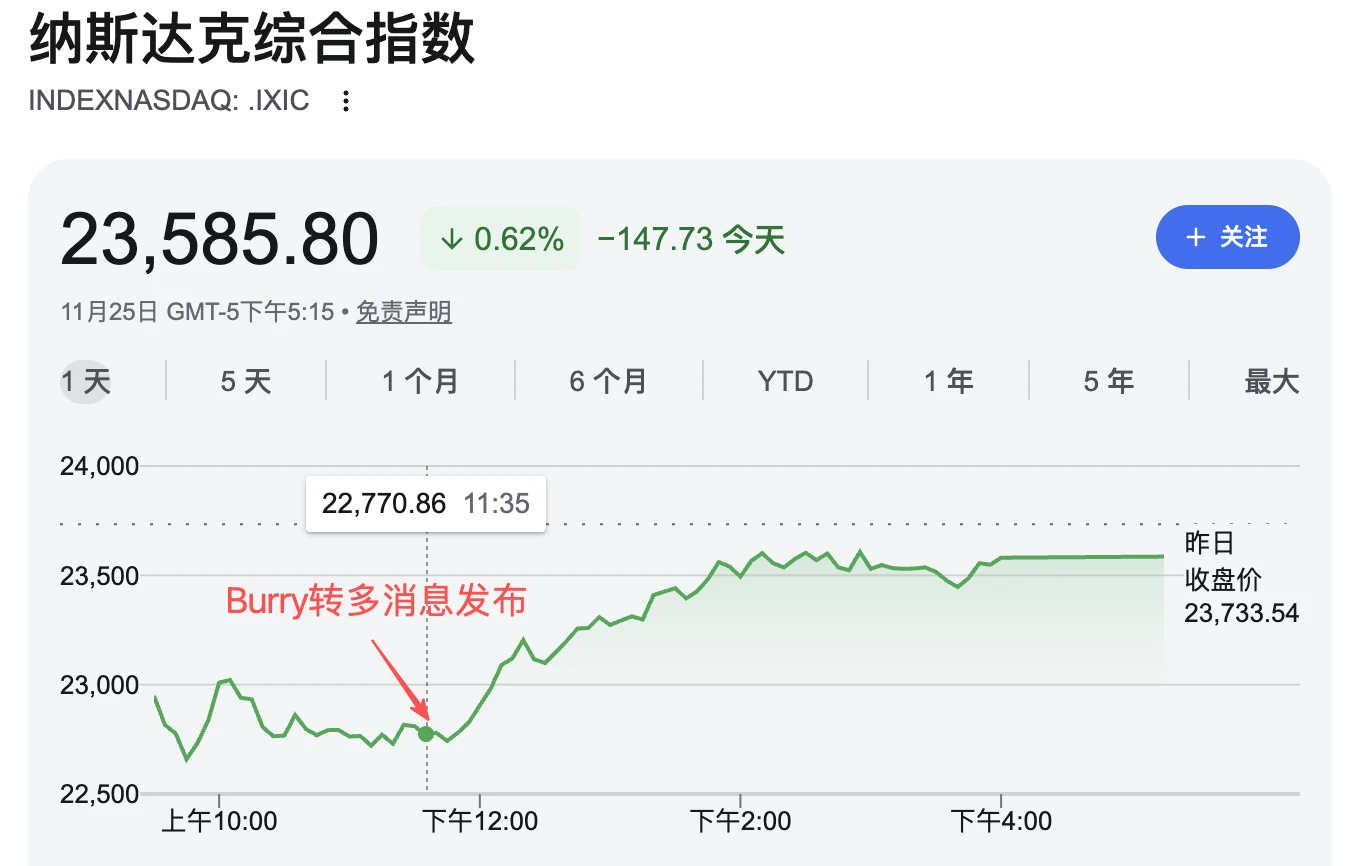
Two days later, on November 25, tech stocks experienced another pullback in the early session, with the Nasdaq 100 dropping more than 4%, and Nvidia closing down 3.91% to $149.30. Burry opportunistically liquidated the last half of his Nasdaq shorts, leaving about 25% of his portfolio in cash.

Strategic bearishness and tactical bullishness calculate the odds
Ordinary investors might imagine "the big short" as someone who stubbornly holds on until the end, but Burry has in recent years become a high-frequency swing trader. Nvidia has fallen from around $243, its annual high, to $149, with the price-to-earnings ratio returning to about 16 times, making it less favorable to pursue shorts at this point.
Options come with expiration dates and time decay; if market sentiment turns pessimistic following a steep decline, continuing to hold on to put options could lead to quick losses in profits if a strong rebound occurs. Therefore, his core strategy is to capitalize on shorts during panic, and to re-enter positions when sentiment warms up again near $200.
In August this year, he employed a very similar hedging method. At that time, he was heavily shorting Nvidia, Palantir, and Oracle, while buying Nvidia call options set to expire in December with strike prices above $200, explicitly stating that this was just insurance against a short squeeze.
In the past year, such significant switches have not been uncommon. In the first quarter of 2025, he cleared out his long positions and aggressively bought Nvidia put options, only to swiftly reverse his stance and buy large amounts of call options on technology and healthcare stocks in the second quarter, before ramping up AI shorts again in the third quarter.
From calling sell to recognizing errors, loss lessons lead to new risk control
Burry's growing reliance on the “out-of-the-money calls for short squeeze protection + partial profit-taking to keep cash” strategy largely stems from multiple past losses incurred due to entering positions too early. Having the correct directional judgment does not guarantee one can withstand volatility in a bull market to cash out.
The most famous lesson occurred in 2023. At the end of January that year, he posted just one word, "Sell," on social media, only for the Nasdaq to record its best performance in forty years in the first half of the year, forcing him to publicly admit by the end of March that his "sell" call was a mistake.
Earlier, in 2021, he had disclosed holding over a million Tesla put options, ultimately exiting prematurely under sustained short squeeze pressure, admitting that the market movement made it difficult to hold on. Even by the end of 2025, after he publicly shorted Nvidia and Palantir, those two stocks still saw a short-term increase.
Even stock picking on the long side has not been foolproof. This November, when his column marked its one-year anniversary, many of the early long positions he publicly tracked, such as Lululemon, Shift4, and Fannie Mae, had dropped by an average of over forty percent, prompting him to place more emphasis on position control and profit-taking discipline.
The $200 second shorting line and the remaining two shorts
Because Burry historically has often demonstrated discrepancies between public statements and quick switches in short-term positions, and because this round of updates comes entirely from his paid column accounts rather than mandatory quarterly disclosure reports, the specific new long positions have not been made public, making it extremely risky for ordinary investors to blindly follow his lead.
The current clear clues are hidden in what he “has kept.” After clearing out shorts in broad market indices and semiconductor ETFs, Burry has only retained put options in the AI software stock Palantir and insurance giant MetLife, not entirely abandoning individual stock shorts.
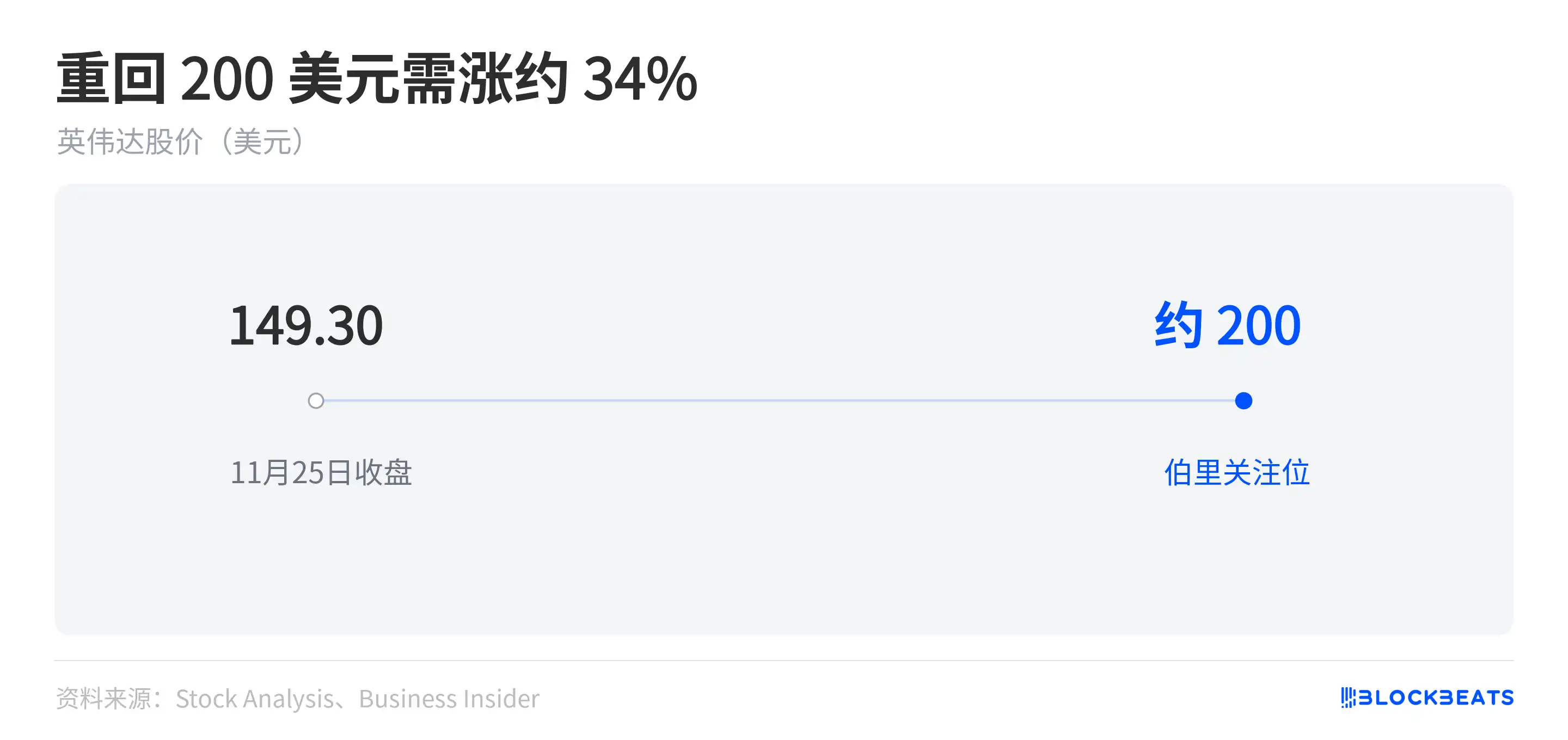
With Nvidia closing at $149.30 on November 25, the market’s evaluation of Burry’s strategy has only just begun: whether Nvidia can rebound to around $200 to trigger his second short, and when this 25% cash will reinvest, will determine the success or failure of this round of tactics.
Click to learn about job openings at Rhythm BlockBeats
Welcome to join the official community of Rhythm BlockBeats:
Telegram subscription group: https://t.me/theblockbeats
Telegram discussion group: https://t.me/BlockBeats_App
Twitter official account: https://twitter.com/BlockBeatsAsia
免责声明:本文章仅代表作者个人观点,不代表本平台的立场和观点。本文章仅供信息分享,不构成对任何人的任何投资建议。用户与作者之间的任何争议,与本平台无关。如网页中刊载的文章或图片涉及侵权,请提供相关的权利证明和身份证明发送邮件到[email protected],本平台相关工作人员将会进行核查。