On October 29, Binance experienced a security incident affecting approximately $6.3 billion in assets. The U.S. Department of Justice and relevant blockchain analysis institutions attributed the incident to a North Korean-related attack organization. Public information indicates that the attack path involved the invasion of employee devices, which led to unauthorized operations being submitted to internal signing services, without evidence showing that the private keys themselves were directly stolen. Binance subsequently stated that it would cover all losses using company funds and the user security asset fund and has completed asset replenishment. On November 23, Binance announced the hiring of three external security agencies for an independent review of its security systems and internal controls: Mandiant (incident response and threat intelligence), SlowMist (blockchain security), and Verichains (attack testing and security research).
This review took place after the incident, focusing on system security, internal operational controls, and the ability to respond to evolving threats. The real topic of discussion is not "whether an external agency was hired," but rather how it reflects a shift in focus within security discussions.
It's not just about whether the code has vulnerabilities, but whether internal permissions can be restricted
In the past, when discussing exchange security, people often asked three questions: Is there a cold wallet? Is there proof of reserves? Is there an insurance fund? These questions are still important, but they are no longer sufficient. In an environment where AI tools are becoming increasingly mature, attackers can more efficiently generate phishing content, forge identities, accelerate reconnaissance, and move laterally. Vulnerabilities may not necessarily appear in public smart contracts or frontend code but may be present in internal personnel permissions, API key management, outsourcing collaborations, and the identification and blocking of abnormal behaviors.
Whether the permissions of core personnel are strictly limited, whether internal systems allow a single individual to control critical processes, whether API keys are managed according to the principle of least privilege, whether malicious programs can enter the production environment through employee or vendor devices, and whether abnormal transactions can be promptly identified and blocked—these questions are beginning to become more critical than “whether the code has been audited.” When attackers can utilize AI to assist in social engineering and automated reconnaissance, the compromise of a single internal node can be magnified in a short period.
Security levels should not be judged by whether incidents have occurred, but by whether incidents can be contained
A more realistic criterion for judgment is: the security level of an exchange should not solely depend on the absence of incidents but should consider whether mechanisms have been established to limit the impact range of incidents. Cold wallets and proof of reserves can mitigate some risks, but once internal permissions or signing services are breached, losses can still potentially escalate quickly. The value of external reviews lies in examining internal permission controls, anomaly detection, and incident response processes from an independent perspective, rather than only focusing on technical vulnerability scans.
The three agencies Binance has hired each have their own focus: Mandiant specializes in incident response and advanced threat investigations, SlowMist focuses on blockchain ecosystem security, and Verichains emphasizes research and testing from an attack perspective. Whether the review will lead to actual improvements depends on whether the review scope covers internal operational controls and whether subsequent remediation is executed and verified. Even with enhancements to the platform's own security mechanisms, it cannot completely replace user-side protection.
A few things users can do
For ordinary users, the system security of the exchange and the security of personal accounts are two different layers of protection. Binance offers several account-level features that users can enable based on their own situations:
● Enable Passkey, using device biometrics or security keys instead of traditional passwords to reduce the risks of phishing and password leaks.
● Set up a anti-phishing code to verify when receiving emails or notifications, confirming that information comes from official channels.
● Enable withdrawal address whitelisting, allowing withdrawals only to pre-added addresses to reduce the likelihood of unauthorized transfers.
● Check API permissions, only granting necessary trading permissions, disabling unnecessary withdrawal permissions, and regularly rotating keys.
These settings cannot guarantee absolute account security, but they can increase resistance on common attack paths. Available features may vary for users from different regions, and actual operation should follow the platform's latest instructions.
Why some people still consider Binance as one of the trading entrances
After the security incident, some may ask: Since such a large loss has occurred, why continue to open an account or trade with this exchange? This question itself is reasonable. Binance's response includes covering losses with company funds, completing asset replenishment, and involving external agencies for an independent review. These actions indicate that the platform chose to handle the situation transparently and accept external scrutiny rather than evade it. For some users, the platform's size, liquidity depth, and product coverage (including spot, futures, and certain traditional financial asset-related tools) remain considerations in their actual trading needs. Choosing a platform does not mean placing all funds there long-term but rather distributing entry points across multiple platforms based on trading frequency, asset types, and risk assessments while only keeping necessary funds on the platform.
Interested users can follow the steps below to register for a Binance account, complete identity verification, and then review security settings and trading features as per their needs. The platform size and product coverage are one of the factors in choosing, but any centralized platform carries operational risks, so it is recommended to only keep trading funds necessary and not leave large amounts of assets on a single platform for the long term.
Binance registration link: https://jump.do/zh-Hans/xlink-proxy?id=3
Or log in to the Binance APP directly and enter invitation code aicoin668, below are the AiCoin exclusive generous registration benefits:
Benefit 1: New users up to 440 USDT
1. Deposit 100 USDT + trade 100 USDT → get a 100 USDT position coupon
2. Deposit 1,000 USDT + trade 50,000 USDT → get an additional 300 USDT position coupon
3. Deposit 3,000 USDT + trade 200,000 USDT → get an additional 40 USDT cash coupon
All three tiers stack, and by depositing 100 USDT, you can receive the benefits of the first tier.
Benefit 2: Open mystery boxes, up to 25 RE
1. Register + deposit 50 USDT + trade 100 USDT + log into the App
2. After completion, one mystery box will be available, randomly drawing RE tokens, up to 25 pieces
This is equivalent to a new user completing tasks can enjoy two layers of benefits.
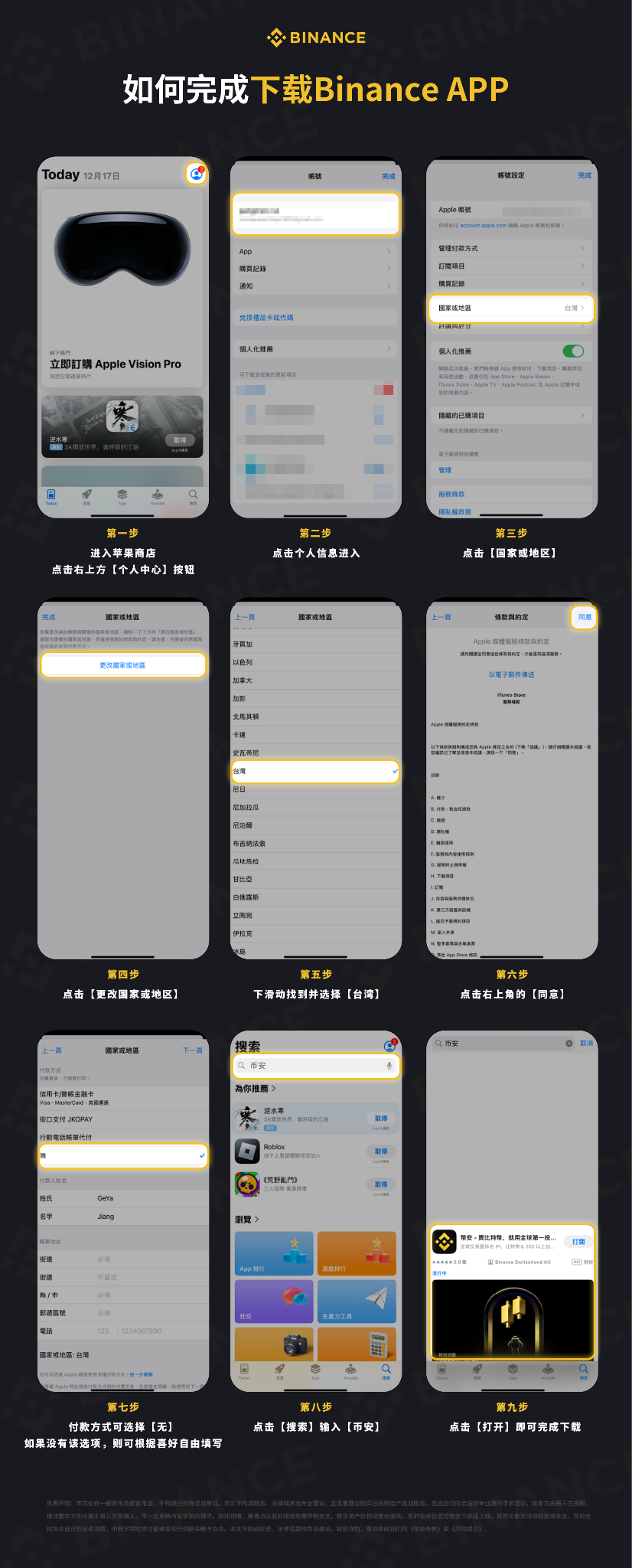
This article is for market observation only and does not constitute any investment advice. Please assess risks according to your own situation before making decisions.
免责声明:本文章仅代表作者个人观点,不代表本平台的立场和观点。本文章仅供信息分享,不构成对任何人的任何投资建议。用户与作者之间的任何争议,与本平台无关。如网页中刊载的文章或图片涉及侵权,请提供相关的权利证明和身份证明发送邮件到[email protected],本平台相关工作人员将会进行核查。