Tidal will completely remove purely AI-generated songs
96% of AI music goes unheard and severely disrupts the platform
Only purely AI works are affected, human-machine collaborative music is not impacted
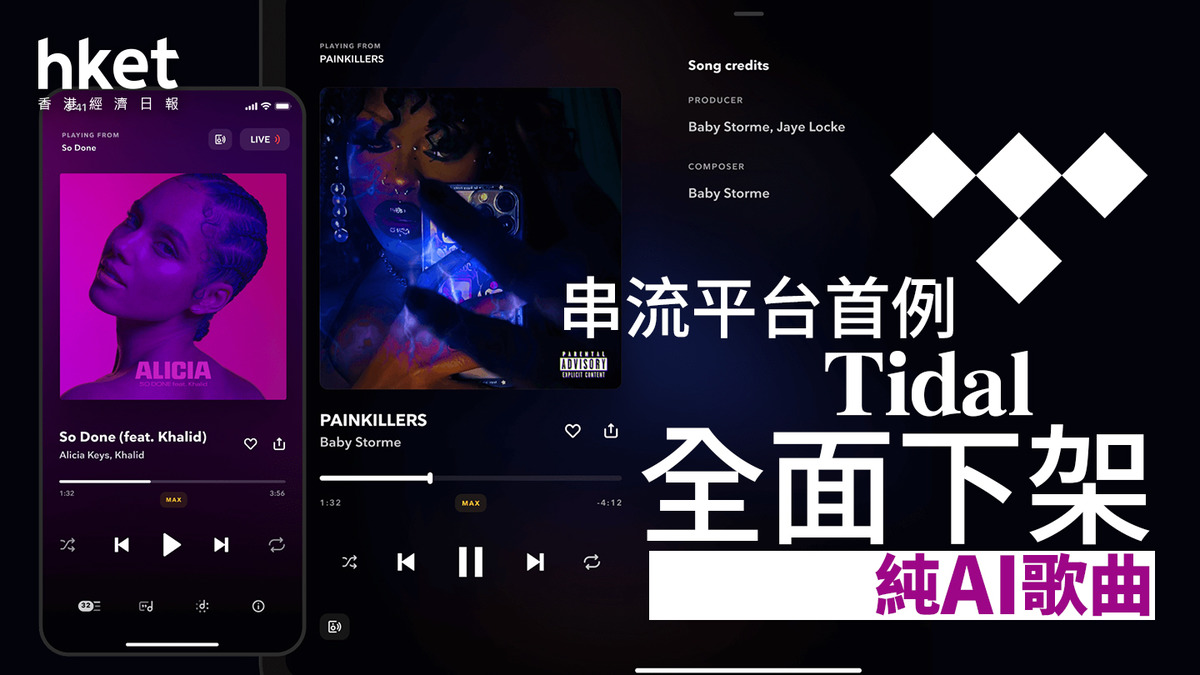
As AI sweeps through the music industry, most major music streaming platforms opt to distinguish AI works through labeling, but music platform Tidal has chosen to adopt a more radical strategy, announcing the complete removal of all songs entirely generated by AI, becoming the first major streaming platform in the industry to broadly ban purely AI music.
Robert Andersen, head of the Tidal platform, recently announced on social media platform X that the company will begin removing all purely AI-generated songs starting December 9, with the cleanup expected to be completed in early next year. He noted that the new policy will result in around 29 million songs being deleted, and the platform will also refuse about 80,000 to 85,000 newly uploaded AI works each day in the future.
Nearly half of new songs are AI-generated, 96% zero playback
According to Tidal statistics, 43% of the songs submitted to the platform in the past 90 days were detected as AI-generated content. However, as high as 96% of these works recorded zero plays in the last three months, reflecting that although related content has surged, it has failed to attract actual listeners.
Tidal stated that while emerging musicians need time to build an audience, the large number of AI songs is drowning out the works of real musicians, affecting users' experiences of discovering new music. Therefore, the company decided to escalate from the original labeling and cancellation of revenue sharing to directly removing the related content.
Only purely AI works are affected, human-machine collaborative music is not impacted
The new measures apply only to songs entirely generated by AI tools and will not affect works created with the assistance of AI for writing, arranging, or production. Tidal will adopt the AI music detection solution provided by Ircam Amplify, a technology company under the French music research organization IRCAM, to identify related content.
Andersen admitted that the labeling policy previously implemented by the company had limited effects, thus deeming it necessary to take more forceful measures to protect the platform's music ecosystem and the interests of original creators.
The industry mainstream still mainly uses labeling systems
In contrast, Tidal's approach is still one of the few in the streaming music market. Platforms like Spotify and YouTube Music have introduced AI content labeling measures in recent years, but most have not chosen to fully remove content.
For example, Spotify recently began adding labels for AI virtual musicians and stated that it has removed over 50 million AI songs from its recommendation system. However, the company is simultaneously developing its own AI music generation tool, which may be launched as a paid value-added feature in the future. On the other hand, AI music generation platform Suno also announced earlier that it would introduce Audio Watermarking and Fingerprinting technologies to assist streaming platforms in identifying AI-generated content, increasing transparency and copyright management capabilities.
AI music, controversy still unresolved
Although some AI songs have successfully entered the Billboard and Spotify charts, even gaining some market attention, the controversy surrounding AI music has not ceased. Supporters argue that AI is just another creative tool following synthesizers and drum machines; opponents criticize the related works for lacking originality and even involving copyright issues related to unauthorized use of musicians' works to train models.
Andersen emphasized that Tidal hopes to prioritize platform resources for real creators and calls on other digital music service providers (DSPs) to follow suit. "We are the first platform to take this step, and we hope that our peers will also consider following. Tidal will continue to prioritize support for real musicians in the future."
This article is reproduced from the Hong Kong Economic Daily, with copyright belonging to the original author and original media.
免责声明:本文章仅代表作者个人观点,不代表本平台的立场和观点。本文章仅供信息分享,不构成对任何人的任何投资建议。用户与作者之间的任何争议,与本平台无关。如网页中刊载的文章或图片涉及侵权,请提供相关的权利证明和身份证明发送邮件到[email protected],本平台相关工作人员将会进行核查。