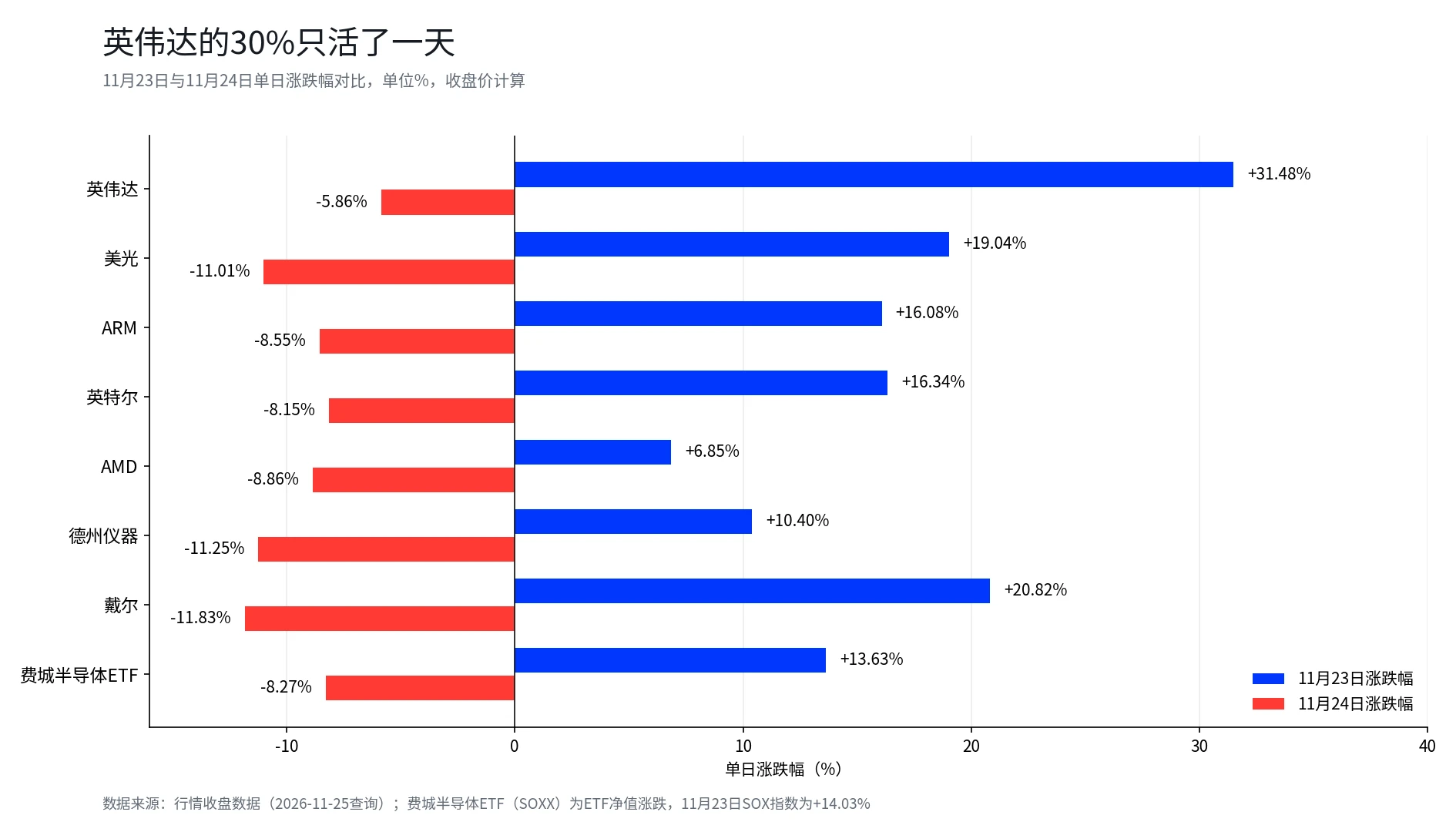
Abstract Ray Dalio, founder of Bridgewater, believes that the technical value of AI can coexist with asset bubbles. When investors borrowing money need to repay their debts, positions concentrated on the same theme may turn to selling pressure.
Video Title: I Finally Interview Ray Dalio
Video Author: Sourcery with Molly O'Shea
TL;DR
· A $50 million funding round can establish a $1 billion company valuation, but how much the founders can realize depends on what price they can sell their shares.
· Dalio believes that the long-term cash flow from new technologies is hard to estimate; even if it eventually generates substantial cash flow, the related assets may experience a bubble collapse along the way.
· Debt repayment, rising interest rates, and wealth taxes that need to be paid in cash may force holders to sell assets. The more investors concentrate on the same theme, the easier sell-offs can amplify each other.
· Dalio views the U.S. debt problem as a political issue as well. Increases in taxes and cuts in spending will require someone to bear the costs, and compromises about how those costs are shared will be necessary after elections.
· Dalio himself is writing investment principles into backtestable rules, which will then be executed with AI assistance. He believes human judgment remains responsible for proposing causal hypotheses and setting decision-making standards.
Editor's Note: As AI companies achieve higher valuations through large funding rounds, market discussions are shifting from whether models can create business value to how much investors have already paid for that value. Discussions surrounding bubbles often stall at estimating future revenues and profits. However, even if companies ultimately fulfill growth expectations, investors may experience significant losses beforehand. A more direct question is, when holders need to convert paper wealth into cash, how many buyers will still be willing to take over at the original prices?
In the November 23, 2026 episode of the Sourcery podcast, host Molly O’Shea discussed the AI investment boom and its underlying bubble mechanisms with Ray Dalio, founder of Bridgewater. Dalio broke down the question of “when the AI bubble will burst” into three more fundamental questions: how valuations are formed, who will be forced to sell, and what the market will rely on to absorb sell-offs when they concentrate.
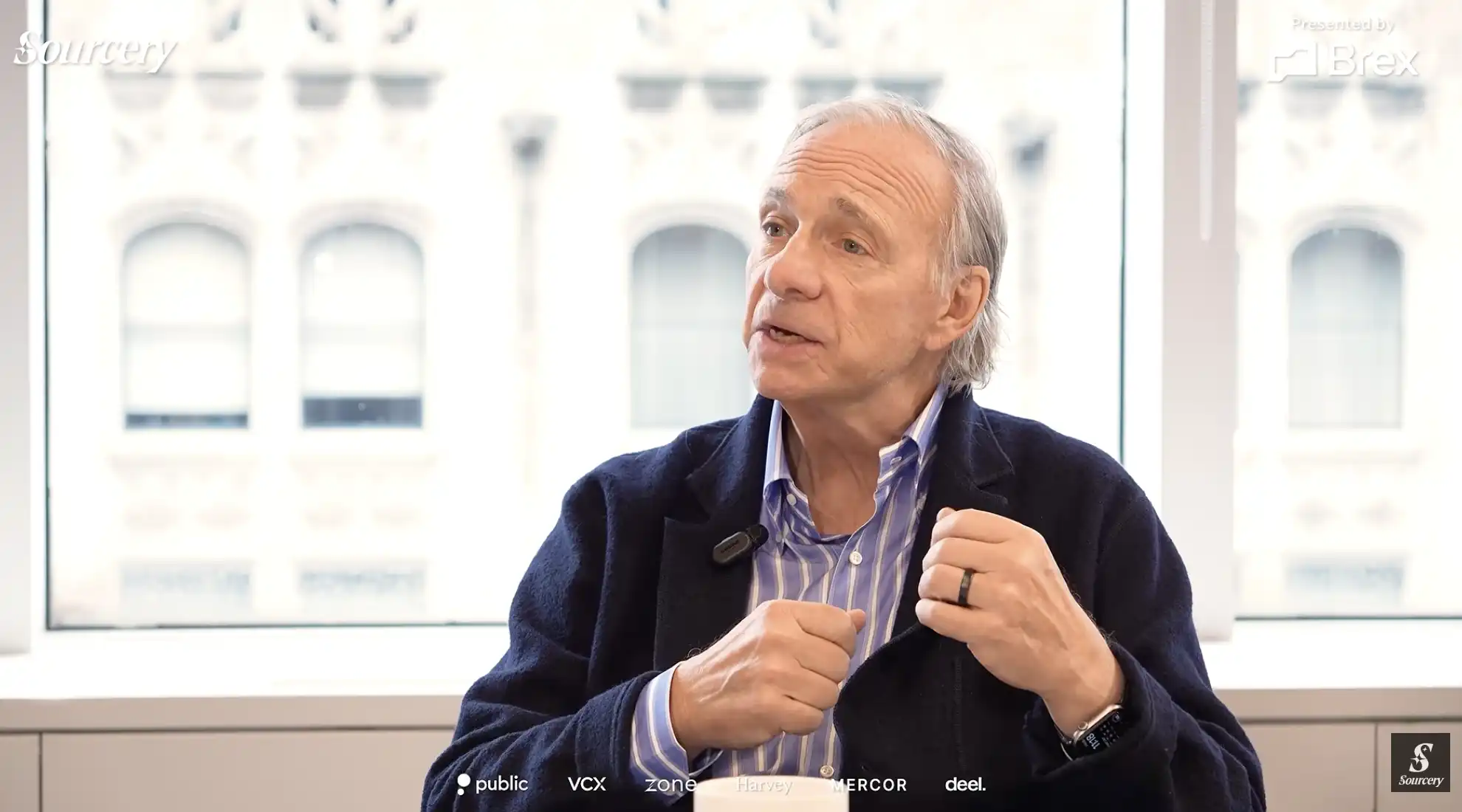
The first is how a small number of transactions can revalue all equity. In the past, startups established their valuations through rounds of funding; the transaction price of a small portion of shares could serve as a pricing reference for the remaining shares. Nowadays, driven by large funding rounds and expectations for IPOs, a single deal for a tech company can correspond to much larger amounts of paper wealth. Dalio gave an example: if a company raises $50 million with a $1 billion valuation, the company actually receives $50 million, and the book value of previous shares may rise accordingly. If many shareholders sell at the same time, whether the last transaction price can be maintained depends on how much new capital the market is willing to provide. Financing can establish a price, while large-scale realizations will test that price.
The second is how debt changes the time investors can afford to wait. Dalio drew an analogy with the electrification, automobile, and broadcasting boom of the 1920s. At that time, the changes brought by these technologies were already clear, attracting investors to borrow money to participate. Today, the long-term cash flows of AI companies similarly rely on future demand and profitability, but investors’ interest and principal have clear payment deadlines. If refinancing is difficult when loans mature, or if raising financing costs reaches a level that holders cannot afford, even optimistic investors about the company’s long-term prospects may need to sell early. The time it takes for companies to realize profits and how long the funds in investors' hands can sustain thus become two equally important variables.
The third is how the concentration of funds can turn individual investors’ cash needs into joint selling pressure. During an uptrend, new capital flowing into the same theme can absorb sell-offs from existing holders while continuing to push prices higher even with fewer transactions. Dalio is concerned that as the market becomes more dependent on AI, an increasing number of positions will expose themselves to similar funding conditions and risk preferences. Once some investors begin to liquidate early, buyers may become cautious due to falling prices, necessitating larger discounts to sell. Price declines may also prompt more holders to reduce their positions. By this stage, even if the company’s operational prospects have not deteriorated simultaneously, the buying power that originally supported the valuations may have receded.
If this conversation were to be condensed into one judgment, it would be: when holders' demand for cash exceeds the market's ability to take over assets at original prices, the bubble may burst. The AI investment boom thus raises a broader market question. Technological revolutions can last for years, yet capital markets must find willing and capable buyers for these long-term expectations at every point in time.
Below is the original content (reorganized for readability):
$50 Million Funding Round: How It Supports a $1 Billion Valuation
Host Molly O’Shea began by asking about the enormous wealth created by tech company IPOs.
Dalio gave an example. A company raised $50 million with a $1 billion valuation, providing pricing references for the entire company’s equity through the new transaction. The company actually received $50 million. The founder's net worth is recalculated based on their ownership percentage, and only when selling shares does relevant cash come in.
A funding round can set a price for a small portion of shares, but if many shareholders demand realization at the same time, buyers must bring more funds to maintain the original price. For those who bought assets with borrowed funds, the time to sell is influenced by repayment deadlines and financing costs. Paper wealth can increase rapidly with rising valuations, but cash outflows have clear amounts and due dates.
This is Dalio’s entry point for judging when a bubble may burst. During prosperous times, new buyers push asset prices up, allowing holders to continue holding. When debt matures, interest rates rise, or cash liabilities arise, some people must sell. If simultaneous sell-offs exceed what buyers are willing to absorb, prices will fall. Such downturns can also lead to more people fearing losses and shrinking their positions, further depleting the market's buying power.
AI Can Create Long-Term Returns, but Investors May Still Suffer Losses in Between
A common approach to judge whether a stock is expensive involves discounting the future cash flows the company can generate to today’s value and comparing it with the current price. Dalio believes this method encounters a challenge when applied to new technologies: it is difficult for investors to reliably predict cash flows decades out. Even if a company ultimately makes a profit, its stock price may experience a significant drop beforehand.
He drew parallels to the 1920s. Incandescent lights, refrigerators, radios, cars, and airplanes gradually became part of American life, with the changes brought by technological advancements being clearly visible. Such changes attracted numerous investors, some of whom borrowed money to invest. The easier the technology is to believe in, the easier it is for capital to accumulate. When funding conditions change, even if consumers continue to use those products, holdings may be sold due to funding pressures.
Dalio is concerned that the market’s dependence on AI is concentrating investment risks. When the same theme attracts substantial funding, among buyers, there will also be holders who cannot bear long-term drawdowns. In an uptrend, concentrated capital can support valuation increases. In a downturn, as these holders liquidate or reduce their positions, the forces that initially drove the uptrend may, in turn, accelerate the downtrend.
In this discussion, Dalio presents a risk transmission chain: rising asset prices attract borrowing and buying, and the demand for financing may then turn into sell pressure. Along his logic, observing bubbles requires looking at two things simultaneously—how much a company can earn in the future and whether investors can continuously finance their assets before the company realizes those earnings.
The U.S. Debt Dilemma Ultimately Comes Back to Who Bears the Costs
Dalio places currency and debt within a longer historical framework. He recalled that when he was working at the New York Stock Exchange in 1971, after Nixon announced the suspension of the dollar's convertibility to gold, he thought the stock market would crash, but instead, it soared. That experience led him to study the 1930s, making him realize that changes in currency value can yield performances in assets priced in that currency that defy intuition. He said that studying the Great Depression later helped him predict the financial crisis of 2008.
Within his framework, currency, debt, domestic politics, geopolitics, natural shocks, and technological progress jointly shape long-term cycles. U.S. fiscal matters reflect the intersection of two of these forces. Debt pressures often come down to budgets, raising discussions about tax increases or spending cuts. Regardless of which path is chosen, it touches on the interests of specific groups. Dalio believes that the ability to form bipartisan compromises will influence whether these measures can be effectively implemented.
Wealth disparities also complicate compromises. In Dalio’s view, technological advances increase productivity, but whether the gains broadly translate into an improved standard of living depends on whether more people have opportunities to gain education, develop skills, and participate in production. If growth benefits are concentrated in the hands of a few, while some families struggle to afford even basic educational expenses, discussions around taxes, public spending, and distribution become even more intense.
How Dalio Uses AI in Investing
Dalio is optimistic about the use of AI in investment decision-making. He mentioned that when he created Bridgewater, he documented investment criteria, wrote them into programs, and tested how those rules operated in different historical contexts. Identifying bubbles is also a similar process. It begins with identifying what signs are sufficient for him to judge rising risk, then reviewing what happened when similar signals appeared in different environments.
Currently, he is building an AI system that integrates his investment principles, hoping to pass on accumulated decision-making experience to others. According to his vision, the model can help researchers compare more historical scenarios, while humans need to pose questions, explain causal relationships, and decide which standards are worth adopting. Bridgewater's internal Dot system reflects a similar idea: recording team members' judgments and feedback during meetings, and identifying each individual’s strengths and areas of mistake through long-term accumulation.
Whether discussing market bubbles or how AI can participate in investment, Dalio consistently questions how results are produced. For current AI transactions, this question can be pinpointed more specifically. When funding costs rise, who is the first to need to sell? When these sell orders appear in the market, how many buyers are still willing to take over at the original prices?
Click to learn about available positions at Rhythm BlockBeats
Welcome to join the official community of Rhythm BlockBeats:
Telegram Subscription Group: https://t.me/theblockbeats
Telegram Discussion Group: https://t.me/BlockBeats_App
Twitter Official Account: https://twitter.com/BlockBeatsAsia
免责声明:本文章仅代表作者个人观点,不代表本平台的立场和观点。本文章仅供信息分享,不构成对任何人的任何投资建议。用户与作者之间的任何争议,与本平台无关。如网页中刊载的文章或图片涉及侵权,请提供相关的权利证明和身份证明发送邮件到[email protected],本平台相关工作人员将会进行核查。