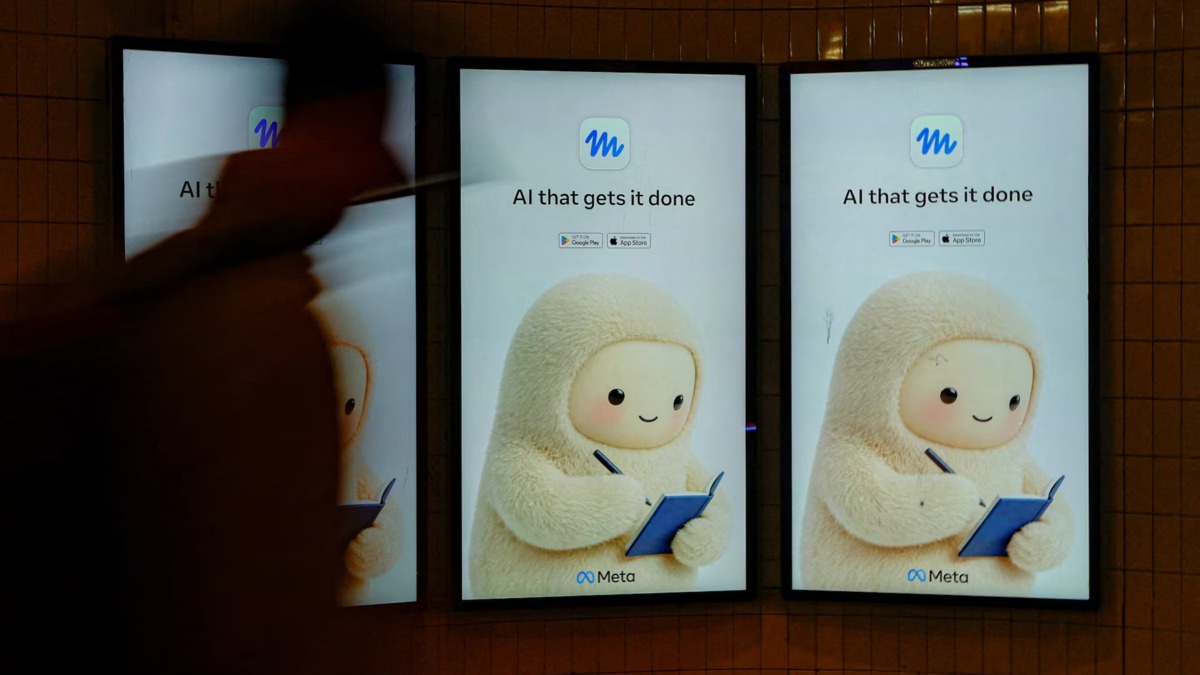
Meta's AI agent Muse officially joins Instagram direct messages, helping users search for products and perform shopping tasks
Retailers have polarized views on AI agents; Walmart adopts a controlled connection while Amazon chooses to ban Muse outright
AI agents are changing the traffic entry points for e-commerce, shifting brand marketing focus from capturing user attention to securing algorithm recommendation weight
The shopping battle of AI agents is heating up, with Meta's AI agent Muse officially launching in Instagram direct messages, allowing users to search for products, plan itineraries, and perform tasks directly on the social platform. Retail giant Walmart is reportedly preparing to open a "controlled channel" for Muse to connect to its e-commerce system, which starkly contrasts with Amazon's complete ban on Muse. However, the initial rollout does not include Hong Kong.
As the "Black Friday" shopping season approaches, AI agents are moving from merely providing information to being further involved in product search, price comparison, and order placement. How retailers manage access permissions for AI agents will become key in this new round of e-commerce competition.
Hong Kong users temporarily unable to use it; 6 countries including the US and Canada are the first to launch
According to reports from foreign media, Instagram users can now directly converse with Muse in their direct message threads to inquire about details for posts, locations, or products they view, and can also request Muse to retrieve missed conversations without switching to the Muse main app. After forwarding an Instagram post to Muse, users can command it to find Black Friday discounts for specific sneakers or add their favorite coffee shop to their travel itinerary, with relevant records also synced to the side panel of the Muse main app.
Meta has also upgraded Instagram's "Collections" feature, allowing Muse to organize saved posts and Reels into custom folders, convert recipe videos into shopping lists, and even provide outfit suggestions based on fashion clips.
In terms of regional availability, the first phase of IG version Muse is only launched for users in the United States, Canada, Mexico, Japan, Singapore, and the United Kingdom, with the content organization feature first going live in the US and Canada, while Hong Kong is currently unable to access it.
Meta emphasizes that users still have complete control over operational permissions and will not send or publish any content without consent and can request Muse to "forget" information or revoke commands at any time. The UK's Information Commissioner's Office (ICO) states that Meta has committed to participating in a voluntary oversight mechanism; the UK's Competition and Markets Authority (CMA) also claimed that after negotiations, the program's terms have become fairer. However, Reuters disclosed that Meta's internal testing had privacy vulnerabilities, including sending random bank account balance messages to employees, to which Meta responded that the relevant errors were fixed before the public launch.
Walmart opens limited permissions, reshaping the e-commerce advertising ecosystem
Retailers' attitudes toward AI agents are vastly different. According to a review of Walmart's updated technical documents by Digiday, Walmart is preparing to launch an interface connecting to Muse, allowing the AI agent to access the e-commerce system within set permissions.
This interface is built using a "Model Context Protocol" (MCP) that focuses on limiting the AI agent's access to complete consumer shopping records; for example, the system will only provide Muse with the user's preferred milk brand rather than handing over all consumption data. Through this mechanism, Muse can help users search for products, answer inquiries, and create shopping carts, and can even call Walmart's own shopping assistant Sparky for price comparisons and complete transactions with authorization.
To ensure transaction safety, Walmart has introduced "Agent Profiles" to distinguish between human and machine purchasing records; consumers can set each transaction to require individual approval or customize approval limits for transactions of $50, $100, and $200, and can disable permissions at any time.
In contrast, Amazon had already blocked Muse's access to its website as early as September this year and requested Meta to remove Amazon from the Muse shopping experience. At that time, Amazon questioned Muse's unauthorized access to customer accounts as potentially involving the capture of user credentials; Meta countered that Muse cannot view passwords or payment information.
Abhishek Bora, the digital growth director at digital marketing firm All Star Elite, pointed out that when consumers delegate shopping decisions to AI agents, the traditional sponsorship advertising model in retail will be impacted. Brands will no longer compete for ad placements but will focus on how to be included in the AI agent's "consideration list"; if new brands lack reviews and purchase records, they will be harder for AI algorithms to discover and recommend.
Neither Walmart nor Meta responded to Digiday's requests for comments on the aforementioned cooperation and connection arrangements.
Analysis: E-commerce traffic entry is rewritten; brand marketing shifts from "capturing attention" to "capturing algorithms"
In the past, competition in the e-commerce market revolved around the "transaction closed loop" formed by the search box, social content, and shopping cart, with platforms controlling entry points to dictate supply-demand matching and commissions. As AI agents intervene in cross-platform price comparisons and order placements, the consumer decision chain is further dismantled, and the focus of the games between retailers and platforms shifts from merely fighting for front-end traffic to controlling data access permissions, identity verification, and transaction authorization mechanisms. The market is gradually forming a diverse landscape involving "blocking defenses," "controlled connections," and "in-house agents countering," where standardized connection protocols and responsibility definitions will become key infrastructure.
Additionally, traditional digital and retail advertising heavily relies on bid placement, visual creativity, and keyword exposure, focusing on persuading humans to click and impulse buy; as AI agents take on preliminary screening and price comparison functions, some products may be filtered or sorted by algorithms before "humans see them." For the entire marketing ecosystem, advertising budgets and optimization focus will inevitably adjust. Beyond traditional brands and performance advertising, the structural degree of product data, real-time inventory and price accuracy, transparent return policies, and cross-platform real reviews and historical transaction performance will directly influence the recommendation weight of AI agents.
With the trend of AI agents dominating recommendations, mature brands and large retail systems with scalability, rich data, and stable performance capabilities will have an advantage in algorithmic screening. In contrast, emerging or small-to-medium brands, lacking historical data and accumulated reputation, may find it increasingly difficult to reach consumers initially.
This article is reprinted from the Hong Kong Economic Daily, with copyright belonging to the original author and original media.
免责声明:本文章仅代表作者个人观点,不代表本平台的立场和观点。本文章仅供信息分享,不构成对任何人的任何投资建议。用户与作者之间的任何争议,与本平台无关。如网页中刊载的文章或图片涉及侵权,请提供相关的权利证明和身份证明发送邮件到[email protected],本平台相关工作人员将会进行核查。