Text|Li Zhaofeng Wen Lihong
Editor|Zhang Yuxin
In January this year, at the AGI-Next summit held in Beijing, Chief Scientist of Zhipu, Tang Jie, reminded the developers in the audience: American companies still hold undisclosed models, and the gap between Chinese and American large models “might not have narrowed”.
At the same conference, when discussing the possibility of Chinese companies leading globally in three to five years, Lin Junyang, then head of Alibaba's Qwen large model, said, “I think it’s about 20%, which is already quite optimistic.” Remote participant Yao Shunyu was relatively optimistic, believing that “the probability is quite high.”
By summer, a batch of outstanding domestic large models was released intensively, and the industry became clearly more optimistic about the “gap between Chinese and American models.” For example, after the launch of Kimi K3 on the dark side of the moon, American AI researcher Nathan Lambert immediately judged that the performance gap between Chinese and American models had narrowed from six to nine months down to three to five months.
However, the changes came very suddenly.
First, in September, Anthropic and OpenAI strengthened “anti-distillation” measures. Anthropic restricted some new API accounts from modifying Claude’s conversation records to prevent users from extracting the model's complete reasoning process. OpenAI banned or restricted accounts involved in bulk extraction of reasoning content and tightened registration reviews to prevent the same team from changing accounts to continue collecting training data.
Subsequently, the continuous rise in prices of high-end computing power led to increased costs and difficulties for model factories in acquiring computing power. This month, “Intelligent Emergence” reported that NVIDIA's high-end chips are undergoing a submerged business in the domestic market: the price of a certain model eight-card B300 server from NVIDIA in China has already exceeded 20 million yuan, five times that of the beginning of the year, and even with the high price, stable sources cannot be found.
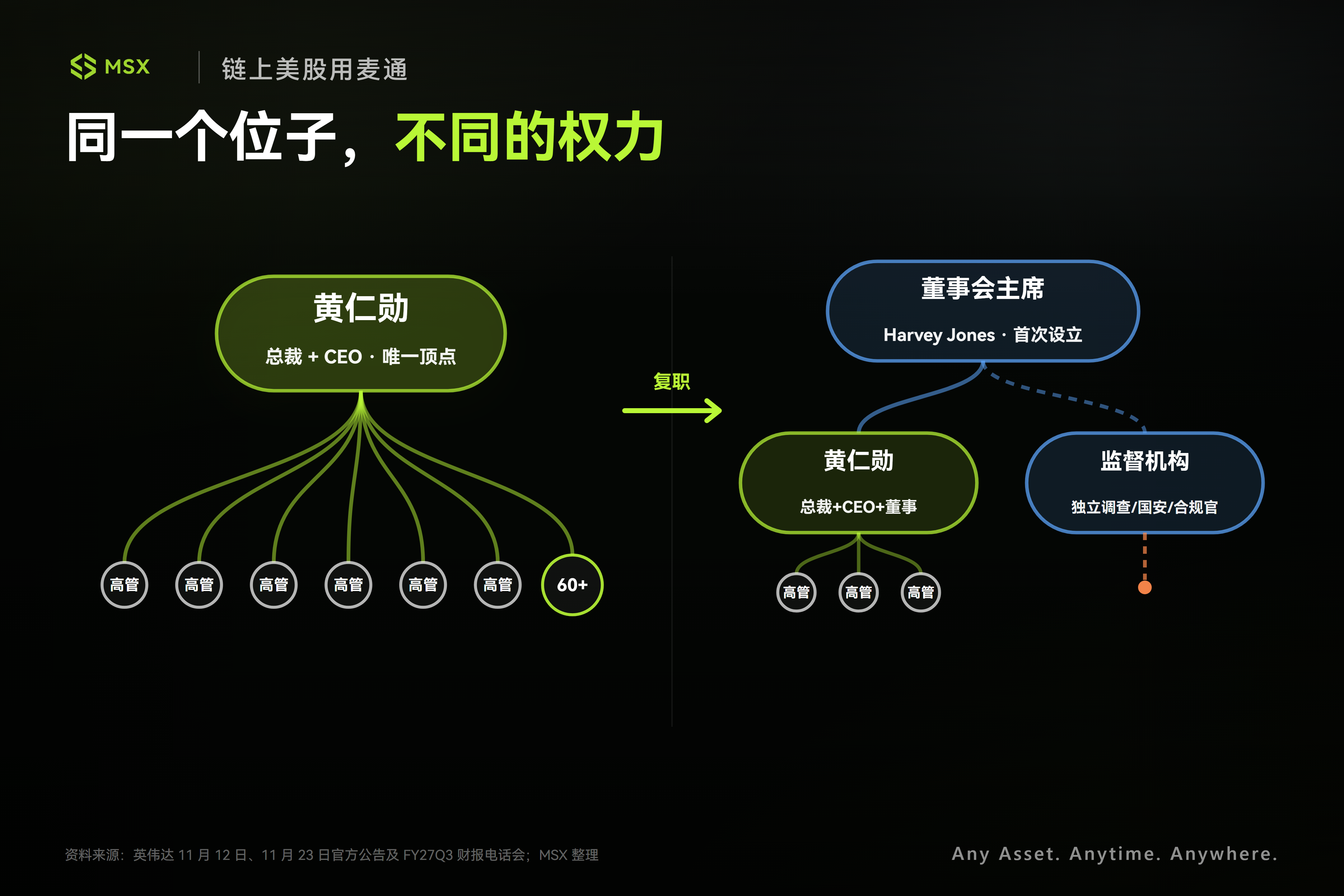
Afterwards, Huang Renxun's resignation again pushed the issue of high-end computing power shortages in domestic model companies to a climax.
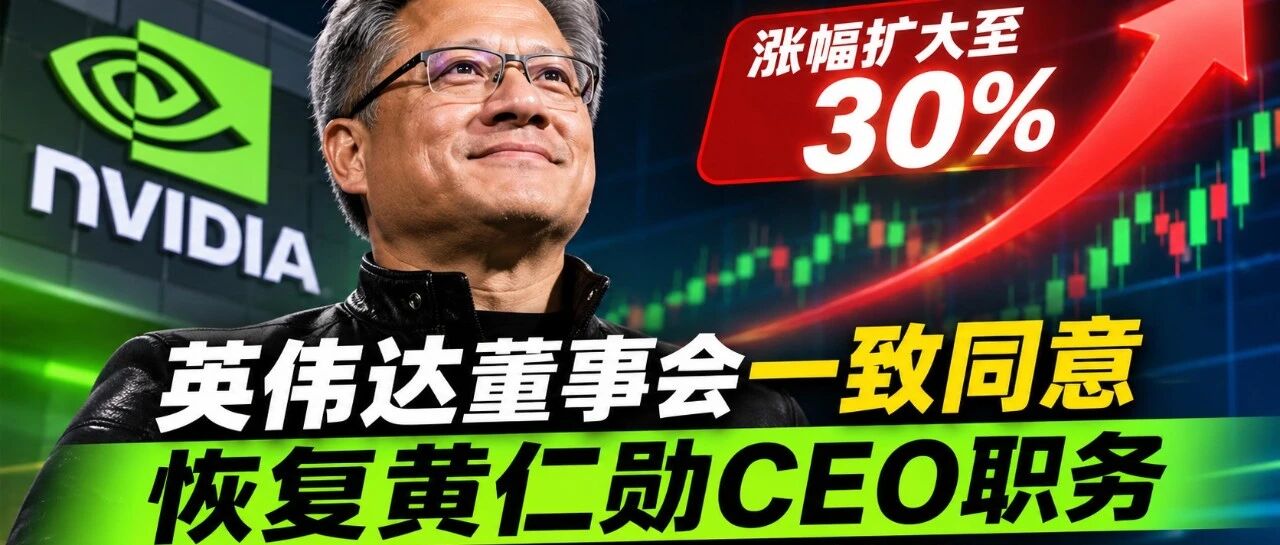
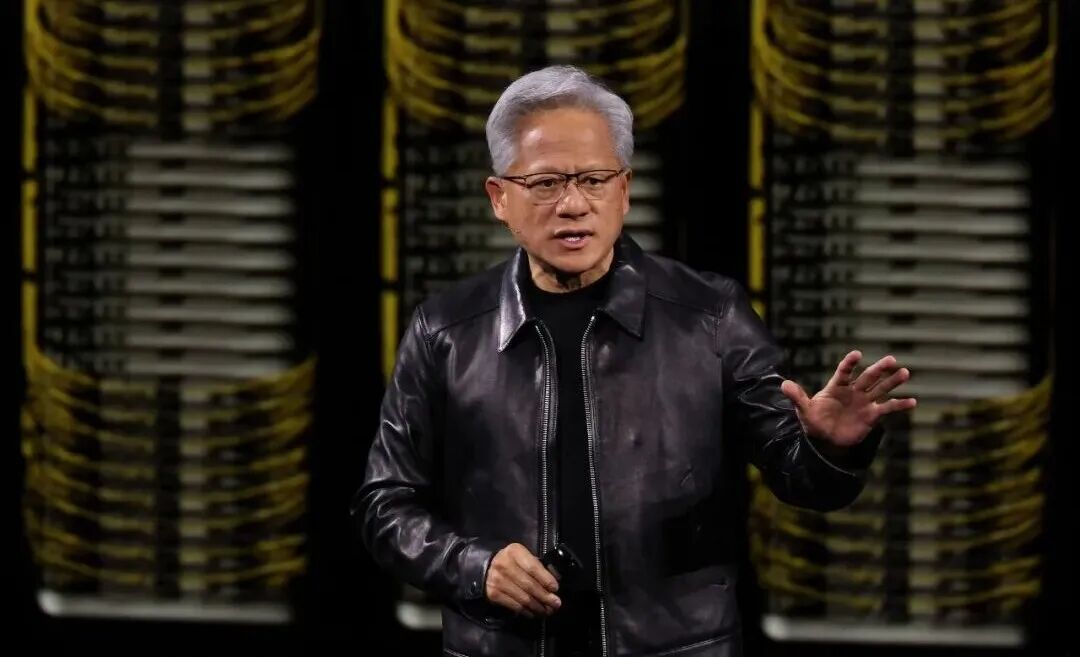
On November 12, NVIDIA announced Huang Renxun’s resignation as CEO. Although just 11 days later, on November 23, the NVIDIA board unanimously decided to restore Huang Renxun's positions as president, CEO, and director,will high-end chips, with Huang Renxun's return, once again fall within the reach of Chinese model companies? The situation may not be that optimistic.
Last week, new regulations on the export of advanced chips targeting some overseas data centers came into effect in the United States, involving providing large-scale computing power to Chinese companies remotely. And Huang Renxun's return is unlikely to change this policy outcome.
For domesticmodelfactories,whether they can have enough computing power to support the next roundof foundational model training is a significant variable that emerged in the originally sequential iteration process.
Now, nearly a year has passed since the discussions at the AGI-Next summit earlier this year; do the initial judgments still hold? With Huang Renxun's return, can domestic model factories expect a more stable supply of high-end computing power? What methods can maintain the training speed and quality of domestic model factories? If catching up with the cutting-edge models becomes difficult, what alternatives are available?
“Intelligent Emergence” recently spoke with several researchers from major domestic companies and leading model factories, AI data practitioners, and primary market investors, trying to find answers from the real issues and feelings in their work.

Shortage of high-end cards, how to train the next generation of models?
We learned that for leading large companies, the previously reserved high-end computing resources are still relatively sufficient to handle the current model iterations. However, not all foundational model teams are living relatively comfortably; those without their own cloud resources face significant computing shortages.
From the end of this year to early next year, domestic large companies and leading model factories will successively launch the next generation of foundational models. After experiencing Huang Renxun's resignation and return, as well as the latest policies on U.S. exports of computing power to China coming into effect, the current situation of computing power supply will affect each company’s planning to varying degrees.
However, even though Huang Renxun is back in charge of NVIDIA, he still has to face a closed-door inquiry from the U.S. Congress on December 1.Domestic teams preparing for the next round of training should not overly rely on his return to quickly ease U.S. chip export restrictions; that may still be premature.
Q1|Do you have enough cards on hand? If it becomes more difficult to acquire high-end computing power in the future, how will foundational model teams be affected?
Large company researcher A: “My real feeling is that GPUs have always been insufficient—I always want to run more experiments, but there aren’t enough cards.” When discussing the number of callable cards,he mentionedthat at peak, he had over a thousand cards, but forlarge-scale experiments, he estimates: “Even if the number of cards increases tenfold, it still might not be enough.”
Leading model factoryresearcher: “Sometimes, just coordinating one or two servers for an experiment can take half a day to secure resources.”Compared to some large companies with sufficient computing reserves, the computing power of the independent model company he works for is clearly tighter.
“If we had ten times the cards, there would be ten times the room for trial and error.” When discussing the training of the next round of models, he said, “Concentrating all the computing power to train one model, I believe it can also be done. But if this round fails, the research and development progress will have to be pushed back, making it difficult to run concurrently.”
Large company researcher B: “Currently, it is sufficient, but not to the extent where we can do RSI (Recursive Self-Improvement).” He also indicated that researchers allocate computing power based on the actual tasks, and not all scenarios require high-end computing power. “For some verification tasks, using B-series cards may only occupy forty percent of utilization, so for some tasks I would actively use H20, as wasting the entire team’s B cards doesn’t make much sense.”
Large company researcher C: “I have a few hundred cards available for daily use. Some tasks definitely need to queue, but the entire foundational model group has enough.” However, he also noted, “Recently, the available number of B-series cards I have has decreased.”
Investor: “For model startups, buying high-end cards is too expensive; in most cases, it’s about renting cards. But with high-end card exports restricted, rental prices will also further increase.” According to his judgment, if the startup’s funds cannot keep pace with the rise in rental prices, the team will either rent fewer GPUs or shorten the rental period, and in either case, the total computing power available for training will decrease.
“For startup companies that require a certain number of model parameters and innovations in technical architecture, it becomes challenging to meet the originally planned stage objectives, and it’s hard to meet investors’ expectations.” The advice he gives to such teams is: “Prioritize finding computing power and cards above team building and fundraising.”He is also concerned that large companies will revert to domestic procurement: “Whenbig companiestruly find the overseas route completely unworkable, they will just sweep up all the cards available domestically.”
AIdata practitioners: “Doing reinforcement learning is particularly cost-intensive in terms of cards; an agent might take an hour or even longer to complete a task, with long-range tasks potentially taking five or ten hours. Because of the long duration, the required number of cards is large, so under the current shortage of cards, we just do fine-tuning for these tasks and don’t do reinforcement learning.” Data practitioners see the limitations in computing power when trying to enhance the model’s agent capabilities.
Q2|With so many cards, should we continue to scale up the next generation of models?
Large company researcher A: “If the current computing resources cannot create ultra-large parameter models, the development of models doesn’t stop there.Parameters are just one dimension ofintelligence,not all models need to solve the Riemann hypothesis.”
He is optimistic about“reducing inference costs” as a direction: “The kernels (small programs that execute calculations on GPUs) written by machines now gradually outperform those written by humans.” In his view, there’s still room for optimizing these programs. With less computing power used for each response, the same budget can allow more people to access the models.
Leading model factory researcher: “For daily scenarios, small scale is sufficient; the current models can resolve issues in most situations.” He gave an example with products servicing a large number of users: In situations with a high user count, excessively large model parameters can actually make costs uncontrollable, so smaller models need to be implemented. “Meanwhile, another group is aiming to push further towards higher performance.”
Large company researcher B: “How to maximize the potential of a model? If we can clarify this under fixed parameters, then after increasing the scale of the model, the upper limit will also be slightly higher.”He believes that even without scaling up model parameters, there remains room for improvement in model capabilities.
AI data practitioners: “There’s no need for so many companies in China to each create their foundational models. Concentrating resources into two or three may be better. Recently, domestic foundational model companies fell into stock competition, which wastes cards a bit.”
Large company researcher C: “Models aren’t necessarily better just by being larger.” In his view, the R&D team must consider how many users these cards will serve in the future when deciding how large the next generation of models should be. “When actually providing services to users, it’s essential to look at the entire system's capacity to handle requests and the speed at which each user gets responses. It’s not simply about the maximum number of requests, as users shouldn’t have to wait too long.”
Q3|What tasks can be assigned to domestic cards? How long until we can use them to train large models?
*CUDA is a set of software tools provided by NVIDIA,which many teams use to write training programs,allowing NVIDIAGPUs to carry out calculations.If replaced with domestic cards, these programs cannot run directly; some computational steps can be completed with existing software tools of domestic cards, while others need to be rewritten by engineers.When thousands of cards train together, the stable exchange of computational results becomes a critical factor.
Currently, in terms of inference, Huawei Ascend has adapted DeepSeek and other domestic models, which can be used to handle user requests. There are also instances on the training side; Meituan started with a thousand domestic cards and spent three years solving software adaptation, communication, and stability issues, releasing LongCat-2.0 in June this year—a large model trained with fifty thousand domestic GPUs.
Although some companies have completed large-scale training with domestic GPUs, the training tasks in the hands of researchers at leading model companies still predominantly use NVIDIA GPUs. In the future, whether overseas high-end cards can reliably fill the gap remains uncertain; deciding whether to switch to domestic cards for training the next generation of models will become an important consideration for these companies.
Large company researcher A: “Switching to domestic cards for training is only a matter of time; it’s just that the current motivation for doing so isn’t strong enough.” According to what he knows, his team has not yet used domestic cards for post-training. “At this moment, switching to domestic cards for training means incurring time and cost losses in the short term, as a lot of Infra layer adaptation work is required for domestic cards.” However, if they expect to continue working on large models while running more tasks in the future, he believes exploring domestic GPUs may be the next step.
Large company researcher C: “Training requirements for computing power depend on how large the model is.If the parameters are to be scaled into trillions or even larger, it will indeed become quite difficult if we don’t have access to the next generation of NVIDIA cards.”
But on the inference side, domestic cards can already share most of the workload: handling prefill and generating responses can be carried out separately by two types of cards. “NVIDIA cards are powerful enough for handling prefill; domestic cards might still lag in computing power, but if the bandwidth is sufficient, they can manage the decoding.”
“Some companies have already established training pathways with domestic cards.” Discussing training, he affirmed Meituan’s success in using domestic cards to train models. In his view, the reason domestic cards have come this far is primarily due to the model teams’ significant adaptation efforts: “On NVIDIA's high-end cards, everyone has optimized the Infra layer fairly well, but there is still considerable exploration space for domestic cards.” He believes thatif high-end cards become harder to obtain, and more Infra engineers turn to domestic cards, it could actually accelerate the ecological adaptation of domesticchips and model training.
Leading model factory researcher: “Adapting to domestic cards requires time. You may have to wait three to six months. Even if it becomes available, three to six months may be an unbearable wait for model companies.”
Large company researcher B: “As soon as one team uses domestic cards to train a large parameter model, subsequent teams will find it easier to do so. For example, once Meituan achieves this, others will want to poach their talent, especially in Infra.”

How much of the model gap lies in data?
Whether the supply of high-end computing power to domestic model factories will thaw remains unknown, and besides computing power, there is another challenge in training the next generation of models: where to obtain high-quality professional data?
Since the beginning of this year, dozens of large model data startups have emerged in China, providing training data and evaluation services for model factories, particularly training data related to programming and various tool usages, such as Intelligent Knowledge, UniPat, and Copula Lab.
Large companies are also directly seeking experts to establish data supply chains. ByteDance’s Doubao is recruiting question setters from universities, Tencent’s “Hunyuan Think Tank” is recruiting competition coaches, lawyers, and designers, while Alibaba’s “Cognitive Origin Plan” targets fields like medicine, advanced manufacturing, and financial compliance.
Compared to generating their own data, there is a faster route: training one model using answers given by a strong model, a practice known as distillation. However,with the new anti-distillation measures implemented by foreign cutting-edge models, Anthropic stated in October that the data volume obtained from Claude by unauthorized distillers has decreased by about 90% to 99%.
For teams aiming to catch up,the ability to access high-quality data has become more crucial than ever.
Currently, compared to the U.S., the large model data market in China is still in its early stages: according to estimates from Suiteng, by 2025, the U.S. large model data market will be approximately $6.2 billion, while China’s will be around $1.6 billion. Many researchers have told us that the budget investment in data by Chinese model factories is several magnitudes lower than that of OpenAI and Anthropic.And the gap in the scale of invested capital may be the most direct reason for the differences in data quality between Chinese and American models.
Q4|Is distillation the best method to acquire data?
AI data practitioners: “Distillation is at least currently the fastest, most efficient, and cheapest way to obtain data. I think anti-distillation significantly impacts the model, even more than the impact of cards. Growing distillation costs will slow down the progress of later entrants.”
Large company researcher A: “Distillation is to first address the problem of ‘whether there is data’, then the question of ‘how good it is’.” However, he believes distillation is not a long-term solution, as the cost is utilizing research funding to buy answers from competitors, “We spend a lot of money, and some of this money goes directly to our competitors, effectively paying them to create bullets.”
“There will definitely be an end to distillation someday. When that day comes, we may find that we have previously spent too much time and money on such endeavors, causing many phases of our research and development to lag behind.”
Large company researcher B: “They initially intended to gather data themselves, but later found that the quality of their own collected data was inferior to that obtained through distillation.” He refers to an experience shared by a colleague regarding data collection.
Once distillation is restricted, teams will have to “make up for all the homework they missed.” Even if they can still distill, the costs have changed. This researcher provided an example: “Previously, we could get effective data in one distillation; now, it may take ten attempts to achieve the same. Afterwards, we still need to filter and clean them using the appropriate techniques. As costs rise, the entire process time also increases.”
Q5|What difficulties does the model team face in creating professional data themselves?
Leading model factory researcher: “I believe a part of it is a lack of funds, and another part is a lack of mature mechanisms.” In his opinion, to create professional training data, experts need to be compensated adequately, and someone must organize the tasks.
“Even if the model company has resources from universities, it doesn’t necessarily mean they can utilize that resource effectively.” He gives an example: “For instance, if we need one thousand samples of biological data, and you tell a biology expert, ‘I want one thousand pieces of high-quality biological data’, that’s a meaningless directive for them. Experts need to know what kind of data the model team considers sufficient, and this collaboration and evaluation process requires substantial manpower and applicable resources.”
AI data practitioners: “There is a particular shortage of expert data in China, including professional questions and data that includes solution processes.” He believes the knowledge accumulated across various industries in China has not yet been adequately transformed into training data available for models, and the fact that quality data doesn’t fetch much in terms of price is one reason: “In the U.S., one piece of quality data costs significantly more than in China, allowing the data industry to evolve much more thoroughly.”
Regarding the data he had been approached to sell to model factories, he identified several main types: “Data for software operations, 3D modeling, as well as data for research in physics, chemistry, geophysics, earth sciences, atmosphere, and astronomy; another notably essential category is data that educates large models on how to operate computers.”
Q6|How does the training data in China compare to that overseas?
Large company researcher B: “Overseas teams invest more in data and started earlier. For instance, Scale AI began their work much earlier than many domestic data vendors; they’ve accumulated more expertise and can mobilize more personnel for data gathering, enhancing their efficiency.”
AI data practitioners: “Some foreign model teams already involve renowned scholars who can bring their domain-specific expertise and resources into play.” Reports indicate that OpenAI revealed in January this year that UCLA math professor Ernest Ryu has joined its synthetic data team, focusing on enhancing models' mathematical capabilities. In contrast, “domestic model teams still have insufficient and shallow cooperation with other industries, particularly in transforming the experts' problem-solving processes into training data, which is an area where we are still lacking.”

More concerning than the performance of domestic models might be the overall bubble in the industry.
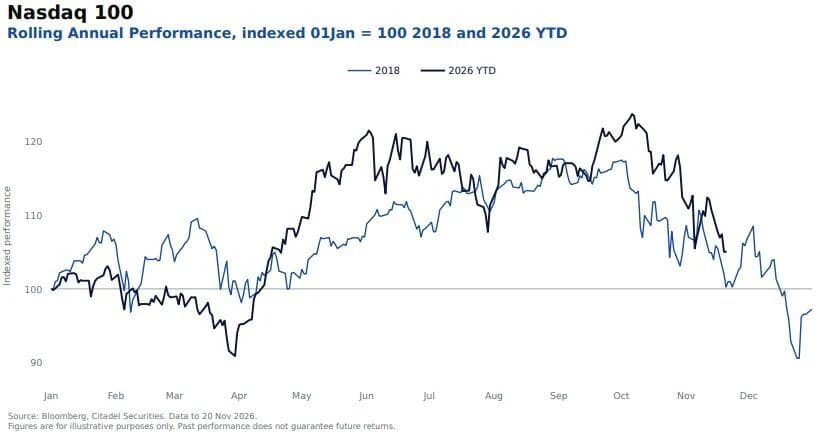
After the announcement of Huang Renxun's return, NVIDIA's stock price rose about 26% compared to the previous trading day’s closing.However, even with the benefits brought by this king’s return, NVIDIA's market value remains over 30% below its peak value.
Earlier this month, Michael Burry, the investor who shorted the U.S. subprime mortgage market, posted on X, questioning the practices of companies like Oracle and Meta extending their server depreciation periods. In his view, while AI chips are replaced every two to three years, companies are spreading out procurement costs over a longer time, which could lead to lower depreciation expenses reflected in financial reports, thereby inflating apparent profits.
Burry's critique reflects broader concerns regarding an AI bubble in the industry. For manufacturers training models, marginal returns are also decreasing—each new route attempted requires vast amounts of computing power, and the performance improvements gained may be diminishing. How much return can science and technology companies expect from the costly computing power they’ve purchased?
Q7|Can companies that sell models and those that develop applications ultimately make a profit?
Investor: “This is a self-fulfilling curse. Without sufficient computing power to scale down costs, token and API costs rise, resulting in reduced usage, which leads to a drop in demand.” When discussing which applications are sensitive to unit token prices, he gave two examples: “For instance, short dramas or text-to-image productions, where potentially up to sixty or seventy percent of costs are tied up in the model.”
In the start-up companies he engages with, the same amount of usage is treated as two separate accounts—financing and operations. “Companies need to inform investors that each user’s token consumption is increasing to improve their valuation.” However, once they rely on products for profit, he adds, “If the cost of each token can’t decrease, it will be difficult for the product’s business model to work.”
Large company researcher B: “Several domestic models hover around similar performance levels, excelling for a few months each. When model capabilities are comparable, it inevitably leads to pricing wars that lower profits across the entire industry.” He worries that this could negatively affect R&D: “Both profits and investment may be impacted, ultimately leading to a vicious cycle.”
Large company researcher A: “Once the market stabilizes, everyone will become increasingly sensitive to the costs of using models, and price wars at the model level will persist. For example, for the same usage, superior models might go for two dollars while slightly faster ones might be at one dollar and fifty cents; significant cost differences still exist. The industry is still in its early stages, and everyone may not fuss over these minor price variations yet. Once the market settles, even a few cents difference will make people as sensitive to these figures as they are to electricity or fuel prices.” Thus in the long run, price wars will continue, and the profit margins on models will remain slim.
Q8|If the bubble bursts, will the strongest model companies necessarily survive?
Large company researcher A: “If we follow this logic, then the best-performing car brands should be Ferrari and Alfa Romeo.” He believes the technically leading companies do not necessarily survive to the end; rather, those who can provide good products that allow more users to utilize the model and generate revenue or profits are crucial.
In his understanding, acquiring users for the models is very challenging and relies on corresponding AI products entering more user scenarios, which is key to unlocking commercialization. Discussing Artificial General Intelligence (AGI), he interprets the concept of G through “generalization”: “Models don’t necessarily need to encapsulate every piece of human knowledge but should be accessible to everyone.”
Investor: “In the past year or two, many investors believed that certain verticals would have dedicated models whose performance would surpass that of general models. However, now that general models can perform exceptionally well in fields like animation and computer-aided design, pursuing intelligence in specialized sectors seems meaningless.”
Regarding directions still worthy of investment, he stated: “I personally lean towards innovations in saving computing power and enhancements at the infrastructure level.”
Large company researcher B: “After the bubble bursts, while there may be a reduction in investment towards the top-tier models, the models that have been trained won’t be wasted. Certainly, there will still be a number of companies trying to find better applications around these models.” He hopes domestic teams can “find ways to increase profits slightly to allow the industry to turn healthily.” Therefore, removing the bubble might ultimately be beneficial in the long term.
Image source|Visual China
免责声明:本文章仅代表作者个人观点,不代表本平台的立场和观点。本文章仅供信息分享,不构成对任何人的任何投资建议。用户与作者之间的任何争议,与本平台无关。如网页中刊载的文章或图片涉及侵权,请提供相关的权利证明和身份证明发送邮件到[email protected],本平台相关工作人员将会进行核查。