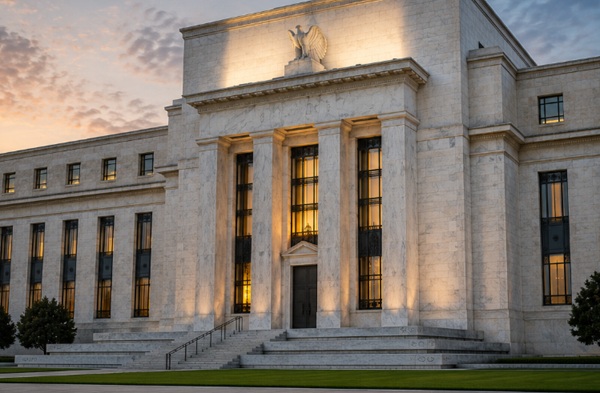
Bowman was appointed by Trump in 2018. According to media reports, she attended a private dinner hosted by Bank of America on June 17 of this year, just hours after a Federal Reserve policy meeting had concluded, at which point officials were still under a silence period prohibiting public comments on economic or monetary policy. The Office of the Inspector General of the Federal Reserve has recently sought to interview Bowman, who denies any wrongdoing.
Written by: Yang Chen, Wall Street Journal
The internal oversight body of the Federal Reserve is investigating Board member Michelle Bowman over her attendance at a private dinner hosted by Bank of America in June, with the core issue being whether she violated the central bank's "silent period" communication restrictions. This is a rare review of a sitting Federal Reserve board member.
According to Bloomberg, citing a knowledgeable source, the dinner took place on June 17 in New York, just hours after the conclusion of a Federal Reserve policy meeting, during which officials were still under a prohibition from making public comments on economic or monetary policy.
The Office of the Inspector General of the Federal Reserve has recently sought to interview Bowman. In response, Bowman denies any wrongdoing and stated in a statement that she has always complied with all applicable regulations and is firmly committed to continuing to do so.
The outcome of this investigation could have direct implications for Bowman. Former Federal Reserve officials and legal experts believe that if the investigation ultimately finds Bowman in violation, the Inspector General may issue a rare public censure, but the possibility of further escalation appears low.
Bowman currently serves as the Vice Chair for Bank Supervision at the Federal Reserve, is one of seven board members, was appointed by President Trump in 2018, and was appointed last year as the head of the Federal Reserve's bank supervision affairs.
Political Pressure: Democratic Senators Call for Inspector General Intervention
This formal investigation is advancing under congressional pressure.
Senator Elizabeth Warren from Massachusetts, the leading Democrat on the Senate Banking Committee, wrote to Inspector General Horowitz in July, requesting that he review whether Bowman's "attendance or statements violate any laws, rules, regulations, policies, or procedures," and explore whether it is necessary to enhance the Federal Reserve's existing framework for such external activities.
Democratic Senators Jack Reed of Rhode Island and Chris Van Hollen of Maryland also co-signed the aforementioned letter.
At the Senate Banking Committee hearing on July 15, Chair Ward stated that Bowman is an "excellent colleague" and expressed respect for the Inspector General's judgment in handling Warren's investigation request. "It's inappropriate to prejudge the facts," he said.
Dinner Background: Over 20 Wall Street Clients Attended the Evening After the Federal Reserve Meeting
The dinner in question was hosted by Hayley Boesky, Executive Vice President of Public Policy and Client Relations at Bank of America, and was an invitation-only event attended by over 20 Bank of America clients from hedge funds and other Wall Street institutions.
This meeting took place on the same day the Federal Reserve's policy meeting was concluded, which was also the first policy meeting chaired by Federal Reserve Chair Ward.
During that meeting, 9 out of 19 attending officials expressed support for an interest rate hike within the year, marking a significant shift from zero support in March.
Previously, Bowman responded to a records request from Bloomberg by publicly releasing a calendar that listed the June 17 event as a "market participants listening session."
Event Scene: Repeated Rules Reminder, Discussion Focused on Bank Supervision
According to another knowledgeable source, Boesky explicitly mentioned the silent period rules prohibiting Bowman from discussing monetary policy while introducing Bowman.
Two Federal Reserve staff members accompanying Bowman also reminded attendees that Bowman could not comment on monetary policy and clarified that her remarks would focus on bank supervision.
During the evening's discussion, Bowman reiterated her consistent questioning stance towards the Federal Reserve's standing repurchase agreement facility, arguing that the tool should set a higher penalty rate to limit the Federal Reserve's level of intervention while maintaining market function. Currently, the New York Fed encourages banks to actively use this tool.
So far, no recordings or written records from the event have leaked.
Rule Interpretation: Private Paid Activity Discussing Monetary Policy is "Inconsistent"
The Federal Reserve's external communication rules encourage policymakers to share personal economic and policy views in public and media-opened settings but explicitly require officials to avoid disclosing unpublished views to anyone who might gain from such information, and to avoid providing a "reputational advantage" to profit-oriented institutions over their competitors, carefully evaluating these principles when considering invitations to non-public activities.
This policy clearly states that private meetings with specific clients of profit-oriented institutions regarding monetary policy fall under "types of contact that are inconsistent with the above principles."
The restrictions during the silent period are even stricter, requiring officials not to express views on the economy or policy in any "meetings or dialogues" with the public.
The silent period begins at midnight on the second Friday before each policy meeting and lasts until midnight on the day following the conclusion of the meeting. This communication policy was adopted by the Federal Open Market Committee in 2011 and reiterated this January, but no specific procedures for handling violations were outlined.
免责声明:本文章仅代表作者个人观点,不代表本平台的立场和观点。本文章仅供信息分享,不构成对任何人的任何投资建议。用户与作者之间的任何争议,与本平台无关。如网页中刊载的文章或图片涉及侵权,请提供相关的权利证明和身份证明发送邮件到[email protected],本平台相关工作人员将会进行核查。