The adjustment in the US stock market in November is transitioning from a situation where "AI stocks have fallen too much" to a more significant revaluation of valuation systems.
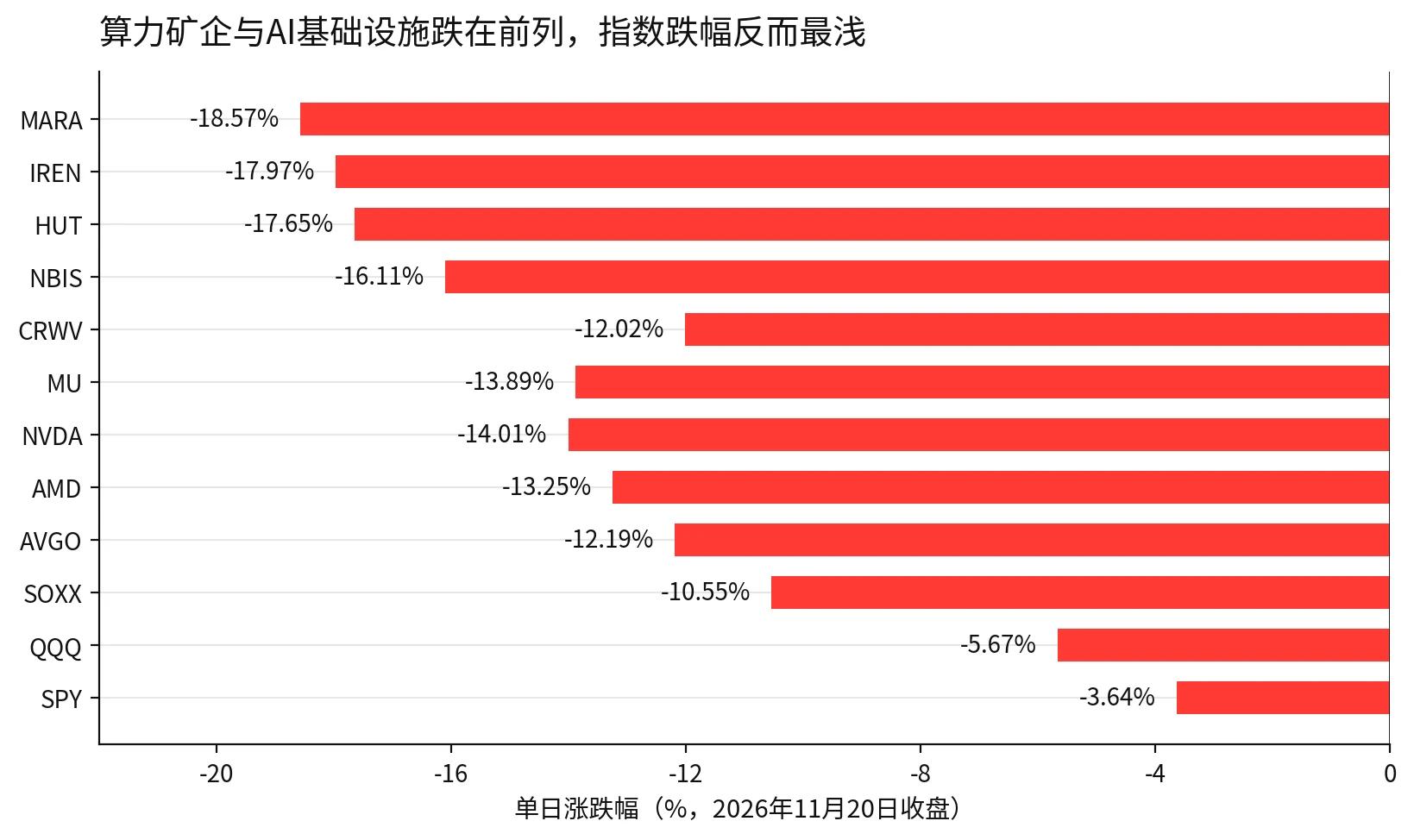
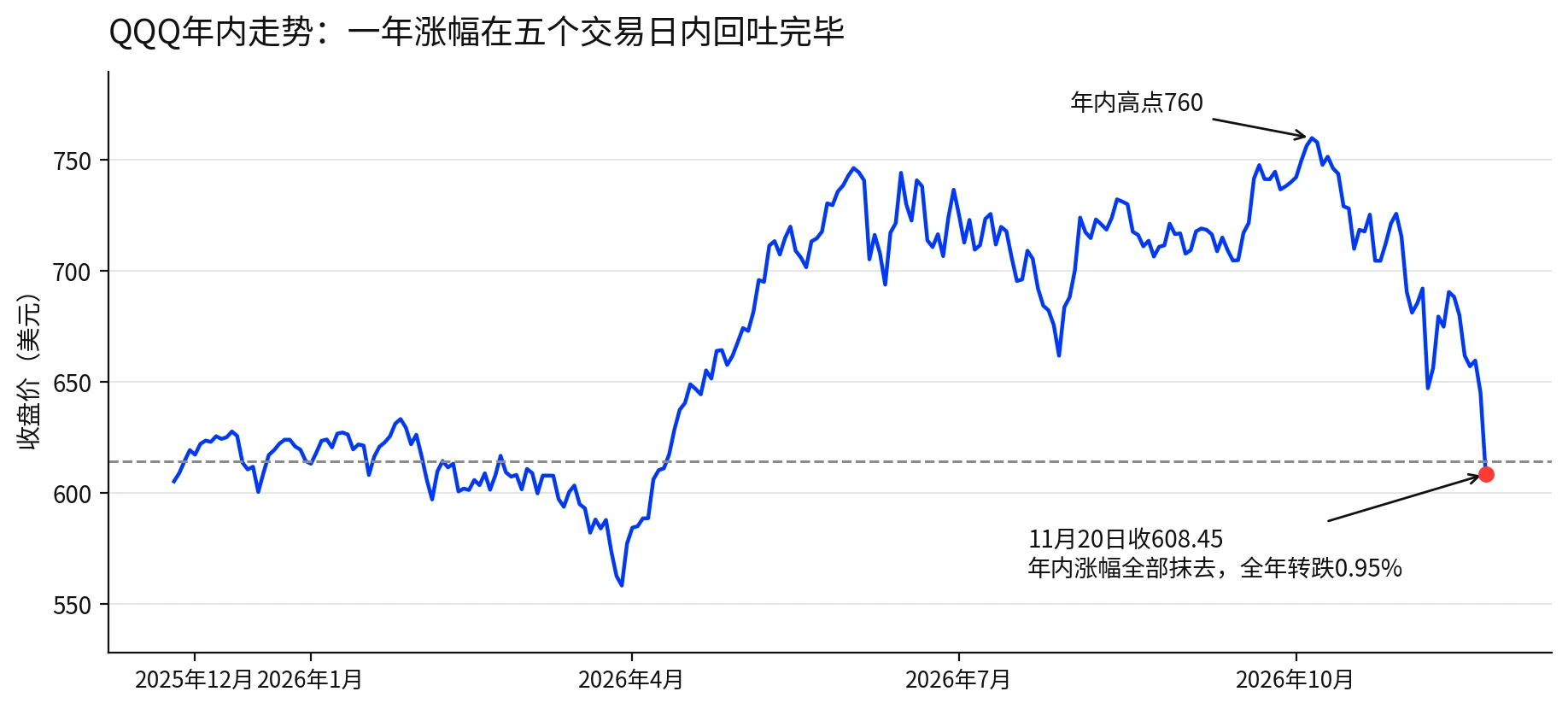
In the past few trading days, the market has traded repeatedly on Nvidia's decline, the AI bubble, and the valuations of tech stocks. This information itself is no longer sufficient to explain the current market situation. The real change is in the relationships between assets. The S&P 500 has entered a correction phase, closing at 6,910.39 points, down 3.70% for the day, a retracement of 11.6% from the peak on October 6. The Nasdaq 100 erased its gains for the year, with QQQ closing at $608.45, down 0.95% for the year. At the same time, the yield on the 10-year US Treasury bond has notably fallen to around 4.93%, but gold and Bitcoin have also declined.
This means that funds are indeed seeking safety, but not generally turning to traditional safe-haven assets; rather, they are reducing overall risk exposure. Reuters' summary of this round of global sell-off also pointed out that the sustainability of AI investments and expectations for further interest rate hikes are suppressing the market simultaneously, while the rise in government bonds and weakness in gold indicate that some investors may be directly increasing their cash holdings.
Therefore, the real question that needs to be answered in this round is no longer "Can Nvidia still rise?" but rather: When interest rates, financing, and regulations start to raise the capital costs for AI, how much valuation is the market willing to assign to AI growth?
1. Market is killing not only stocks, but the financing logic behind AI assets
If we look at last Friday in isolation, it is easy to conclude that "tech stocks plummeted, capital is seeking safety." However, when we look at the recent weeks collectively, the market is in fact reexamining the funding cycle behind the AI boom.
The core logic of the AI industry over the past two years has been: cloud providers increase capital expenditure, GPU manufacturers receive orders, data center companies obtain financing, AI model companies acquire computing power, and model companies then demonstrate demand for computing power through revenue growth. As long as revenue grows fast enough, this chain can continue moving forward.
The problem is that this model is increasingly dependent on financing. Investment in AI infrastructure in the US is expanding rapidly, and some data center companies require substantial debt and asset financing, while large cloud providers and GPU manufacturers participate through equity investment, procurement commitments, guarantees, and other means. On November 16, Federal Reserve Governor Barr discussed AI financial stability risks at a meeting in Milan, providing three sets of figures: by the end of 2026, the on-balance-sheet debt of the seven largest AI companies in the US is expected to exceed $800 billion, and the nominal peak of off-balance-sheet obligations may exceed $3 trillion, including long-term contracts, leases, and residual value guarantees. The cumulative equity investment of large cloud providers and GPU manufacturers in AI labs and cloud computing startups exceeds $100 billion, with some of these funds ultimately flowing back into the GPU and computing power purchases of these companies.
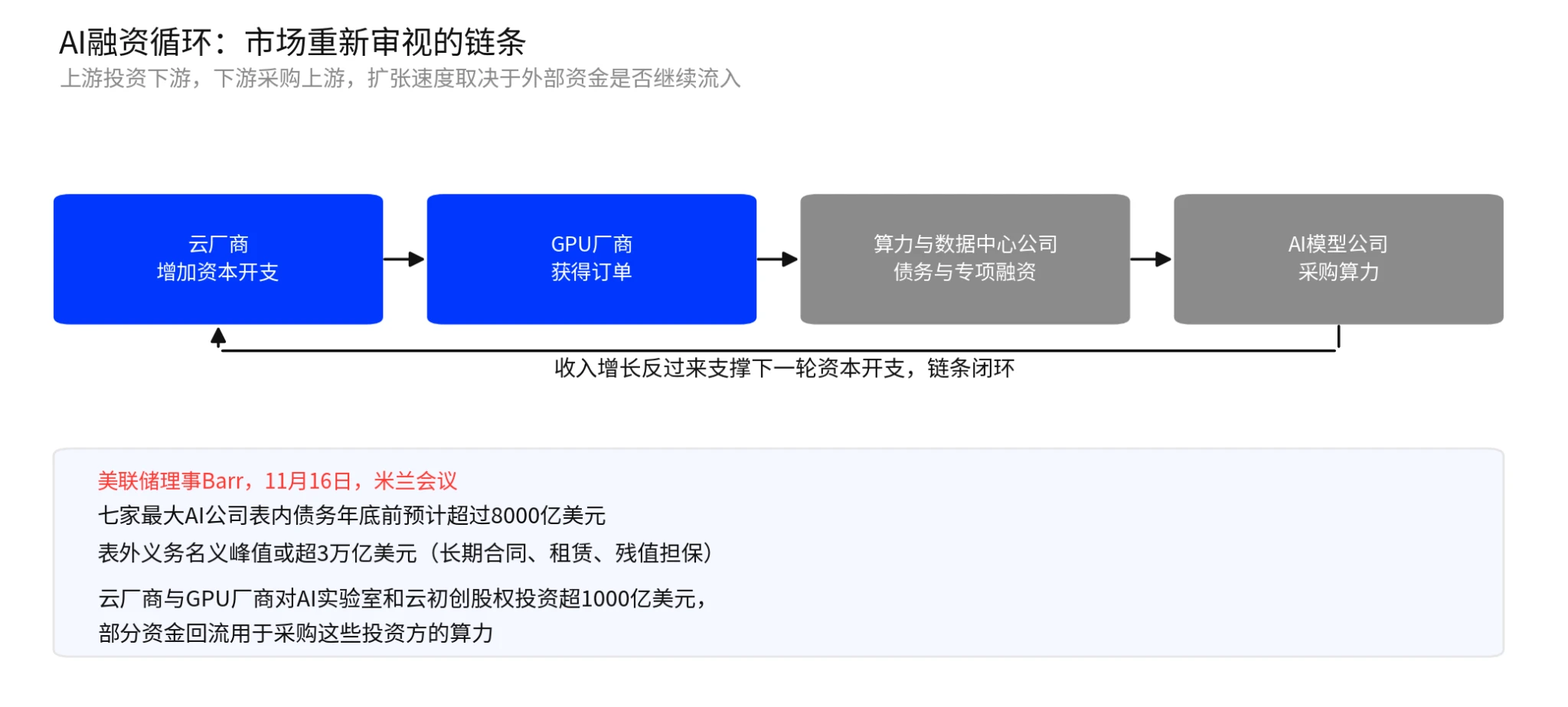
This is the "circular financing" that the market is now starting to focus on. It does not mean that AI demand is false, nor does it mean that related transactions are inherently illegal. The issue is that when both upstream and downstream players in the supply chain become investors, suppliers, customers, and financing supporters, the financial relationships between enterprises become more complex. As long as the capital market continues to be willing to provide funding, this structure can support very rapid expansion. However, if financing conditions tighten, the previously reinforcing capital cycle could conversely amplify deleveraging.
This is also why, during this adjustment, assets closer to the financing end have fallen faster. High-leverage computing companies, data center operators, and some new cloud computing companies are facing not just "slower future revenue growth," but an increase in the discount rate for future revenues, while financing costs are also rising.
However, this concern is currently mainly reflected in the stock market. According to Goldman Sachs, as of November 19, the investment-grade credit spread has only widened by about 5 basis points since October 6, while the high-yield bond credit spread has widened by about 38 basis points, both of which are significantly lower than the changes observed in the fourth quarter of 2018. If credit spreads widen significantly later, it would indicate that financing pressure is transmitting from the stock market to the bond market, which is also a signal worth tracking going forward.
The market is moving from "Can AI generate revenue?" to further questioning: Are these revenues sufficient to cover capital costs? This is the true starting point of this round of valuation revaluation.
2. Repricing of interest rate expectations, AI valuations begin to face another pricing method
AI stocks were able to maintain high valuations in the past primarily because the market was willing to believe that there would be very high profit growth in the coming years while funding costs would not continue to rise.
This combination is now changing. The Federal Reserve's October meeting minutes indicate that almost all officials believe that further rate hikes may be appropriate in the future. The market is already pricing in a high probability of a rate hike on December 9. This means that AI assets are facing not a simple "valuation compression," but rather a re-discounting of future cash flows following an increase in the level of risk-free interest rates.
In the past, the market was willing to pay a high price for AI profits in 2028 and 2029 because investors believed that growth would be fast enough and that the interest rate environment would ultimately be supportive. Now, if the market begins to believe that policy rates will continue to rise, and that even in 2027 we cannot quickly return to a loose environment, then the same forward profits will contribute less to today's valuations.
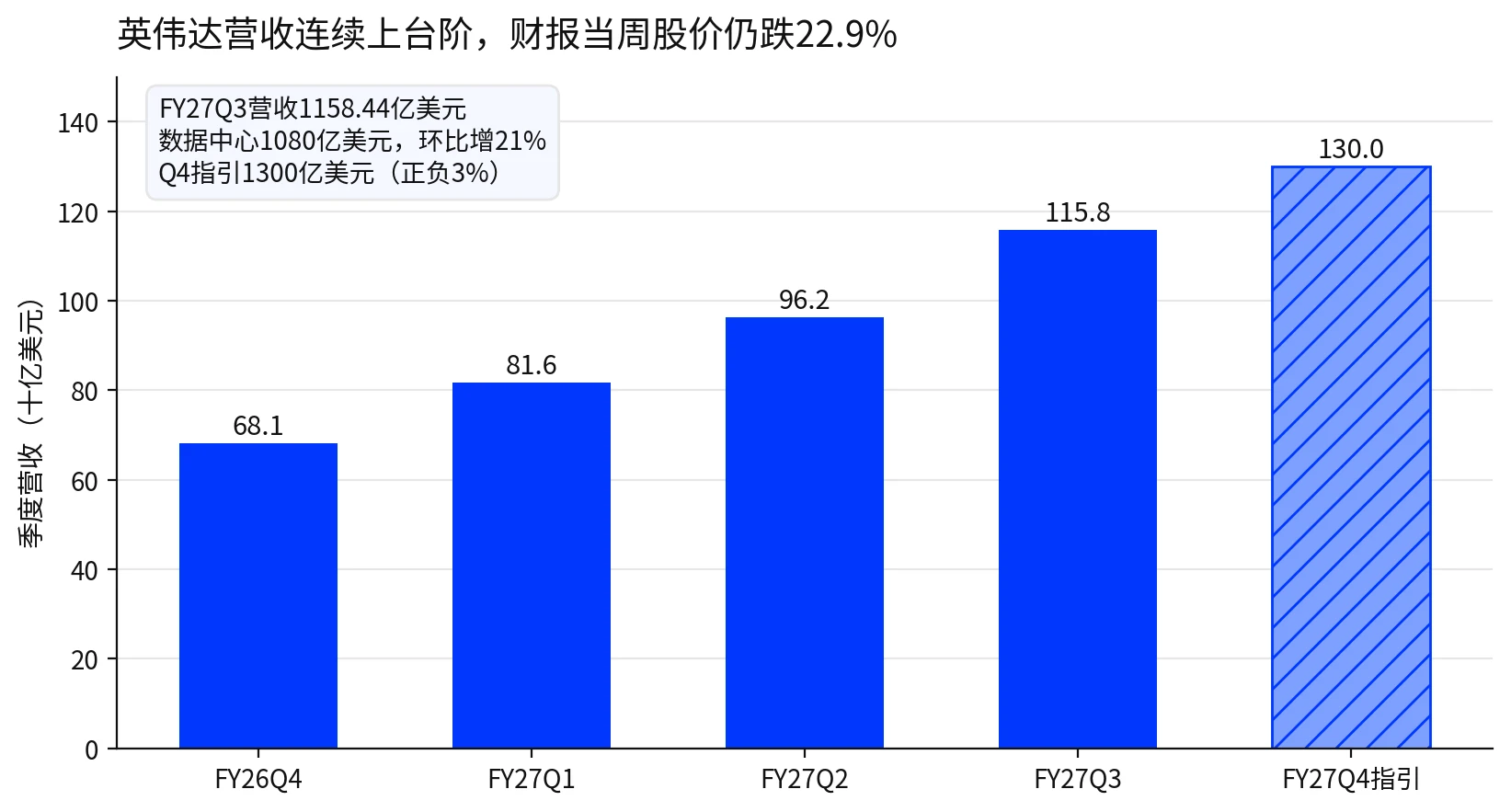
Figure 4 reminds us that this round of revaluation is occurring against a backdrop where the fundamentals have not worsened. Nvidia's latest quarterly revenue was $115.844 billion, with data center revenue of $108 billion, growing 21% quarter-on-quarter, and Q4 guidance of $130 billion (plus or minus 3%). The performance trend has been consistently upward, yet the stock price still fell 22.91% that week.
Therefore, a very important market phenomenon that has recently emerged is: the yield on the 10-year US Treasury bond has fallen, yet AI stocks did not immediately rebound. If tech stocks were merely experiencing valuation adjustments due to interest rates, then the rapid decline in long-end yields should have provided some relief, but the market did not immediately buy back AI assets. This indicates that the current pricing has moved from simple "interest rate trading" to "interest rates plus earnings plus financing" three-factor trading.
In other words, a slight decrease in US Treasury yields is no longer sufficient to automatically rescue overvalued AI stocks. The market needs to see stronger evidence: genuine declines in inflation, a retreat in interest rate expectations, continued strength in AI capital expenditure, no deterioration in corporate cash flows, and no systemic problems in the financing chain.
3. Regulatory risks enter AI valuation for the first time
This may be the biggest difference between this round of market activity and previous AI adjustments. After the midterm elections, the Democratic Party will control Congress in 2027. The market is now beginning to trade in advance a variable that has not been adequately priced previously: Will the expansion of AI infrastructure be subject to stricter regulations and political constraints?
The Democratic Party has already clearly released a series of policy directions, including requiring enhanced testing of advanced AI models, raising corporate accountability, focusing on the electricity costs brought about by data centers, and strengthening oversight of AI firms and data center construction. Reuters previously reported that the Democrats plan to promote a series of AI and data center-related bills in 2027.
However, the market's current focus is not solely on AI models themselves. Data centers require massive amounts of electricity, water, and land; therefore, the larger the AI capital expenditure, the more apparent the costs borne by local communities and consumers. After the US midterm elections, multiple local governments have begun to exert political pressure to limit data center construction and increase disclosure and protection of electricity prices.
More direct changes come from financial regulation. On November 19, a bipartisan team consisting of Democratic Senators Mark Warner, Angela Alsobrooks, and Republican Senators John Kennedy, Mike Rounds introduced the AUDIT AI Act, which calls for public companies to disclose major AI investments, financing arrangements, and related risks more clearly, including special purpose entities and leasing arrangements.
This issue itself is still far from fundamentally changing the AI industry, but it alters the market's risk premium. In the past, investors could view many AI financing relationships as commercial arrangements between enterprises. Now, regulators are starting to require the market to be clear on: Who is financing whom? Who are the customers of these enterprises? Which guarantees are not directly reflected on the balance sheet? If an AI company encounters problems, who will ultimately bear the risk?
For companies with already very high valuations, regulation does not need to truly halt operations to have an impact. As long as the market demands greater transparency, stricter capital constraints, and higher financing costs, the valuation itself will need to be recalculated.
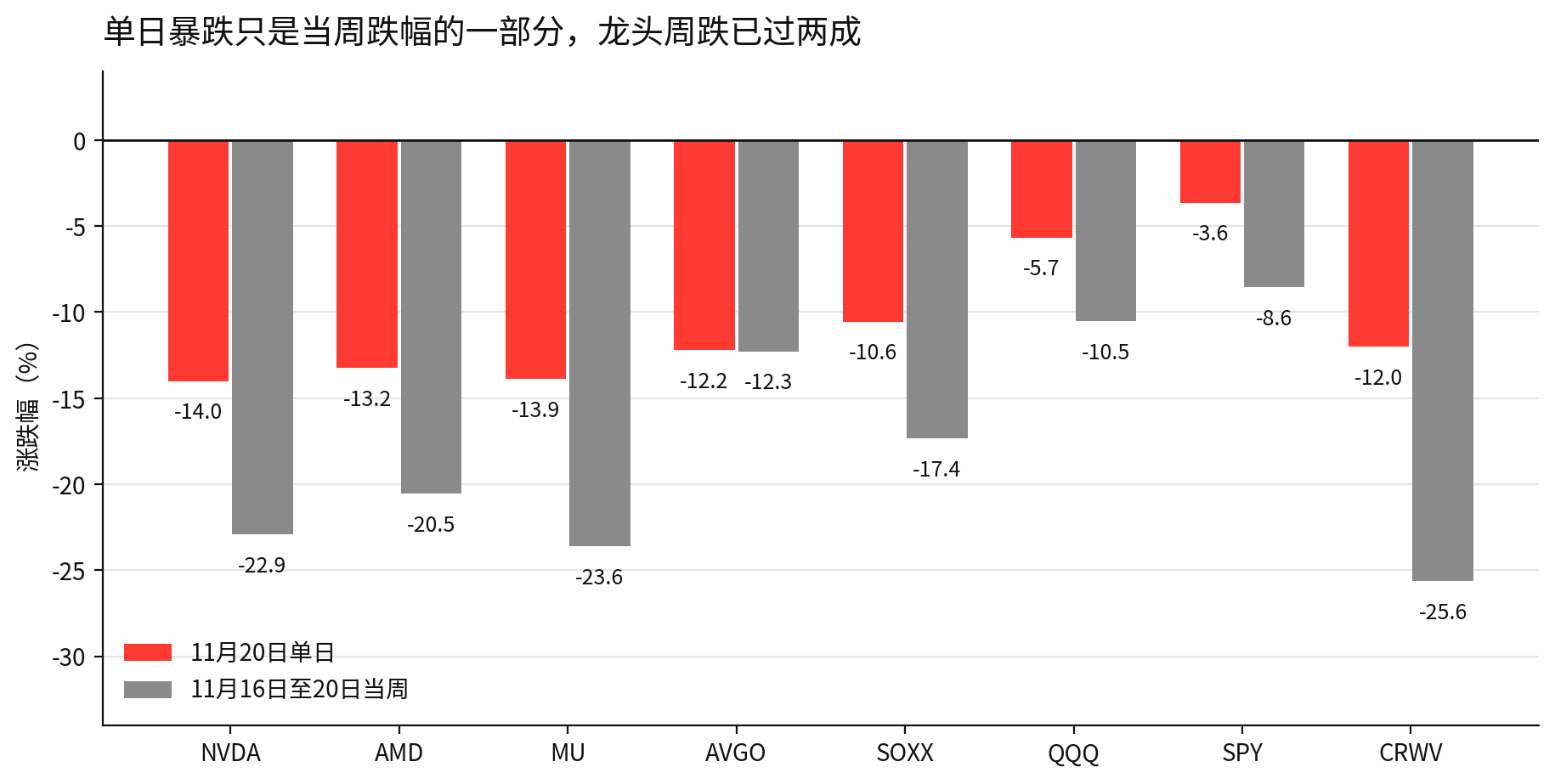
The layering in Figure 5 has gained new meaning in the regulatory context. CoreWeave fell 25.64% that week, an even larger decline than several leading chip companies, indicating that when the market begins to recalculate capital costs and future disclosure obligations, the valuations of companies with high capital expenditures and high leverage will experience significantly greater fluctuations.
4. The simultaneous decline of gold and Bitcoin indicates that the market truly lacks "risk tolerance"
The easiest signal to overlook in this round is not NVDA, but rather gold and Bitcoin. If the market were merely switching from tech stocks to defensive assets, gold should normally have received stronger capital support. If the market were simply moving from stocks to crypto assets, then BTC should also have shown relative resilience.
But the reality is that stocks, gold, and Bitcoin have all experienced declines, while US Treasury yields have notably fallen. Reuters pointed out that amid the global market sell-off, US Treasuries have garnered fund inflows, but gold has shown abnormal weakness. The dollar has risen to a 19-month high, further reinforcing the attractiveness of cash and US dollar assets.
According to Goldman Sachs, as of November 19, gold has fallen 10.8% from recent highs, and the yen has weakened about 1% against the dollar; whereas during the same adjustment period in the fourth quarter of 2018, gold rose 5%, and the yen appreciated by 2.1%.
This combination is more noteworthy than a simple "tech stocks plummeting." It suggests that the current core demand in the market may not be about finding a new high-yield asset, but rather about first lowering risk and then waiting for a new price system to form.
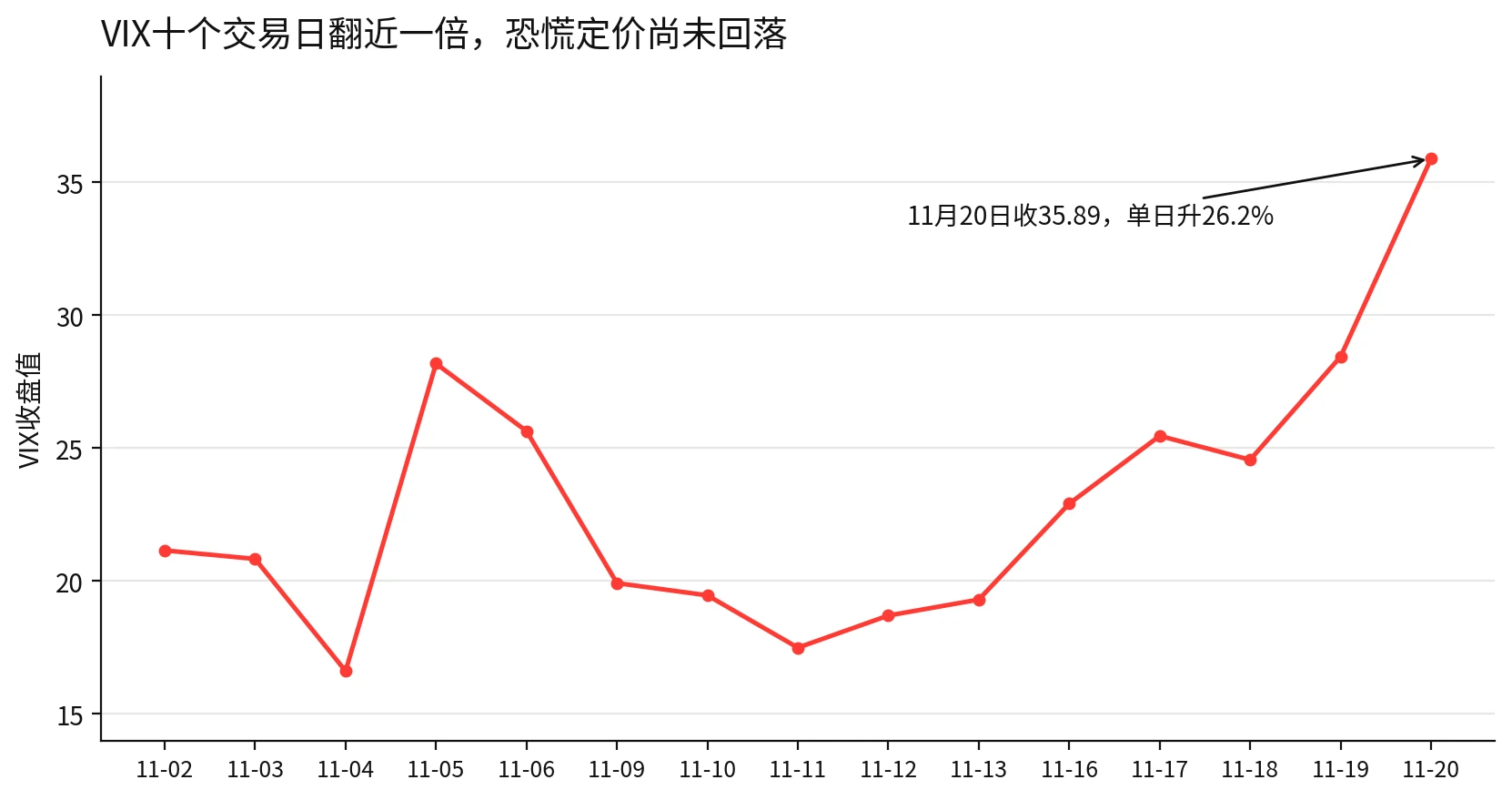
For traders, this means that they cannot simply view gold, BTC, and tech stocks as three independent markets. When BTC falls, gold falls, NDX falls, and the dollar strengthens, the market resembles a liquidity contraction. When BTC stabilizes, gold strengthens again, the dollar retreats, and NDX begins to rally, that is when we are closer to a restoration of risk appetite.
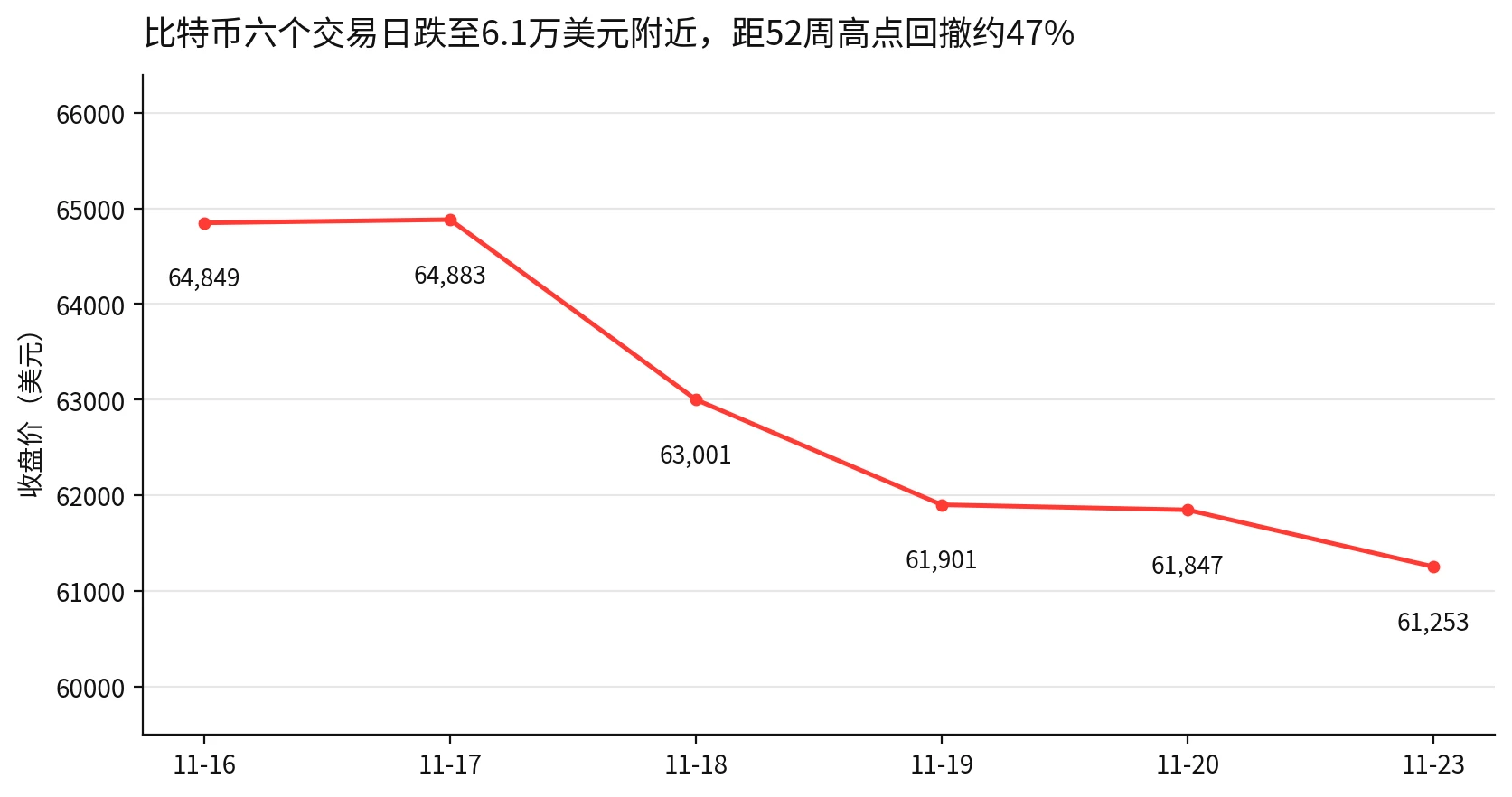
Therefore, the importance of BTC this week is not just limited to the crypto asset itself. It can serve as a rapid indicator of whether high-beta funds are flowing back in. The real thing to wait for is not for a particular asset to rise first, but for several risk assets to begin to stop dragging each other down.
5. PCE and Dell earnings reports will tell the market whether this is truly "killing valuations" or "killing fundamentals"
This week's schedule happens to provide the market with an opportunity to verify this logic. On November 25, the US will release the October PCE, core PCE, revised Q3 GDP, personal spending, durable goods orders, and initial unemployment claims all at once. The market currently expects the overall October PCE year-on-year to be about 3.8%, with core PCE around 3.2%, and month-on-month around 0.3%. The annualized GDP growth rate is expected to be slightly revised up from the initial 3.4% to 3.5%.
Therefore, the most important thing on Wednesday is not to simply look at whether PCE is high or low, but to consider inflation, growth, and employment together:
- If core PCE continues to rise while GDP and consumption remain resilient, the market will find it easier to accept pricing of "high rates maintained for longer or even further rate hikes." For high-valued tech stocks, this means that both the discount rate and risk premium are under pressure.
- If PCE cools down while growth remains resilient, it might form a better combination: inflationary pressures decrease, but the economy experiences no significant recession, allowing the market to reprice a "soft landing," leading to further potential declines in long-end yields and possible valuation recovery for tech stocks.
- The worst combination would be high inflation and weak growth. In this scenario, the market would face both a lack of room for interest rate cuts and downward revisions to earnings expectations, significantly increasing pressure on AI and growth stocks.
Company earnings will answer the other half of the question. Dell will release its performance on November 24, and the market particularly needs to observe AI server orders, backlog, delivery pace, margins, and cash flow. Because after Nvidia, Dell is closer to the downstream realization phase of AI capital expenditures: selling GPUs well is one thing, whether server orders can translate into revenue, and whether that revenue can generate profit and cash flow is another.
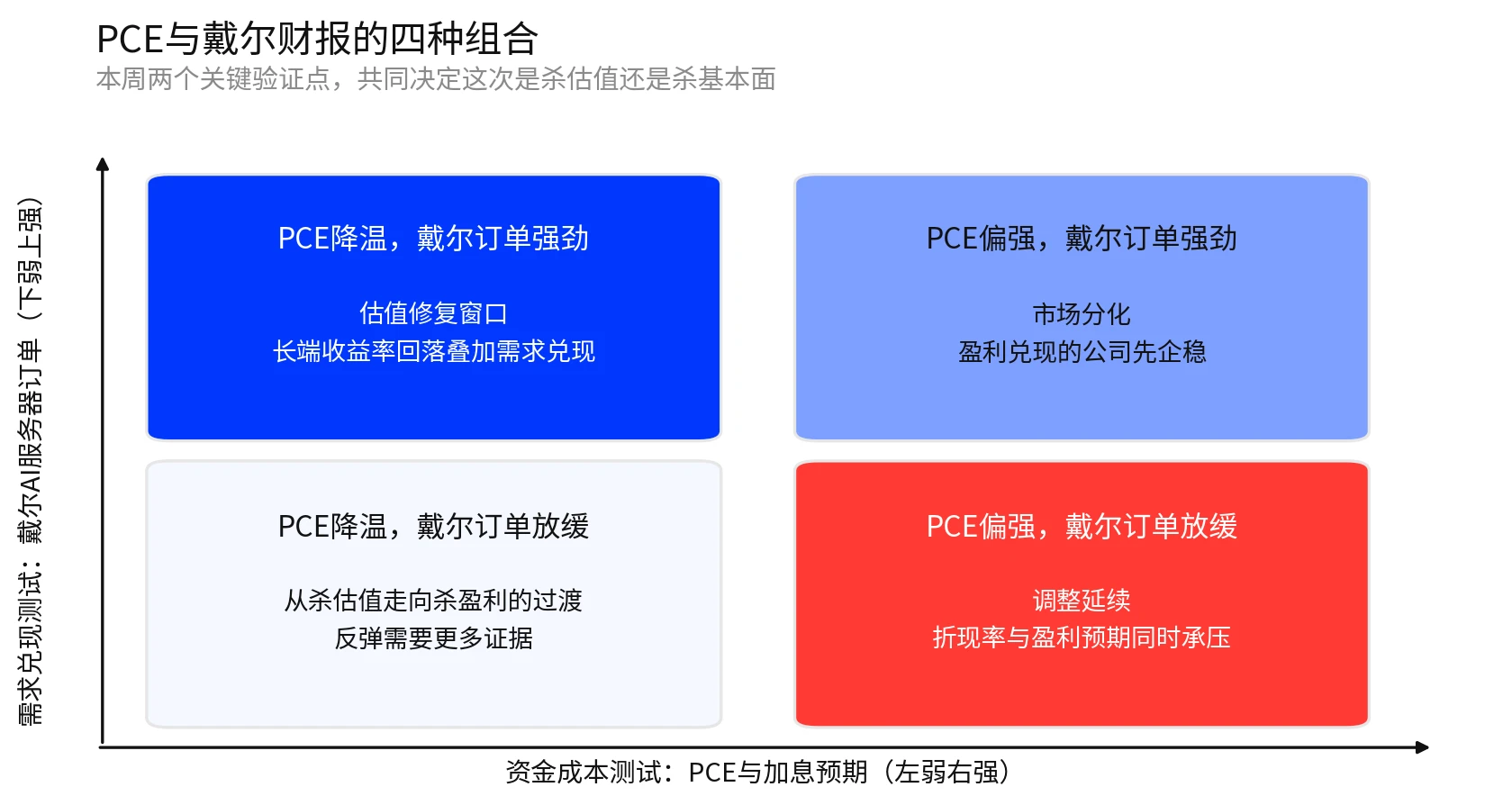
Thus, this week can be viewed as a test for funding costs with PCE and a test for AI demand realization with Dell. If both are relatively strong, the steep correction in AI assets is more likely to regain ground. If one is weak and one is strong, the market will further differentiate. If both worsen simultaneously, it indicates that the current downturn may not yet be complete.
6. Thanksgiving shortened trading week, real opportunities may come from "the strongest stop declining first"
This week, there is also a specific trading factor: Thanksgiving leads to a full market closure on Thursday and an early closing on Friday, resulting in decreased liquidity before and after the holiday, which may further amplify daily price fluctuations. From Monday to Wednesday is actually the window with the highest information density of the week, with PMI, consumer confidence, PCE, GDP, initial claims, and corporate earnings continuously hitting the market.
This means that this week is not suitable for judging "the bottom has arrived" based solely on one large up candle. What’s more worthwhile to observe is whether relative strengths and weaknesses are beginning to change. If, after the PCE is announced, US Treasury yields fall, while SOXX's decline noticeably decreases. If NVDA no longer hits new lows, and simultaneously AMD, MU, and AVGO start to recover together. If BTC stops dropping, and the dollar no longer continues to strengthen. If the number of rising stocks expands, no longer only a few mega-cap tech stocks are holding up the index, then the market is giving genuine clues for the bottom.
On the contrary, if the index rebounds but trading volume quickly shrinks, SOXX remains weaker than the market, BTC and high-leverage AI infrastructure stocks continue to make new lows, and US Treasury yields quickly rise again, then the so-called "bottom-fishing" is more likely just a technical rebound.
The observations for this week can be simplified into one chain: PCE determines interest rate expectations, interest rate expectations influence US10Y, US10Y affects AI valuations, AI financing costs influence capital expenditures, and Dell’s downstream earnings validate orders, while BTC, gold, and high-beta assets validate risk appetite.
Once this chain turns around, the AI market may truly enter the next stage. The biggest change currently in the market is not how much Nvidia has fallen, but how the pricing method for AI is changing. In the past, the market was willing to pay upfront for growth, waiting for profits and cash flow to materialize. Now, the market is starting to demand that growth simultaneously answer three questions: Where does the capital come from, what are the capital costs, and who ultimately pays the bill?
Rising expectations for interest rate hikes re-emphasized the discount cost of future cash flows. The increasingly complex AI financing structures have led the market to begin focusing on circular financing, debt, and off-balance-sheet guarantees. The impending control of Congress by the Democrats has brought regulatory expectations regarding data centers, electricity costs, AI safety, and corporate responsibilities into asset pricing ahead of time. The recent actions of the Federal Reserve and Congress have pushed issues that previously belonged more to industry discussions onto the financial market's agenda from two different directions.
Therefore, what needs to be guarded against in this round of adjustments is not "the sudden disappearance of AI demand," but rather that AI growth is still rapid, but the price the market is willing to pay for this growth has decreased. This is why, even though Nvidia’s performance remains strong, its stock can still fall sharply. Why US Treasury yields have not led to an immediate rebound in tech stocks. Why gold and Bitcoin have not been a unified safe haven for capital.
The market is transitioning from "looking for the next upward story" to "recalculating how much the whole story needs to cost." What is most worth focusing on next is not simply searching for the "most dropped" stocks, but finding companies where earnings expectations have not significantly deteriorated, balance sheets are more stable, cash flows are clearer, and stock prices have reflected changes in interest rates and risk premiums adequately.
If this week sees PCE cooling, long-end yields continuing to fall, Dell's AI orders remaining strong, SOXX beginning to lead the market, BTC and gold stabilizing, then the market may enter "after killing valuations, seeking strong fundamentals" phase. If PCE continues to be strong, interest rate hike expectations increase, AI financing regulations continue to tighten, while downstream server orders or profit margins begin to weaken, then the current adjustment may further transition from valuation compression to downward revisions in earnings expectations.
Therefore, this week what we should truly await is not "Has Nvidia dropped enough?", but whether the market has emerged with a new combination: reduced interest rate pressure, continued AI demand, controllable financing risks, and a peak in regulatory discounts. Only when these conditions begin to simultaneously improve can AI assets regain the rationale for funding to pay a higher valuation.
This Week's Observation Checklist
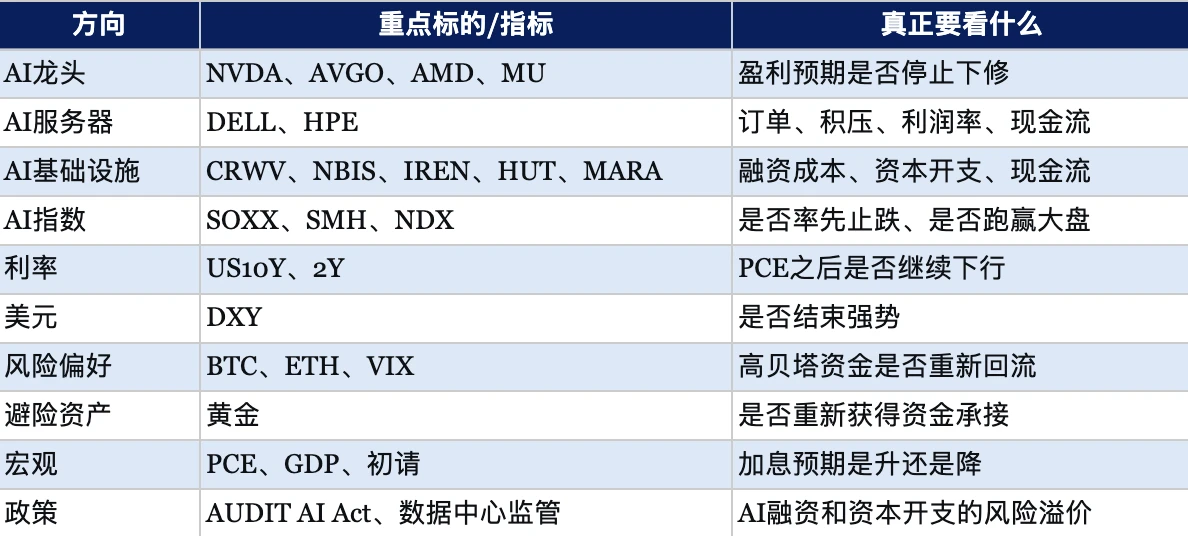
Stocks like Nvidia, Broadcom, AMD, Micron listed in the checklist can be viewed in real-time on the BIT US Stock market page.
One Week Outlook
- November 23, Monday: US November manufacturing and services PMI initial values. HPE, Zoom after-hours earnings. Focus on changes in corporate orders and price pressures.
- November 24, Tuesday: Speech by New York Fed President Williams. US Consumer Confidence Index. Earnings reports from Dell, Workday, and others. Earnings reports from Xiaomi, Bilibili, and others.
- November 25, Wednesday: This week’s core trading day. US October PCE, core PCE, revised Q3 GDP, personal spending, durable goods orders, and initial jobless claims to be released together. Earnings after Dell will continue to provide clues on AI demand and US corporate investments.
- November 26, Thursday: US Thanksgiving, full market closure. Federal Reserve releases Beige Book. Attention on descriptions by businesses in various regions regarding employment, prices, and demand.
- November 27, Friday: Black Friday shopping season begins, with US stocks closing early at 13:00 EST. In a low liquidity environment, single-day price fluctuations should not be overly interpreted; focus on retailer discounts, customer traffic, and consumption resilience for clues regarding the next phase of consumption and corporate profits.
The direction of the market this week may be determined by only two sets of data: PCE will tell the market whether interest rates can continue to rise, and Dell and other AI server companies will tell the market whether capital expenditures have begun to be realized.
Want to track these stocks yourself? Qualified users can trade US and Hong Kong stocks on BIT Securities.
Disclaimer:
The content of this article is for general informational and market commentary purposes only and is compiled based on publicly available information as of the date mentioned in the text. Relevant market data, expectations, and probabilities may change with market conditions. The views and investment strategies cited from third-party organizations, analysts, or other individuals only represent the views of those third parties at a specific time and do not represent BIT's views or recommendations. This article does not constitute investment advice, investment research, solicitation, invitation, or recommendation of any security, investment product, or trading strategy, nor should it be used as the basis for any investment decision. Financial markets carry risks, and securities prices and market performance may fluctuate; past performance and historical market trends do not represent or guarantee future results. Investors should independently assess relevant risks based on their circumstances and seek professional advice when needed.
免责声明:本文章仅代表作者个人观点,不代表本平台的立场和观点。本文章仅供信息分享,不构成对任何人的任何投资建议。用户与作者之间的任何争议,与本平台无关。如网页中刊载的文章或图片涉及侵权,请提供相关的权利证明和身份证明发送邮件到[email protected],本平台相关工作人员将会进行核查。