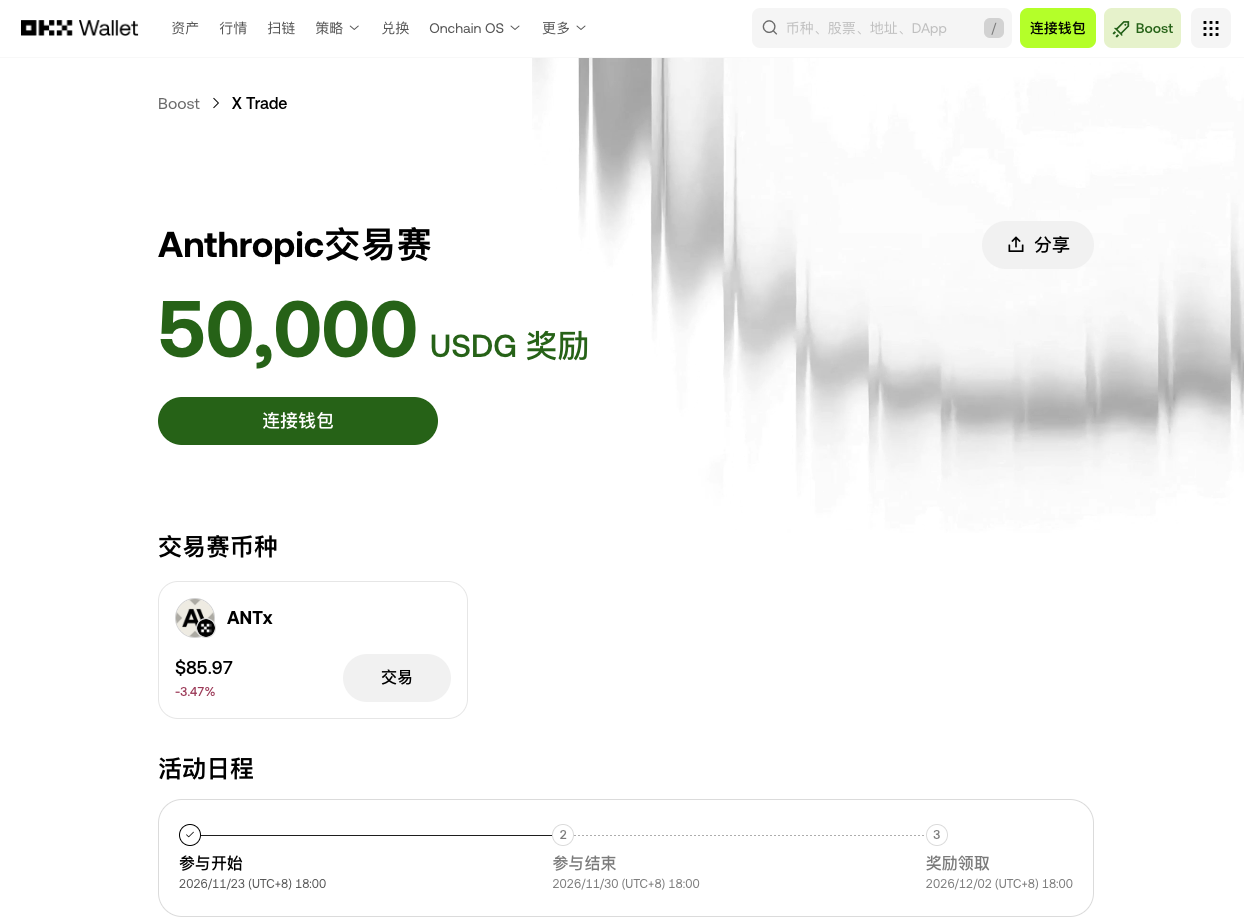
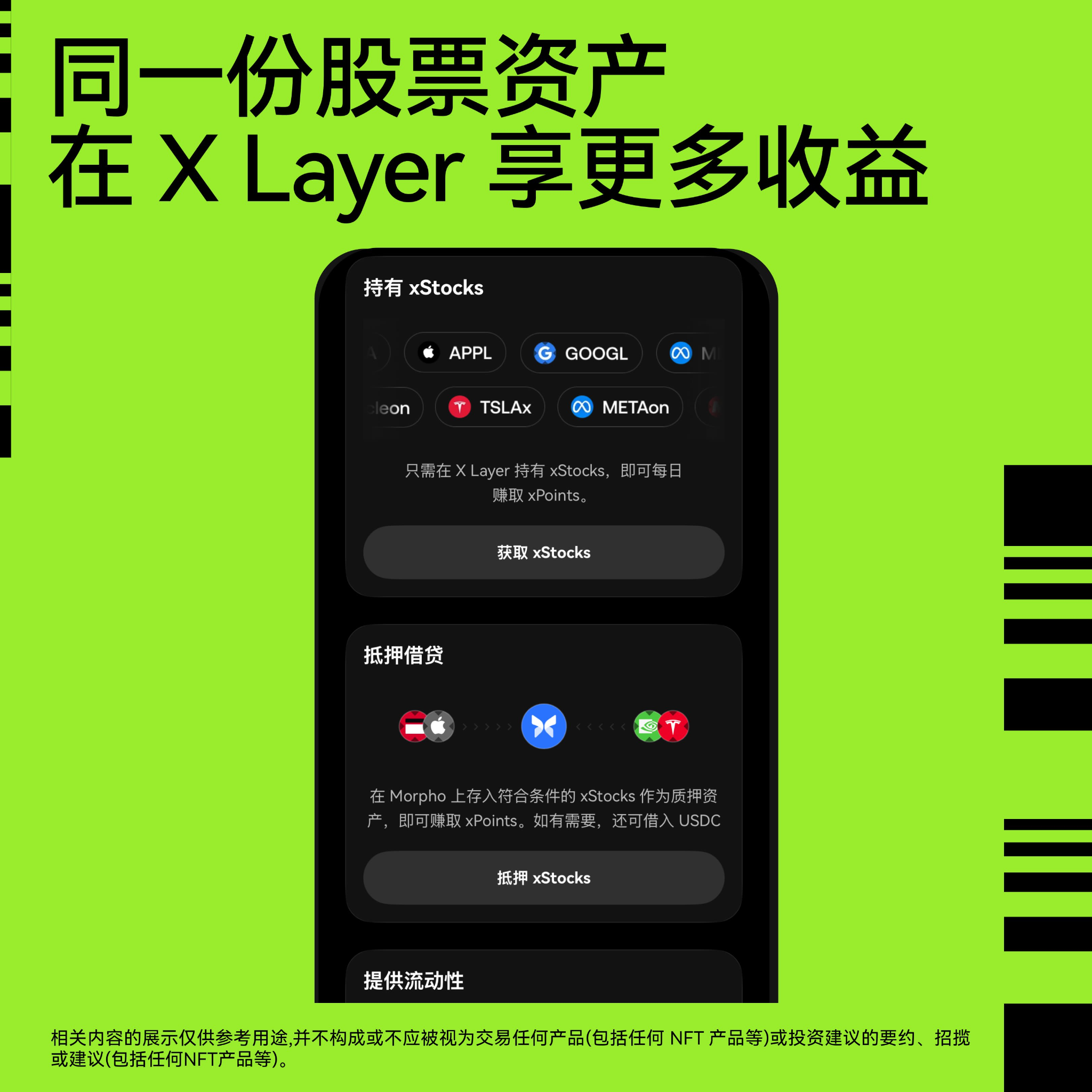
In the past, many users' first impression of Web3 wallets was: complex, difficult to understand, and easily led to asset loss due to selecting the wrong address or network.
Creating a wallet requires remembering a mnemonic phrase; connecting to a DApp requires confirming authorization; exchanging requires understanding Gas, slippage, and liquidity; if the mobile phone is lost, one must find a way to recover the wallet. For users who are new to the on-chain world, these steps can be daunting.
What the Binance Web3 wallet attempts to solve is the threshold for entering the on-chain world from exchange accounts.
It is integrated within the Binance App, allowing users to enter the Web3 wallet from the familiar trading platform, manage multi-chain assets, access DApps, complete transfers and exchanges. Compared to traditional third-party wallets, the Binance Web3 wallet functions more like an entry point extending Binance's ecosystem to the on-chain realm: users do not need to completely leave their original usage environment to start engaging with DeFi, on-chain trading, and decentralized applications.
But its value goes beyond "ease of creation." What truly deserves attention is that Binance is trying to integrate wallet security management, asset operations, cross-chain exchanges, and on-chain applications into a single product.
1. Why do exchange users need a Web3 wallet?
Exchange accounts and Web3 wallets solve two different kinds of problems.
Exchange accounts are suitable for spot trading, contracts, financial management, and asset management within the platform. User operations take place within the account system provided by the trading platform, with relatively clear pages and processes for trading, deposits, and withdrawals.
Web3 wallets, however, directly connect to blockchain networks and decentralized applications. Users can utilize DEX, DeFi, blockchain games, prediction markets, and various on-chain protocols, and manage on-chain addresses and assets independently of a single platform.
This means that Web3 wallets are not a replacement for exchange accounts but rather an extension of them.
Users can think of exchanges as centralized asset and trading gateways and Web3 wallets as passports to the world of on-chain applications. In the future, more and more assets, protocols, and applications will run directly on-chain; without a Web3 wallet, users will find it difficult to truly participate.
2. Core advantage of the Binance Web3 wallet: reducing the barrier to on-chain operations
According to the functionality presented in the Binance Web3 wallet tutorial, users can directly enter "Wallet—Web3—Create Wallet" within the Binance App to complete wallet creation in just a few steps.
For users already using the Binance App, this path is very straightforward. Users do not need to search for unfamiliar wallet applications nor switch back and forth between multiple products.
Once created, the wallet can be used for:
- Managing assets across different blockchain networks;
- Sending and receiving tokens;
- Performing cross-chain exchanges;
- Connecting to DApps and DeFi protocols;
- Participating in on-chain trading and other Web3 scenarios.
More importantly, the Binance Web3 wallet attempts to place many originally scattered functions in one entry point. Users move from exchange accounts to on-chain, and then back from on-chain applications to wallet management of assets, making the entire process more coherent.
3. MPC mechanism: making wallet security management no longer rely solely on a set of mnemonic phrases
Traditional wallets typically rely on mnemonic phrases. If the mnemonic phrase is lost, assets may be unrecoverable; if it is leaked, assets may be controlled by others.
The Binance Web3 wallet uses an MPC-related key sharding mechanism. According to the tutorial content, critical control information is split across different environments, including Binance servers, user devices, and encrypted cloud backups.
The design philosophy is to avoid exposing the complete private key indefinitely in a single location. Users do not need to directly manage a whole set of mnemonic phrases as in traditional wallets, but instead, they jointly complete wallet recovery through their devices, cloud backups, and recovery passwords.
This reduces the entry difficulty for new users and minimizes the issue of "forgetting the mnemonic phrase immediately after creating the wallet."
However, MPC does not mean that users bear no security responsibility at all. Recovery passwords, Binance accounts, mobile devices, and cloud backups remain important components of wallet security. Any single link being leaked could increase asset risk.
Therefore, users need to remember a principle: MPC reduces the risk of single point failure, not cancels the user's security responsibility.
4. Wallet backup is not optional, but the first thing to do after creation
Many users, after creating a wallet, first react by transferring assets or trying exchanges but neglect to back up.
In fact, wallet backup should be prioritized before all on-chain operations. The Binance Web3 wallet tutorial suggests that users enable cloud backups after creation, set recovery passwords, and confirm that backups are completed.
The tutorial also showcases the QR code backup feature. Users can encrypt and backup key shards to generate a QR code, then complete recovery via the recovery password and related account information.
QR codes and recovery passwords are both sensitive information and should not be given to anyone or uploaded to public platforms. Be especially wary of fake customer service, fake airdrops, and fake technical support. Anyone requesting users to provide recovery passwords, QR codes, private keys, or complete backup information is not genuine official customer support.
In extreme cases, the wallet also provides an emergency export private key function. However, this is not a feature for regular users' daily use. After exporting the private key, users need to independently bear the subsequent responsibility for storage and management; once the private key is leaked, assets may be directly controlled.
Therefore, the correct order should be:
Create wallet → Complete backup → Verify recovery path → Small test → Then begin on-chain operations.
5. From transfers to exchanges, the Binance Web3 wallet is covering core on-chain scenarios
The most basic use of a wallet is for transfers and payments, but what truly adds value to the Web3 wallet is its ability to seamlessly connect different chains and protocols.
The Binance Web3 wallet supports sending and receiving multi-chain assets and also provides token exchange and cross-chain exchange functions. Users can select assets and networks within the wallet, check quotes, set slippage, and submit transactions after authorizing.
This means users do not have to transfer assets to multiple external platforms to exchange a token and then separately find cross-chain tools.
For ordinary users, the operation path has been simplified; for data analysis platforms, the wallet has also become an important entry point to observe on-chain fund flows. Which chain users use, which assets they exchange, and which protocols they participate in can reflect the activity level and funding preferences of different ecosystems.
However, simplification of operations does not mean that risks have disappeared. Before exchanging, users still need to check:
- Whether the token for exchange is correct;
- Whether the current network matches;
- Whether the trading slippage is reasonable;
- Whether the authorized party is trustworthy;
- Whether the final amount received meets expectations;
- Whether additional Gas fees are required.
6. The two costs most easily overlooked in on-chain trading: Gas and slippage
When users enter Web3 from exchanges, the two concepts they are most likely to encounter are Gas and slippage.
Gas is the transaction execution cost that users pay to the blockchain network. Sending, exchanging, authorizing, and cross-chain operations can incur on-chain fees. Different networks have different Gas assets, and fees can also rise during network congestion.
Slippage is the difference between the expected transaction price and the actual transaction price. The lower the liquidity, the larger the transaction scale, and the greater the market volatility, the more pronounced the slippage tends to be.
This means users cannot just look at the exchange page's displayed exchange rate; they also need to consider:
- Transaction fees;
- Network Gas;
- Price impact;
- Transaction scale;
- Asset liquidity;
- Actual amount received after the exchange.
Especially in transactions involving Meme assets and new projects, prices on the page can change very quickly. If users blindly increase slippage just to ensure the transaction succeeds, they might accept significantly unfavorable transaction prices.
7. Once confirmed, on-chain transactions are usually irreversible
This is a basic understanding that all Web3 users must establish.
In some cases, if there is an issue with bank transfers, one can apply for a reversal; however, once an on-chain transaction is confirmed by the blockchain network, it generally cannot be directly cancelled by the platform.
Therefore, before clicking confirm, users need to check the receiving address, network, asset, amount, Gas, and authorization content once again. Especially when transferring to a new address for the first time, it is recommended to first conduct a small test.
The risk prompts and address recognition functions of the Binance Web3 wallet can help users identify some suspicious transactions, but system prompts cannot replace manual confirmations. The final person clicking sign remains the user themselves.
8. What advantages does the Binance Web3 wallet have compared to other wallets?
The advantages of the Binance Web3 wallet mainly lie in “the connection between the exchange ecosystem and on-chain wallets.”
First, the entry point is more familiar. For Binance users, creating a wallet, checking assets, and conducting operations are all centralized within the App.
Second, the product connectivity is tighter. Users can transfer from platform accounts to the Web3 wallet, then access DApps, conduct exchanges, or participate in on-chain activities.
Third, the MPC mechanism lowers the threshold for traditional mnemonic phrase management. New users do not have to confront complex private key and mnemonic phrase processes from the outset.
Fourth, the Binance wallet is continuously integrating functions such as Meme trading, prediction markets, RWA financial management, on-chain squares, and Agent Wallet, and may become the main entry point for connecting Binance's ecosystem to on-chain applications in the future.
However, it is not a "risk-free wallet." Users still need to understand basic concepts such as self-custody, on-chain authorization, Gas, slippage, and irreversible transactions.
9. Which users are suitable to start using it?
The Binance Web3 wallet is especially suitable for the following types of users:
Users who want to enter Web3 from exchanges
If you are already familiar with the Binance exchange account and wish to further explore DApps, DeFi, and on-chain trading, the Binance Web3 wallet can be a more natural starting point.
Users who want to manage multi-chain assets
If your assets are distributed across different networks and you want to view and operate within one wallet, you can focus on multi-chain management and cross-chain exchange features.
Users who want to participate in Meme, prediction markets, and on-chain activities
Many new on-chain projects and applications will not directly appear within centralized exchanges, requiring interaction through a Web3 wallet.
Users who want to study on-chain data
Through wallet addresses, transaction records, profits and losses, protocol interactions, and asset changes, users can further analyze on-chain fund flows and trading behaviors.
Conclusion
A Web3 wallet is not just a tool for storing coins; it connects on-chain transactions, DeFi, DApps, cross-chain exchanges, and more future digital asset applications.
The Binance Web3 wallet seeks to lower the threshold for ordinary users to enter the on-chain world through the App's built-in entry, MPC key sharding, cloud backups, QR code backups, multi-chain management, and exchange capabilities.
However, even after the threshold is lowered, users still need to maintain basic security awareness: backup cannot be omitted, recovery passwords cannot be leaked, addresses and networks must be verified, authorization and slippage cannot be confirmed blindly, and on-chain transactions cannot be assumed to be reversible.
From a product development perspective, wallets are upgrading from "asset containers" to infrastructures connecting transactions, applications, data, and financial services. For ordinary users, this represents a new entry into Web3; for data analysis platforms, this is an important window for observing on-chain funds, user behaviors, and ecosystem changes.
A truly worthwhile wallet should not only allow users to complete a transaction faster but should also enable users to understand what the transaction is doing, what the costs are, and whether it can be reversed afterwards.
Exclusive Benefits for AiCoin Users
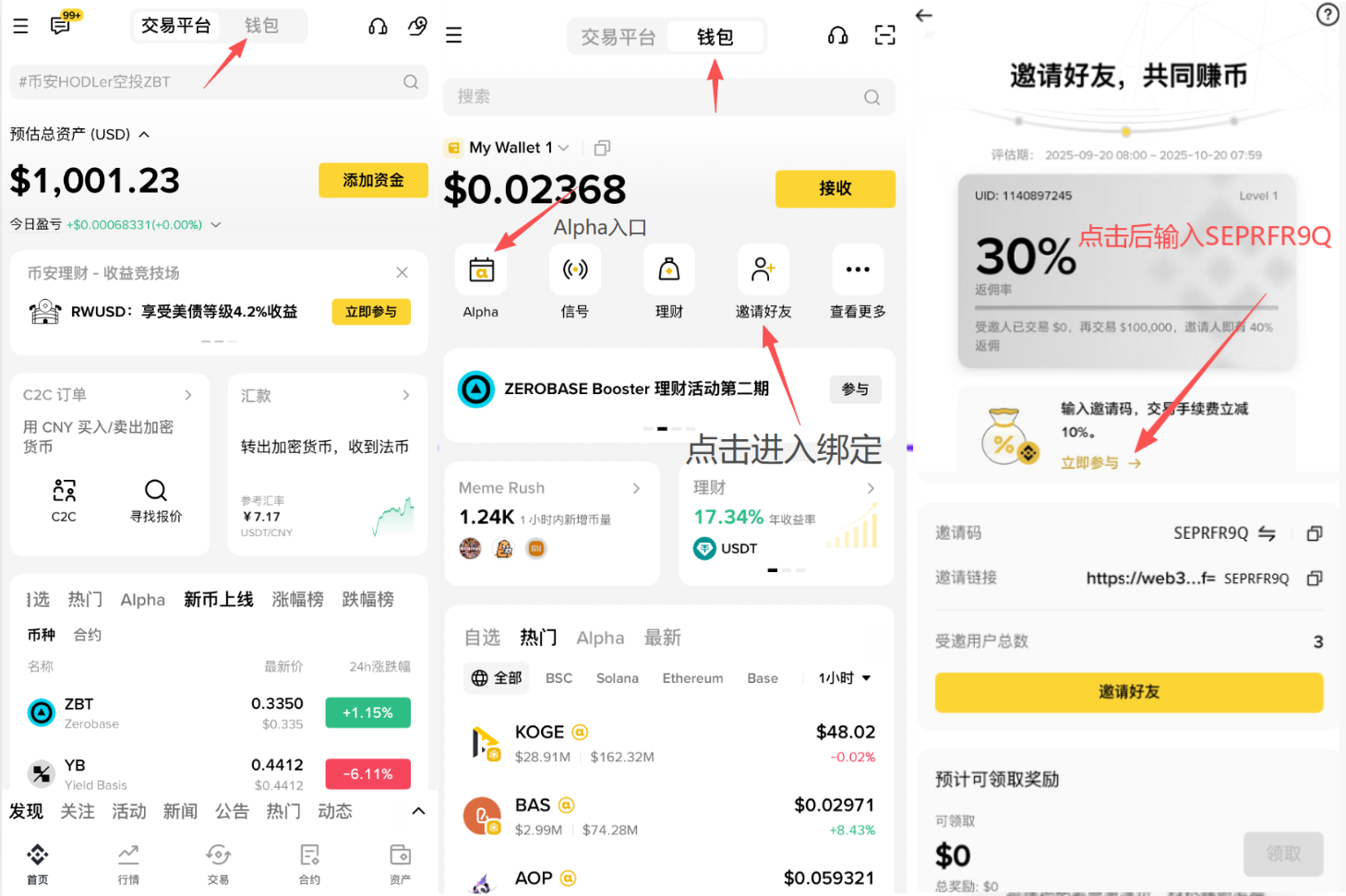
👉 Enter invitation code SEPRFR9Q when using the Binance wallet to enjoy 10% commission rebate, making meme trading cheaper and more profitable
🔗 Exclusive link:
https://web3.binance.com/referral?ref=SEPRFR9Q
免责声明:本文章仅代表作者个人观点,不代表本平台的立场和观点。本文章仅供信息分享,不构成对任何人的任何投资建议。用户与作者之间的任何争议,与本平台无关。如网页中刊载的文章或图片涉及侵权,请提供相关的权利证明和身份证明发送邮件到[email protected],本平台相关工作人员将会进行核查。