The crypto space sees a large amount of opinions being spread every day. When opening social platforms, some people predict that BTC is about to rise, some say the altcoin season is coming, and others claim they have found targets that will significantly increase. For newcomers, a common confusion is: does having many followers mean that an account's trading judgments are more reliable?
The number of followers only indicates popularity and does not directly reflect the validity of the opinion. A more reliable way is to observe from several verifiable dimensions: which cryptocurrencies has he been focusing on for a long time? How did the assets he publicly recommended perform afterward? Is there continuous record of opinions, rather than only reviewing after an increase? This information is more valuable than just looking at follower numbers.
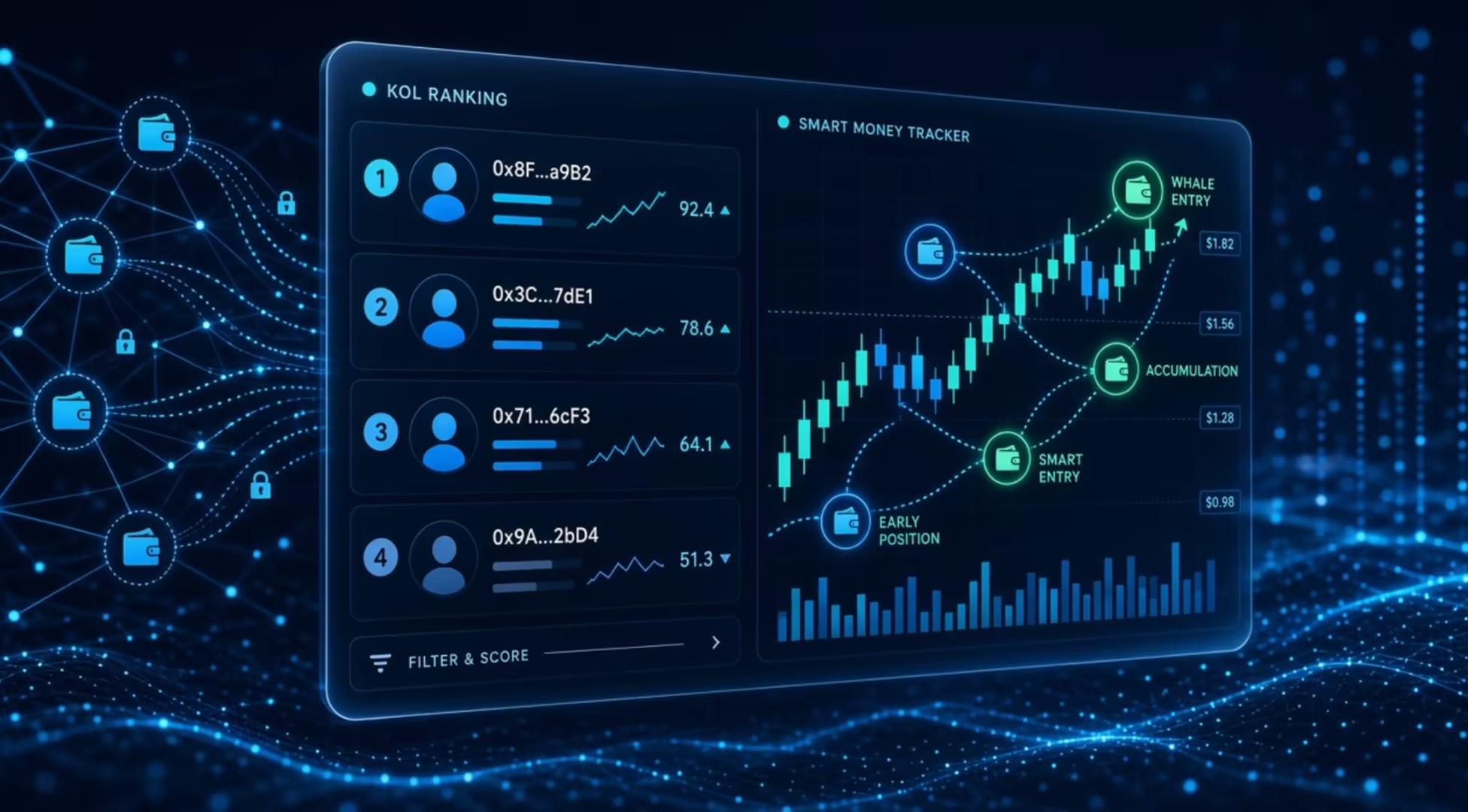
AiCoin provides a KOL leaderboard feature that allows users to view the cryptocurrencies different KOLs are focusing on, their social activity levels, and relevant historical performance data. For newcomers, this offers a relatively structured way of filtering, instead of relying solely on impressions or trends.
How can it be operated in practical use?
After opening the AiCoin KOL leaderboard, you can first sort by recent performance or popularity to view the accounts at the top of the list. Suppose you see that a certain KOL has a relatively good performance based on related data over a period of time, you can click to enter details, view the list of cryptocurrencies he has focused on recently, and the price changes of these cryptocurrencies during the corresponding time periods. Also observe his posting frequency and content direction to confirm if there is a continuous record, rather than only appearing after a price rise.
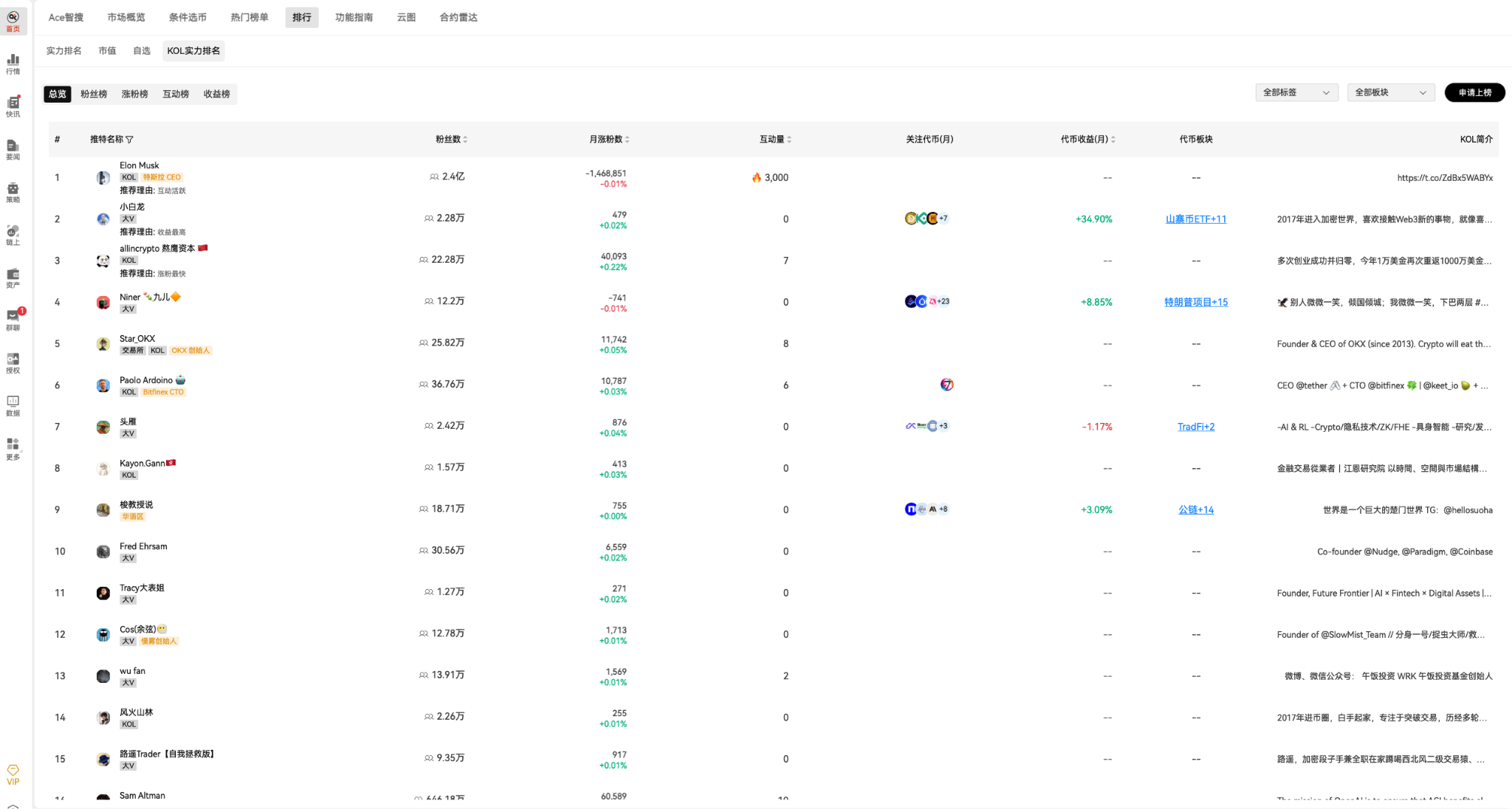
For a specific scenario: when multiple bullish opinions about a certain altcoin appear in the market simultaneously, you can search the leaderboard for KOLs who have focused on that cryptocurrency and compare their historical performance data and focus times. If a certain account had related records prior to a noticeable price increase and its past data is relatively stable, then this opinion can be considered as one of the "pieces of information that need further verification," rather than being treated as a direct basis for trading. Conversely, if the account mainly shows related content heavily only after a price increase, then its weight should be reduced.
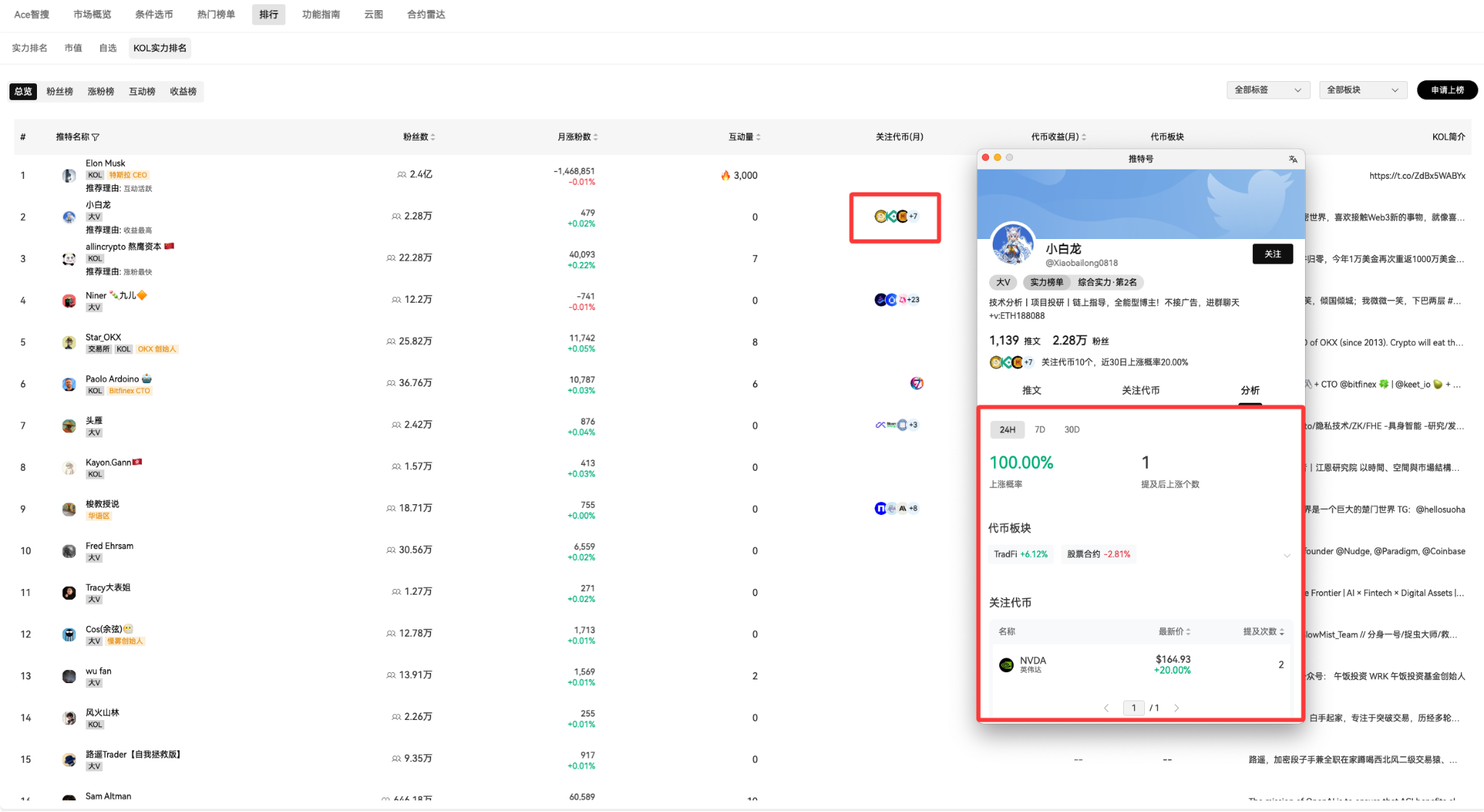
Another use is periodic reviews. Newcomers can regularly check the changes in the cryptocurrencies focused on by the top KOLs in the leaderboard at a fixed time each week, record the targets they are interested in, and then judge in combination with their observations. This approach can help establish the habit of "first looking at data records, then looking at opinion content," reducing the probability of being influenced by a single popular post.
It should be clarified that historical performance does not guarantee future returns. The data in the leaderboard only reflects publicly available records over a certain period and cannot predict subsequent market changes. A KOL's opinions may be influenced by personal positions, market sentiment, or sources of information, and even if past data is good, it cannot replace independent judgment. For newcomers, a more reasonable use is to treat the leaderboard as an information screening tool: first use it to narrow down the scope of interest, then independently verify the fundamentals, price levels, and risks of the cryptocurrencies, rather than directly following to place orders.
How do you usually judge whether a KOL's opinion is worth referencing? Do you look at follower counts, or do you check his historical records? Feel free to share your methods.
Risk Warning:KOL historical performance data is for reference only and does not constitute any investment advice. Cryptocurrency prices are highly volatile and may lead to a total or partial loss of principal. Users should fully understand the risks, make cautious decisions based on their own risk tolerance, and independently assess the reliability of the information sources.
免责声明:本文章仅代表作者个人观点,不代表本平台的立场和观点。本文章仅供信息分享,不构成对任何人的任何投资建议。用户与作者之间的任何争议,与本平台无关。如网页中刊载的文章或图片涉及侵权,请提供相关的权利证明和身份证明发送邮件到[email protected],本平台相关工作人员将会进行核查。